The Story
Plant Bio
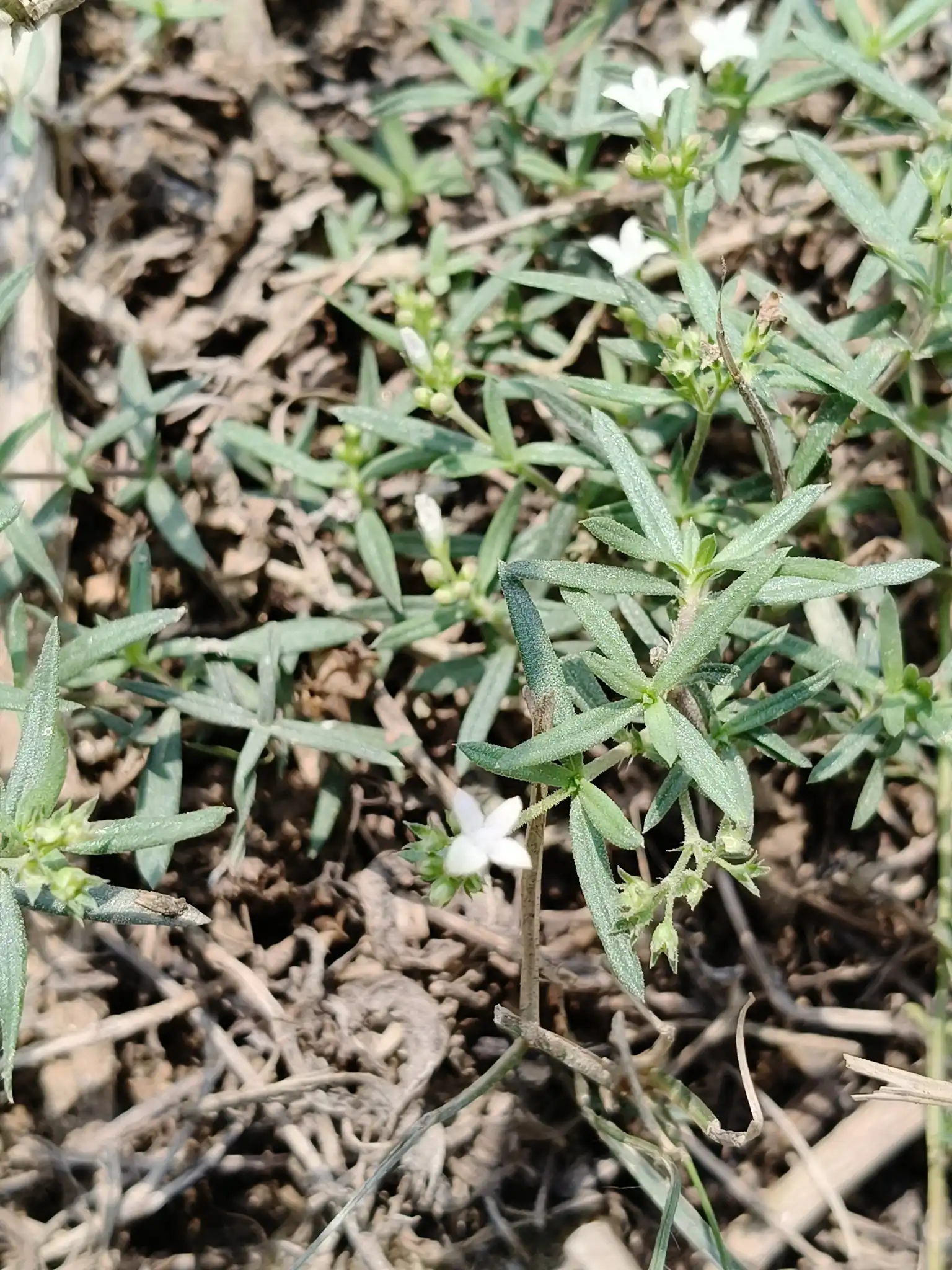
Oldenlandia corymbosa is a diffusely branched annual herb or subshrub native to the tropical and subtropical Old World, characterized by slender, angled stems that are woody at the base. The plant produces opposite, linear to narrow-elliptic dark green leaves and small white flowers in umbel-like clusters or solitary in the leaf axils.
This species behaves as a tender, low-growing annual that spreads via decumbent or prostrate branchlets, occasionally rooting at the nodes. It is highly opportunistic, rapidly colonizing disturbed soils, lawns, and waste areas through abundant seed production.
Uses & Benefits:
Essentials
At a Glance
Plant Type
Annual
Height
12"
Width
16"
Light
Full Sun, Partial Sun
Zones
8, 9, 10
Water
Moderate
Humidity
High
Lifespan
Annual
Native To
Tropical & Subtropical Old World
Toxicity
None documented
Bloom period
Summer – Fall
In flower about 6 months of the year
Planting
How to Grow
- Select a site with full sun to partial shade and well-drained soil, though the plant tolerates damp, disturbed ground.
- Avoid applying any fertilizer, as this species thrives in low-nutrient substrates without supplemental feeding.
- Provide moderate moisture during dry periods, though the plant survives dry spells once established.
- Monitor the area closely and hand-pull plants before flowering finishes to control self-sowing.
Pro Tip
To prevent this opportunistic species from spreading aggressively through garden beds, manually pull or hand-weed the plants before they set their abundant, minute seeds.
Keep It Thriving
Care Guide
Do
- Hand-weed plants early in the season if containment is desired.
- Grow in well-drained sandy or loamy soils if cultivating for traditional uses.
Don't
- Do not apply fertilizers, which are unnecessary and promote excessive weed growth.
- Do not allow the plant to set seed if you wish to prevent it from spreading.
Seasonal Care Calendar
| Task | Jan | Feb | Mar | Apr | May | Jun | Jul | Aug | Sep | Oct | Nov | Dec |
|---|---|---|---|---|---|---|---|---|---|---|---|---|
| Pest Check | ||||||||||||
| Propagate | ||||||||||||
| Prune | ||||||||||||
| Winter Prep |
Watch Out For
Pests & Diseases
Common Pests
Common Diseases
In the Garden
Landscape Uses & Companions
Landscape Uses
Companion Plants
Multiply
Propagation Methods
Good to Know
Common Questions
Old World Diamond-Flower questions
What zones can Old World Diamond-Flower grow in?
Old World Diamond-Flower is hardy in USDA Zones 8–10. Inside that range it survives winter in the ground; outside it, grow it as an annual or a container plant you protect.
When does Old World Diamond-Flower bloom?
Old World Diamond-Flower typically blooms in summer through fall. Exact timing shifts a week or two with your zone — Sow's bloom calendar maps it to your garden.
Does Old World Diamond-Flower need full sun?
Old World Diamond-Flower does best in full sun to part shade. In hot climates, afternoon shade keeps blooms fresher longer.
Is Old World Diamond-Flower drought tolerant?
Yes — once established (usually after the first full season), Old World Diamond-Flower handles dry spells with minimal watering. Water deeply its first year to build the root system that makes that possible.
Keep exploring
Explore the genus
Hardy in your zone?
Grow Old World Diamond-Flower with confidence
See it in a design of your actual yard, get zone-matched care reminders, and track it season by season in your garden journal.