
Garden hybrid
This is a garden hybrid, bred from more than one wild species, so it has no single species page of its own.
The Story
Plant Bio
Ceanothus is a genus of nitrogen-fixing, evergreen shrubs native to the chaparral and woodland slopes of western North America. These plants are highly adapted to Mediterranean climates with dry summers and require exceptionally well-drained, coarse soils to prevent root rot.
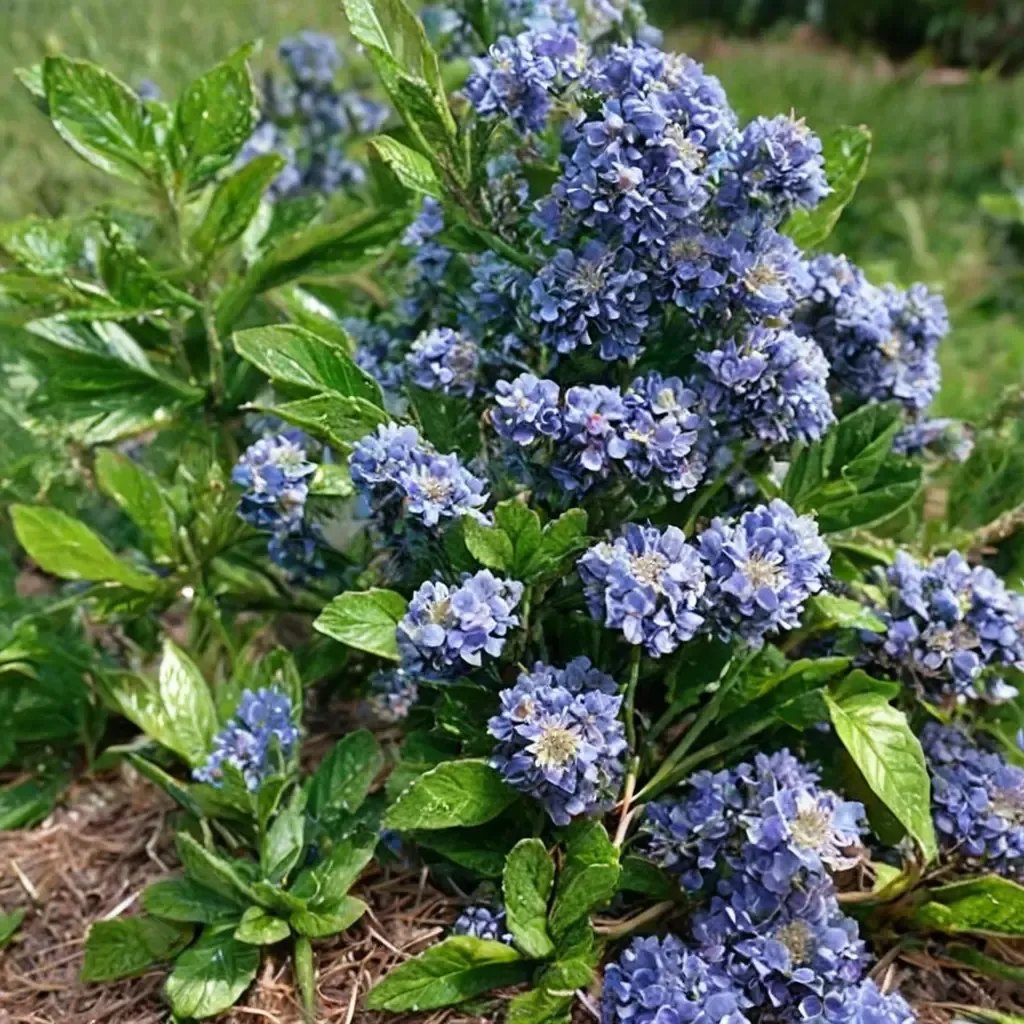
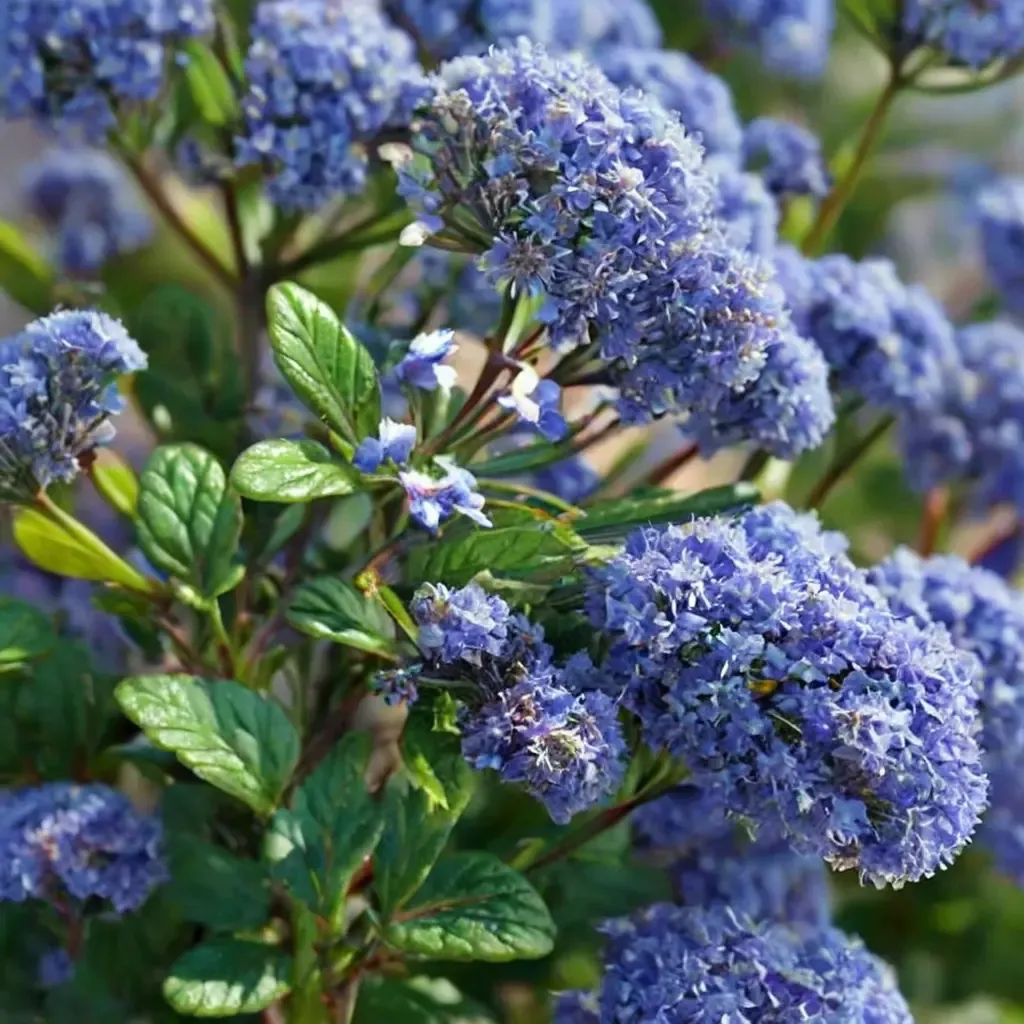
'Blue Mound' is a compact, dense, mound-forming cultivar that produces abundant, tight clusters of deep rich blue flowers in late spring. The small, glossy, dark green leaves have finely toothed margins and a slightly hairy underside, maintaining a neat, structured form year-round.
Uses & Benefits:
Bred from more than one wild species, so it has no species page of its own.
Essentials
At a Glance
Plant Type
Shrub
Height
79"
Width
79"
Light
Full Sun
Zones
8, 9, 10
Water
Low
Humidity
Low to Moderate
Lifespan
8 - 15 years
Native To
North America
Toxicity
Non-toxic
Bloom period
Late spring
In flower about 1 month of the year
Planting
How to Grow
- Select a planting site in full sun with coarse, sandy, or loamy soil that drains rapidly.
- Dig a hole twice as wide as the root ball but no deeper, keeping the crown slightly above the surrounding soil level.
- Backfill with native soil without adding organic amendments or fertilizer, which can promote weak growth.
- Water deeply to settle the soil, then establish a strict minimal-watering schedule once the root system is active.
Pro Tip
Prune strictly after the spring bloom finishes and never cut back into old, leafless wood, as the plant lacks dormant buds on mature stems to generate new growth.
Keep It Thriving
Care Guide
Do
- Prune annually immediately after flowering to maintain a compact, mounded shape.
- Plant in a location protected from harsh, freezing winter winds.
- Ensure the soil has excellent structural porosity and drainage.
Don't
- Do not irrigate during the summer months once the plant is established.
- Never cut back into old, brown, leafless wood.
- Avoid applying high-nitrogen or high-phosphorus fertilizers.
Seasonal Care Calendar
| Task | Jan | Feb | Mar | Apr | May | Jun | Jul | Aug | Sep | Oct | Nov | Dec |
|---|---|---|---|---|---|---|---|---|---|---|---|---|
| Pest Check | ||||||||||||
| Plant | ||||||||||||
| Prune | ||||||||||||
| Winter Prep |
Watch Out For
Pests & Diseases
Common Pests
Common Diseases
In the Garden
Landscape Uses & Companions
Landscape Uses
Companion Plants
Multiply
Propagation Methods
Good to Know
Common Questions
California Lilac 'Blue Mound' questions
What zones can California Lilac 'Blue Mound' grow in?
California Lilac 'Blue Mound' is hardy in USDA Zones 8–10. Inside that range it survives winter in the ground; outside it, grow it as an annual or a container plant you protect.
Is California Lilac 'Blue Mound' deer resistant?
Not reliably. Deer may browse California Lilac 'Blue Mound', especially tender spring growth — plan on repellents or fencing where pressure is high.
When does California Lilac 'Blue Mound' bloom?
California Lilac 'Blue Mound' typically blooms in late spring through late spring. Exact timing shifts a week or two with your zone — Sow's bloom calendar maps it to your garden.
Does California Lilac 'Blue Mound' need full sun?
California Lilac 'Blue Mound' does best in full sun (6+ hours).
Is California Lilac 'Blue Mound' drought tolerant?
Yes — once established (usually after the first full season), California Lilac 'Blue Mound' handles dry spells with minimal watering. Water deeply its first year to build the root system that makes that possible.
More Ceanothus to compare
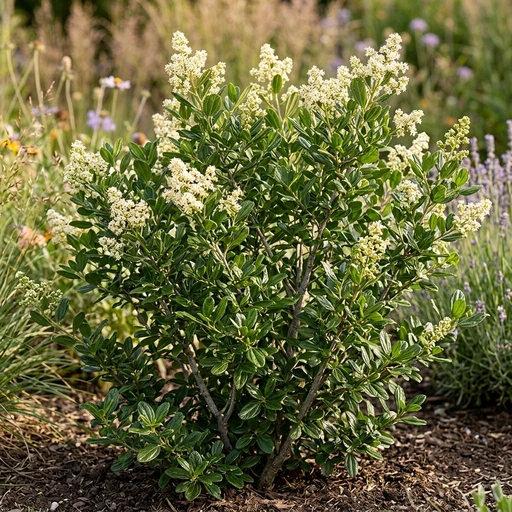
New Jersey Tea
Ceanothus americanus
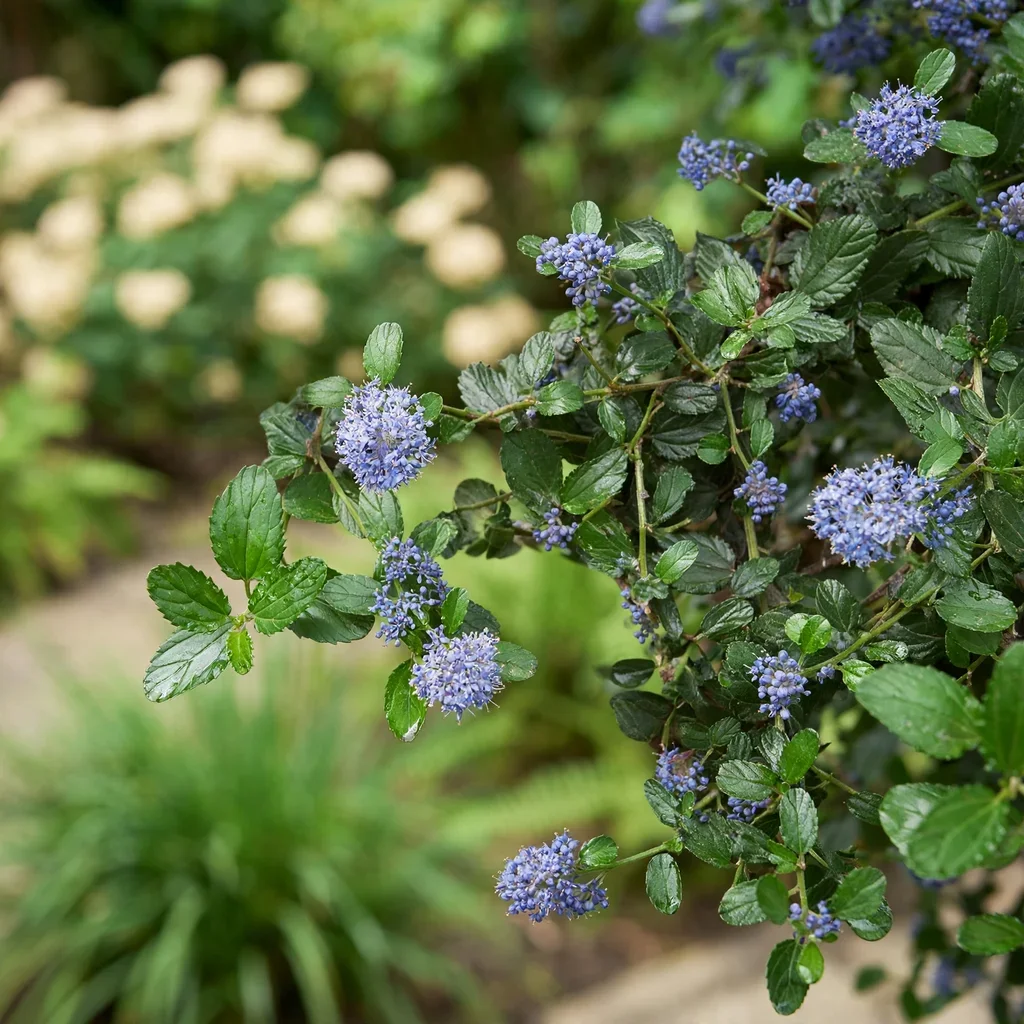
California Lilac
Ceanothus thyrsiflorus
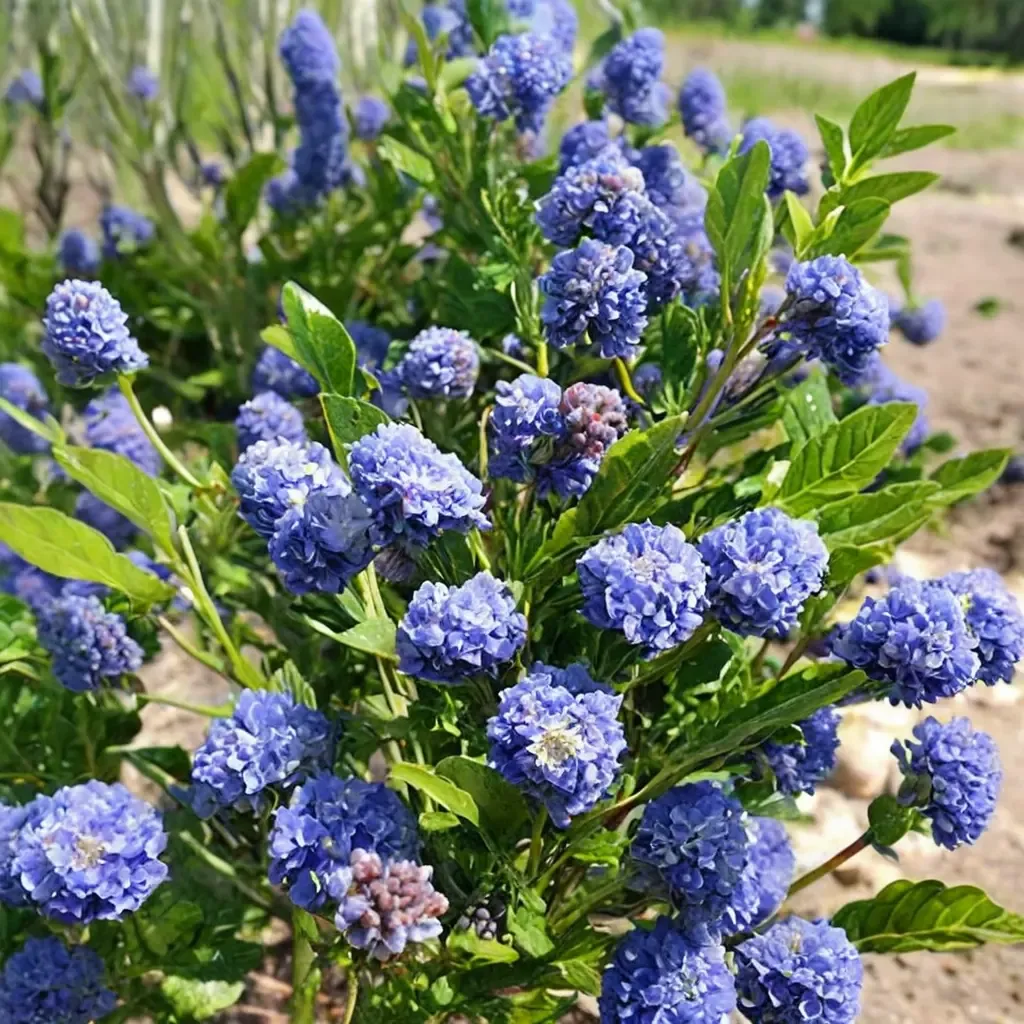
Skylark California Lilac
Ceanothus thyrsiflorus 'Skylark'
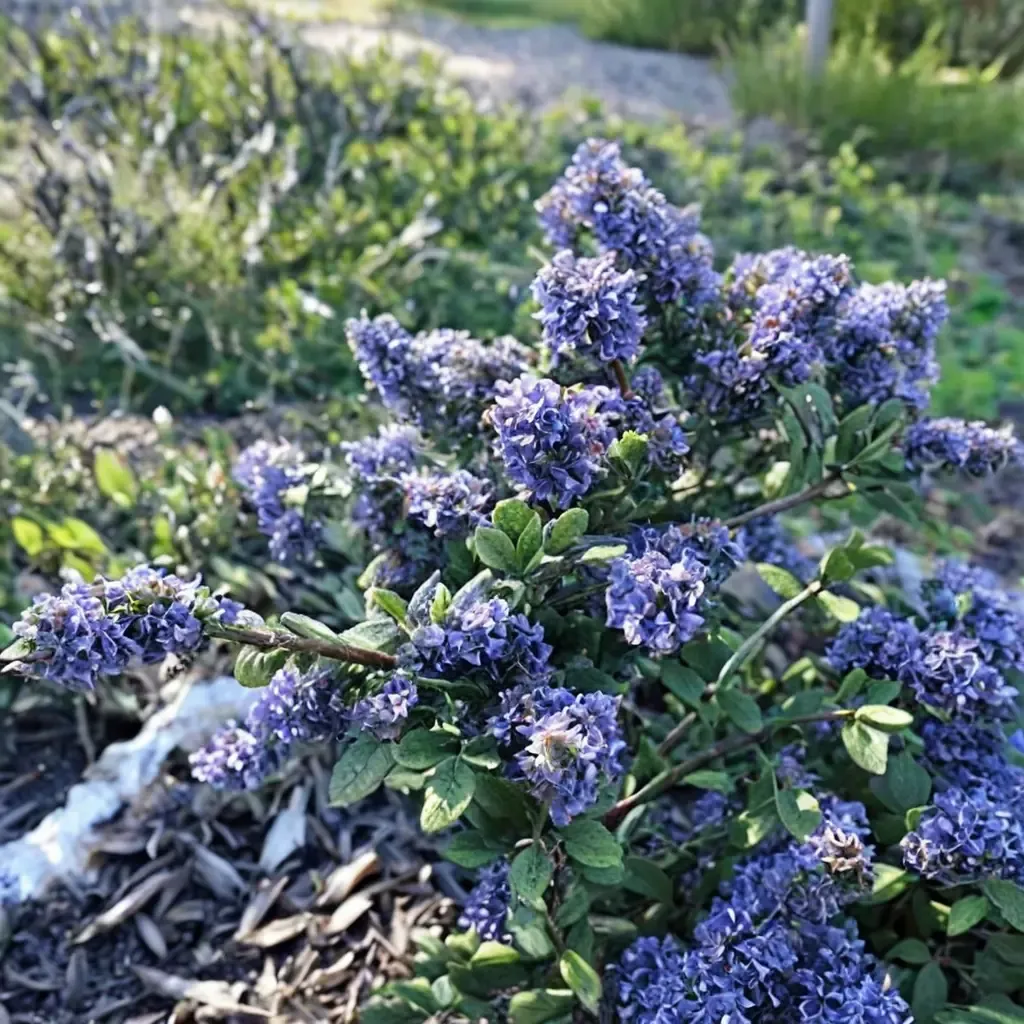
Valley Violet California Lilac
Ceanothus maritimus 'Valley Violet'
Victoria California Lilac
Ceanothus griseus 'Victoria'
Autumnal Blue California Lilac
Ceanothus thyrsiflorus 'Autumnal Blue'
Keep exploring
Explore the genus
Hardy in your zone?
Grow California Lilac 'Blue Mound' with confidence
See it in a design of your actual yard, get zone-matched care reminders, and track it season by season in your garden journal.