The Story
Plant Bio
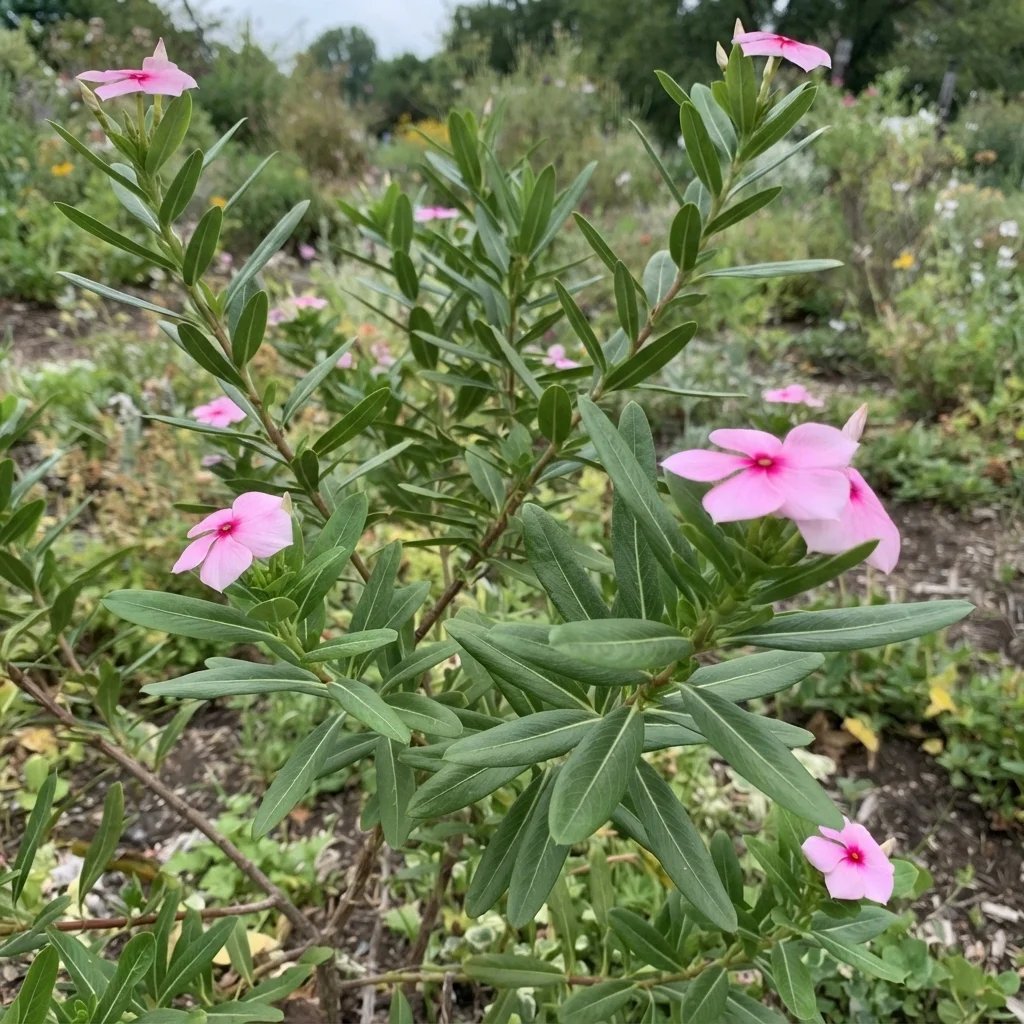
Catharanthus coriaceus is a low-growing, compact perennial endemic to the dry rocky plateaus of Madagascar, reaching twelve to sixteen inches in height. The tough, leathery leaves are oppositely arranged and elliptic, providing a dense backdrop for the solitary pink flowers that emerge from the leaf axils during summer.
This species is distinguished by its highly coriaceous, thick foliage and its strict adaptation to arid, nutrient-poor environments. Unlike its widely naturalized relative Catharanthus roseus, it remains exceptionally rare in cultivation and is highly intolerant of cold, wet soils.
Uses & Benefits:
Essentials
At a Glance
Plant Type
Perennial
Height
16"
Light
Full Sun, Partial Sun
Zones
10
Water
Low
Humidity
Moderate
Lifespan
Perennial
Native To
Madagascar
Toxicity
Toxic if ingested
Bloom period
Summer – Late summer
In flower about 3 months of the year
Planting
How to Grow
- Select a planting site with sandy, rocky, or gravelly soil that drains rapidly.
- Position the plant in full sun to partial shade, ensuring protection from strong winds.
- Water sparingly, allowing the root zone to dry thoroughly before applying more moisture.
- Overwinter indoors or in a heated greenhouse if temperatures drop below freezing.
Pro Tip
Provide exceptionally sharp drainage and allow the soil to dry out completely between waterings; excess moisture quickly triggers fatal root rot.
Keep It Thriving
Care Guide
Do
- Grow in pots with high-drainage gritty mix to control soil moisture.
- Prune lightly after summer flowering to maintain a compact, bushy habit.
- Sow seeds in complete darkness to trigger successful germination.
Don't
- Do not overwater or allow the roots to sit in waterlogged soil.
- Do not prune hard into old, leafless woody stems where new buds cannot break.
- Do not apply heavy fertilizers; feed sparingly with a low-strength liquid formula.
Seasonal Care Calendar
| Task | Jan | Feb | Mar | Apr | May | Jun | Jul | Aug | Sep | Oct | Nov | Dec |
|---|---|---|---|---|---|---|---|---|---|---|---|---|
| Fertilize | ||||||||||||
| Pest Check | ||||||||||||
| Prune | ||||||||||||
| Winter Prep |
Watch Out For
Pests & Diseases
Common Pests
Common Diseases
In the Garden
Landscape Uses & Companions
Landscape Uses
Companion Plants
Multiply
Propagation Methods
Good to Know
Common Questions
Madagascar Periwinkle questions
What zones can Madagascar Periwinkle grow in?
Madagascar Periwinkle is hardy in USDA Zone 10. Inside that range it survives winter in the ground; outside it, grow it as an annual or a container plant you protect.
When does Madagascar Periwinkle bloom?
Madagascar Periwinkle typically blooms in summer through late summer. Exact timing shifts a week or two with your zone — Sow's bloom calendar maps it to your garden.
Does Madagascar Periwinkle need full sun?
Madagascar Periwinkle does best in full sun to part shade. In hot climates, afternoon shade keeps blooms fresher longer.
Is Madagascar Periwinkle drought tolerant?
Yes — once established (usually after the first full season), Madagascar Periwinkle handles dry spells with minimal watering. Water deeply its first year to build the root system that makes that possible.
More Catharanthus to compare
Keep exploring
Explore the genus
Hardy in your zone?
Grow Madagascar Periwinkle with confidence
See it in a design of your actual yard, get zone-matched care reminders, and track it season by season in your garden journal.