The Story
Plant Bio
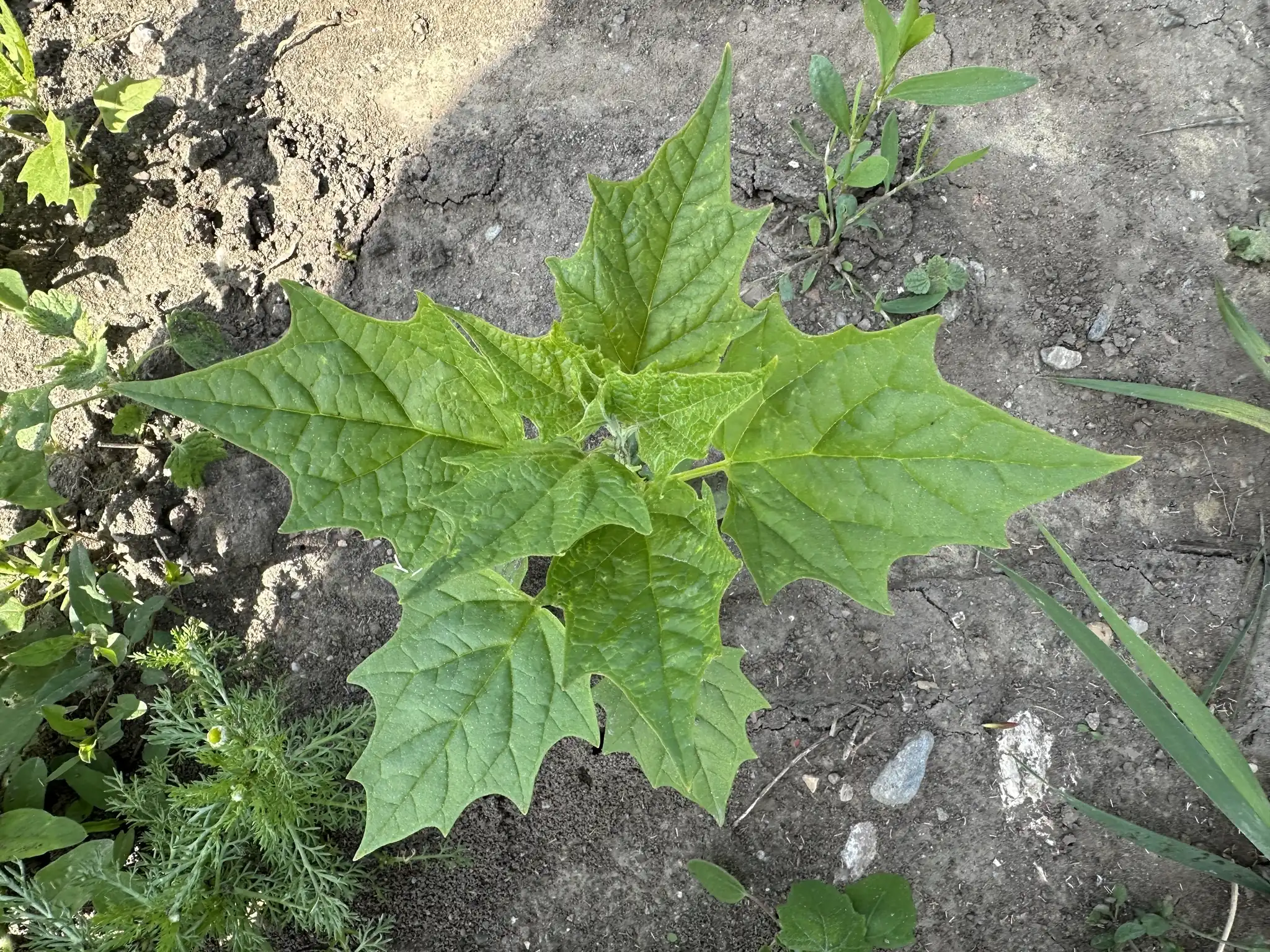
Chenopodiastrum hybridum is an erect, branching annual herb native to Europe and Asia that establishes readily in disturbed soils and waste areas. The plant features distinct angular or striped stems and alternate, triangular to rhombic leaves with coarse, maple-like teeth along the margins.
This species is distinguished by its small, inconspicuous greenish-white flowers arranged in lax, branched clusters that bloom from summer into fall. Unlike its native North American relative Chenopodiastrum simplex, this introduced taxon is primarily found as a naturalized weed in ruderal habitats.
Uses & Benefits:
Essentials
At a Glance
Plant Type
Annual
Height
60"
Width
24"
Light
Full Sun, Partial Sun
Zones
4, 5, 6, 7, 8, 9, 10
Water
Moderate
Humidity
Moderate
Lifespan
Annual
Native To
Eurasia
Toxicity
Toxic to livestock if ingested in large quantities
Bloom period
Summer – Autumn
In flower about 6 months of the year
Planting
How to Grow
- Sow seeds directly onto the soil surface in early spring after the last hard frost.
- Press seeds lightly into the soil, ensuring they remain shallow as they require light to germinate.
- Water moderately until seedlings emerge, then reduce watering to allow the soil to dry between intervals.
- Deadhead spent flower spikes before they turn brown to control self-seeding.
Pro Tip
Deadhead the flower panicles immediately after blooming to prevent the plant from dropping abundant seeds and becoming an aggressive weed in garden beds.
Keep It Thriving
Care Guide
Do
- Deadhead regularly to control aggressive self-seeding.
- Grow in full sun to ensure strong, upright stem development.
- Ensure soil is well-drained to prevent root rot.
Don't
- Do not overwater or allow the soil to become waterlogged.
- Do not apply heavy nitrogen fertilizers, which promote weak, floppy growth.
- Do not plant near pastures where livestock graze, as the foliage contains toxic oxalates.
Seasonal Care Calendar
| Task | Jan | Feb | Mar | Apr | May | Jun | Jul | Aug | Sep | Oct | Nov | Dec |
|---|---|---|---|---|---|---|---|---|---|---|---|---|
| Deadhead | ||||||||||||
| Fertilize | ||||||||||||
| Pest Check | ||||||||||||
| Propagate |
Watch Out For
Pests & Diseases
Common Pests
Common Diseases
In the Garden
Landscape Uses & Companions
Landscape Uses
Companion Plants
Multiply
Propagation Methods
Good to Know
Common Questions
Maple-Leaved Goosefoot questions
What zones can Maple-Leaved Goosefoot grow in?
Maple-Leaved Goosefoot is hardy in USDA Zones 4–10. Inside that range it survives winter in the ground; outside it, grow it as an annual or a container plant you protect.
When does Maple-Leaved Goosefoot bloom?
Maple-Leaved Goosefoot typically blooms in summer through autumn. Exact timing shifts a week or two with your zone — Sow's bloom calendar maps it to your garden.
Does Maple-Leaved Goosefoot need full sun?
Maple-Leaved Goosefoot does best in full sun to part shade. In hot climates, afternoon shade keeps blooms fresher longer.
Is Maple-Leaved Goosefoot drought tolerant?
Yes — once established (usually after the first full season), Maple-Leaved Goosefoot handles dry spells with minimal watering. Water deeply its first year to build the root system that makes that possible.
Keep exploring
Explore the genus
Grow Maple-Leaved Goosefoot with confidence
See it in a design of your actual yard, get zone-matched care reminders, and track it season by season in your garden journal.