The Story
Plant Bio
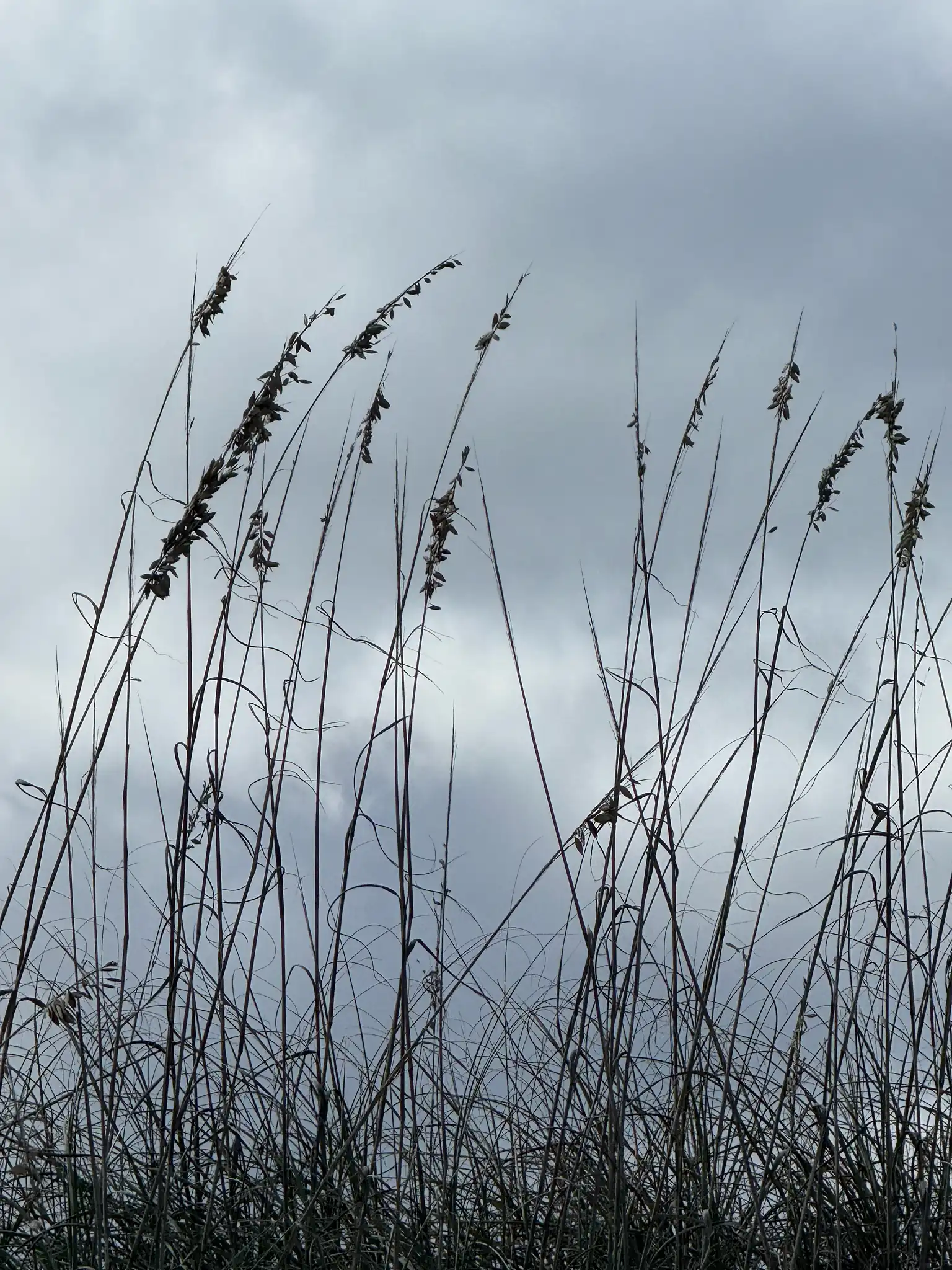
Uniola paniculata is a tall, clump-forming warm-season perennial grass native to the coastal dunes of the southeastern United States and Mexico. It develops an extensive system of deep roots and creeping rhizomes that physically trap wind-blown sand, making it a primary dune-stabilizing species.
The foliage consists of long, narrow, green leaves that taper to fine, abrasive margins. In summer, the plants produce large, drooping panicles of flat, scaly spikelets that mature from greenish-white to a golden straw color.
Uses & Benefits:
Essentials
At a Glance
Plant Type
Grass
Height
80"
Width
48"
Light
Full Sun
Zones
7, 8, 9, 10
Water
Low
Humidity
High
Lifespan
Perennial
Native To
North America
Toxicity
Non-toxic
Bloom period
Summer – Fall
In flower about 6 months of the year
Planting
How to Grow
- Select a planting site with full, unobstructed sun and exceptionally well-draining, sandy soil.
- Dig a hole twice the width of the root ball, ensuring no organic compost or heavy soil amendments are added.
- Position the plant at the same depth as its nursery container and backfill with native sand, pressing firmly to eliminate air pockets.
- Water deeply immediately after planting to settle the sand, then withhold supplemental irrigation once the root system establishes.
Pro Tip
Plant only in pure sand or extremely loose, rapidly draining coastal soil under full sun; planting in standard garden loam or clay holds too much moisture and triggers fatal root rot.
Keep It Thriving
Care Guide
Do
- Grow in pure sand or highly porous, coarse-textured soils.
- Provide full, baking sun to maintain upright structural form.
- Trim back dead foliage in late winter before new spring growth emerges.
Don't
- Do not plant in heavy clay, rich garden loam, or waterlogged areas.
- Do not apply supplemental fertilizers, which can cause weak, floppy growth.
- Do not cut back into old, leafless woody stems.
Seasonal Care Calendar
| Task | Jan | Feb | Mar | Apr | May | Jun | Jul | Aug | Sep | Oct | Nov | Dec |
|---|---|---|---|---|---|---|---|---|---|---|---|---|
| Pest Check | ||||||||||||
| Plant | ||||||||||||
| Prune |
Watch Out For
Pests & Diseases
Common Pests
Common Diseases
In the Garden
Landscape Uses & Companions
Landscape Uses
Companion Plants
Multiply
Propagation Methods
Good to Know
Common Questions
Sea Oats questions
What zones can Sea Oats grow in?
Sea Oats is hardy in USDA Zones 7–10. Inside that range it survives winter in the ground; outside it, grow it as an annual or a container plant you protect.
Is Sea Oats deer resistant?
Not reliably. Deer may browse Sea Oats, especially tender spring growth — plan on repellents or fencing where pressure is high.
When does Sea Oats bloom?
Sea Oats typically blooms in summer through fall. Exact timing shifts a week or two with your zone — Sow's bloom calendar maps it to your garden.
Does Sea Oats need full sun?
Sea Oats does best in full sun (6+ hours).
Is Sea Oats drought tolerant?
Yes — once established (usually after the first full season), Sea Oats handles dry spells with minimal watering. Water deeply its first year to build the root system that makes that possible.
Keep exploring
Explore the genus
Hardy in your zone?
Grow Sea Oats with confidence
See it in a design of your actual yard, get zone-matched care reminders, and track it season by season in your garden journal.