The Story
Plant Bio
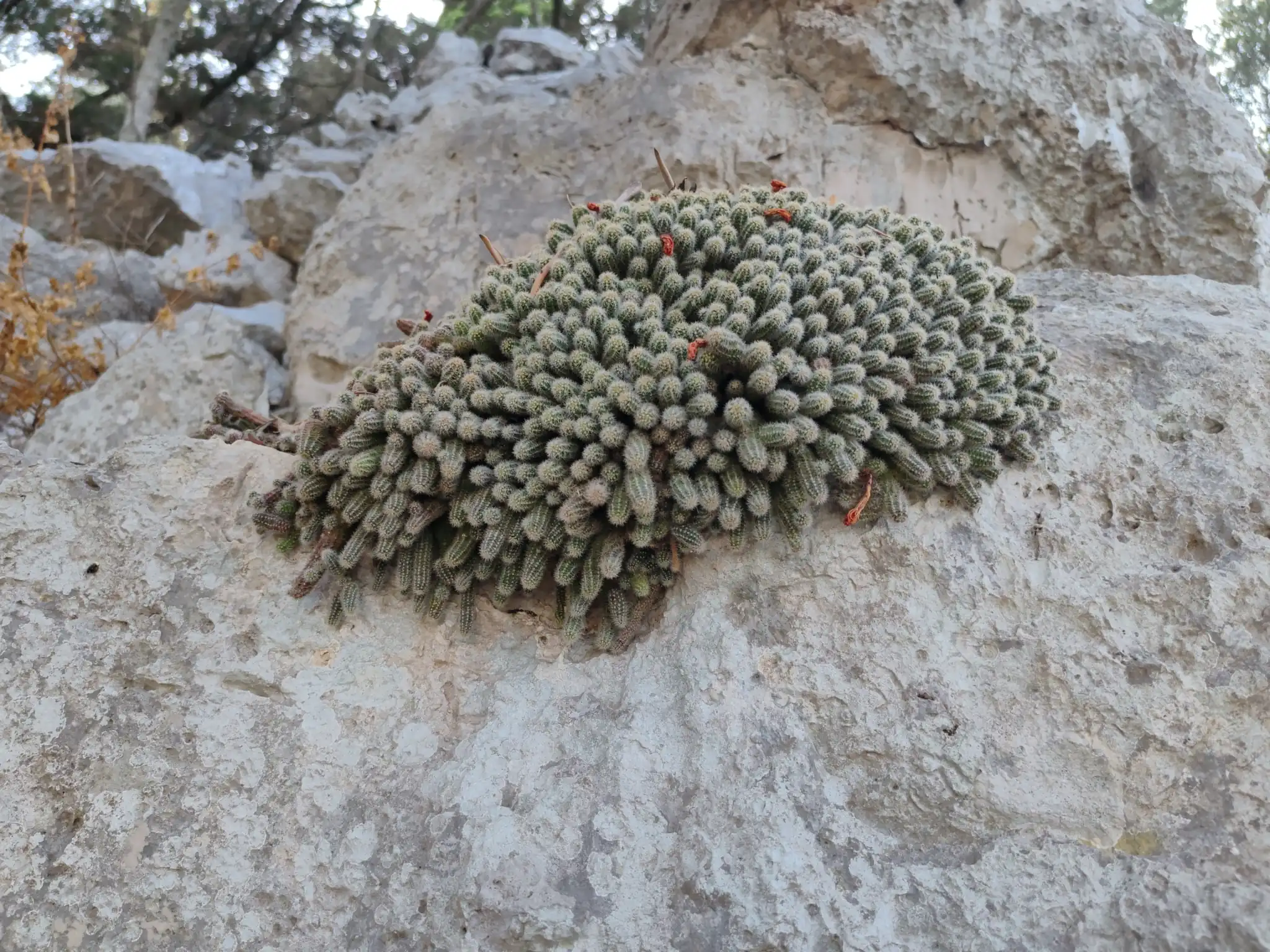
Chamaecereus silvestrii is a low-growing, mat-forming cactus native to northwestern Argentina and Bolivia, characterized by numerous soft, finger-like branching stems. The light green stems feature small white areoles with short, soft, bristle-like spines and can develop a purplish or reddish-bronze tint when exposed to cool temperatures or bright sunlight.
The species is distinguished by its profuse display of bright orange-red, funnel-shaped flowers that measure up to four centimeters in diameter. These blooms open along the stems from late spring to early summer, contrasting sharply with the pale yellow spines.
Uses & Benefits:
Essentials
At a Glance
Plant Type
Cactus Succulent
Height
6"
Width
24"
Light
Full Sun, Partial Sun
Zones
9, 10
Water
Low
Humidity
Low to moderate
Lifespan
Perennial
Native To
Northwestern Argentina and Bolivia
Toxicity
Non-toxic
Bloom period
Late spring – Early summer
In flower about 2 months of the year
Planting
How to Grow
- Plant in a rapidly draining medium consisting of cactus potting mix blended with coarse sand, perlite, or pumice.
- Position in full sun to partial shade, providing light afternoon shade in extremely hot desert climates.
- Water thoroughly only when the growing medium has dried out completely during the spring and summer active growth phases.
- Withhold all water entirely during the winter months to allow the plant to enter a necessary cold-hardy dormancy.
Pro Tip
Provide a cool, completely dry winter rest period to trigger flower bud initiation; watering on a regular calendar schedule during winter dormancy prevents blooming and induces fatal root rot.
Keep It Thriving
Care Guide
Do
- Allow the soil to dry out completely between waterings.
- Provide bright sunlight to maintain tight, compact stem growth and encourage flowering.
- Keep the plant completely dry during winter dormancy to tolerate temperatures down to 19°F.
- Use containers with ample drainage holes to prevent standing water.
Don't
- Do not water on a fixed calendar schedule, especially during the winter months.
- Do not prune into old, thick, woody bases unless rescuing a diseased plant.
- Do not expose the plant to high humidity without adequate airflow.
- Do not use heavy, clay-based garden soils that retain moisture.
Seasonal Care Calendar
| Task | Jan | Feb | Mar | Apr | May | Jun | Jul | Aug | Sep | Oct | Nov | Dec |
|---|---|---|---|---|---|---|---|---|---|---|---|---|
| Fertilize | ||||||||||||
| Propagate | ||||||||||||
| Spring Cleanup | ||||||||||||
| Winter Prep |
Watch Out For
Pests & Diseases
Common Pests
Common Diseases
In the Garden
Landscape Uses & Companions
Landscape Uses
Companion Plants
Multiply
Propagation Methods
Good to Know
Common Questions
Peanut Cactus questions
What zones can Peanut Cactus grow in?
Peanut Cactus is hardy in USDA Zones 9–10. Inside that range it survives winter in the ground; outside it, grow it as an annual or a container plant you protect.
When does Peanut Cactus bloom?
Peanut Cactus typically blooms in late spring through early summer. Exact timing shifts a week or two with your zone — Sow's bloom calendar maps it to your garden.
Does Peanut Cactus need full sun?
Peanut Cactus does best in full sun to part shade. In hot climates, afternoon shade keeps blooms fresher longer.
Is Peanut Cactus drought tolerant?
Yes — once established (usually after the first full season), Peanut Cactus handles dry spells with minimal watering. Water deeply its first year to build the root system that makes that possible.
Keep exploring
Explore the genus
Hardy in your zone?
Grow Peanut Cactus with confidence
See it in a design of your actual yard, get zone-matched care reminders, and track it season by season in your garden journal.