The Story
Plant Bio
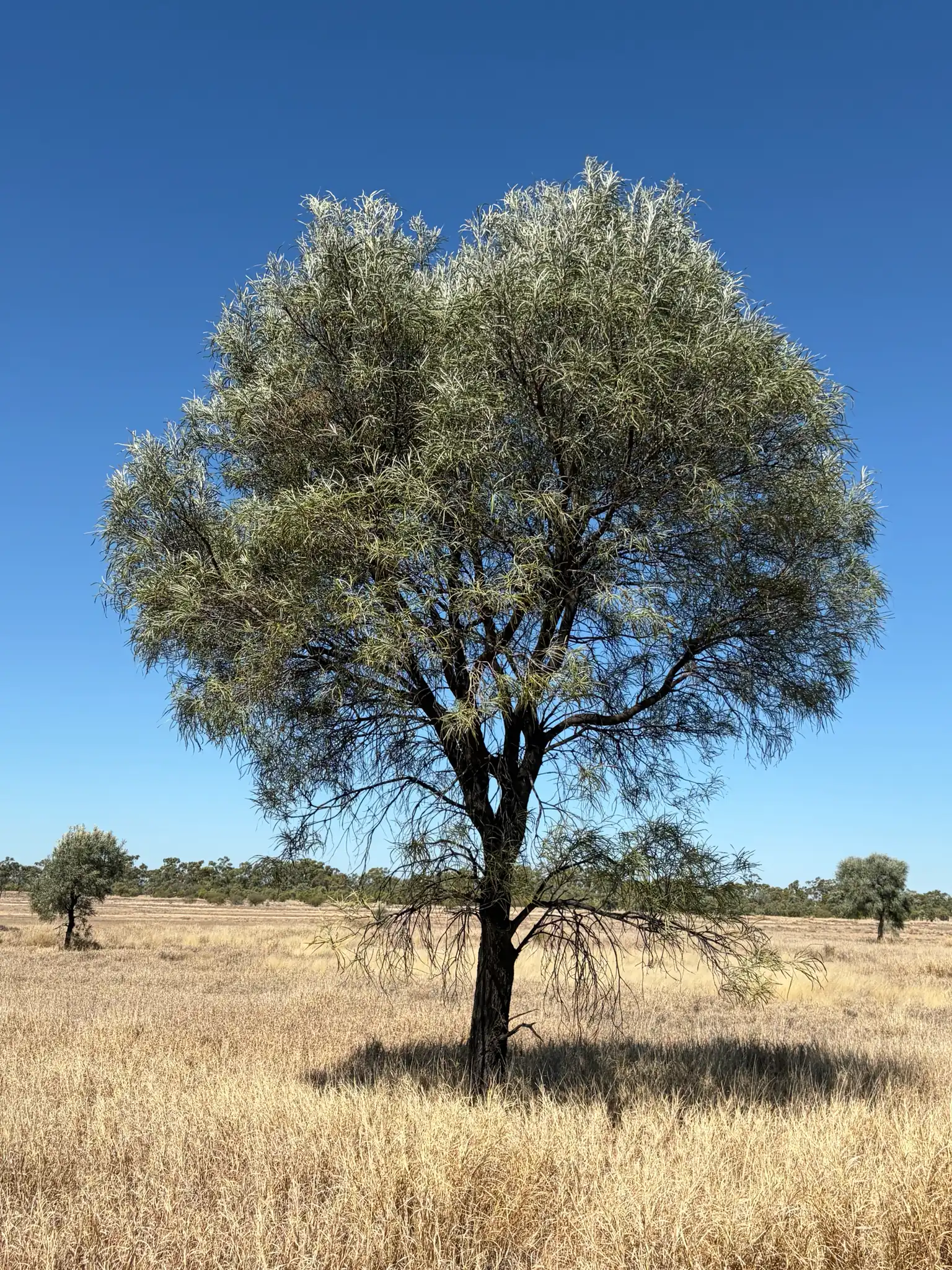
Grevillea striata, commonly known as beefwood, is an evergreen Australian tree or robust shrub reaching thirty feet in cultivation, distinguished by its dark, deeply fissured, corky bark and open crown. The long, strap-like leaves feature prominent longitudinal striations on their silky-haired undersides and remain attractive year-round.
During winter, spring, and summer, the branches bear cylindrical clusters of cream-colored flowers arranged in branching panicles. These nectar-rich blooms attract insect pollinators and hummingbirds in North American landscapes despite the plant's arid Australian origins.
Uses & Benefits:
Essentials
At a Glance
Plant Type
Tree
Height
360"
Width
120"
Light
Full Sun
Zones
9, 10
Water
Low
Humidity
Low to Moderate
Lifespan
Long-lived
Native To
Australia
Toxicity
Non-toxic
Bloom period
Winter – Summer
In flower about 9 months of the year
Planting
How to Grow
- Select a planting site in full sun with exceptionally well-drained soil, such as gravelly loam or deep sand.
- Dig a hole twice as wide as the root ball but no deeper, ensuring the crown sits slightly above the surrounding soil level.
- Water deeply immediately after planting to settle the soil, then restrict irrigation to periods of prolonged dry weather.
- Avoid applying any standard garden fertilizers; use only specialized low-phosphorus native plant formulas if necessary.
Pro Tip
Avoid pruning back into the old, heavily fissured wood, as the plant lacks the capacity to regenerate shoots from mature bark.
Keep It Thriving
Care Guide
Do
- Plant in a highly elevated bed or sloped area to guarantee rapid drainage.
- Protect young specimens from frost using burlap or frost cloth during their first few winters.
- Prune lightly immediately after the summer flowering period to maintain a tidy shape.
Don't
- Do not use standard general-purpose fertilizers, as high phosphorus levels are toxic to the root system.
- Do not overwater or allow water to pool around the root zone, which triggers fatal root rot.
- Do not cut back severely into old, leafless, corky wood.
Seasonal Care Calendar
| Task | Jan | Feb | Mar | Apr | May | Jun | Jul | Aug | Sep | Oct | Nov | Dec |
|---|---|---|---|---|---|---|---|---|---|---|---|---|
| Fertilize | ||||||||||||
| Pest Check | ||||||||||||
| Prune | ||||||||||||
| Winter Prep |
Watch Out For
Pests & Diseases
Common Pests
Common Diseases
In the Garden
Landscape Uses & Companions
Landscape Uses
Companion Plants
Multiply
Propagation Methods
Good to Know
Common Questions
Beefwood questions
What zones can Beefwood grow in?
Beefwood is hardy in USDA Zones 9–10. Inside that range it survives winter in the ground; outside it, grow it as an annual or a container plant you protect.
Is Beefwood deer resistant?
Not reliably. Deer may browse Beefwood, especially tender spring growth — plan on repellents or fencing where pressure is high.
When does Beefwood bloom?
Beefwood typically blooms in winter through summer. Exact timing shifts a week or two with your zone — Sow's bloom calendar maps it to your garden.
Does Beefwood need full sun?
Beefwood does best in full sun (6+ hours).
Is Beefwood drought tolerant?
Yes — once established (usually after the first full season), Beefwood handles dry spells with minimal watering. Water deeply its first year to build the root system that makes that possible.
More Grevillea to compare
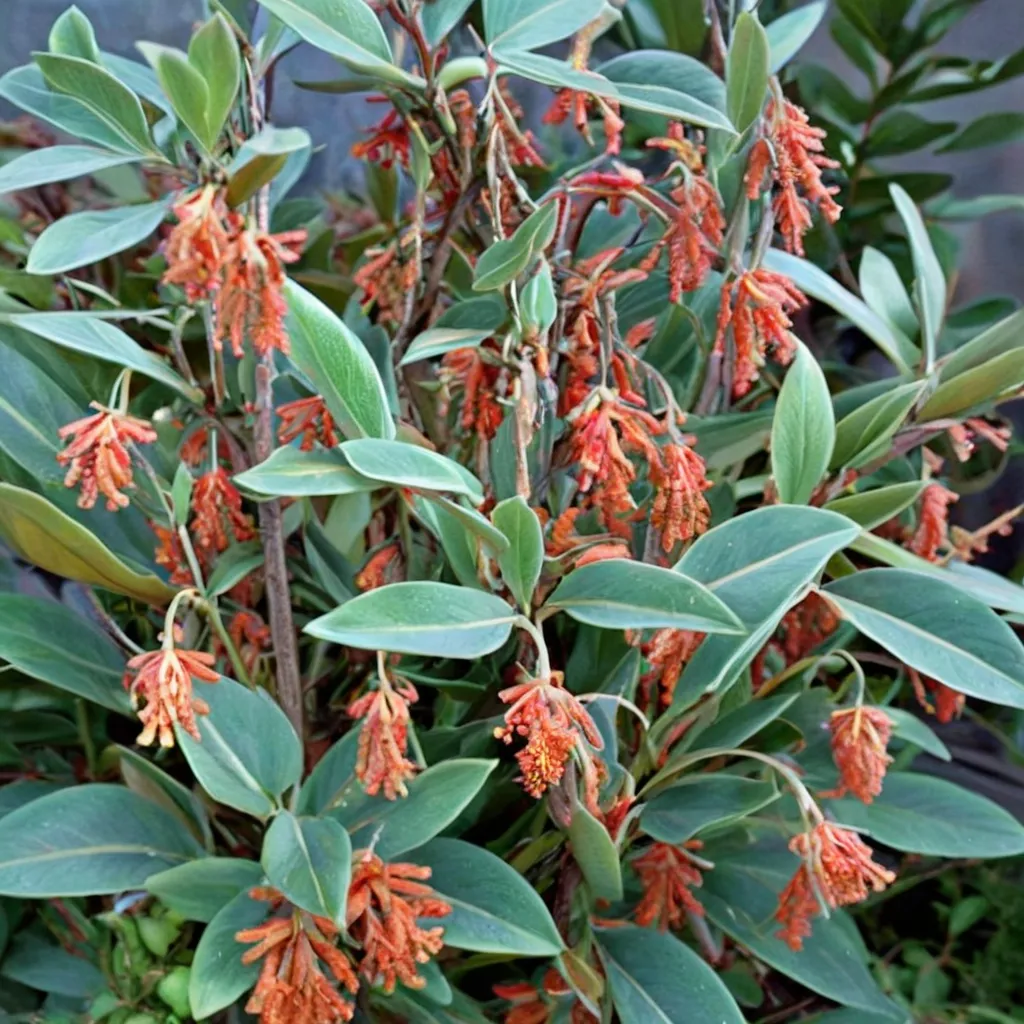
Murray Queen Grevillea
Grevillea victoriae 'Murray Queen'
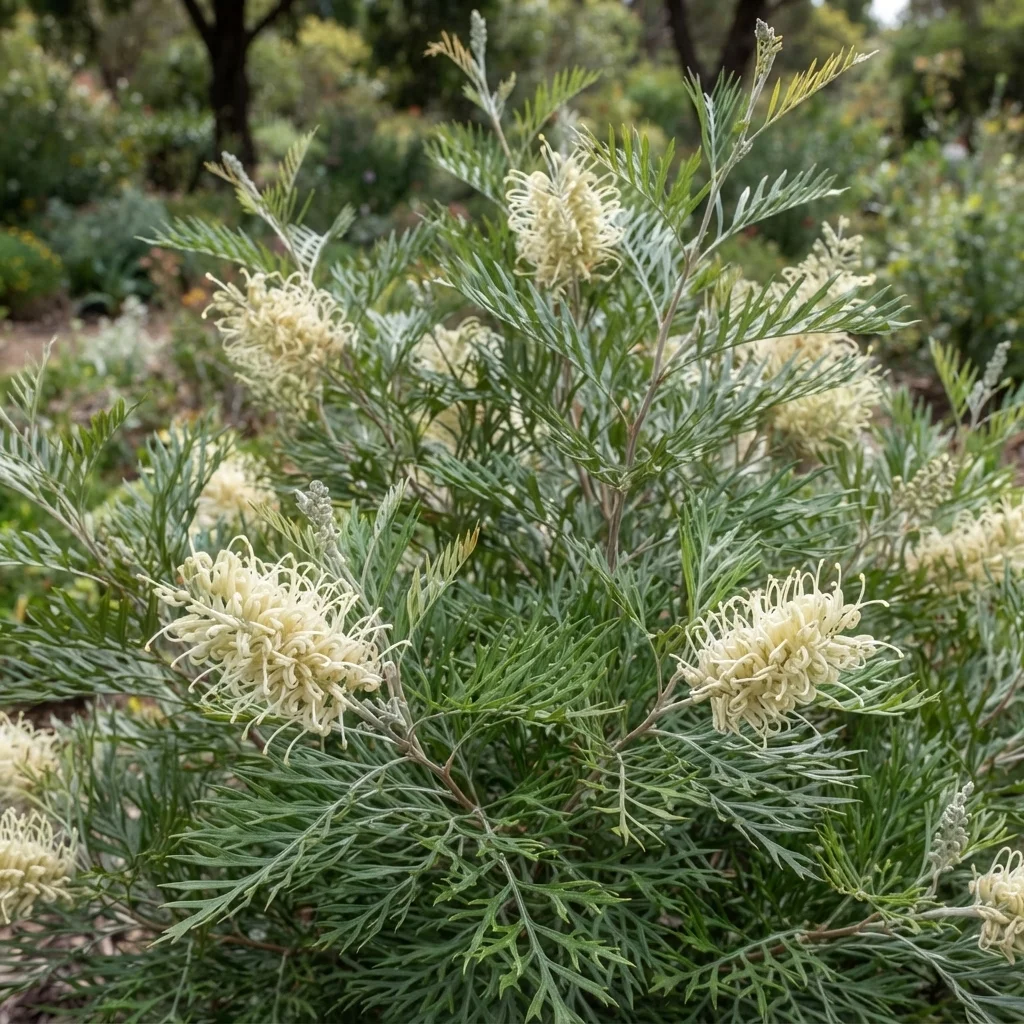
Moonlight Grevillea
Grevillea x hybrida 'Moonlight'
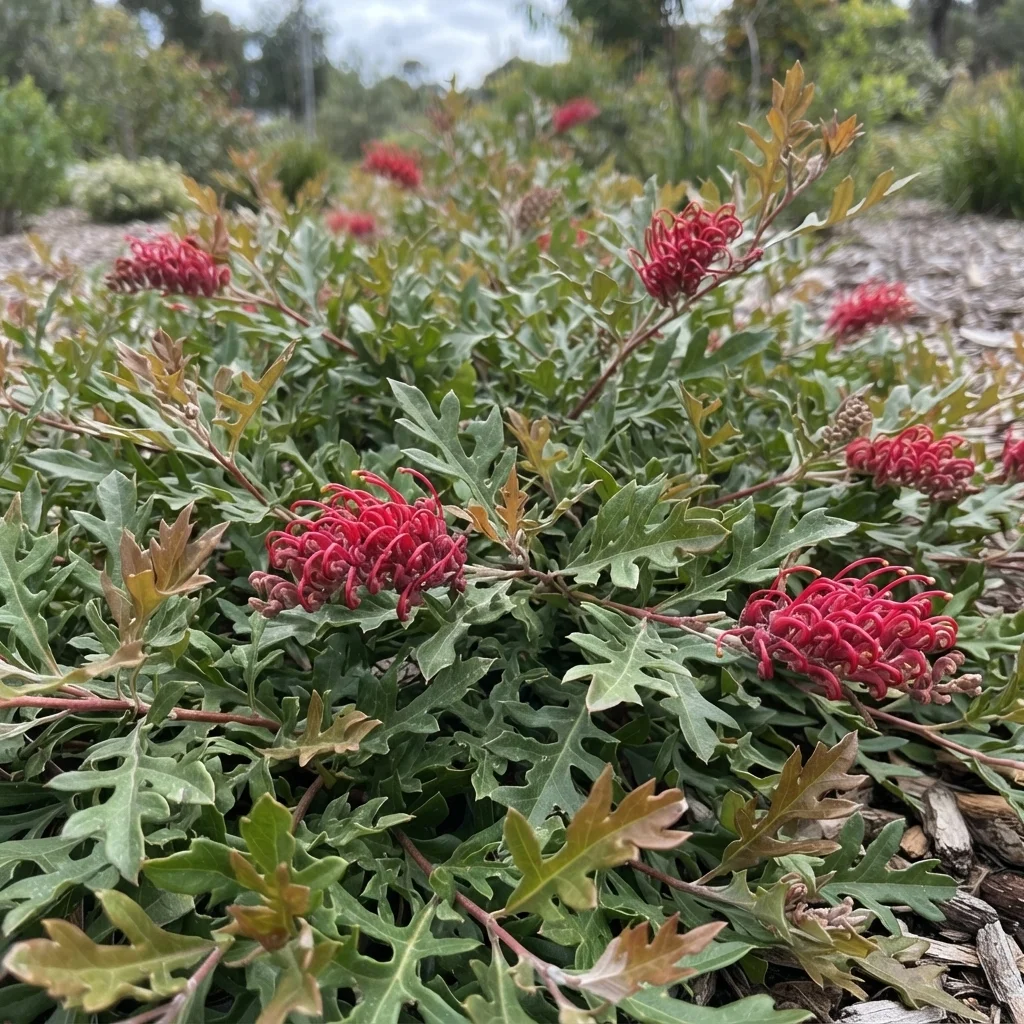
Prostrate Grevillea
Grevillea × gaudichaudii 'Gaudi Chaudi'
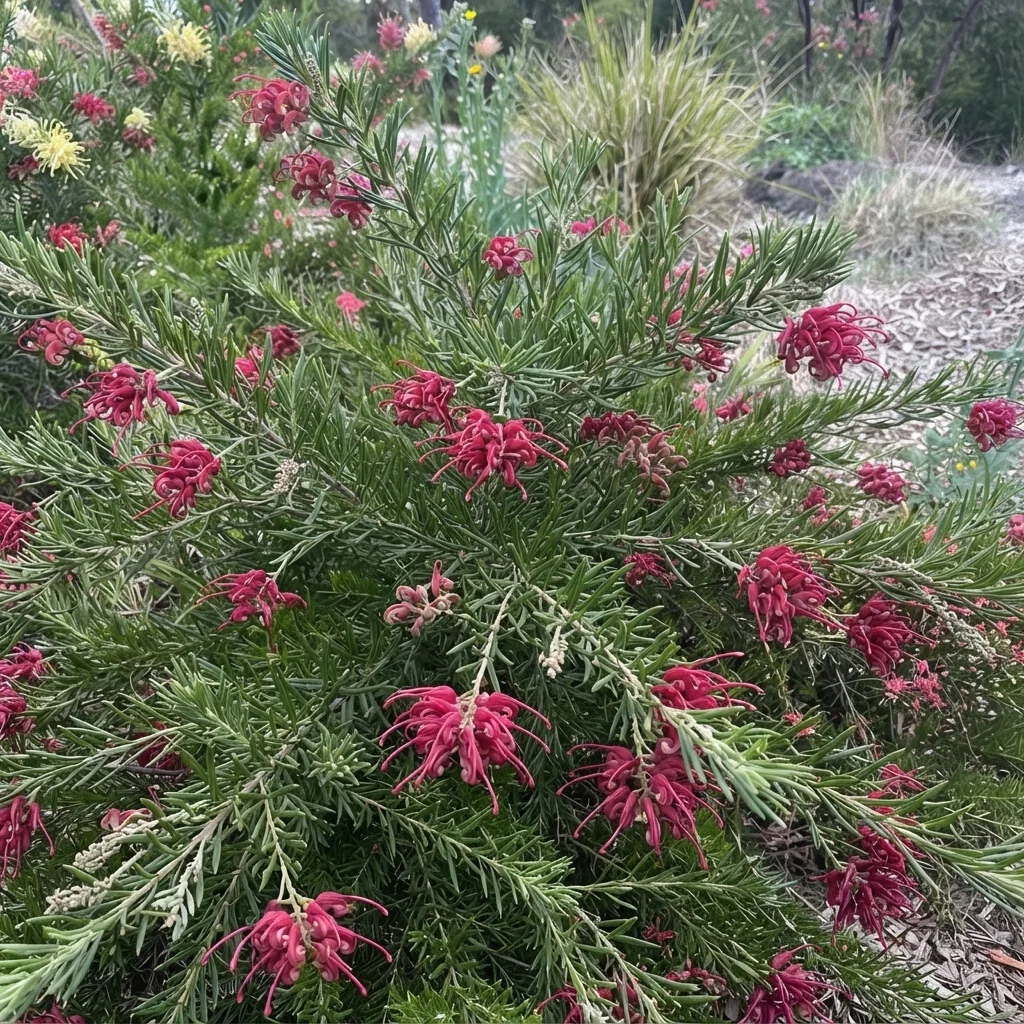
Rosemary Grevillea
Grevillea rosmarinifolia
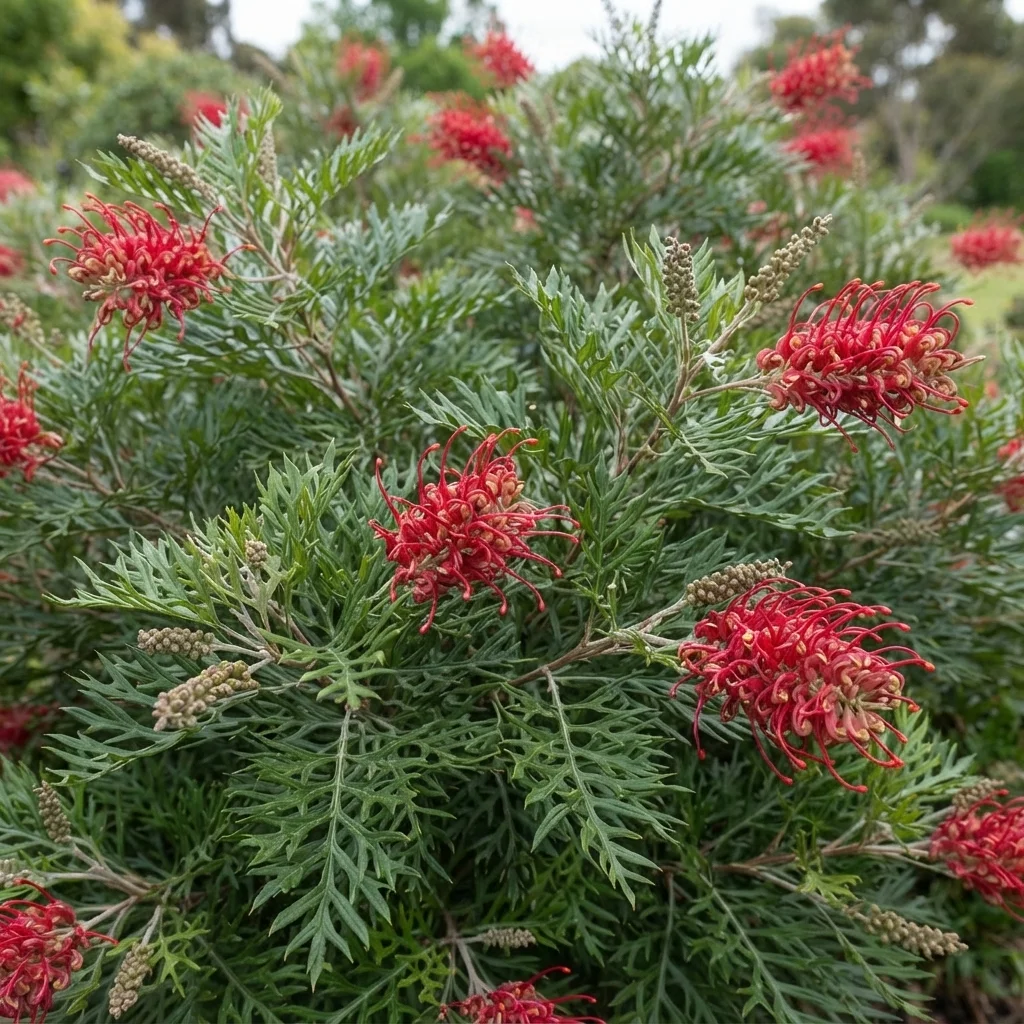
Robyn Gordon Grevillea
Grevillea x hybrida 'Robyn Gordon'
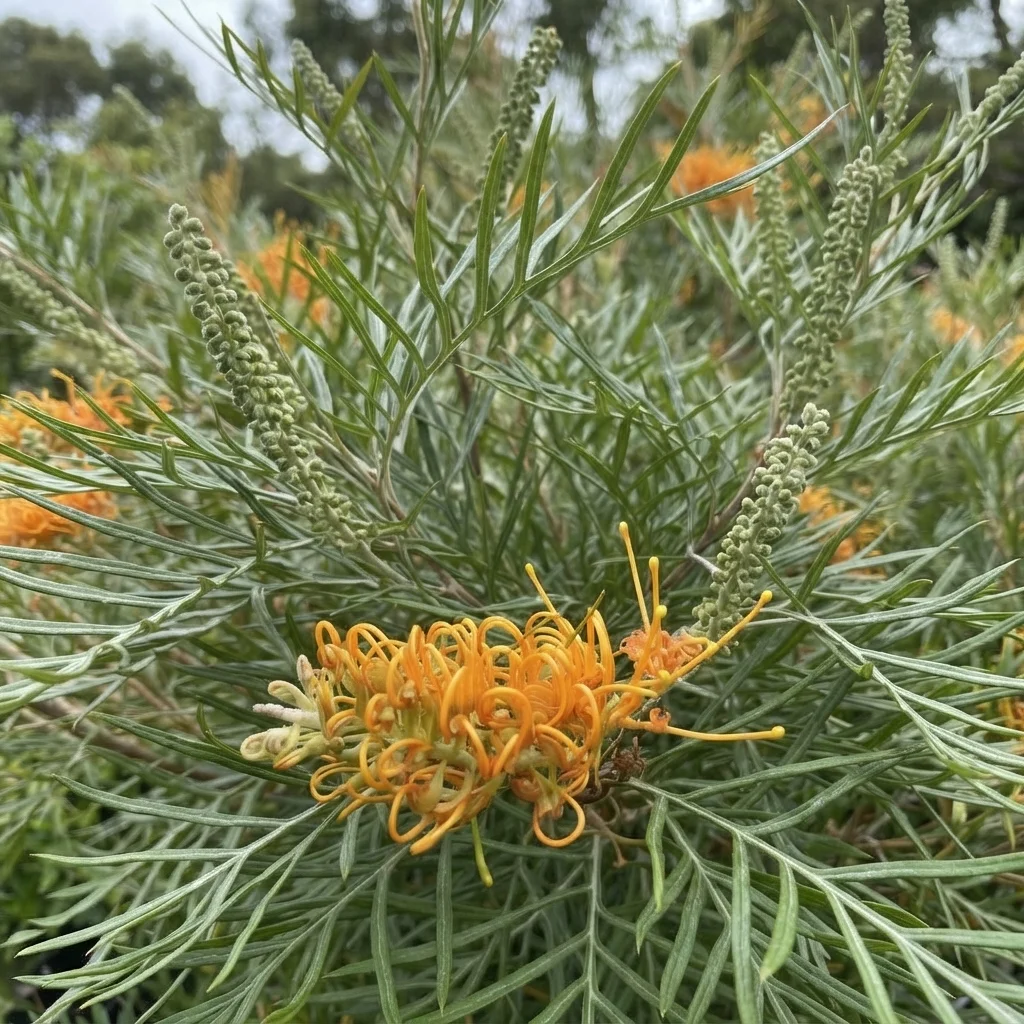
Honey Gem Grevillea
Grevillea x hybrida 'Honey Gem'
Keep exploring
Explore the genus
Hardy in your zone?
Grow Beefwood with confidence
See it in a design of your actual yard, get zone-matched care reminders, and track it season by season in your garden journal.