The Story
Plant Bio
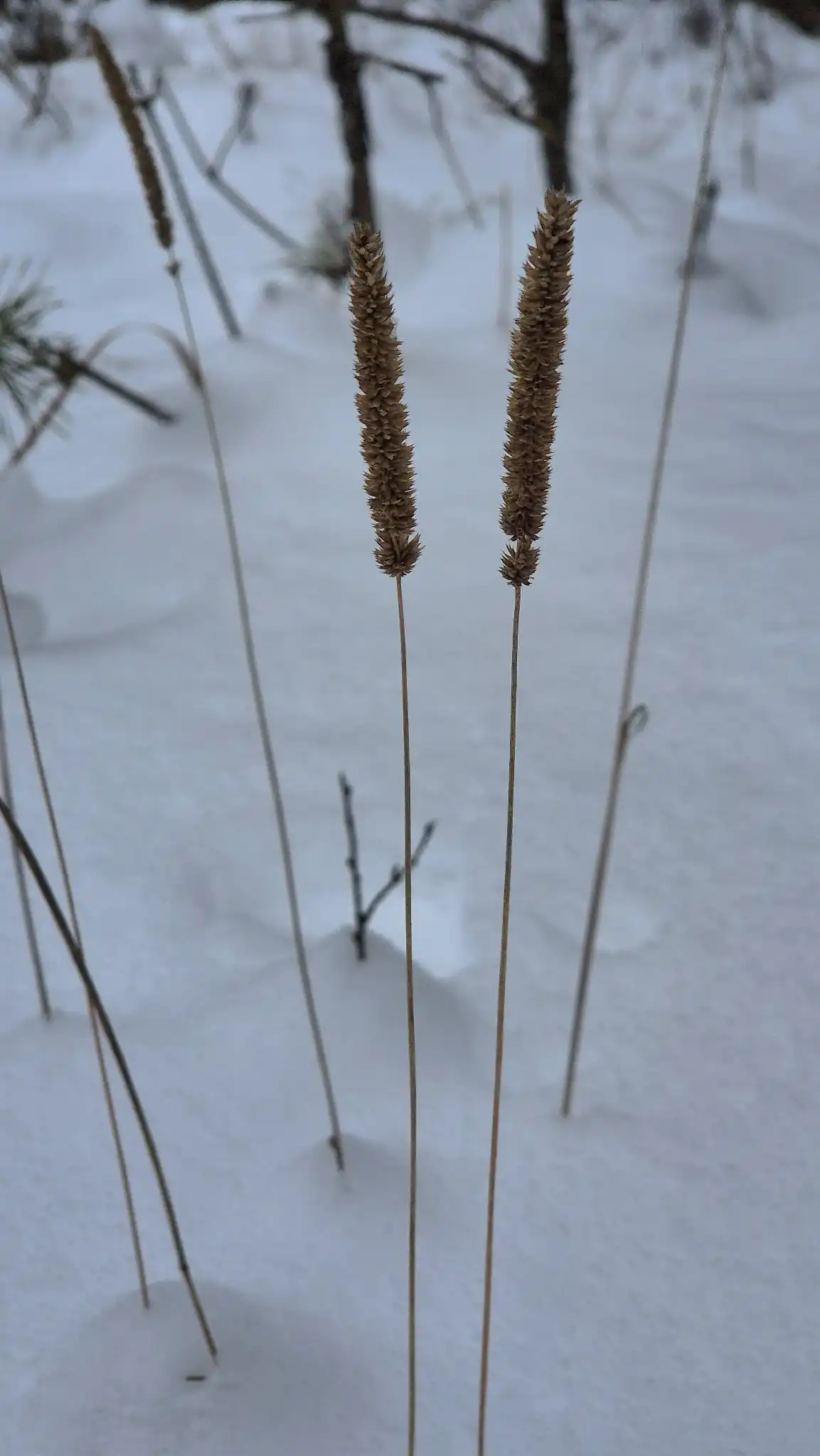
Phleum pratense, commonly known as Timothy grass, is a hardy perennial bunchgrass native to Europe and Asia that forms dense, upright tufts of hairless green foliage. In summer, it produces distinctive, tightly packed cylindrical flower spikes that resemble a cat's tail, maturing from green to a soft purplish hue.
This species is highly valued for its cold hardiness and adaptability to heavy, moist clay soils where other grasses struggle. It spreads slowly via short rhizomes and corms, making it an effective choice for soil stabilization and naturalized meadows.
Uses & Benefits:
Essentials
At a Glance
Plant Type
Grass
Height
60"
Width
39"
Light
Full Sun
Zones
4, 5, 6, 7, 8, 9
Water
Medium
Humidity
Moderate
Lifespan
Perennial
Native To
Europe and Asia
Toxicity
Non-toxic
Bloom period
Summer – Fall
In flower about 6 months of the year
Planting
How to Grow
- Sow seeds directly into prepared, moist soil in early spring or early fall when temperatures are cool.
- Select a site in full sun with heavy, fertile loam or clay that retains moisture but drains reasonably well.
- Water regularly during the first growing season to establish a deep, resilient root system.
- Cut back the dead foliage to just above the crown in late winter to clear the way for fresh spring growth.
Pro Tip
Avoid scalping the plant below the crown when cutting back old foliage, as this severely weakens the root system and slows spring recovery.
Keep It Thriving
Care Guide
Do
- Grow in full sun to maintain an upright, sturdy habit.
- Keep the soil consistently moist, especially during dry summer spells.
- Mow or cut back after flowering if you wish to prevent self-seeding in surrounding beds.
Don't
- Do not plant this grass near areas where severe hay fever sufferers spend time, as it produces highly allergenic wind-borne pollen.
- Do not allow the soil to become completely waterlogged for extended periods.
- Do not apply heavy fertilizers to garden specimens, as they perform best with minimal supplemental feeding.
Seasonal Care Calendar
| Task | Jan | Feb | Mar | Apr | May | Jun | Jul | Aug | Sep | Oct | Nov | Dec |
|---|---|---|---|---|---|---|---|---|---|---|---|---|
| Deadhead | ||||||||||||
| Pest Check | ||||||||||||
| Propagate | ||||||||||||
| Prune |
Watch Out For
Pests & Diseases
Common Pests
In the Garden
Landscape Uses & Companions
Landscape Uses
Companion Plants
Multiply
Propagation Methods
Good to Know
Common Questions
Timothy Grass questions
What zones can Timothy Grass grow in?
Timothy Grass is hardy in USDA Zones 4–9. Inside that range it survives winter in the ground; outside it, grow it as an annual or a container plant you protect.
Is Timothy Grass deer resistant?
Not reliably. Deer may browse Timothy Grass, especially tender spring growth — plan on repellents or fencing where pressure is high.
When does Timothy Grass bloom?
Timothy Grass typically blooms in summer through fall. Exact timing shifts a week or two with your zone — Sow's bloom calendar maps it to your garden.
Does Timothy Grass need full sun?
Timothy Grass does best in full sun (6+ hours).
Keep exploring
Explore the genus
Grow Timothy Grass with confidence
See it in a design of your actual yard, get zone-matched care reminders, and track it season by season in your garden journal.