The Story
Plant Bio
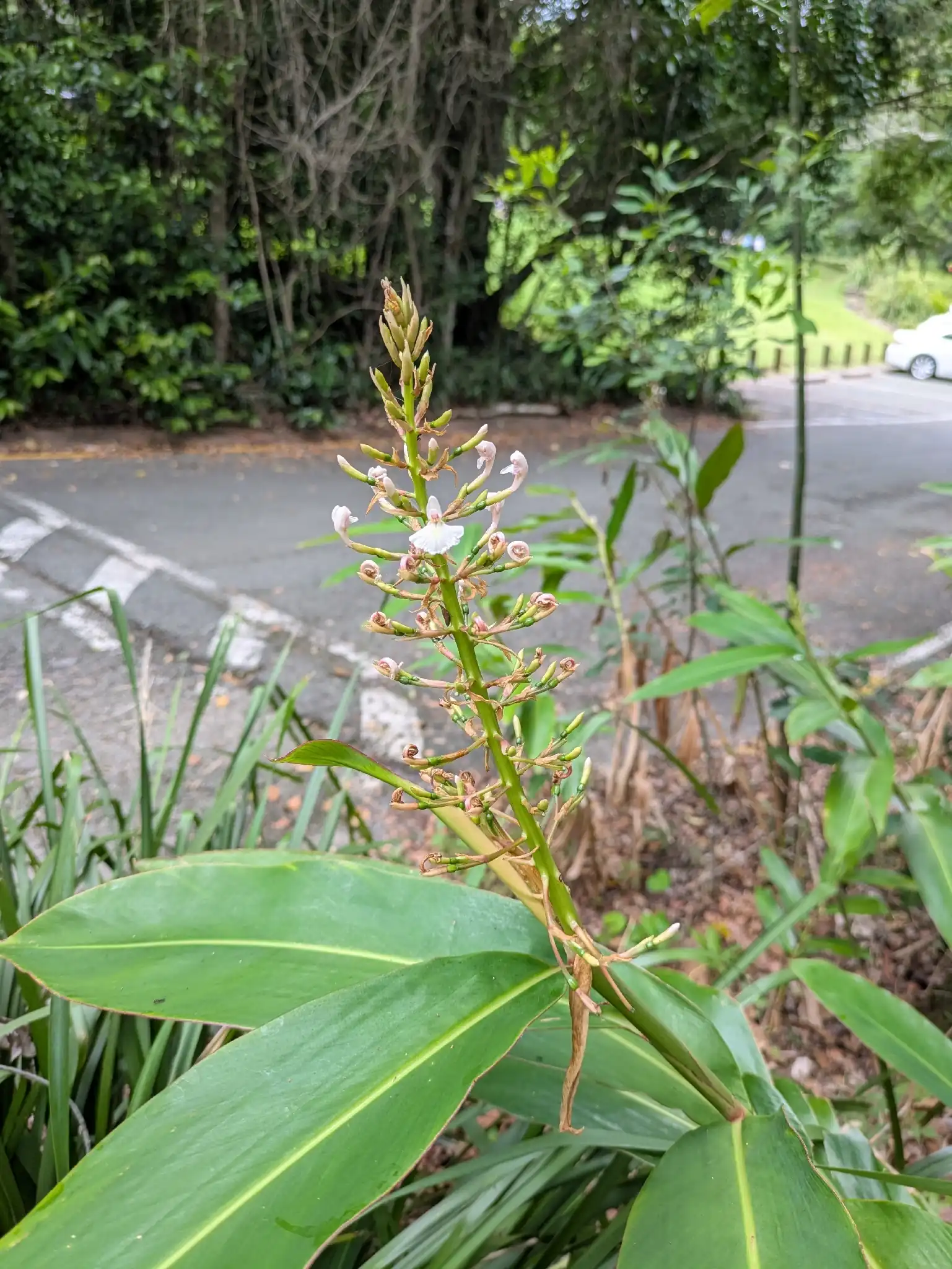
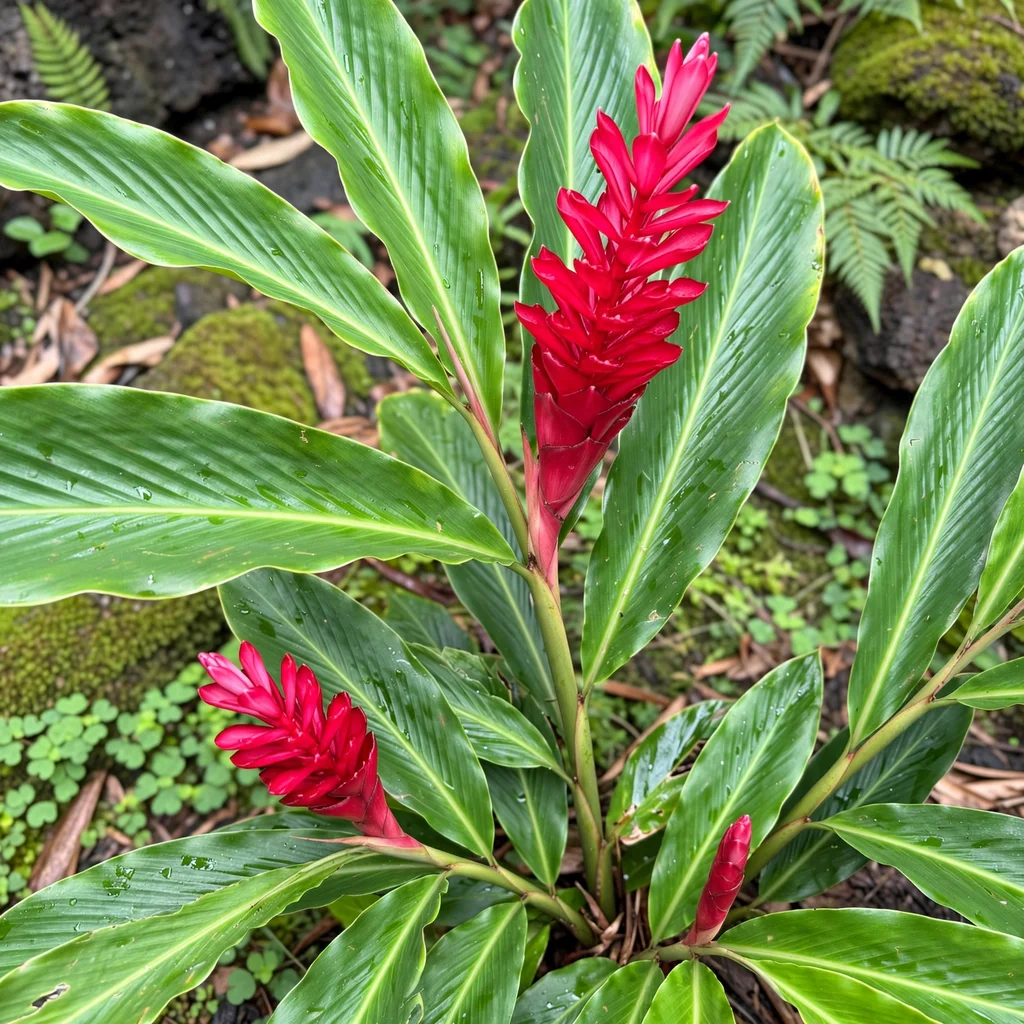
Alpinia caerulea, commonly known as native ginger, is an upright, clumping perennial herb native to moist understory environments. It produces large, glossy green lanceolate leaves on arching pseudostems that grow from underground rhizomes.
This species is distinguished by its terminal spikes of small white flowers that develop into bright blue, spherical berries. Certain northern forms exhibit a striking, contrasting dark red or maroon underside on the foliage.
Uses & Benefits:
Essentials
At a Glance
Plant Type
Perennial
Height
120"
Width
40"
Light
Partial Sun, Shade
Zones
9, 10
Water
Regular
Humidity
High
Lifespan
Perennial
Native To
Australia
Toxicity
Non-toxic
Bloom period
Spring – Summer
In flower about 6 months of the year
Planting
How to Grow
- Select a sheltered site with partial to full shade and moist, organic-rich, well-drained soil.
- Plant rhizomes or container stock at the same depth as they were in the pot, ensuring the crown is not buried too deeply.
- Water regularly to keep the soil consistently moist, especially during warm dry spells, but avoid waterlogged conditions.
- Apply a thick layer of organic mulch around the base of the plant, keeping it clear of the stems to prevent rot.
Pro Tip
Selectively cut two-year-old spent flowering canes down to ground level in spring to prevent the clump from becoming congested and untidy.
Keep It Thriving
Care Guide
Do
- Keep the soil evenly moist during the active growing season.
- Protect the plant from strong, dry winds and harsh afternoon sun.
- Cut back frost-damaged foliage to ground level in spring to allow new shoots to emerge.
Don't
- Do not allow the soil to dry out completely for extended periods.
- Do not let the plant sit in stagnant, poorly drained water.
- Do not pile heavy mulch directly against the pseudostems.
Seasonal Care Calendar
| Task | Jan | Feb | Mar | Apr | May | Jun | Jul | Aug | Sep | Oct | Nov | Dec |
|---|---|---|---|---|---|---|---|---|---|---|---|---|
| Divide | ||||||||||||
| Fertilize | ||||||||||||
| Mulch | ||||||||||||
| Prune | ||||||||||||
| Spring Cleanup |
Watch Out For
Pests & Diseases
Common Pests
Common Diseases
In the Garden
Landscape Uses & Companions
Landscape Uses
Companion Plants
Multiply
Propagation Methods
Good to Know
Common Questions
Native Ginger questions
What zones can Native Ginger grow in?
Native Ginger is hardy in USDA Zones 9–10. Inside that range it survives winter in the ground; outside it, grow it as an annual or a container plant you protect.
When does Native Ginger bloom?
Native Ginger typically blooms in spring through summer. Exact timing shifts a week or two with your zone — Sow's bloom calendar maps it to your garden.
Does Native Ginger need full sun?
Native Ginger does best in part shade.
More Alpinia to compare
Keep exploring
Explore the genus
Hardy in your zone?
Grow Native Ginger with confidence
See it in a design of your actual yard, get zone-matched care reminders, and track it season by season in your garden journal.