The Story
Plant Bio
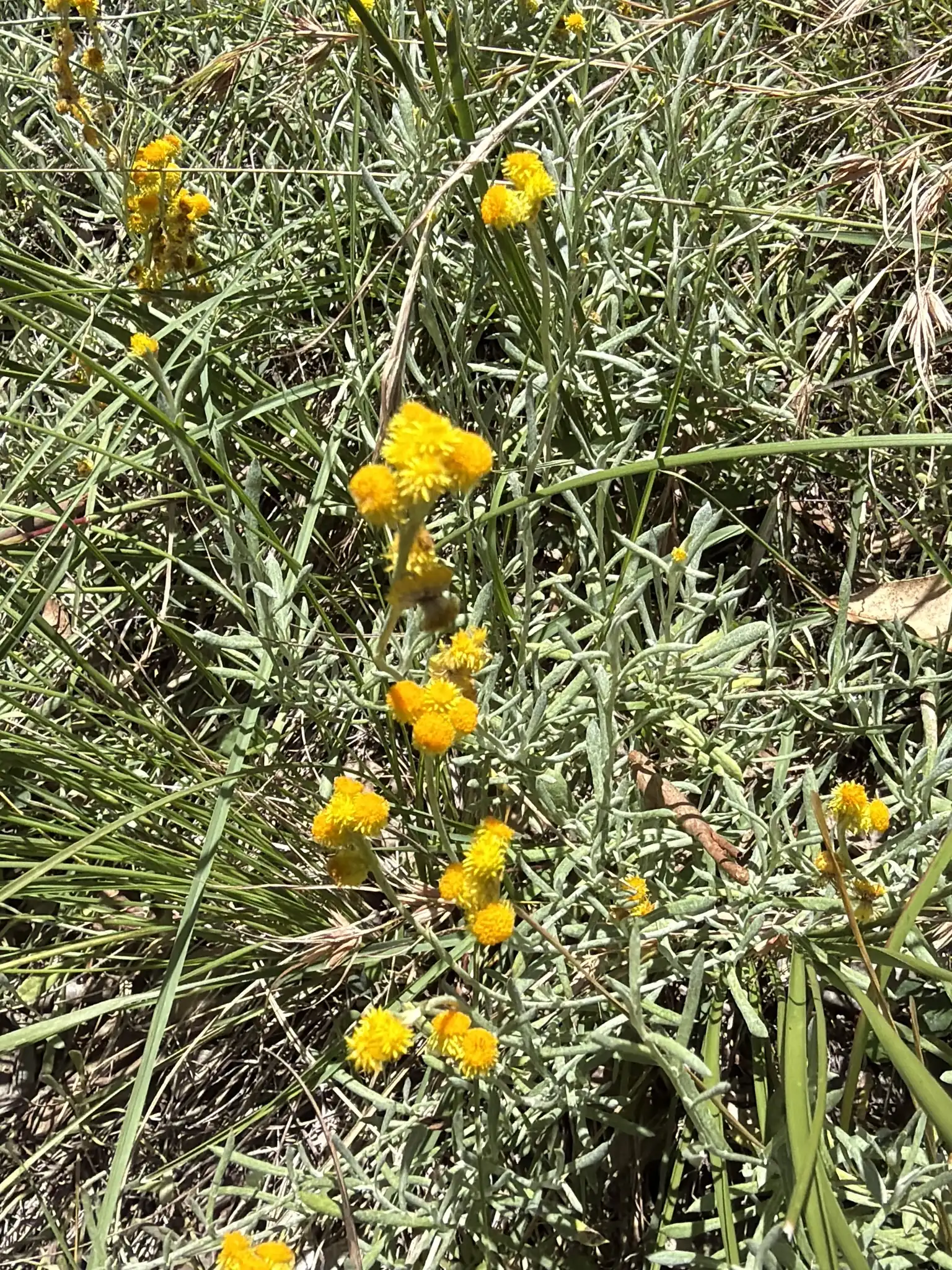
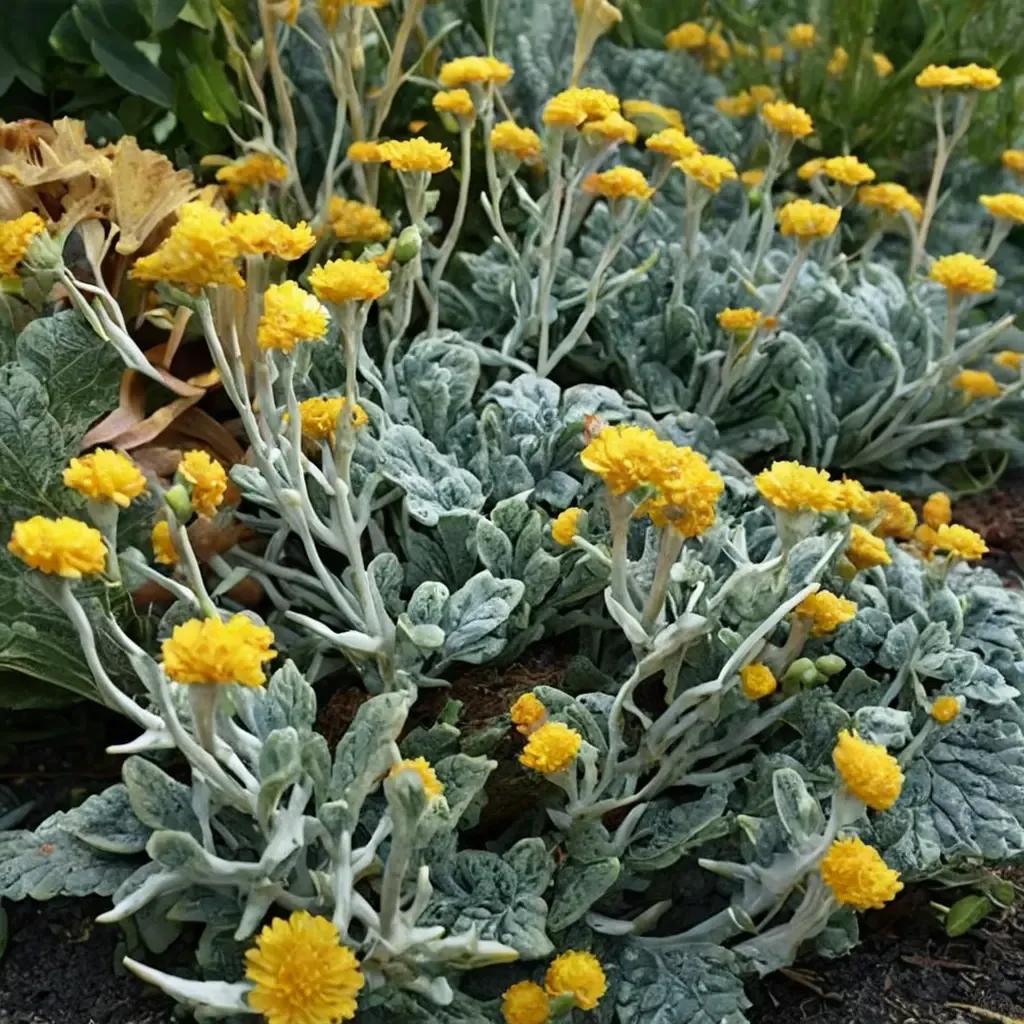
Chrysocephalum apiculatum is a low-growing, spreading perennial herb native to Australia that forms dense mats of silver-gray to green foliage. The plant produces small, bright golden-yellow, button-like flower heads on terminal stems from spring through fall.
This species is highly variable, with regional forms ranging from prostrate, woolly-leafed carpets to more upright, green-foliaged subshrubs. The aromatic leaves emit a distinct scent when crushed and help deter mammalian herbivores.
Uses & Benefits:
Essentials
At a Glance
Plant Type
Groundcover
Height
12"
Width
60"
Light
Full Sun, Partial Sun
Zones
8, 9, 10
Water
Low
Humidity
Moderate
Lifespan
Perennial
Native To
Australia
Toxicity
Non-toxic
Planting
How to Grow
- Select a site in full sun to very light partial shade with highly permeable, sandy or rocky soil.
- Dig a hole twice the width of the root ball and plant at the same depth as the nursery container.
- Water moderately to establish the root system, then reduce irrigation to a minimum once new growth appears.
- Apply a light layer of gravel mulch around the base to keep foliage off wet soil and improve air circulation.
Pro Tip
Plant in coarse, fast-draining soil and avoid overhead watering to prevent root rot and powdery mildew. Pruning the stems back by one-third after a heavy flowering flush maintains a dense habit, but do not cut into old, leafless woody stems.
Keep It Thriving
Care Guide
Do
- Grow in raised beds or rock gardens if your native soil is heavy clay.
- Prune lightly after major flowering flushes to stimulate fresh, compact growth.
- Allow the soil to dry out completely between watering sessions.
Don't
- Do not overwater or plant in low-lying areas where water pools.
- Do not cut back hard into old, bare, woody stems as they lack dormant buds to resprout.
- Do not apply heavy, high-phosphorus fertilizers.
Seasonal Care Calendar
| Task | Jan | Feb | Mar | Apr | May | Jun | Jul | Aug | Sep | Oct | Nov | Dec |
|---|---|---|---|---|---|---|---|---|---|---|---|---|
| Fertilize | ||||||||||||
| Pest Check | ||||||||||||
| Propagate | ||||||||||||
| Prune |
Watch Out For
Pests & Diseases
Common Pests
Common Diseases
In the Garden
Landscape Uses & Companions
Landscape Uses
Companion Plants
Multiply
Propagation Methods
Good to Know
Common Questions
Yellow Buttons questions
What zones can Yellow Buttons grow in?
Yellow Buttons is hardy in USDA Zones 8–10. Inside that range it survives winter in the ground; outside it, grow it as an annual or a container plant you protect.
Is Yellow Buttons deer resistant?
Yes — Yellow Buttons is rated deer-resistant. Deer typically pass it over, though extreme hunger can override any plant's defenses.
When does Yellow Buttons bloom?
Yellow Buttons typically blooms in spring through fall. Exact timing shifts a week or two with your zone — Sow's bloom calendar maps it to your garden.
Does Yellow Buttons need full sun?
Yellow Buttons does best in full sun to part shade. In hot climates, afternoon shade keeps blooms fresher longer.
Is Yellow Buttons drought tolerant?
Yes — once established (usually after the first full season), Yellow Buttons handles dry spells with minimal watering. Water deeply its first year to build the root system that makes that possible.
More Chrysocephalum to compare
Keep exploring
Explore the genus
Hardy in your zone?
Grow Yellow Buttons with confidence
See it in a design of your actual yard, get zone-matched care reminders, and track it season by season in your garden journal.