The Story
Plant Bio
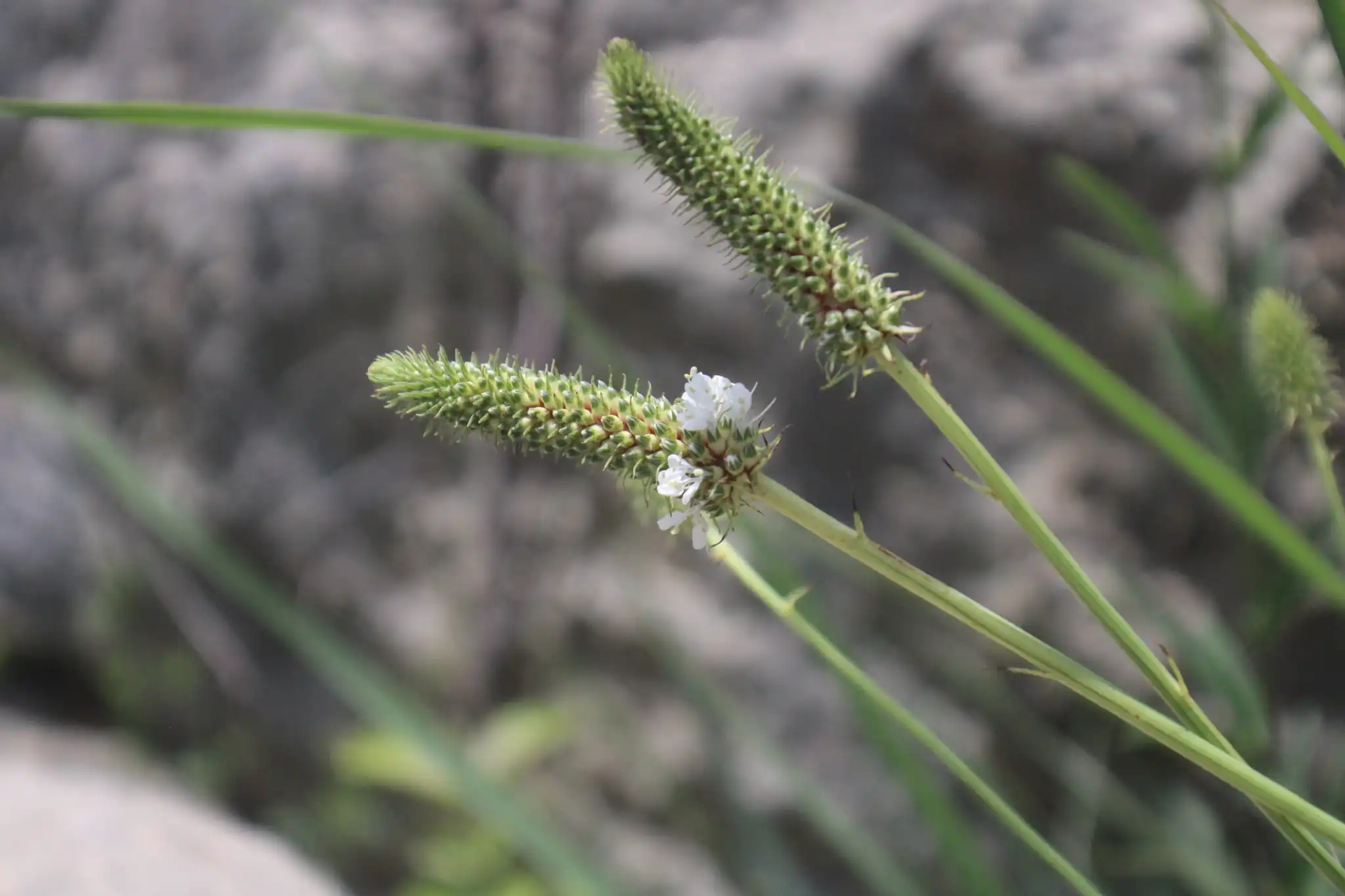
Dalea candida, commonly known as white prairie clover, is an erect herbaceous perennial native to North American prairies and open grasslands. It develops slender, upright stems clad in fine, dull green pinnate foliage arising from a deep, woody taproot.
Dense cylindrical spikes of tiny white flowers bloom progressively from bottom to top during summer, attracting a high diversity of native bees and butterflies. As a nitrogen-fixing legume, it thrives in nutrient-poor, well-drained soils without requiring supplemental fertilization.
Uses & Benefits:
Essentials
At a Glance
Plant Type
Perennial
Height
35"
Width
18"
Light
Full Sun
Zones
4, 5, 6, 7, 8
Water
Low
Humidity
Moderate
Lifespan
Perennial
Native To
North America
Toxicity
Non-toxic
Bloom period
Summer
In flower about 3 months of the year
Planting
How to Grow
- Select a location in full sun with gritty, sandy, or loamy soil that drains rapidly.
- Sow seeds directly in fall or early spring, or install deep plugs without disturbing the root ball.
- Water moderately after planting until established, then rely on rainfall except during extreme drought.
- Leave spent stems standing through winter, then trim old growth back to the base in early spring.
Pro Tip
Sow seed directly or plant young plugs early, as the deep woody taproot renders mature plants nearly impossible to transplant without severe root shock.
Keep It Thriving
Care Guide
Do
- Ensure high soil drainage to prevent crown and root rot.
- Allow the deep taproot to establish undisturbed once planted.
- Plant in full sun to maintain sturdy, upright stems.
Don't
- Do not overwater or plant in heavy, waterlogged clay soils.
- Do not apply nitrogen fertilizers, as the plant fixes its own nitrogen.
- Do not attempt to divide or relocate mature plants once established.
Seasonal Care Calendar
| Task | Jan | Feb | Mar | Apr | May | Jun | Jul | Aug | Sep | Oct | Nov | Dec |
|---|---|---|---|---|---|---|---|---|---|---|---|---|
| Pest Check | ||||||||||||
| Plant | ||||||||||||
| Spring Cleanup | ||||||||||||
| Winter Prep |
Watch Out For
Pests & Diseases
Common Pests
Common Diseases
In the Garden
Landscape Uses & Companions
Landscape Uses
Multiply
Propagation Methods
Good to Know
Common Questions
White Prairie Clover questions
What zones can White Prairie Clover grow in?
White Prairie Clover is hardy in USDA Zones 4–8. Inside that range it survives winter in the ground; outside it, grow it as an annual or a container plant you protect.
Is White Prairie Clover deer resistant?
Not reliably. Deer may browse White Prairie Clover, especially tender spring growth — plan on repellents or fencing where pressure is high.
When does White Prairie Clover bloom?
White Prairie Clover typically blooms in summer through summer. Exact timing shifts a week or two with your zone — Sow's bloom calendar maps it to your garden.
Does White Prairie Clover need full sun?
White Prairie Clover does best in full sun (6+ hours).
Is White Prairie Clover drought tolerant?
Yes — once established (usually after the first full season), White Prairie Clover handles dry spells with minimal watering. Water deeply its first year to build the root system that makes that possible.
More Dalea to compare
Keep exploring
Explore the genus
Hardy in your zone?
Grow White Prairie Clover with confidence
See it in a design of your actual yard, get zone-matched care reminders, and track it season by season in your garden journal.