The Story
Plant Bio
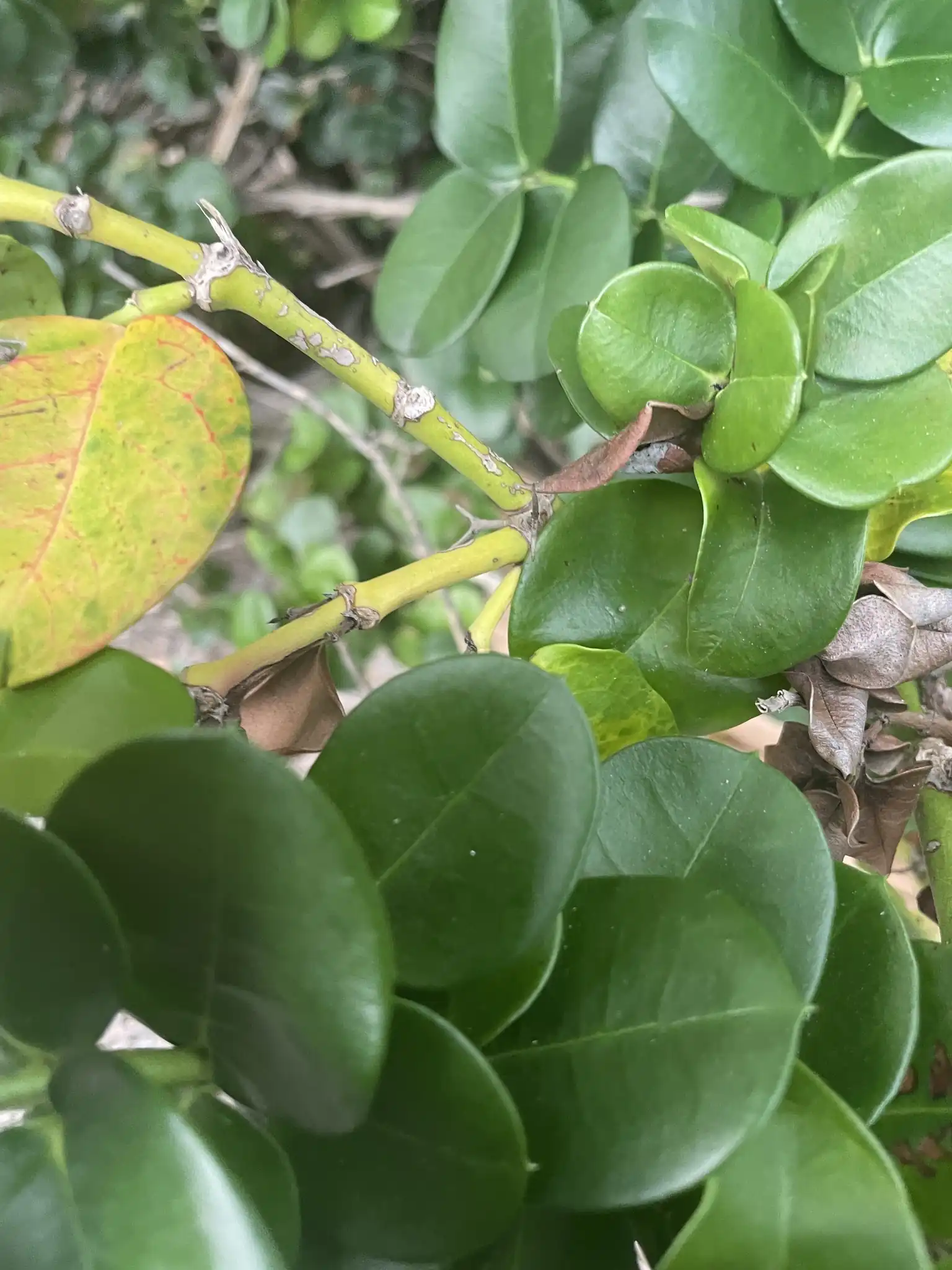
Carissa macrocarpa, the Natal plum, is a dense, rounded evergreen shrub native to the coastal and subtropical regions of southern and eastern Africa. It features thick, glossy, leathery dark green leaves and rigid, forked thorns along its stiff branches.
This species is highly valued for its fragrant, white, star-shaped flowers that emit a jasmine-like scent from spring through fall, followed by edible red fruits. It exhibits exceptional resistance to salt spray, making it a reliable choice for coastal windbreaks and hedges.
Uses & Benefits:
Essentials
At a Glance
Plant Type
Shrub
Height
118"
Width
118"
Light
Full Sun, Partial Sun
Zones
9, 10
Water
Low
Humidity
High
Lifespan
Perennial
Native To
Africa
Toxicity
Mildly toxic sap
Bloom period
Spring – Autumn
In flower about 9 months of the year
Planting
How to Grow
- Select a planting site in full sun to partial shade with highly drained sandy or loamy soil.
- Dig a hole twice as wide as the root ball and set the plant at the same depth as its nursery container.
- Water deeply to settle the soil, then establish a regular watering schedule until the root system is fully established.
- Apply a light application of balanced, slow-release fertilizer in early spring only if growth appears sluggish.
Pro Tip
Avoid heavy shearing or shaping into old, leafless wood, as this ruins the plant's natural branching framework and severely reduces subsequent flowering and fruit production.
Keep It Thriving
Care Guide
Do
- Prune selectively in spring to remove dead wood or stray branches.
- Wear thick gloves when handling to protect against the sharp, forked thorns.
- Ensure the soil drains rapidly to prevent root rot.
Don't
- Do not over-water or plant in low-lying areas prone to waterlogging.
- Do not shear heavily into old wood, which limits flower and fruit development.
- Do not apply heavy applications of fertilizer, as the plant performs well with minimal nutrients.
Seasonal Care Calendar
| Task | Jan | Feb | Mar | Apr | May | Jun | Jul | Aug | Sep | Oct | Nov | Dec |
|---|---|---|---|---|---|---|---|---|---|---|---|---|
| Fertilize | ||||||||||||
| Pest Check | ||||||||||||
| Propagate | ||||||||||||
| Prune | ||||||||||||
| Spring Cleanup |
Watch Out For
Pests & Diseases
Common Pests
Common Diseases
In the Garden
Landscape Uses & Companions
Landscape Uses
Multiply
Propagation Methods
Good to Know
Common Questions
Natal Plum questions
What zones can Natal Plum grow in?
Natal Plum is hardy in USDA Zones 9–10. Inside that range it survives winter in the ground; outside it, grow it as an annual or a container plant you protect.
Is Natal Plum deer resistant?
Yes — Natal Plum is rated deer-resistant. Deer typically pass it over, though extreme hunger can override any plant's defenses.
When does Natal Plum bloom?
Natal Plum typically blooms in spring through autumn. Exact timing shifts a week or two with your zone — Sow's bloom calendar maps it to your garden.
Does Natal Plum need full sun?
Natal Plum does best in full sun to part shade. In hot climates, afternoon shade keeps blooms fresher longer.
Is Natal Plum drought tolerant?
Yes — once established (usually after the first full season), Natal Plum handles dry spells with minimal watering. Water deeply its first year to build the root system that makes that possible.
Keep exploring
Explore the genus
Hardy in your zone?
Grow Natal Plum with confidence
See it in a design of your actual yard, get zone-matched care reminders, and track it season by season in your garden journal.