The Story
Plant Bio
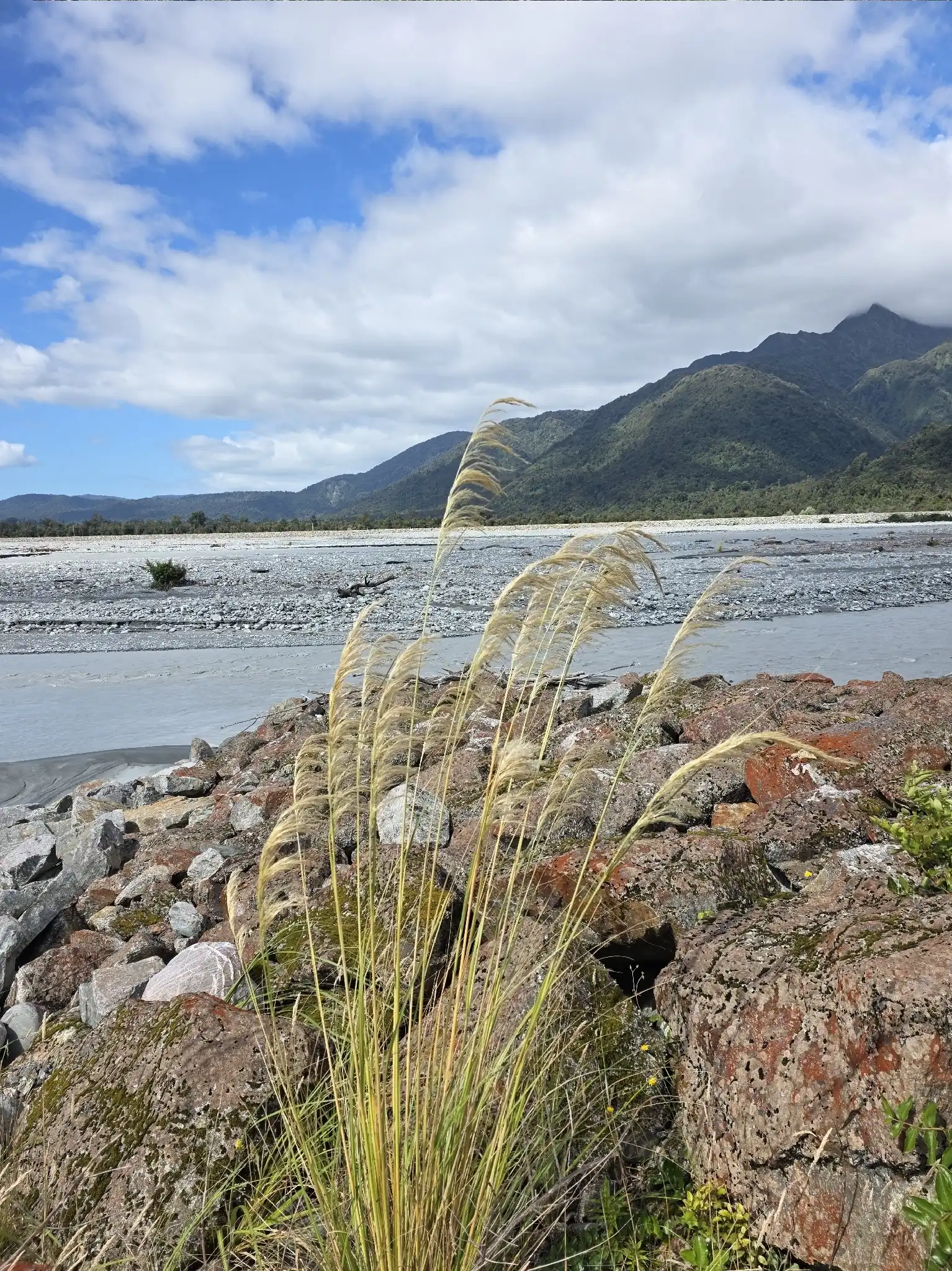
Austroderia richardii, commonly known as South Island toetoe, is a massive, evergreen perennial grass native to New Zealand that forms dense, arching tussocks of tough, leathery foliage. The elegant, weeping plumes of creamy-buff to pale golden-yellow flowers emerge on tall, pendulous stalks during spring and summer, standing well above the leaves.
This species is distinguished by its razor-sharp leaf margins, which feature minute prickle teeth, and a distinct white waxy coating on the green leaf sheaths. Unlike invasive pampas grass, its leaves do not snap when pulled sharply, and its flower heads droop gracefully to one side like pennants.
Uses & Benefits:
Essentials
At a Glance
Plant Type
Grass
Height
118"
Width
78"
Light
Full Sun
Zones
7, 8, 9, 10
Water
Moderate
Humidity
Moderate
Lifespan
Perennial
Native To
New Zealand
Toxicity
Non-toxic
Bloom period
Spring – Summer
In flower about 6 months of the year
Planting
How to Grow
- Select a site in full sun with well-draining soil, though the plant tolerates sandy, clay, or loamy profiles.
- Dig a hole twice the width of the root ball and set the plant so the crown sits level with the surrounding soil line.
- Water deeply and regularly during the first growing season to establish a deep, drought-tolerant root system.
- Apply a light layer of organic mulch around the base, keeping it clear of the central crown to prevent moisture retention and rot.
Pro Tip
Always wear heavy leather gloves and long sleeves when working near this grass to avoid severe skin cuts from the razor-sharp leaf margins.
Keep It Thriving
Care Guide
Do
- Wear thick protective gloves and eye protection whenever handling or pruning the foliage.
- Ensure excellent soil drainage to prevent winter moisture from rotting the crown.
- Water during prolonged summer droughts to prevent the leaf tips from browning.
Don't
- Do not cut the plant back to the ground annually; prune tattered leaves and spent stalks selectively.
- Do not plant in low-lying spots where water stagnates or pools during winter.
- Do not handle the foliage bare-handed due to the sharp, saw-like edges.
Seasonal Care Calendar
| Task | Jan | Feb | Mar | Apr | May | Jun | Jul | Aug | Sep | Oct | Nov | Dec |
|---|---|---|---|---|---|---|---|---|---|---|---|---|
| Divide | ||||||||||||
| Mulch | ||||||||||||
| Pest Check | ||||||||||||
| Spring Cleanup |
Watch Out For
Pests & Diseases
Common Pests
Common Diseases
In the Garden
Landscape Uses & Companions
Landscape Uses
Multiply
Propagation Methods
Good to Know
Common Questions
South Island Toetoe questions
What zones can South Island Toetoe grow in?
South Island Toetoe is hardy in USDA Zones 7–10. Inside that range it survives winter in the ground; outside it, grow it as an annual or a container plant you protect.
Is South Island Toetoe deer resistant?
Not reliably. Deer may browse South Island Toetoe, especially tender spring growth — plan on repellents or fencing where pressure is high.
When does South Island Toetoe bloom?
South Island Toetoe typically blooms in spring through summer. Exact timing shifts a week or two with your zone — Sow's bloom calendar maps it to your garden.
Does South Island Toetoe need full sun?
South Island Toetoe does best in full sun (6+ hours).
Is South Island Toetoe drought tolerant?
Yes — once established (usually after the first full season), South Island Toetoe handles dry spells with minimal watering. Water deeply its first year to build the root system that makes that possible.
Keep exploring
Explore the genus
Hardy in your zone?
Grow South Island Toetoe with confidence
See it in a design of your actual yard, get zone-matched care reminders, and track it season by season in your garden journal.