The Story
Plant Bio
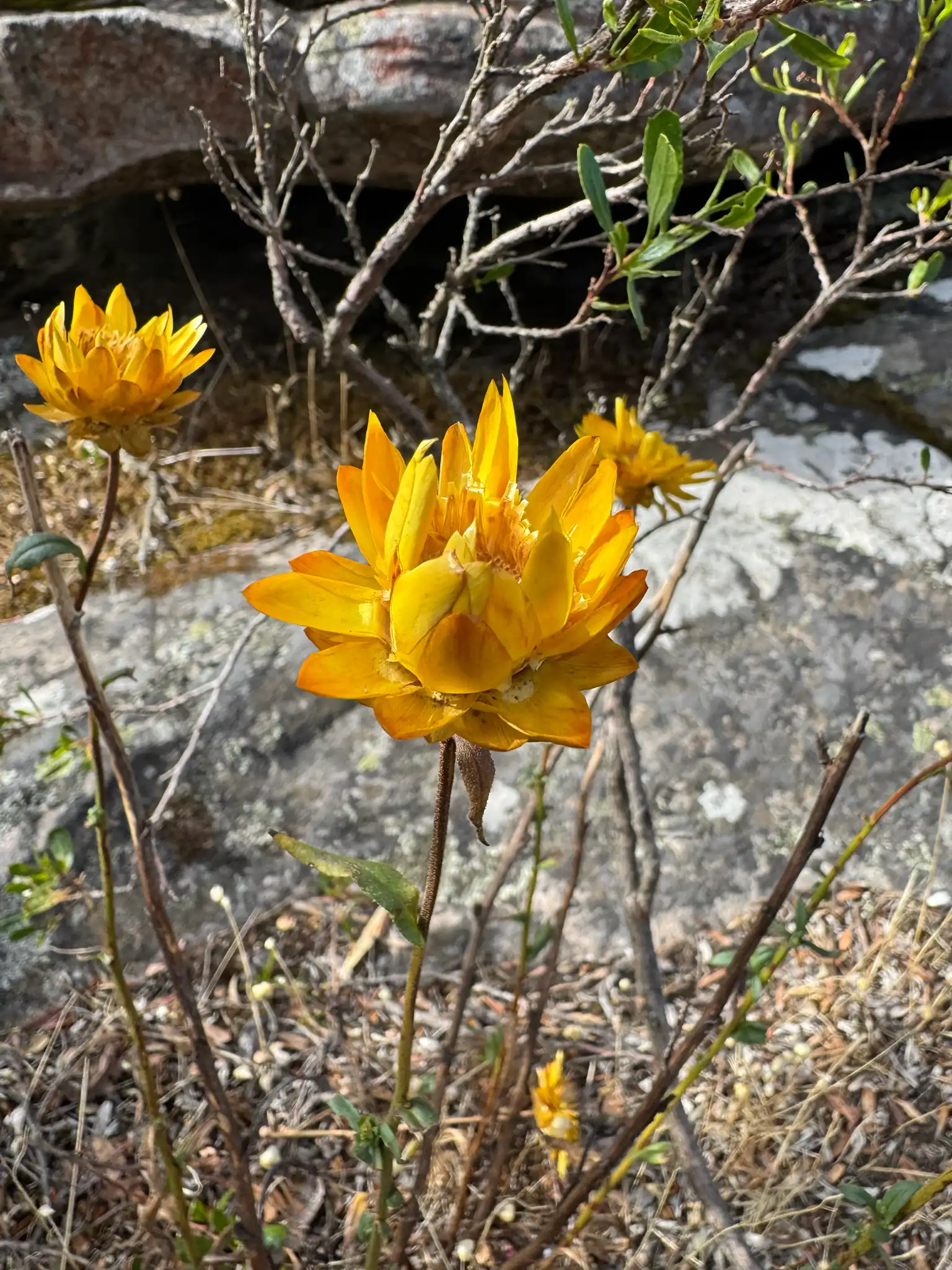
Xerochrysum bracteatum, the strawflower, is an upright herbaceous annual or short-lived perennial native to Australia, producing lanceolate green to grey-green leaves on branching stems. The distinctive flower heads consist of central yellow disc florets surrounded by stiff, papery, petal-like bracts that remain colorful and intact even when dried.
While wild species reach up to five feet in height, dwarf cultivars like 'Diamond Head' form compact mounds only three inches tall. The papery bracts contain very little moisture, allowing them to retain their bright yellow, orange, bronze, or pink coloration indefinitely after harvest.
Uses & Benefits:
Essentials
At a Glance
Plant Type
Perennial
Height
36"
Width
18"
Light
Full Sun, Partial Sun
Zones
8, 9, 10
Water
Low to Medium
Humidity
Low to Moderate
Lifespan
Short-lived Perennial or Annual
Native To
Australia
Toxicity
Non-toxic
Bloom period
Spring – Fall
In flower about 9 months of the year
Planting
How to Grow
- Select a planting site in full sun with highly permeable, sandy loam or well-draining loam soil.
- Incorporate a light application of balanced, slow-release fertilizer into the soil at planting time.
- Water regularly until the root system is established, then reduce frequency to allow the top few inches of soil to dry completely between waterings.
- Harvest flowers for drying just as the outer bracts begin to open but before the central yellow disc florets are fully exposed.
Pro Tip
Prune the stems back lightly after the first major flowering flush to stimulate lateral branching and a second crop of blooms; avoid cutting deep into old, leafless woody stems as they lack active buds to regenerate.
Keep It Thriving
Care Guide
Do
- Plant in a location with excellent air circulation to prevent powdery mildew.
- Deadhead spent flower heads regularly to prolong the blooming season.
- Provide physical barriers or fencing if deer or rabbits are active in the area.
Don't
- Do not plant in heavy, poorly drained clay or waterlogged soils, which trigger rapid root rot.
- Avoid overhead watering, as wet foliage encourages fungal pathogens.
- Do not over-fertilize, which leads to excessive, weak vegetative growth at the expense of flowers.
Seasonal Care Calendar
| Task | Jan | Feb | Mar | Apr | May | Jun | Jul | Aug | Sep | Oct | Nov | Dec |
|---|---|---|---|---|---|---|---|---|---|---|---|---|
| Deadhead | ||||||||||||
| Fertilize | ||||||||||||
| Pest Check | ||||||||||||
| Plant | ||||||||||||
| Prune |
Watch Out For
Pests & Diseases
Common Pests
Common Diseases
In the Garden
Landscape Uses & Companions
Landscape Uses
Companion Plants
Multiply
Propagation Methods
Good to Know
Common Questions
Strawflower questions
What zones can Strawflower grow in?
Strawflower is hardy in USDA Zones 8–10. Inside that range it survives winter in the ground; outside it, grow it as an annual or a container plant you protect.
Is Strawflower deer resistant?
Not reliably. Deer may browse Strawflower, especially tender spring growth — plan on repellents or fencing where pressure is high.
When does Strawflower bloom?
Strawflower typically blooms in spring through fall. Exact timing shifts a week or two with your zone — Sow's bloom calendar maps it to your garden.
Does Strawflower need full sun?
Strawflower does best in full sun to part shade. In hot climates, afternoon shade keeps blooms fresher longer.
Is Strawflower drought tolerant?
Yes — once established (usually after the first full season), Strawflower handles dry spells with minimal watering. Water deeply its first year to build the root system that makes that possible.
Keep exploring
Explore the genus
Hardy in your zone?
Grow Strawflower with confidence
See it in a design of your actual yard, get zone-matched care reminders, and track it season by season in your garden journal.