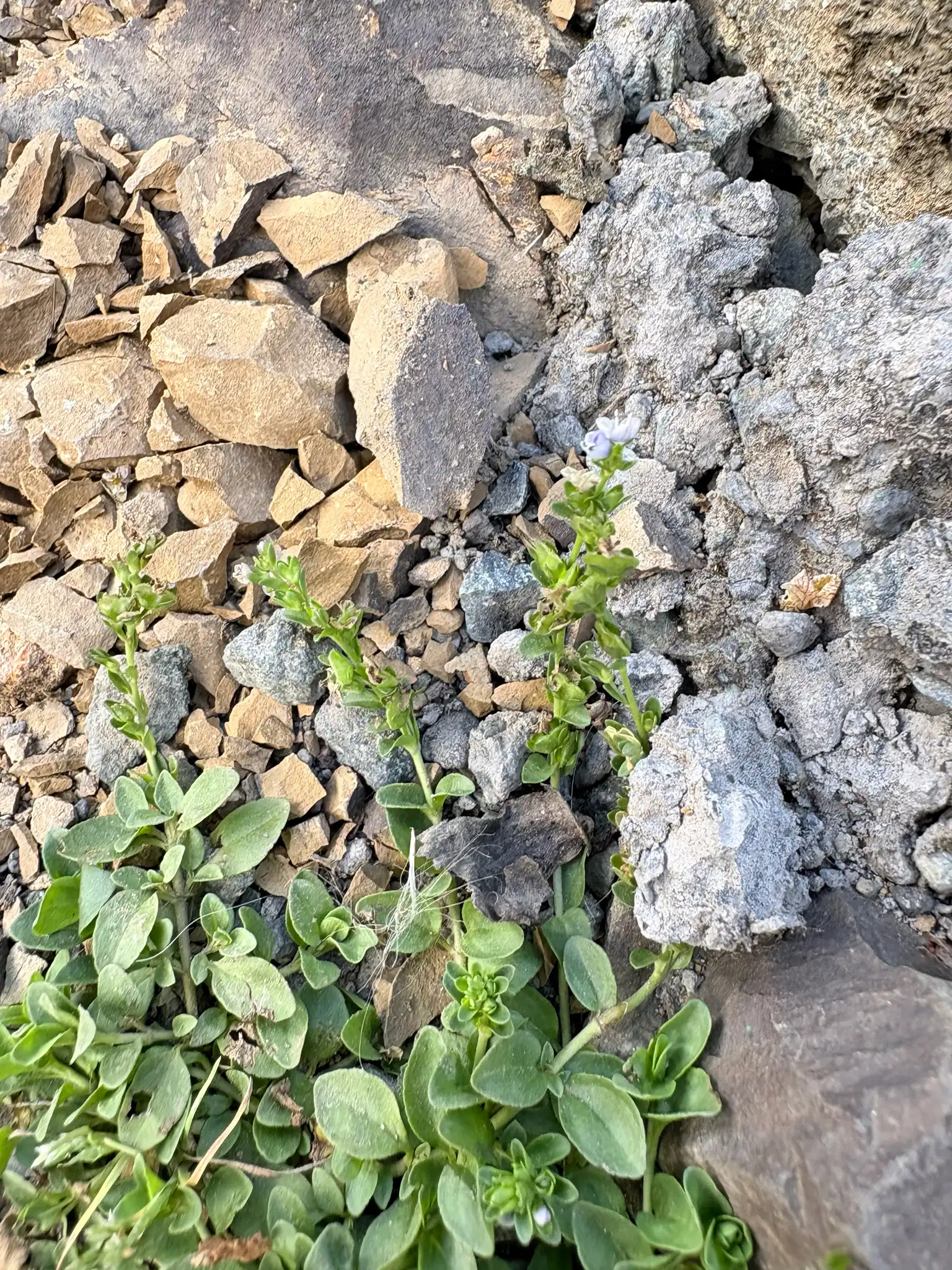
The Story
Plant Bio
Veronica serpyllifolia, the thymeleaf speedwell, is a low-growing perennial herb that forms dense or loose mats by rooting at the stem nodes. The opposite, fresh green leaves are ovate to oblong-elliptic and grow up to 20 millimeters long with smooth or faintly toothed margins.
This species produces tiny pale blue, lilac, or white flowers with distinct dark blue veins arranged in loose terminal racemes during spring and summer. The individual blossoms measure four to eight millimeters across and feature four unequal lobes, with the lowest lobe being noticeably smaller than the others.
Uses & Benefits:
Essentials
At a Glance
Plant Type
Groundcover
Height
6"
Width
18"
Light
Full Sun, Partial Sun
Zones
4, 5, 6, 7, 8, 9
Water
Medium to high
Humidity
Moderate to high
Lifespan
Perennial
Native To
Europe, Asia, North America
Toxicity
Non-toxic
Bloom period
Spring – Summer
In flower about 6 months of the year
Planting
How to Grow
- Select a site with full sun to partial shade and consistently moist, loamy, sandy, or clay soil.
- Plant plugs or rooted stem divisions at the same depth they were growing in their previous containers.
- Water thoroughly after planting to settle the soil around the shallow root systems.
- Maintain consistent soil moisture during the first growing season to help the creeping stems establish and root at the nodes.
Pro Tip
To manage this species in lawns without chemicals, improve soil drainage and increase turf vigor, as its low-growing habit allows creeping stems to slip beneath mower blades and survive low-dose selective herbicides.
Keep It Thriving
Care Guide
Do
- Keep the soil consistently moist to prevent the shallow root systems from drying out.
- Mow or trim lightly after the main summer flowering flush to tidy up the mats if using as a groundcover.
- Improve overall lawn drainage and turf density if trying to limit its spread in grassed areas.
Don't
- Do not apply excess fertilizer, which triggers aggressive, weed-like spreading and weak, lush growth.
- Avoid scalping the mats when mowing or trimming.
- Do not allow the soil to dry out completely for extended periods, as the plant suffers under drought stress.
Seasonal Care Calendar
| Task | Jan | Feb | Mar | Apr | May | Jun | Jul | Aug | Sep | Oct | Nov | Dec |
|---|---|---|---|---|---|---|---|---|---|---|---|---|
| Divide | ||||||||||||
| Pest Check | ||||||||||||
| Prune | ||||||||||||
| Spring Cleanup |
Watch Out For
Pests & Diseases
Common Pests
Common Diseases
In the Garden
Landscape Uses & Companions
Landscape Uses
Companion Plants
Multiply
Propagation Methods
Good to Know
Common Questions
Thymeleaf Speedwell questions
What zones can Thymeleaf Speedwell grow in?
Thymeleaf Speedwell is hardy in USDA Zones 4–9. Inside that range it survives winter in the ground; outside it, grow it as an annual or a container plant you protect.
Is Thymeleaf Speedwell deer resistant?
Not reliably. Deer may browse Thymeleaf Speedwell, especially tender spring growth — plan on repellents or fencing where pressure is high.
When does Thymeleaf Speedwell bloom?
Thymeleaf Speedwell typically blooms in spring through summer. Exact timing shifts a week or two with your zone — Sow's bloom calendar maps it to your garden.
Does Thymeleaf Speedwell need full sun?
Thymeleaf Speedwell does best in full sun to part shade. In hot climates, afternoon shade keeps blooms fresher longer.
More Veronica to compare
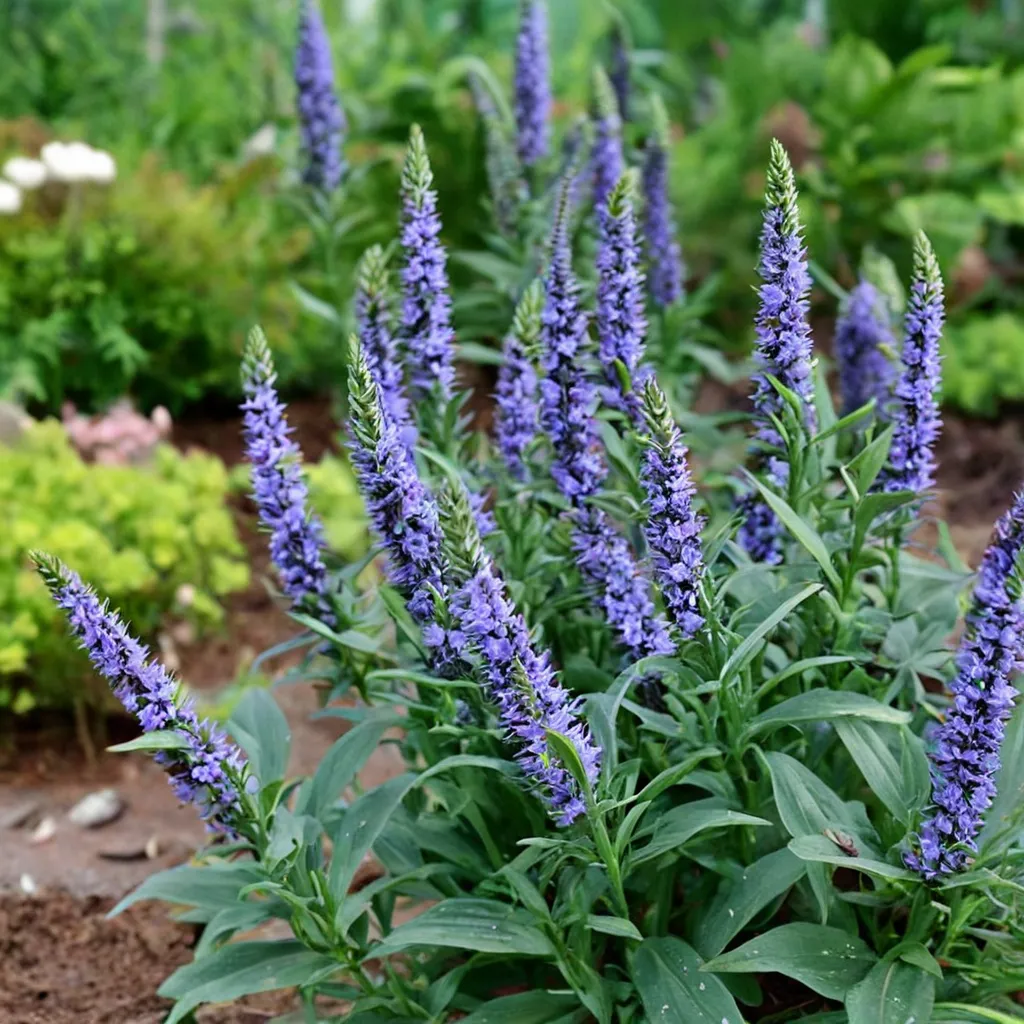
Moody Blues Sky Blue Veronica
Veronica spicata 'Moody Blues Sky Blue'
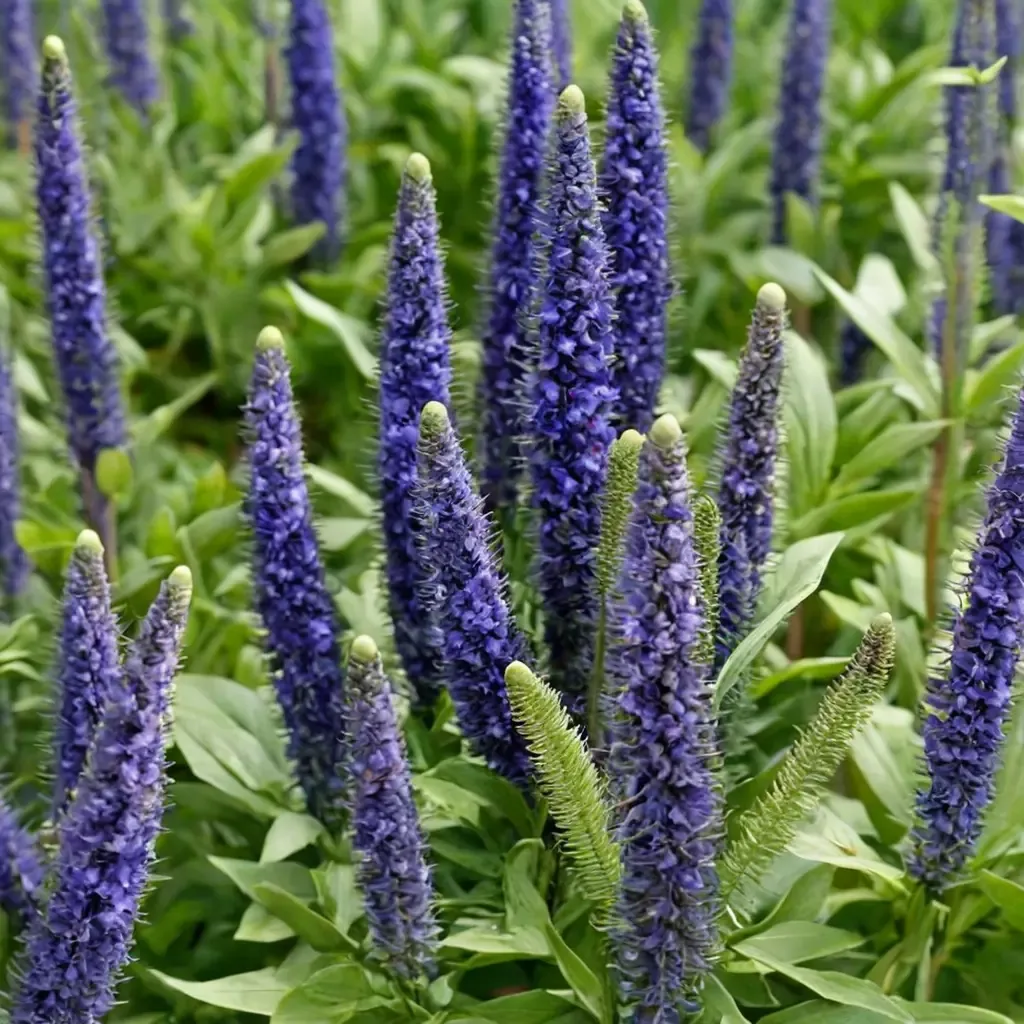
Royal Candles Speedwell
Veronica spicata 'Royal Candles'
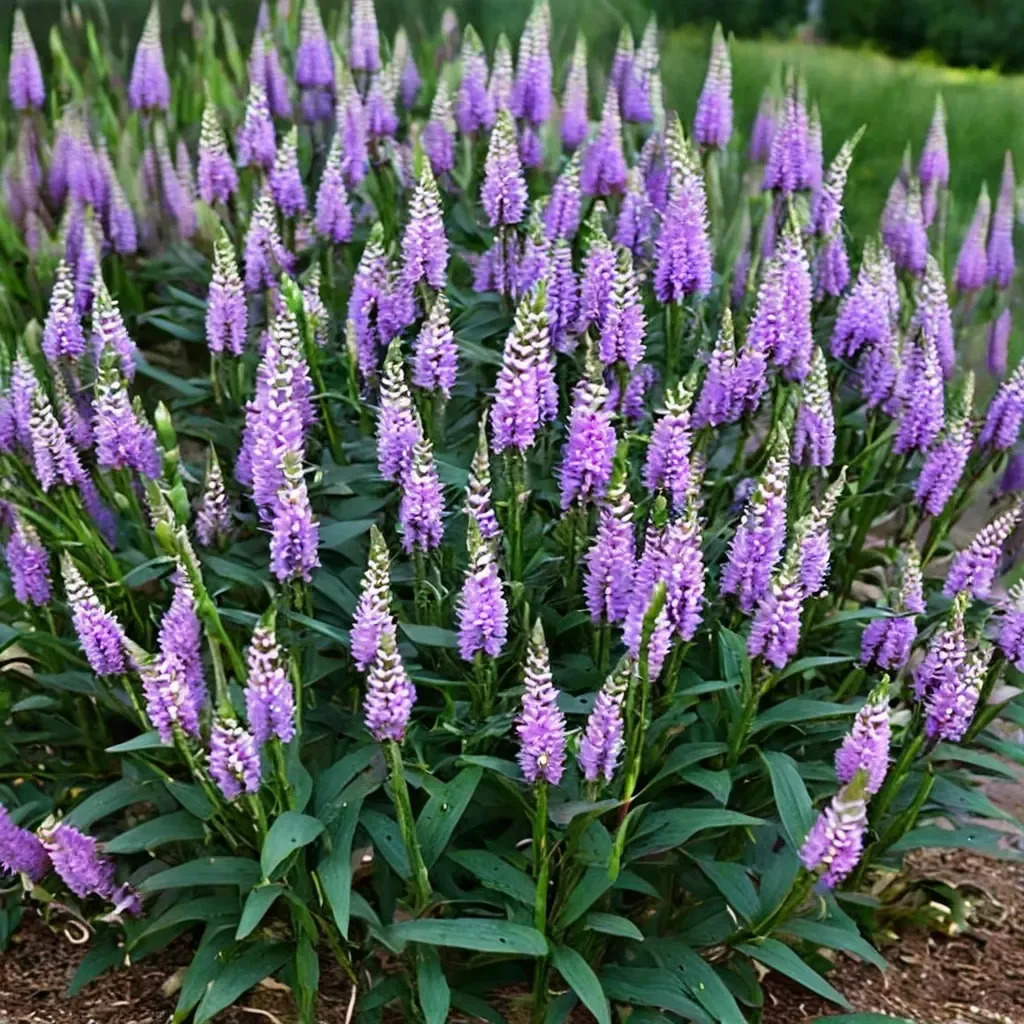
Lavender Lightsaber Speedwell
Veronica spicata 'Lavender Lightsaber'
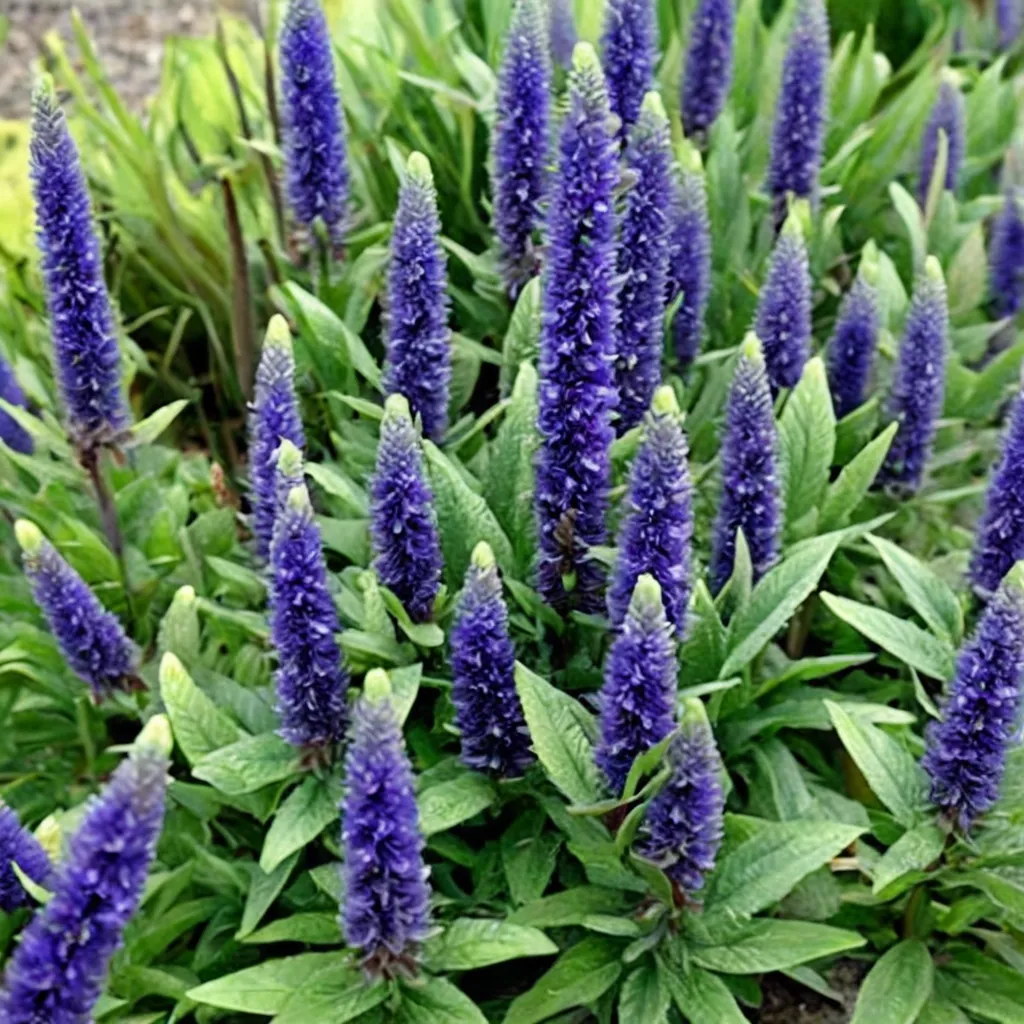
Royal Candles Spike Speedwell
Veronica spicata 'Glory'
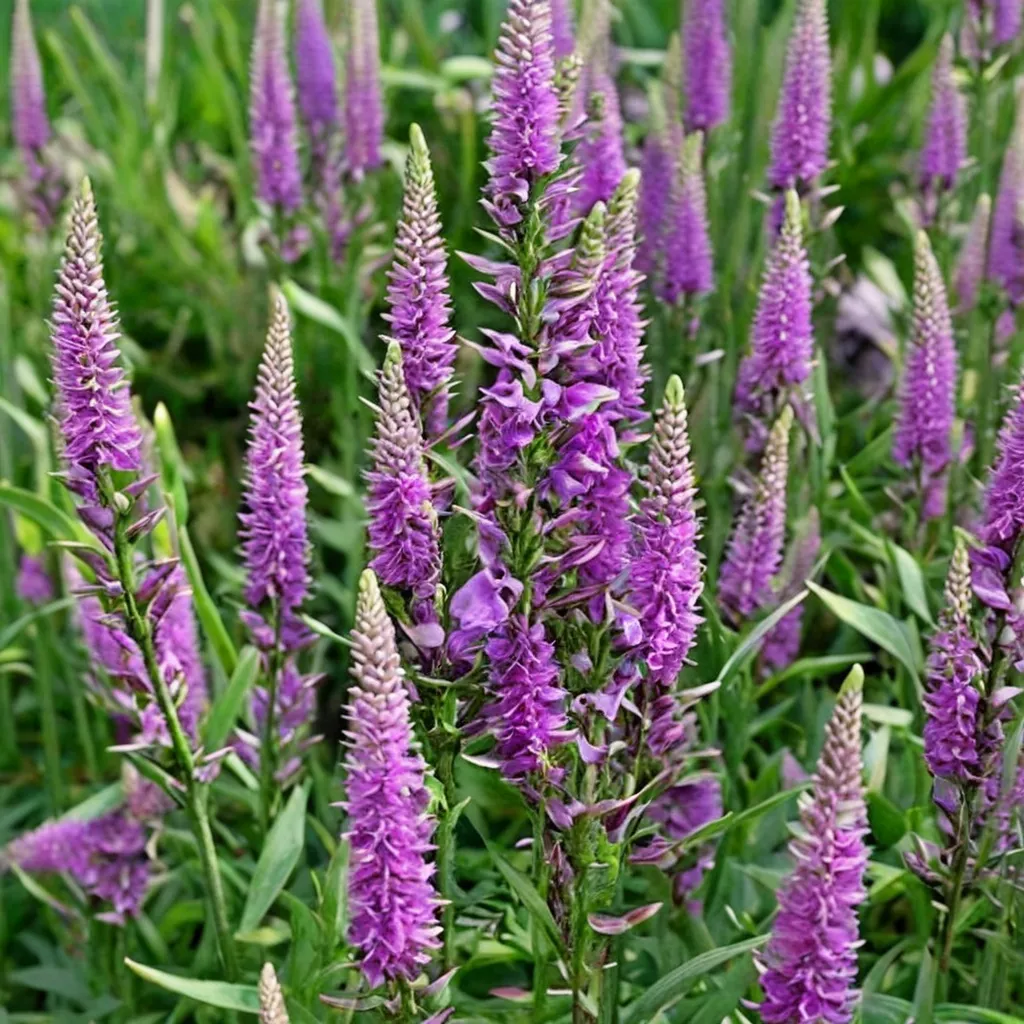
Longifolia Veronica Eveline
Veronica longifolia 'Eveline'
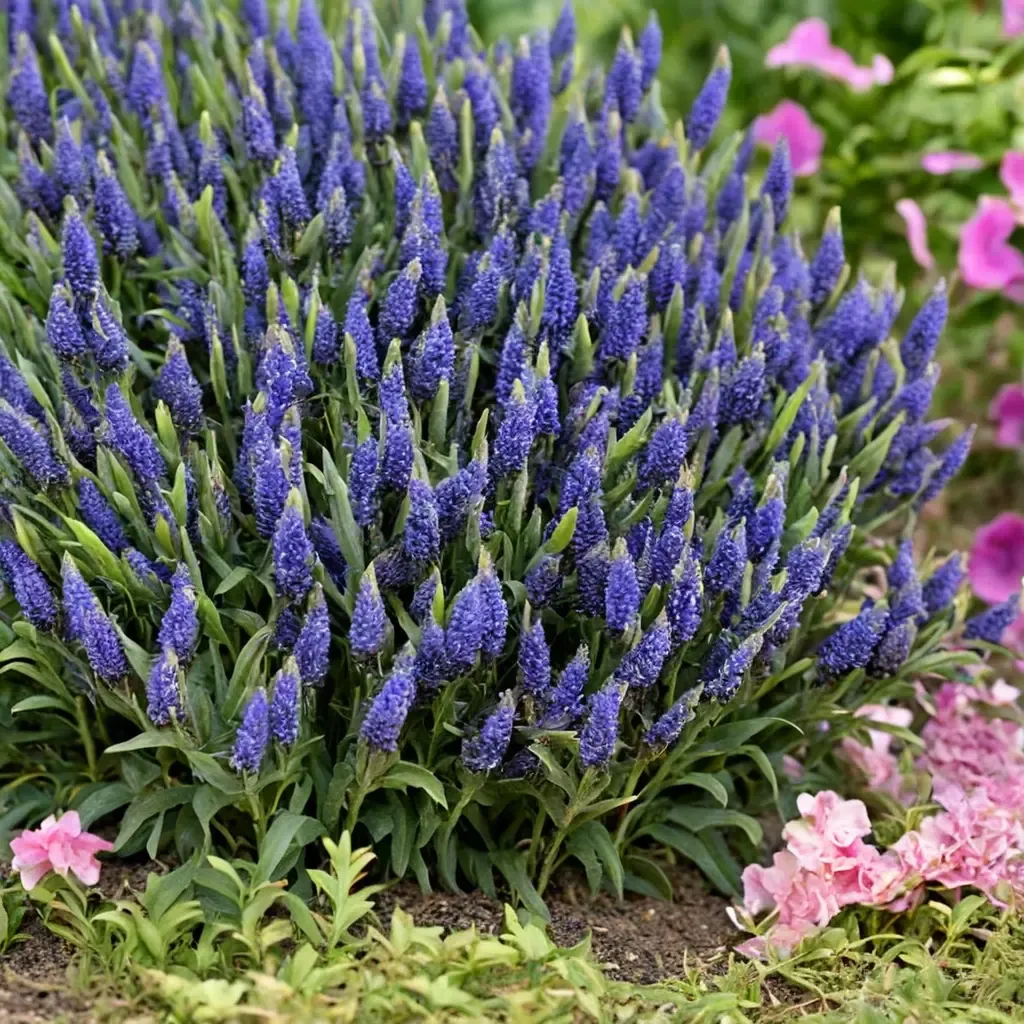
Wizard of Ahhs Speedwell
Veronica spicata 'Wizard Of Ahhs'
Keep exploring
Explore the genus
Grow Thymeleaf Speedwell with confidence
See it in a design of your actual yard, get zone-matched care reminders, and track it season by season in your garden journal.