The Story
Plant Bio
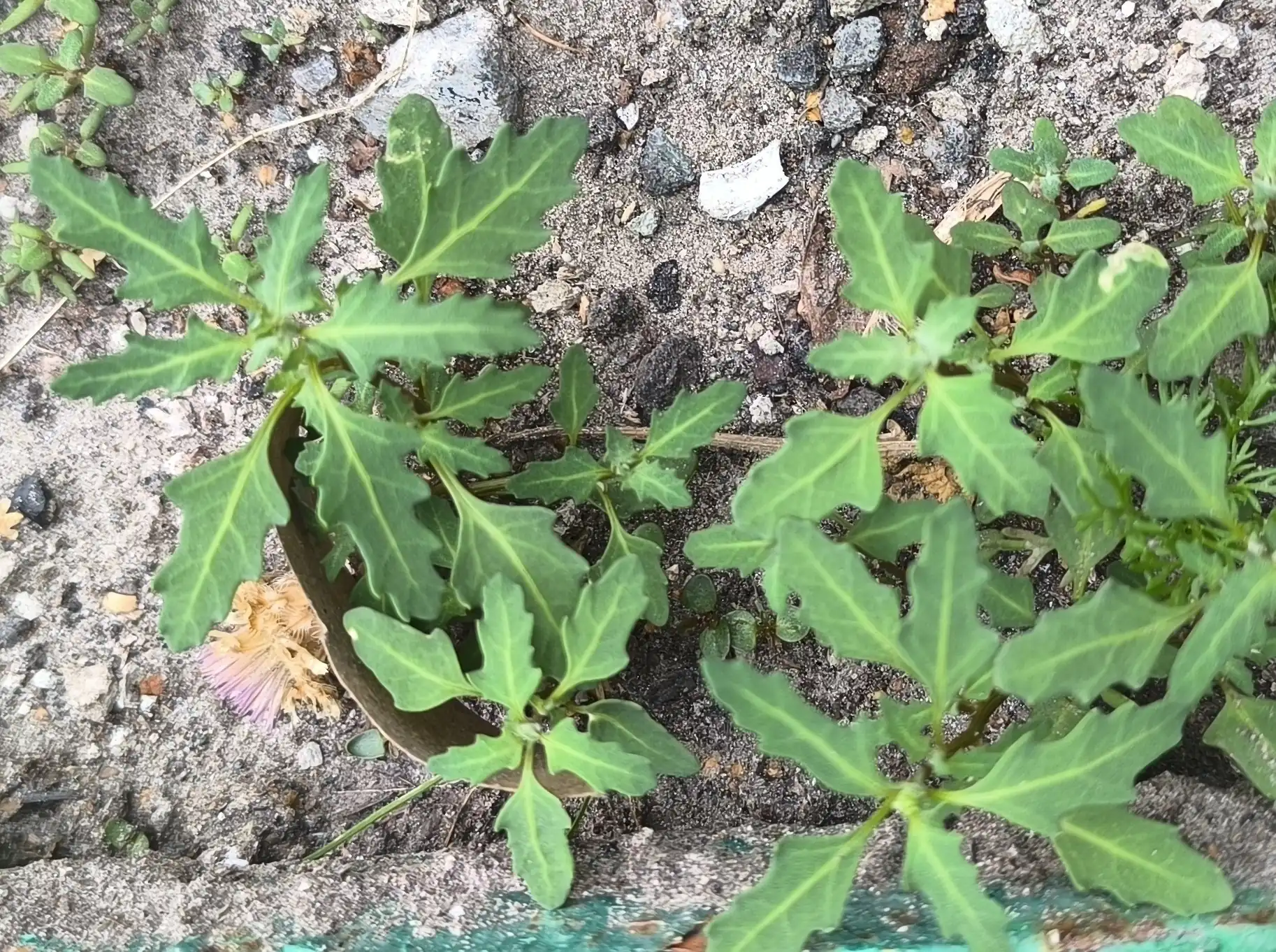
Oxybasis glauca, commonly known as oak-leaved goosefoot, is a low-growing annual herb native to Eurasia that has naturalized across North America in disturbed, saline, or wet soils. The prostrate or decumbent stems form sprawling mats of alternate leaves, which are distinguished by their shallowly toothed, oak-like margins and a dense covering of white, mealy hairs on the undersides.
This species is highly adapted to harsh, saline, and alkaline environments, colonizing drying mudflats, agricultural margins, and coastal saltmarshes. The inconspicuous greenish-yellow flowers cluster in tight glomerules along short spikes, producing thousands of tiny, long-lived seeds that rapidly colonize open ground.
Uses & Benefits:
Essentials
At a Glance
Plant Type
Annual
Height
30"
Width
20"
Light
Full Sun
Zones
4, 5, 6, 7, 8, 9
Water
Moderate
Humidity
Moderate to High
Lifespan
Annual
Native To
Eurasia
Toxicity
Toxic to livestock if ingested in large quantities
Bloom period
Summer – Fall
In flower about 6 months of the year
Planting
How to Grow
- Select a site in full sun with moist, nutrient-rich, or saline soil where other vegetation is sparse.
- Sow seeds directly onto the soil surface in spring, as they require light and fluctuating temperatures to trigger germination.
- Maintain high soil moisture during the early growth phases, allowing the soil to dry out only periodically as the plant matures.
- Pull or cut the plants down in late summer before the green flower clusters mature and release their seeds.
Pro Tip
Target control efforts along damp margins and waste areas before the plants set seed, as a single specimen can deposit up to 3,000 seeds into the soil bank.
Keep It Thriving
Care Guide
Do
- Clear surrounding dense vegetation to ensure the plant receives full sun.
- Monitor damp depressions and agricultural margins for rapid seedling emergence.
- Allow the soil to dry out periodically once the root system is established.
Don't
- Do not apply nitrogen fertilizers, which can cause the plant to accumulate toxic levels of nitrates.
- Do not plant near intensive vegetable crops where it can become a persistent agricultural weed.
- Do not allow standing water to stagnate around the roots in poorly drained garden beds.
Seasonal Care Calendar
| Task | Jan | Feb | Mar | Apr | May | Jun | Jul | Aug | Sep | Oct | Nov | Dec |
|---|---|---|---|---|---|---|---|---|---|---|---|---|
| Harvest | ||||||||||||
| Pest Check | ||||||||||||
| Plant | ||||||||||||
| Spring Cleanup |
Watch Out For
Pests & Diseases
Common Pests
Common Diseases
In the Garden
Landscape Uses & Companions
Landscape Uses
Companion Plants
Multiply
Propagation Methods
Good to Know
Common Questions
Oak-leaved goosefoot questions
What zones can Oak-leaved goosefoot grow in?
Oak-leaved goosefoot is hardy in USDA Zones 4–9. Inside that range it survives winter in the ground; outside it, grow it as an annual or a container plant you protect.
When does Oak-leaved goosefoot bloom?
Oak-leaved goosefoot typically blooms in summer through fall. Exact timing shifts a week or two with your zone — Sow's bloom calendar maps it to your garden.
Does Oak-leaved goosefoot need full sun?
Oak-leaved goosefoot does best in full sun (6+ hours).
Keep exploring
Explore the genus
Grow Oak-leaved goosefoot with confidence
See it in a design of your actual yard, get zone-matched care reminders, and track it season by season in your garden journal.