The Story
Plant Bio
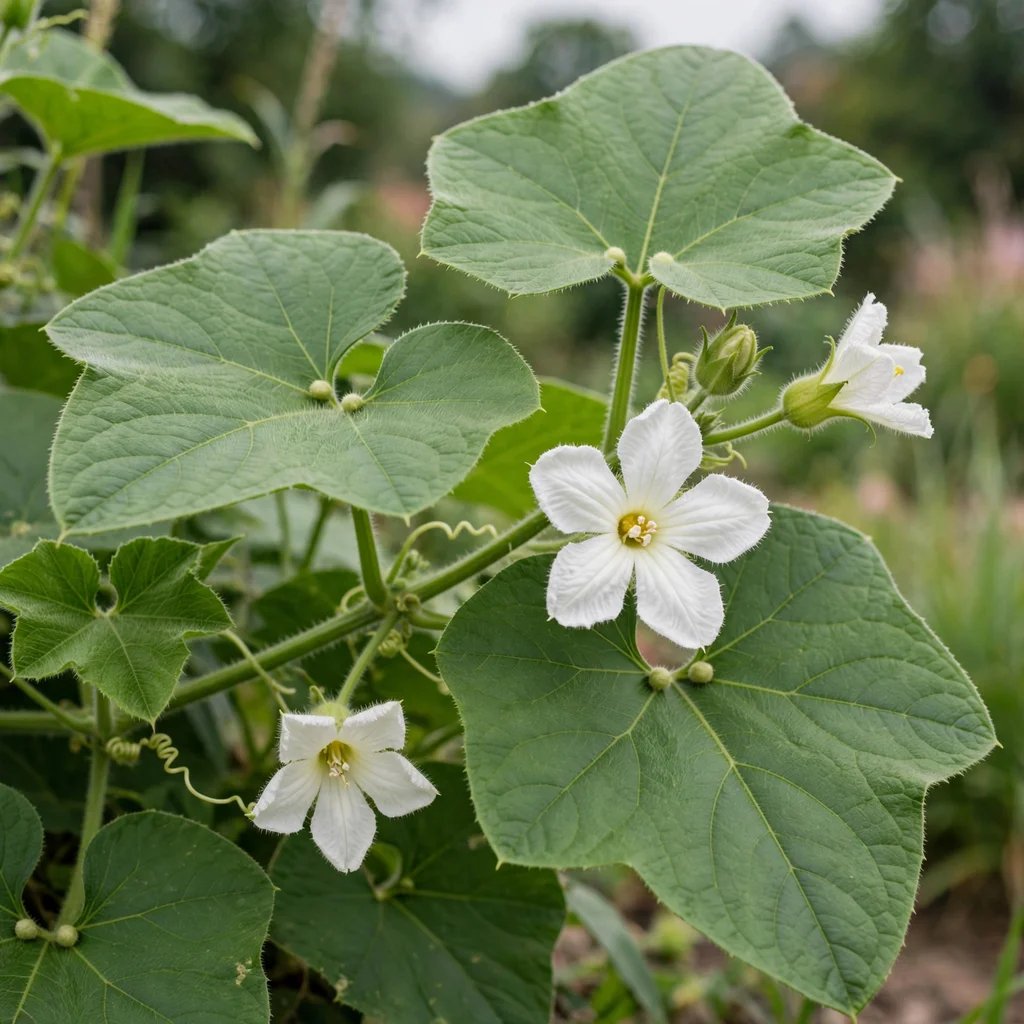
Lagenaria siceraria is a fast-growing, tender annual vine that climbs or trails using branching tendrils. The broad, triangular to heart-shaped leaves are softly fuzzy on both surfaces and feature two distinctive raised glands at the base of the leaf blade near the petiole.
The large, white, trumpet-shaped flowers open primarily at night during the summer months. These solitary blooms rely on nocturnal pollinators and are followed by hard-shelled green fruits that dry to a woody tan.
Uses & Benefits:
Essentials
At a Glance
Plant Type
Vine
Height
192"
Width
192"
Light
Full Sun
Zones
4, 5, 6, 7, 8, 9, 10
Water
High
Humidity
High
Lifespan
Annual
Native To
Africa
Toxicity
Toxic if mature or bitter
Bloom period
Summer
In flower about 3 months of the year
Planting
How to Grow
- Sow seeds directly into rich, well-draining soil in a full-sun location after all danger of frost has passed.
- Install a sturdy trellis, fence, or arbor immediately to support the heavy climbing vines and keep developing fruits off the ground.
- Pinch back the main growing tips once the vine reaches 10 to 13 feet in length to stimulate lateral branching and increase fruit production.
- Water daily during dry spells and apply a balanced organic fertilizer weekly to support the rapid, heavy-feeding growth.
Pro Tip
To ensure fruit set, hand-pollinate the night-blooming flowers in the evening or early morning by transferring pollen from the yellow anthers of male flowers directly to the female stigmas using a small, soft brush.
Keep It Thriving
Care Guide
Do
- Provide a strong support structure to keep fruits clean and straight.
- Water consistently at the base of the plant to keep the soil evenly moist.
- Harvest young, tender fruits early if intending to use them for culinary purposes.
Don't
- Do not use overhead watering, which encourages powdery and downy mildew on the foliage.
- Do not eat mature or bitter-tasting gourds, as they contain toxic compounds that cause severe gastrointestinal illness.
- Do not delay harvesting crafting gourds; leave them on the vine until they are fully mature and the stems dry out.
Seasonal Care Calendar
| Task | Jan | Feb | Mar | Apr | May | Jun | Jul | Aug | Sep | Oct | Nov | Dec |
|---|---|---|---|---|---|---|---|---|---|---|---|---|
| Fertilize | ||||||||||||
| Harvest | ||||||||||||
| Pest Check | ||||||||||||
| Pinch | ||||||||||||
| Plant |
Watch Out For
Pests & Diseases
Common Pests
Common Diseases
In the Garden
Landscape Uses & Companions
Landscape Uses
Companion Plants
Multiply
Propagation Methods
Good to Know
Common Questions
Bottle Gourd questions
What zones can Bottle Gourd grow in?
Bottle Gourd is hardy in USDA Zones 4–10. Inside that range it survives winter in the ground; outside it, grow it as an annual or a container plant you protect.
When does Bottle Gourd bloom?
Bottle Gourd typically blooms in summer through summer. Exact timing shifts a week or two with your zone — Sow's bloom calendar maps it to your garden.
Does Bottle Gourd need full sun?
Bottle Gourd does best in full sun (6+ hours).
Is Bottle Gourd drought tolerant?
Yes — once established (usually after the first full season), Bottle Gourd handles dry spells with minimal watering. Water deeply its first year to build the root system that makes that possible.
Keep exploring
Explore the genus
Grow Bottle Gourd with confidence
See it in a design of your actual yard, get zone-matched care reminders, and track it season by season in your garden journal.