The Story
Plant Bio
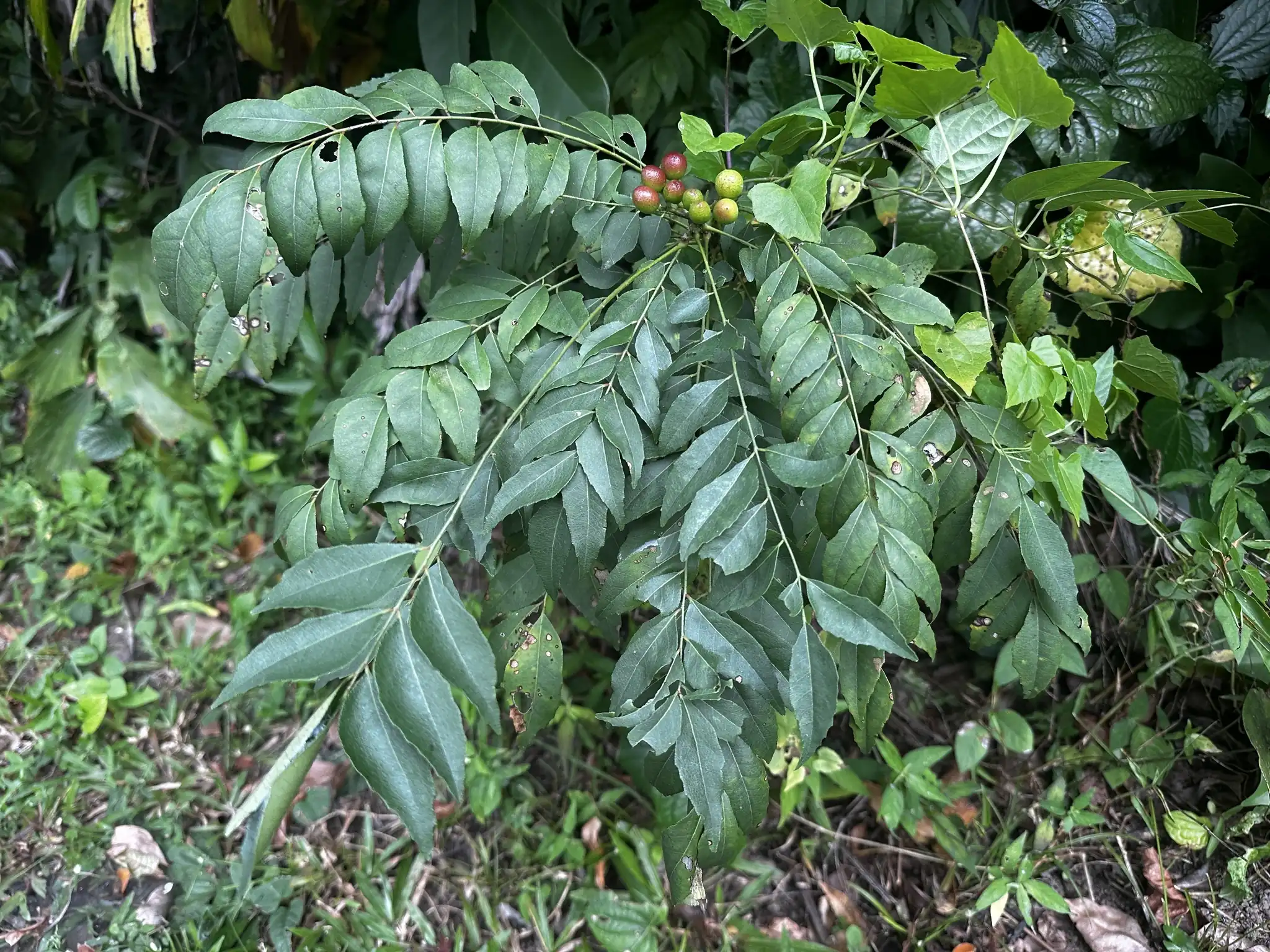
Murraya koenigii is an evergreen, heavily branched tropical shrub or small tree with a dense, spreading crown of highly aromatic foliage. The alternate, pinnately compound leaves bear 11 to 21 glossy, dark green leaflets that release a complex, spicy scent when bruised.
Small, fragrant white flowers emerge in dense terminal clusters during spring and summer, followed by small black berries. While grown in the ground in frost-free climates, it functions primarily as a container plant in most of North America to allow indoor overwintering.
Uses & Benefits:
Essentials
At a Glance
Plant Type
Shrub
Height
120"
Width
80"
Light
Full Sun, Partial Sun
Zones
10
Water
Moderate
Humidity
High
Lifespan
Perennial
Native To
Indian subcontinent and Southeast Asia
Toxicity
Seeds are toxic; foliage is edible
Bloom period
Spring – Summer
In flower about 6 months of the year
Planting
How to Grow
- Select a planting site in full sun to partial shade with fertile, well-draining soil with a pH between 5.5 and 7.5.
- Water regularly to keep the soil consistently moist but never waterlogged, especially during the active spring and summer growing seasons.
- Apply a balanced organic fertilizer or compost annually in spring to support leaf production.
- Bring container-grown plants indoors before overnight temperatures drop below 32 degrees Fahrenheit to protect them from frost damage.
Pro Tip
Avoid drying the leaves for storage, as they quickly lose their volatile essential oils; harvest them fresh as needed. When overwintering indoors, use a highly porous potting mix and allow the soil to dry slightly between waterings to prevent sudden root rot.
Keep It Thriving
Care Guide
Do
- Pinch the growing tips regularly to encourage dense, bushy branching and prevent a leggy habit.
- Grow in containers with excellent drainage holes if gardening outside of USDA Zones 10 through 12.
- Use fresh leaves immediately after harvesting to preserve the maximum concentration of aromatic oils.
Don't
- Do not prune heavily into old, thick, leafless wood, as the plant recovers poorly from deep cuts.
- Do not overwater during winter dormancy, as cold, wet soil rapidly triggers fatal root rot.
- Do not ingest the seeds found inside the mature black berries, as they are bitter and potentially toxic.
Seasonal Care Calendar
| Task | Jan | Feb | Mar | Apr | May | Jun | Jul | Aug | Sep | Oct | Nov | Dec |
|---|---|---|---|---|---|---|---|---|---|---|---|---|
| Fertilize | ||||||||||||
| Harvest | ||||||||||||
| Pest Check | ||||||||||||
| Prune | ||||||||||||
| Winter Prep |
Watch Out For
Pests & Diseases
Common Pests
Common Diseases
In the Garden
Landscape Uses & Companions
Landscape Uses
Companion Plants
Multiply
Propagation Methods
Good to Know
Common Questions
Curry Tree questions
What zones can Curry Tree grow in?
Curry Tree is hardy in USDA Zone 10. Inside that range it survives winter in the ground; outside it, grow it as an annual or a container plant you protect.
When does Curry Tree bloom?
Curry Tree typically blooms in spring through summer. Exact timing shifts a week or two with your zone — Sow's bloom calendar maps it to your garden.
Does Curry Tree need full sun?
Curry Tree does best in full sun to part shade. In hot climates, afternoon shade keeps blooms fresher longer.
Is Curry Tree drought tolerant?
Yes — once established (usually after the first full season), Curry Tree handles dry spells with minimal watering. Water deeply its first year to build the root system that makes that possible.
More Murraya to compare

Keep exploring
Explore the genus
Hardy in your zone?
Grow Curry Tree with confidence
See it in a design of your actual yard, get zone-matched care reminders, and track it season by season in your garden journal.