The Story
Plant Bio
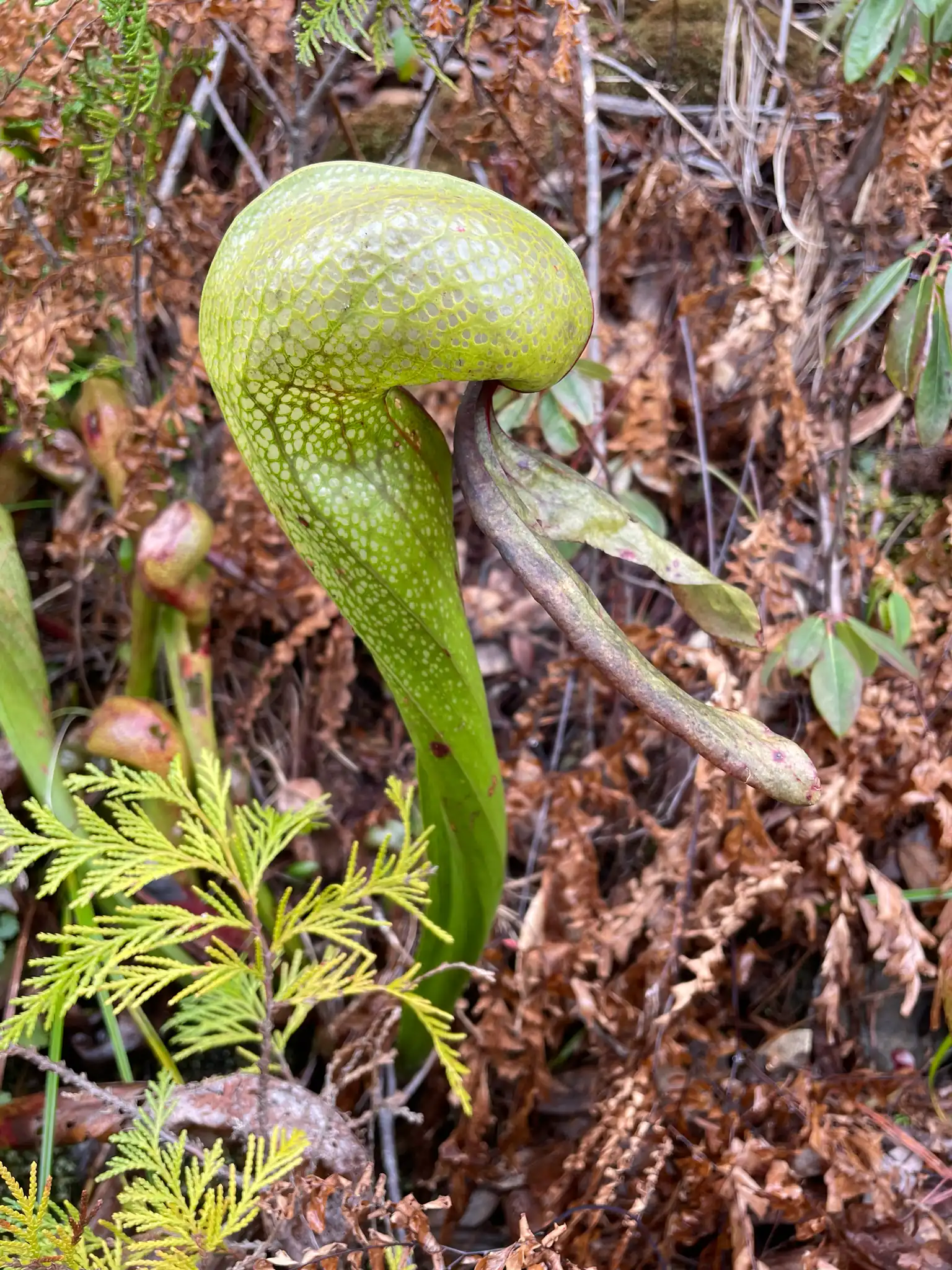
Darlingtonia californica, the cobra lily, is a carnivorous perennial native to the cold, nutrient-poor bogs and seeps of northern California and Oregon. It forms clumps of upright, tubular leaves with bulbous, hooded tops and distinctive forked appendages resembling a striking snake.
The translucent windows on the hood dome trick trapped insects into flying toward the light, eventually exhausting them so they fall into the digestive pool below. New pitchers emerge bright green before developing deep red and bronze veining under strong light.
Uses & Benefits:
Essentials
At a Glance
Plant Type
Perennial
Height
40"
Width
10"
Light
Full Sun, Partial Sun
Zones
6, 7, 8, 9
Water
High
Humidity
High
Lifespan
Perennial
Native To
North America
Toxicity
Non-toxic
Bloom period
Summer
In flower about 3 months of the year
Planting
How to Grow
- Plant in an acidic, nutrient-poor medium such as a mix of long-fibered sphagnum moss, perlite, and silica sand.
- Situate the container in a location receiving full sun to partial shade, ensuring afternoon shade in hot inland climates.
- Flush the pot daily with cool, mineral-free water, such as rainwater or distilled water, to keep the root system oxygenated.
- Maintain high humidity around the foliage and avoid placing the plant in stagnant, draft-free indoor air.
Pro Tip
Keep the roots cool at all times; irrigate with chilled water or top-dress the pot with live sphagnum moss to insulate the root zone during summer heatwaves.
Keep It Thriving
Care Guide
Do
- Use only distilled water, rainwater, or reverse-osmosis water.
- Keep the growing medium constantly wet and cool.
- Provide bright light to encourage red and bronze coloration.
- Allow the plant to undergo a cold winter dormancy period.
Don't
- Never use tap water or water with high mineral content.
- Do not apply chemical fertilizers to the soil or roots.
- Never let the roots sit in warm, stagnant water.
- Do not prune into the live, woody rhizome.
Seasonal Care Calendar
| Task | Jan | Feb | Mar | Apr | May | Jun | Jul | Aug | Sep | Oct | Nov | Dec |
|---|---|---|---|---|---|---|---|---|---|---|---|---|
| Pest Check | ||||||||||||
| Propagate | ||||||||||||
| Spring Cleanup | ||||||||||||
| Winter Prep |
Watch Out For
Pests & Diseases
Common Pests
Common Diseases
In the Garden
Landscape Uses & Companions
Landscape Uses
Companion Plants
Multiply
Propagation Methods
Good to Know
Common Questions
Cobra Lily questions
What zones can Cobra Lily grow in?
Cobra Lily is hardy in USDA Zones 6–9. Inside that range it survives winter in the ground; outside it, grow it as an annual or a container plant you protect.
Is Cobra Lily deer resistant?
Yes — Cobra Lily is rated deer-resistant. Deer typically pass it over, though extreme hunger can override any plant's defenses.
When does Cobra Lily bloom?
Cobra Lily typically blooms in summer through summer. Exact timing shifts a week or two with your zone — Sow's bloom calendar maps it to your garden.
Does Cobra Lily need full sun?
Cobra Lily does best in full sun to part shade. In hot climates, afternoon shade keeps blooms fresher longer.
Keep exploring
Explore the genus
Hardy in your zone?
Grow Cobra Lily with confidence
See it in a design of your actual yard, get zone-matched care reminders, and track it season by season in your garden journal.