The Story
Plant Bio
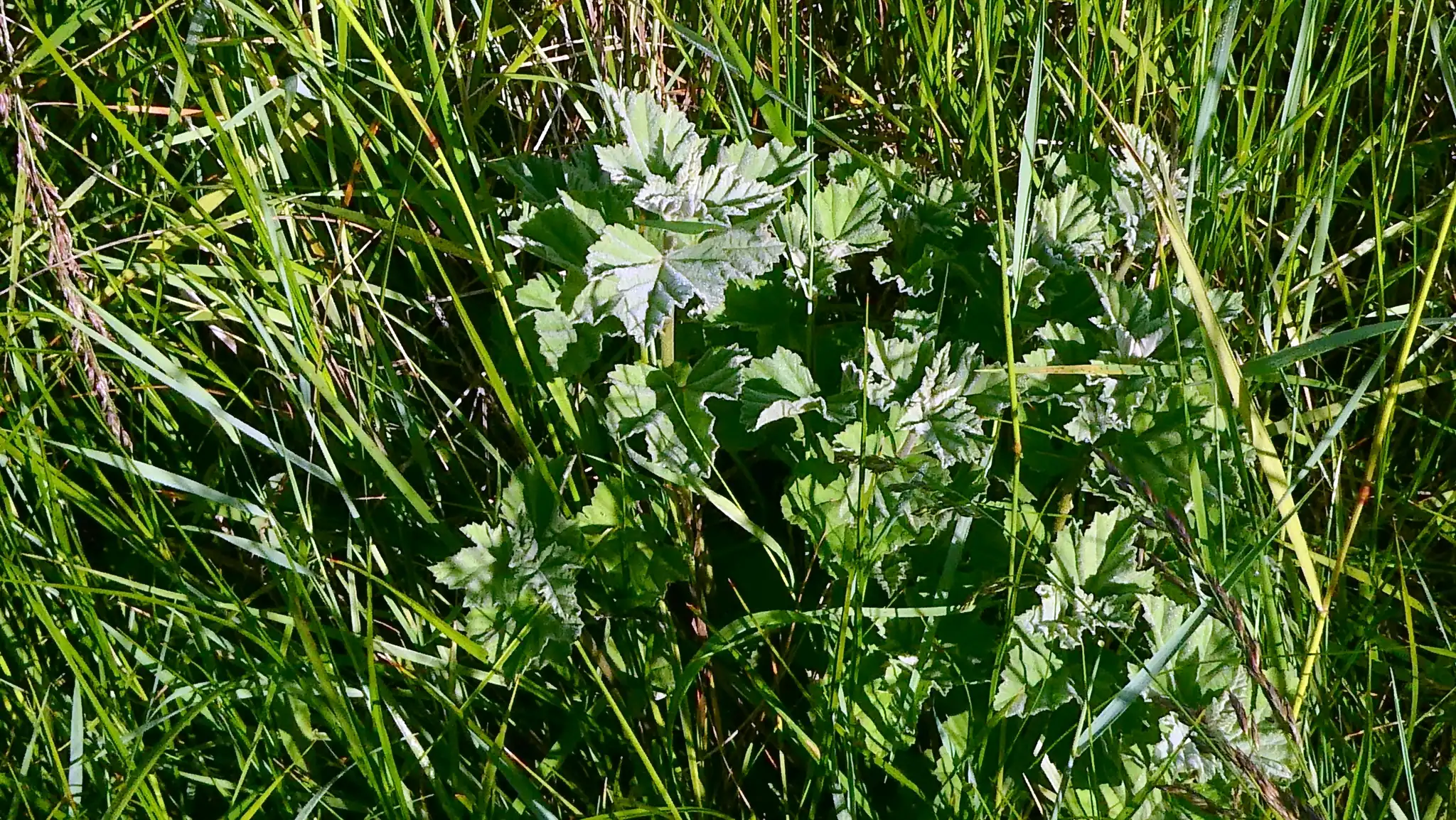
Althaea officinalis is an upright, clump-forming herbaceous perennial native to Europe, Western Asia, and North Africa, distinguished by its stout, fleshy roots and velvety, grey-green foliage. The soft-hairy, ovate leaves are sometimes lobed, providing a tactile backdrop for the pale pink to nearly white flowers that emerge in summer.
Unlike its biennial relative the hollyhock, this species is a long-lived, durable perennial that thrives in wet, heavy soils where other garden plants fail. The flowers form in axillary cymes near the upper leaf axils, attracting a wide range of native bees and generalist pollinators.
Uses & Benefits:
Essentials
At a Glance
Plant Type
Perennial
Height
60"
Width
40"
Light
Full Sun, Partial Sun
Zones
4, 5, 6, 7, 8, 9
Water
High
Humidity
High
Lifespan
Perennial
Native To
Europe, Western Asia, North Africa
Toxicity
Non-toxic
Bloom period
Summer – Fall
In flower about 6 months of the year
Planting
How to Grow
- Select a site in full sun to partial shade with moist, deep, humus-rich soil.
- Amend the planting area with compost to improve moisture retention, especially in sandy soils.
- Plant container-grown specimens or bare-root crowns in spring, ensuring the crown sits level with the soil surface.
- Water deeply and regularly to keep the soil consistently moist, as dry conditions cause leaf scorch and leaf drop.
- Apply a layer of organic mulch around the base of the plant to conserve soil moisture and suppress weeds.
Pro Tip
Cut back dead stems completely to ground level in late winter or early spring before new shoots emerge; avoid pruning into any old woody stems that persist at the base.
Keep It Thriving
Care Guide
Do
- Keep the soil consistently moist to wet, especially during hot summer dry spells.
- Apply a balanced organic fertilizer or a layer of compost in early spring.
- Cut the entire plant back to the ground in late winter before new growth starts.
Don't
- Do not allow the soil to dry out completely, which leads to immediate foliage damage.
- Avoid heavy applications of high-nitrogen fertilizers that produce weak, lanky stems.
- Do not prune into old woody stems if they persist at the base of the plant.
Seasonal Care Calendar
| Task | Jan | Feb | Mar | Apr | May | Jun | Jul | Aug | Sep | Oct | Nov | Dec |
|---|---|---|---|---|---|---|---|---|---|---|---|---|
| Fertilize | ||||||||||||
| Pest Check | ||||||||||||
| Propagate | ||||||||||||
| Spring Cleanup |
Watch Out For
Pests & Diseases
Common Pests
Common Diseases
In the Garden
Landscape Uses & Companions
Landscape Uses
Multiply
Propagation Methods
Good to Know
Common Questions
Marsh Mallow questions
What zones can Marsh Mallow grow in?
Marsh Mallow is hardy in USDA Zones 4–9. Inside that range it survives winter in the ground; outside it, grow it as an annual or a container plant you protect.
Is Marsh Mallow deer resistant?
Not reliably. Deer may browse Marsh Mallow, especially tender spring growth — plan on repellents or fencing where pressure is high.
When does Marsh Mallow bloom?
Marsh Mallow typically blooms in summer through fall. Exact timing shifts a week or two with your zone — Sow's bloom calendar maps it to your garden.
Does Marsh Mallow need full sun?
Marsh Mallow does best in full sun to part shade. In hot climates, afternoon shade keeps blooms fresher longer.
Keep exploring
Explore the genus
Grow Marsh Mallow with confidence
See it in a design of your actual yard, get zone-matched care reminders, and track it season by season in your garden journal.