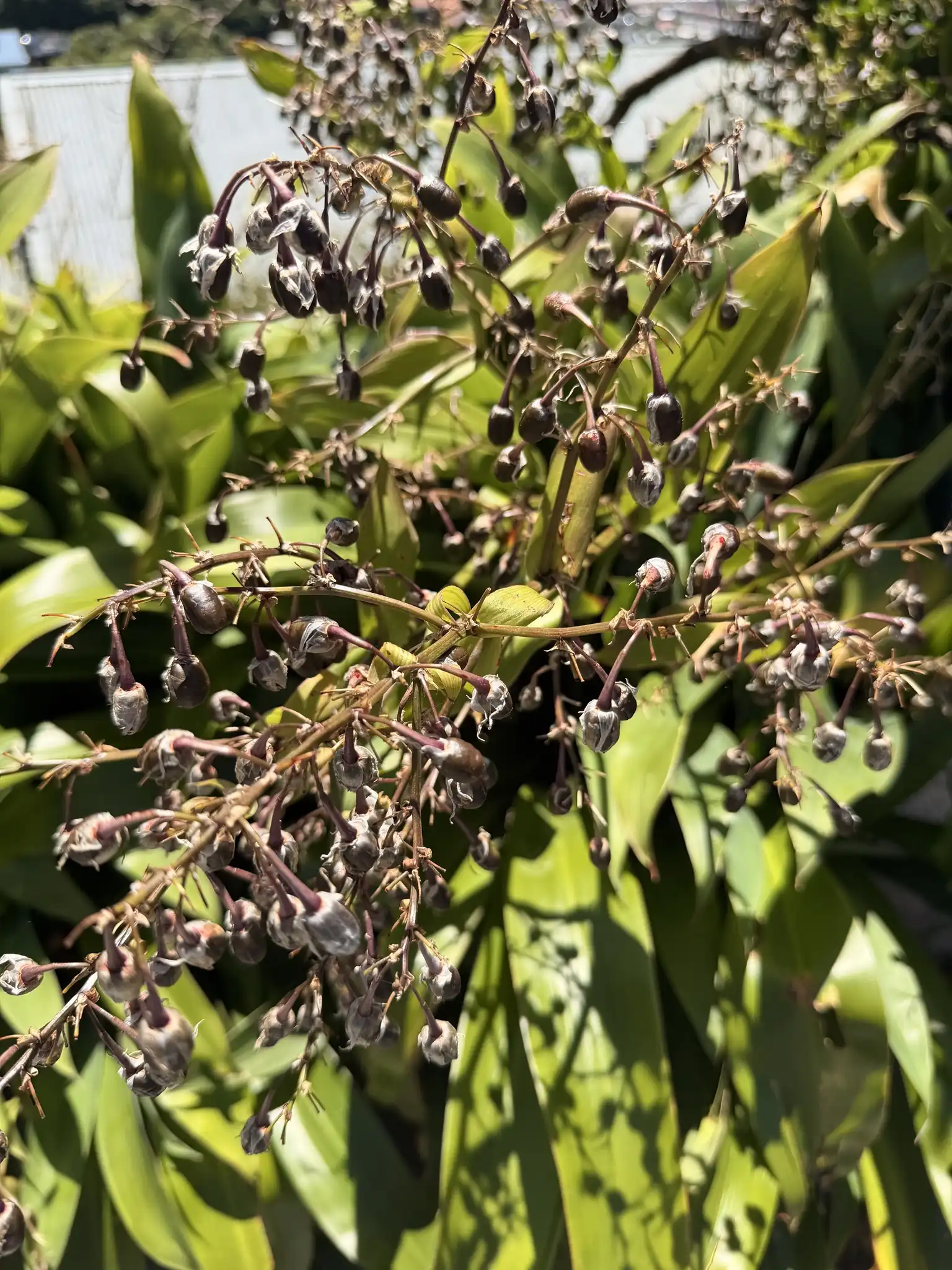
The Story
Plant Bio
Arthropodium cirratum is a clump-forming herbaceous perennial endemic to New Zealand, where it grows naturally on rocky coastal cliffs and in lowland forests. It produces broad, arching, strap-shaped leaves of a glossy medium green that emerge from fleshy, thickened rhizomes.
In late spring and summer, the plant sends up airy, branched panicles of star-shaped white flowers on stems reaching three feet tall. The flowers feature distinctive, showy stamens with woolly purple and white filaments tipped in curled yellow.
Uses & Benefits:
Essentials
At a Glance
Plant Type
Perennial
Height
39"
Width
48"
Light
Full Sun, Partial Sun, Shade
Zones
8, 9, 10
Water
Moderate
Humidity
Moderate to high
Lifespan
Perennial
Native To
New Zealand
Toxicity
Non-toxic
Bloom period
Late spring – Summer
In flower about 4 months of the year
Planting
How to Grow
- Select a site with partial to full shade and exceptionally well-draining, gritty or sandy soil.
- Plant the rhizomes just below the soil surface, ensuring the crown is not buried too deeply.
- Water regularly to establish the root system, then reduce watering to allow the soil to dry between applications.
- Apply an organic mulch around the base to retain moderate moisture while keeping the crown clear of debris.
Pro Tip
Avoid shearing the clumps aggressively to the ground annually like ornamental grasses; cutting into the fleshy crown can destroy the growing points and kill the plant.
Keep It Thriving
Care Guide
Do
- Provide sharp drainage to prevent fatal root rot in heavy soils.
- Protect the foliage from slugs and snails, which heavily graze the leaves.
- Cut back frost-damaged leaves to six to twelve inches in early spring to rejuvenate the clump.
Don't
- Do not plant in waterlogged or boggy soils where water sits.
- Do not shear the entire clump to the ground annually.
- Do not cut back into old, dead leafless wood where the plant cannot regenerate.
Seasonal Care Calendar
| Task | Jan | Feb | Mar | Apr | May | Jun | Jul | Aug | Sep | Oct | Nov | Dec |
|---|---|---|---|---|---|---|---|---|---|---|---|---|
| Divide | ||||||||||||
| Fertilize | ||||||||||||
| Pest Check | ||||||||||||
| Spring Cleanup |
Watch Out For
Pests & Diseases
Common Pests
Common Diseases
In the Garden
Landscape Uses & Companions
Landscape Uses
Multiply
Propagation Methods
Good to Know
Common Questions
Rengarenga questions
What zones can Rengarenga grow in?
Rengarenga is hardy in USDA Zones 8–10. Inside that range it survives winter in the ground; outside it, grow it as an annual or a container plant you protect.
When does Rengarenga bloom?
Rengarenga typically blooms in late spring through summer. Exact timing shifts a week or two with your zone — Sow's bloom calendar maps it to your garden.
Does Rengarenga need full sun?
Rengarenga does best in full sun to part shade. In hot climates, afternoon shade keeps blooms fresher longer.
Is Rengarenga drought tolerant?
Yes — once established (usually after the first full season), Rengarenga handles dry spells with minimal watering. Water deeply its first year to build the root system that makes that possible.
Keep exploring
Explore the genus
Hardy in your zone?
Grow Rengarenga with confidence
See it in a design of your actual yard, get zone-matched care reminders, and track it season by season in your garden journal.