The Story
Plant Bio
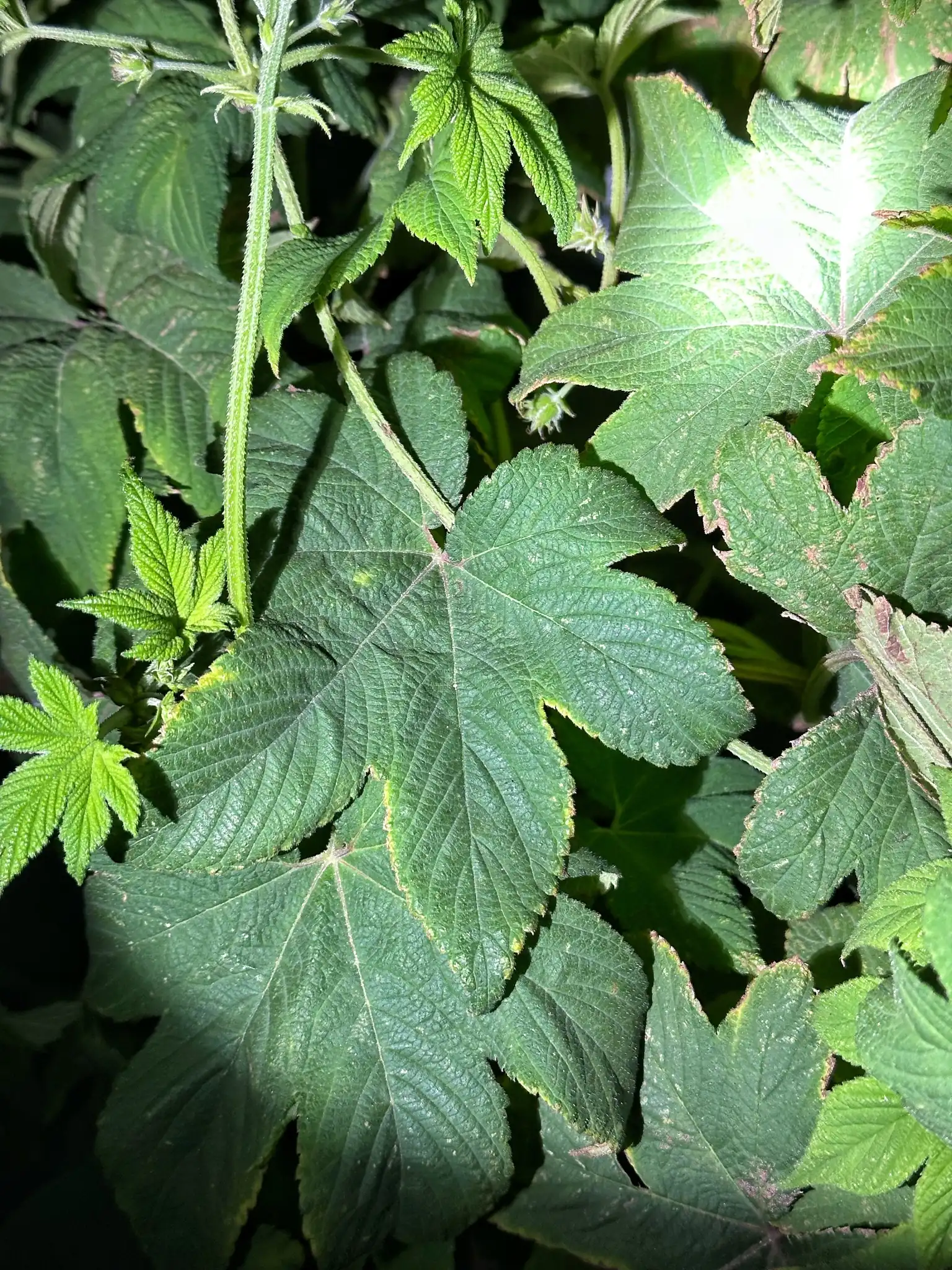
Humulus scandens, the Japanese hop, is a vigorous, twining annual vine native to East Asia that climbs up to thirty-four feet using rough, downward-pointing stem prickles. The opposite, rough-textured leaves are palmately divided into five to nine lobes, while the inconspicuous summer flowers are dioecious, with males producing loose yellowish-green panicles and females forming papery, cone-like strobiles.
This species is distinguished from commercial hops by its aggressive annual growth habit, clockwise twining direction, and lack of lupulin glands on the female bracts. It spreads rapidly via water-dispersed seeds, frequently invading riparian corridors and smothering native vegetation under dense, heavy mats of foliage.
Uses & Benefits:
Essentials
At a Glance
Plant Type
Vine
Height
413"
Width
118"
Light
Full Sun, Partial Sun
Zones
4, 5, 6, 7, 8, 9
Water
Moderate to high
Humidity
High
Lifespan
Annual
Native To
East Asia
Toxicity
Skin irritant and low-severity ingestion hazard
Bloom period
Summer – Fall
In flower about 6 months of the year
Planting
How to Grow
- Select a site in full sun to partial shade with moist, fertile, well-draining soil.
- Sow seeds directly into the soil in early spring after the last frost has passed.
- Provide a sturdy trellis or support structure for the clockwise-twining stems to climb.
- Monitor the vine closely through summer to prevent it from escaping into adjacent vegetation.
Pro Tip
Pull or cut back the entire vine before the female strobiles set seed in mid-to-late summer; composting mature seed-bearing structures will only spread the viable, water-buoyant seeds downstream.
Keep It Thriving
Care Guide
Do
- Wear heavy gloves and long sleeves when handling the plant to avoid skin scratches from the rough prickles.
- Eradicate the vine completely before seed set to control its aggressive spread.
- Ensure the soil remains consistently moist, especially during dry summer spells.
Don't
- Do not apply supplemental fertilizer, as high soil fertility only accelerates its weed-like growth.
- Do not compost mature, seed-bearing female strobiles.
- Do not plant near natural waterways or floodplains where seeds can easily escape.
Seasonal Care Calendar
| Task | Jan | Feb | Mar | Apr | May | Jun | Jul | Aug | Sep | Oct | Nov | Dec |
|---|---|---|---|---|---|---|---|---|---|---|---|---|
| Pest Check | ||||||||||||
| Plant | ||||||||||||
| Prune | ||||||||||||
| Winter Prep |
Watch Out For
Pests & Diseases
Common Pests
Common Diseases
In the Garden
Landscape Uses & Companions
Landscape Uses
Companion Plants
Multiply
Propagation Methods
Good to Know
Common Questions
Japanese Hop questions
What zones can Japanese Hop grow in?
Japanese Hop is hardy in USDA Zones 4–9. Inside that range it survives winter in the ground; outside it, grow it as an annual or a container plant you protect.
Is Japanese Hop deer resistant?
Not reliably. Deer may browse Japanese Hop, especially tender spring growth — plan on repellents or fencing where pressure is high.
When does Japanese Hop bloom?
Japanese Hop typically blooms in summer through fall. Exact timing shifts a week or two with your zone — Sow's bloom calendar maps it to your garden.
Does Japanese Hop need full sun?
Japanese Hop does best in full sun to part shade. In hot climates, afternoon shade keeps blooms fresher longer.
Is Japanese Hop drought tolerant?
Yes — once established (usually after the first full season), Japanese Hop handles dry spells with minimal watering. Water deeply its first year to build the root system that makes that possible.
More Humulus to compare
Keep exploring
Explore the genus
Grow Japanese Hop with confidence
See it in a design of your actual yard, get zone-matched care reminders, and track it season by season in your garden journal.