The Story
Plant Bio
Humulus lupulus, the common hop, is a vigorous, herbaceous perennial vine that climbs rapidly by wrapping its rough, bristly stems clockwise around supports. Each winter the top growth dies completely to the ground, with fresh bines emerging from the underground rhizomatous crown in early spring.
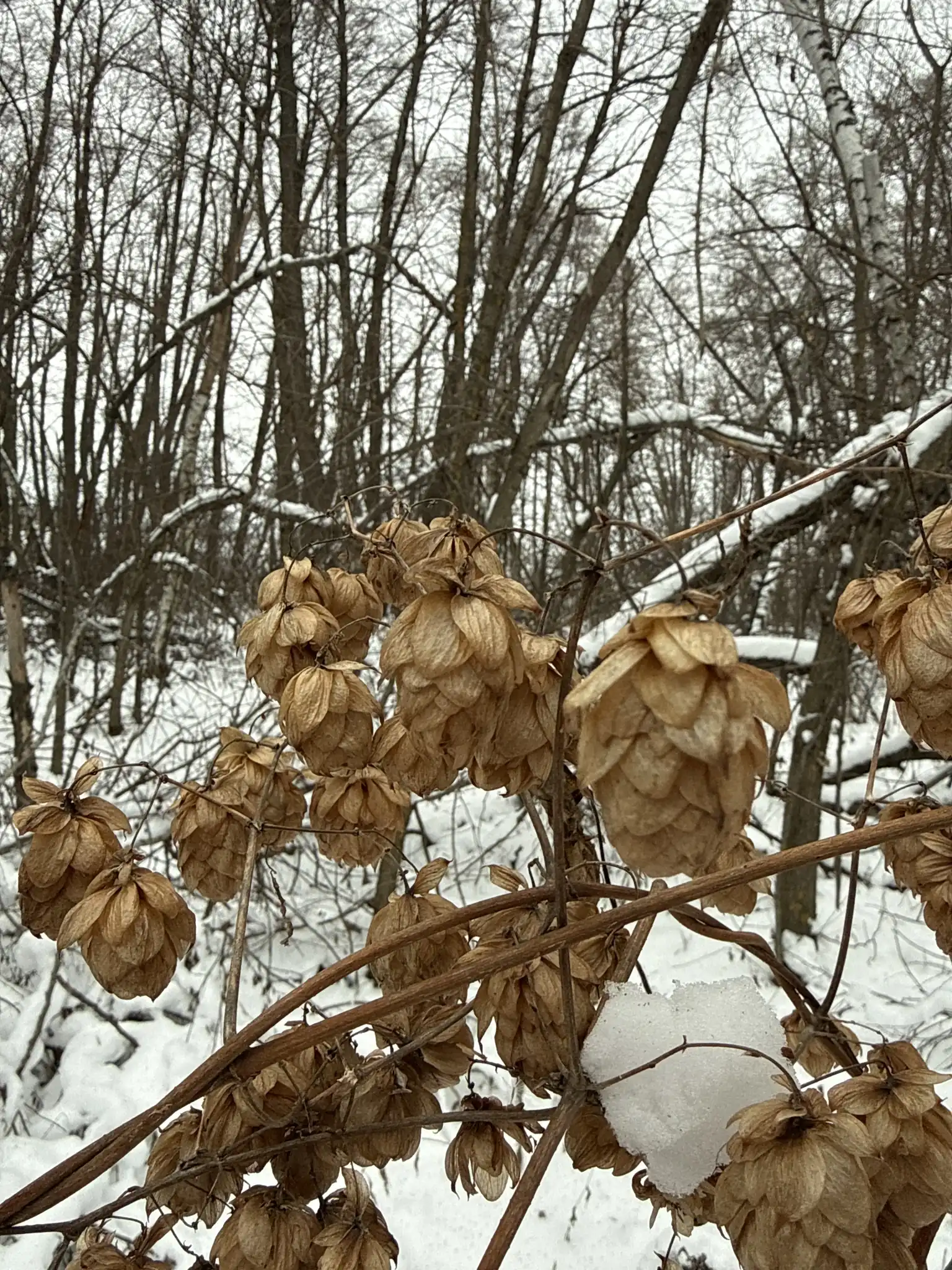
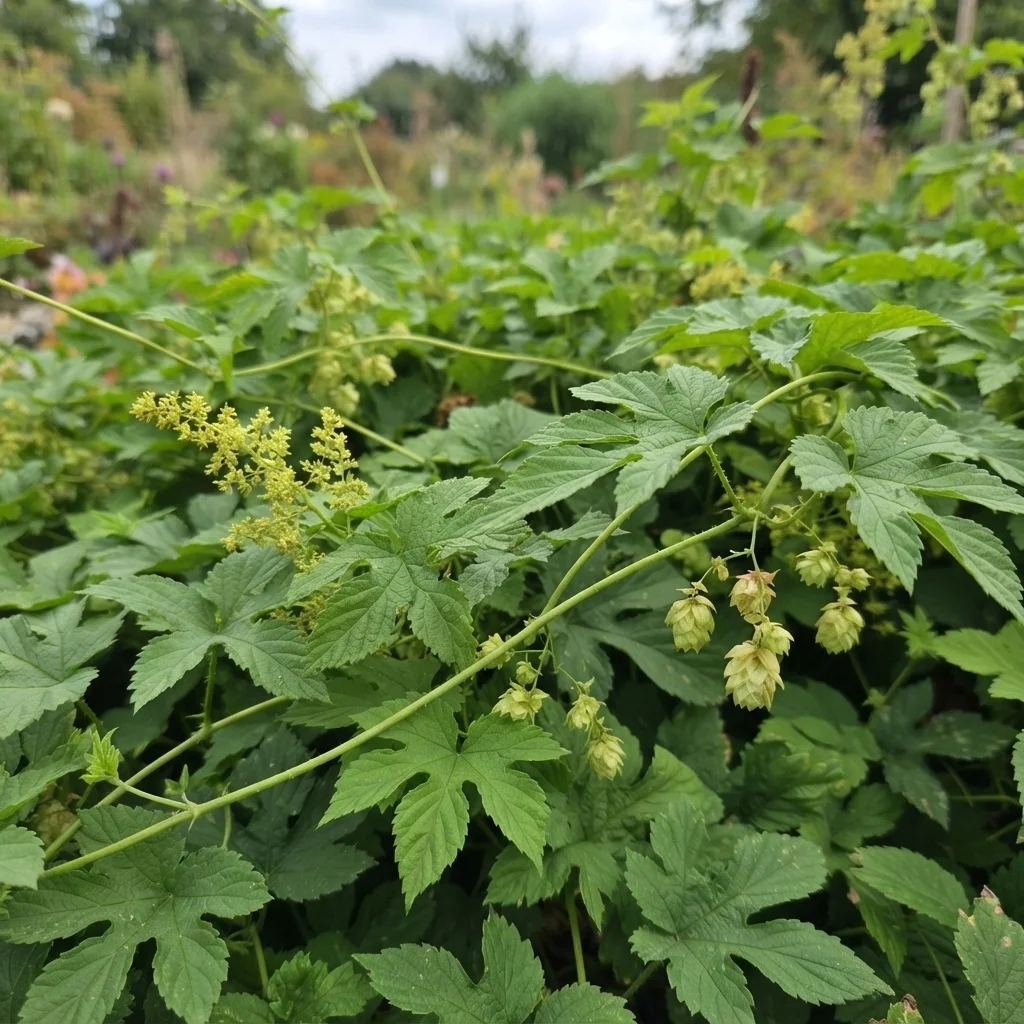
This species is dioecious, producing small yellow-green male panicles on separate plants from the papery, cone-like female strobiles used in brewing. The deeply lobed, rough-textured foliage provides dense summer screening before producing its characteristic lupulin-rich cones.
Uses & Benefits:
Essentials
At a Glance
Plant Type
Vine
Height
300"
Width
118"
Light
Full Sun, Partial Sun
Zones
4, 5, 6, 7, 8, 9
Water
Medium
Humidity
Moderate
Lifespan
Perennial
Native To
Europe, temperate Asia, North Africa, North America
Toxicity
Toxic to dogs and livestock
Bloom period
Summer – Fall
In flower about 6 months of the year
Planting
How to Grow
- Select a site in full sun with deep, fertile, well-drained soil and install a tall, sturdy trellis or support wire.
- Plant dormant rhizomes horizontally about two inches deep in early spring, or transplant potted starts after the last hard frost.
- Train the emerging young bines clockwise around the support structure once they reach one to two feet in length.
- Provide consistent moisture throughout the growing season, applying water at the base to keep the foliage dry.
Pro Tip
Install a heavy-duty vertical trellis or cable system at planting, as the bines can grow up to a foot a week and will collapse under their own weight without robust support.
Keep It Thriving
Care Guide
Do
- Cut all dead bines completely to the ground in late fall or winter after a hard frost.
- Apply a balanced, nitrogen-rich organic fertilizer or compost in early spring as new shoots emerge.
- Provide a secondary fertilizer boost in early summer before peak growth begins.
- Keep soil consistently moist but well-drained during active growth to maximize cone production.
Don't
- Do not prune into old woody frameworks during the growing season, as all growth emerges fresh from underground crowns.
- Do not allow the soil to become waterlogged, which quickly leads to root rot.
- Do not plant without a heavy-duty support structure capable of holding significant wind and weight loads.
- Do not handle the rough stems and foliage with bare skin if you are sensitive to contact dermatitis.
Seasonal Care Calendar
| Task | Jan | Feb | Mar | Apr | May | Jun | Jul | Aug | Sep | Oct | Nov | Dec |
|---|---|---|---|---|---|---|---|---|---|---|---|---|
| Fertilize | ||||||||||||
| Pest Check | ||||||||||||
| Prune | ||||||||||||
| Spring Cleanup |
Watch Out For
Pests & Diseases
Common Pests
Common Diseases
In the Garden
Landscape Uses & Companions
Landscape Uses
Companion Plants
Multiply
Propagation Methods
Good to Know
Common Questions
Common hop questions
What zones can Common hop grow in?
Common hop is hardy in USDA Zones 4–9. Inside that range it survives winter in the ground; outside it, grow it as an annual or a container plant you protect.
Is Common hop deer resistant?
Not reliably. Deer may browse Common hop, especially tender spring growth — plan on repellents or fencing where pressure is high.
When does Common hop bloom?
Common hop typically blooms in summer through fall. Exact timing shifts a week or two with your zone — Sow's bloom calendar maps it to your garden.
Does Common hop need full sun?
Common hop does best in full sun to part shade. In hot climates, afternoon shade keeps blooms fresher longer.
More Humulus to compare
Keep exploring
Explore the genus
Grow Common hop with confidence
See it in a design of your actual yard, get zone-matched care reminders, and track it season by season in your garden journal.