The Story
Plant Bio
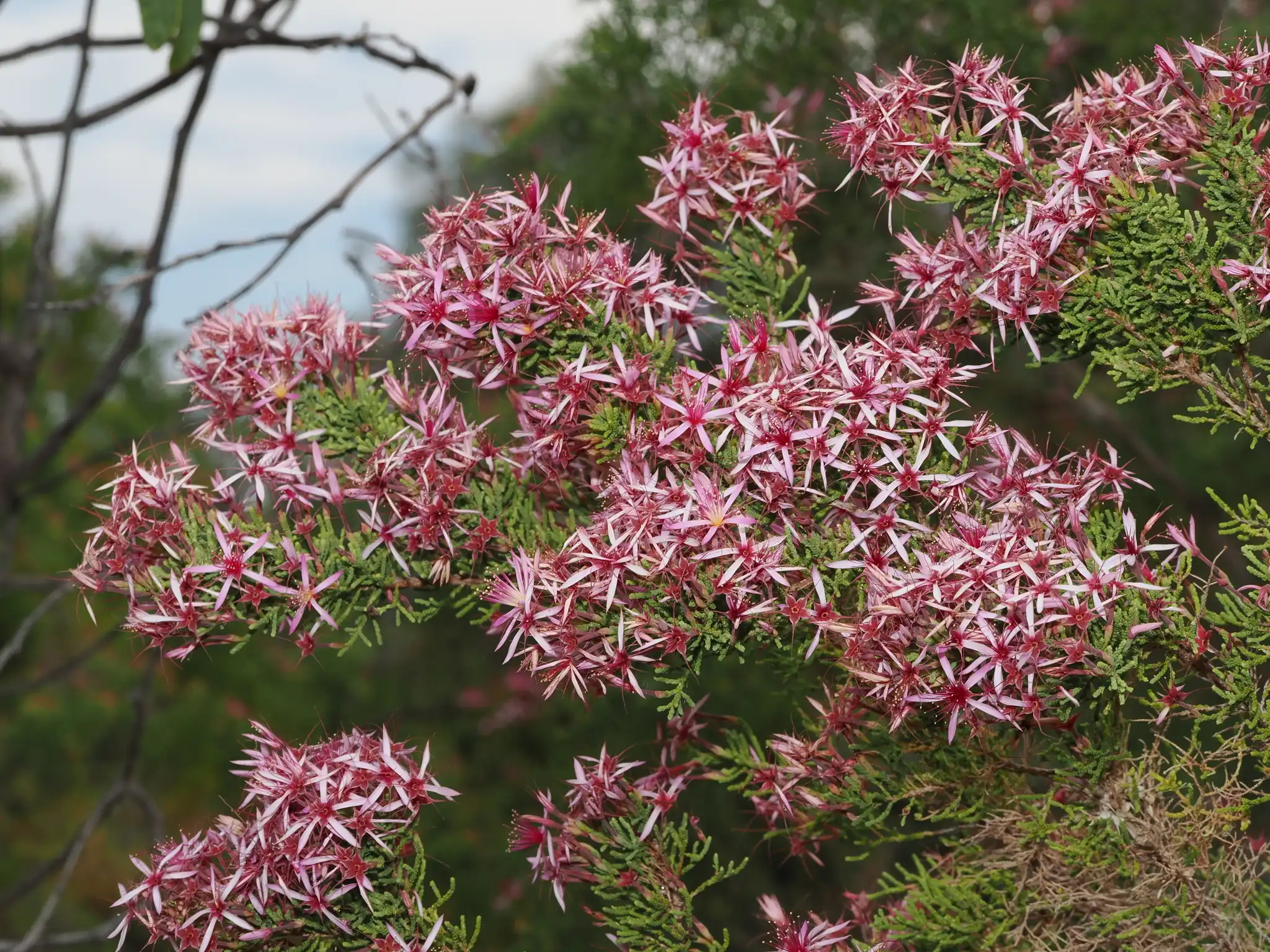
Calytrix exstipulata, commonly known as turkey bush, is an erect, multi-stemmed evergreen shrub native to northern Australia that reaches up to fifteen feet in height. It features small, aromatic, heather-like leaves and produces a heavy display of star-shaped pink or mauve flowers with persistent, whisker-like calyx lobes.
The species is distinguished by its lack of leaf stipules and its highly drought-tolerant, resinous foliage. The star-like blossoms crowd the upper branches in dense, leafy spikes, leaving behind decorative star-shaped calyces long after the petals fall.
Uses & Benefits:
Essentials
At a Glance
Plant Type
Shrub
Height
177"
Width
118"
Light
Full Sun
Zones
10
Water
Low
Humidity
High tolerance for dry-season humidity; poor in wet-summer temperate zones
Lifespan
Perennial
Native To
Northern Australia
Toxicity
Non-toxic (may cause minor skin irritation from essential oils)
Bloom period
Autumn – Spring
In flower about 9 months of the year
Planting
How to Grow
- Select a terracotta container filled with a lean, highly aerated sandy potting mix or a native-specific substrate.
- Position the plant in a location that receives full, unfiltered sun for at least six hours daily.
- Water deeply only when the potting medium has dried out completely, avoiding any standing water in the saucer.
- Apply a low-phosphorus, native-formulated fertilizer sparingly once a year in early spring.
Pro Tip
Plant in a sharply draining, sandy or gravelly medium and withhold summer water; standard garden soils or over-irrigation will rapidly trigger fatal root rot.
Keep It Thriving
Care Guide
Do
- Provide exceptional drainage using sandy or gravelly soil mixes.
- Grow in a pot to move indoors if winter temperatures drop below freezing.
- Prune lightly immediately after flowering to maintain a bushy habit.
Don't
- Do not use standard phosphorus-heavy fertilizers, which damage the root system.
- Do not overwater or allow the roots to sit in soggy, waterlogged soil.
- Do not prune hard into old, leafless woody stems as they will fail to regenerate.
Seasonal Care Calendar
| Task | Jan | Feb | Mar | Apr | May | Jun | Jul | Aug | Sep | Oct | Nov | Dec |
|---|---|---|---|---|---|---|---|---|---|---|---|---|
| Fertilize | ||||||||||||
| Pest Check | ||||||||||||
| Prune | ||||||||||||
| Winter Prep |
Watch Out For
Pests & Diseases
Common Pests
Common Diseases
In the Garden
Landscape Uses & Companions
Landscape Uses
Companion Plants
Multiply
Propagation Methods
Good to Know
Common Questions
Turkey Bush questions
What zones can Turkey Bush grow in?
Turkey Bush is hardy in USDA Zone 10. Inside that range it survives winter in the ground; outside it, grow it as an annual or a container plant you protect.
When does Turkey Bush bloom?
Turkey Bush typically blooms in autumn through spring. Exact timing shifts a week or two with your zone — Sow's bloom calendar maps it to your garden.
Does Turkey Bush need full sun?
Turkey Bush does best in full sun (6+ hours).
Is Turkey Bush drought tolerant?
Yes — once established (usually after the first full season), Turkey Bush handles dry spells with minimal watering. Water deeply its first year to build the root system that makes that possible.
Keep exploring
Explore the genus
Hardy in your zone?
Grow Turkey Bush with confidence
See it in a design of your actual yard, get zone-matched care reminders, and track it season by season in your garden journal.