The Story
Plant Bio
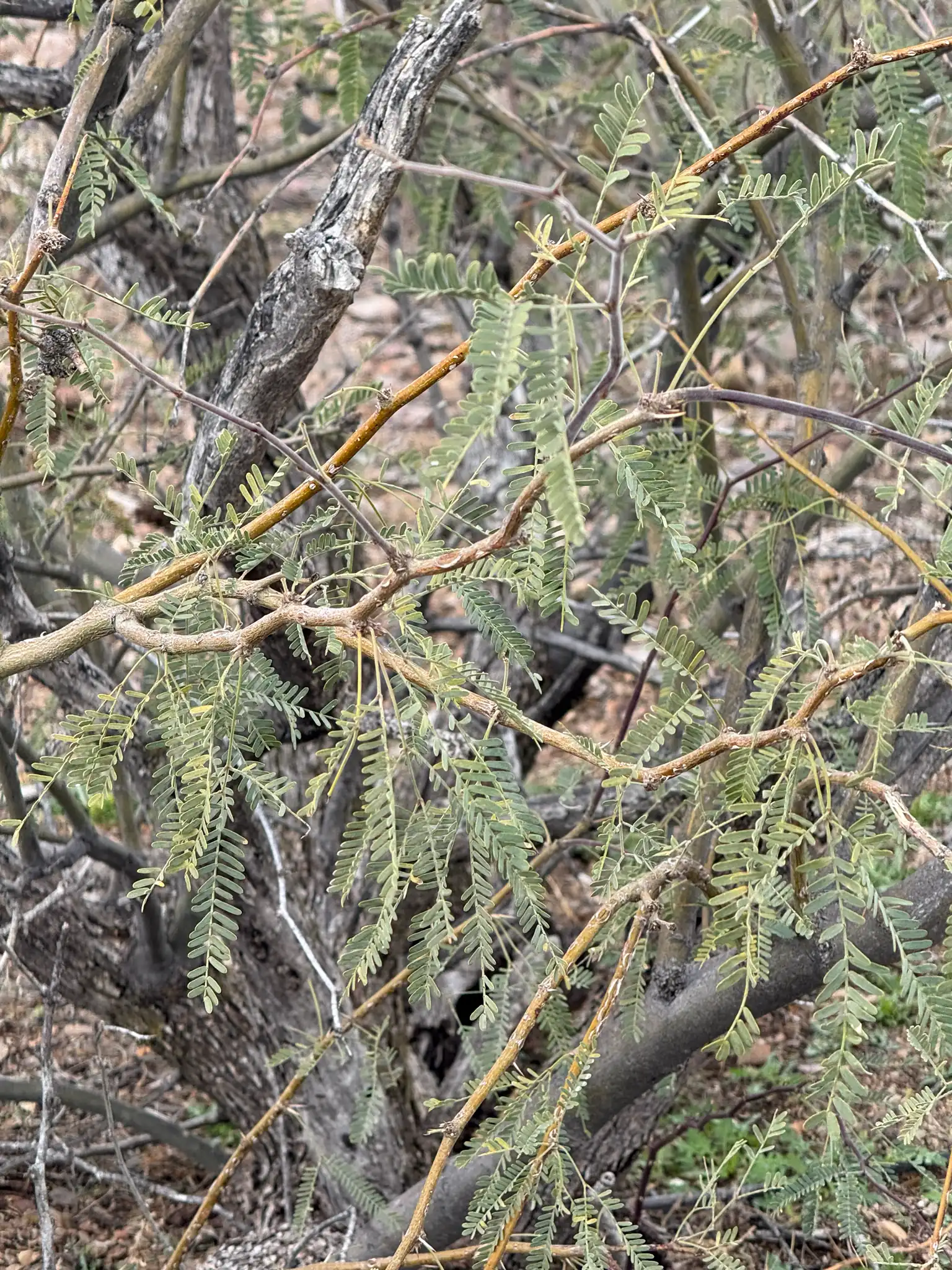
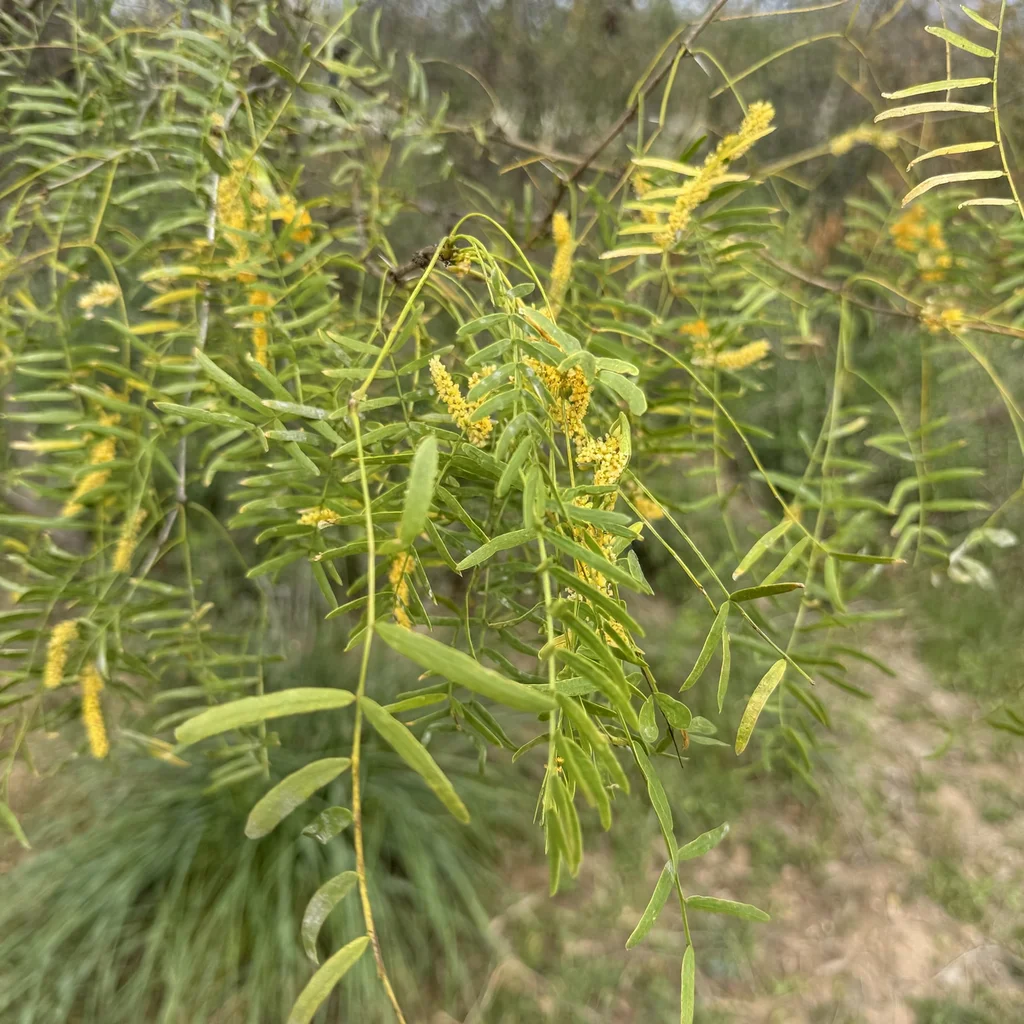
Prosopis velutina, the velvet mesquite, is a deciduous desert tree or large multi-stemmed shrub characterized by a crooked, spreading crown and zigzag branches armed with paired thorns. The entire plant is covered in a fine, velvety pubescence, bearing pale yellow to cream catkin-like flower spikes from spring into early summer.
This species is distinguished by its exceptionally deep taproot system, which allows it to thrive in arid conditions where other woody plants fail. The foliage consists of delicate, bipinnately compound leaves that emerge light green before maturing to a dusty grey-green.
Uses & Benefits:
Essentials
At a Glance
Plant Type
Tree
Height
354"
Width
354"
Light
Full Sun
Zones
8, 9, 10
Water
Low
Humidity
Low
Lifespan
Long-lived
Native To
North America
Toxicity
Skin Irritant
Bloom period
Spring – Early summer
In flower about 4 months of the year
Planting
How to Grow
- Select a planting site in full sun with excellent drainage, avoiding low spots where water pools.
- Dig a hole twice as wide as the root ball but no deeper, ensuring the root flare sits slightly above the surrounding soil grade.
- Backfill with native soil without amendments, tamping lightly to remove air pockets, and water thoroughly to settle.
- Establish a wide basin for deep, infrequent irrigation during the first two seasons, then taper off watering once established.
Pro Tip
Irrigate deeply but infrequently to force the taproot downward; shallow watering encourages weak surface roots and structural instability.
Keep It Thriving
Care Guide
Do
- Water deeply and infrequently to encourage a resilient, deep-reaching root system.
- Prune selectively in late winter to remove dead, damaged, or crossing branches.
- Wear thick leather gloves when handling the plant to protect against sharp stipular spines.
Don't
- Do not over-water or plant in heavy, poorly draining clay soils, which triggers root rot.
- Do not prune heavily into old, leafless wood, as recovery is slow and patchy.
- Do not apply routine fertilizers, as excessive nutrients cause weak, structurally unsound growth.
Seasonal Care Calendar
| Task | Jan | Feb | Mar | Apr | May | Jun | Jul | Aug | Sep | Oct | Nov | Dec |
|---|---|---|---|---|---|---|---|---|---|---|---|---|
| Mulch | ||||||||||||
| Pest Check | ||||||||||||
| Plant | ||||||||||||
| Prune |
Watch Out For
Pests & Diseases
Common Pests
Common Diseases
In the Garden
Landscape Uses & Companions
Landscape Uses
Multiply
Propagation Methods
Good to Know
Common Questions
Velvet Mesquite questions
What zones can Velvet Mesquite grow in?
Velvet Mesquite is hardy in USDA Zones 8–10. Inside that range it survives winter in the ground; outside it, grow it as an annual or a container plant you protect.
Is Velvet Mesquite deer resistant?
Not reliably. Deer may browse Velvet Mesquite, especially tender spring growth — plan on repellents or fencing where pressure is high.
When does Velvet Mesquite bloom?
Velvet Mesquite typically blooms in spring through early summer. Exact timing shifts a week or two with your zone — Sow's bloom calendar maps it to your garden.
Does Velvet Mesquite need full sun?
Velvet Mesquite does best in full sun (6+ hours).
Is Velvet Mesquite drought tolerant?
Yes — once established (usually after the first full season), Velvet Mesquite handles dry spells with minimal watering. Water deeply its first year to build the root system that makes that possible.
More Prosopis to compare
Keep exploring
Explore the genus
Hardy in your zone?
Grow Velvet Mesquite with confidence
See it in a design of your actual yard, get zone-matched care reminders, and track it season by season in your garden journal.