The Story
Plant Bio
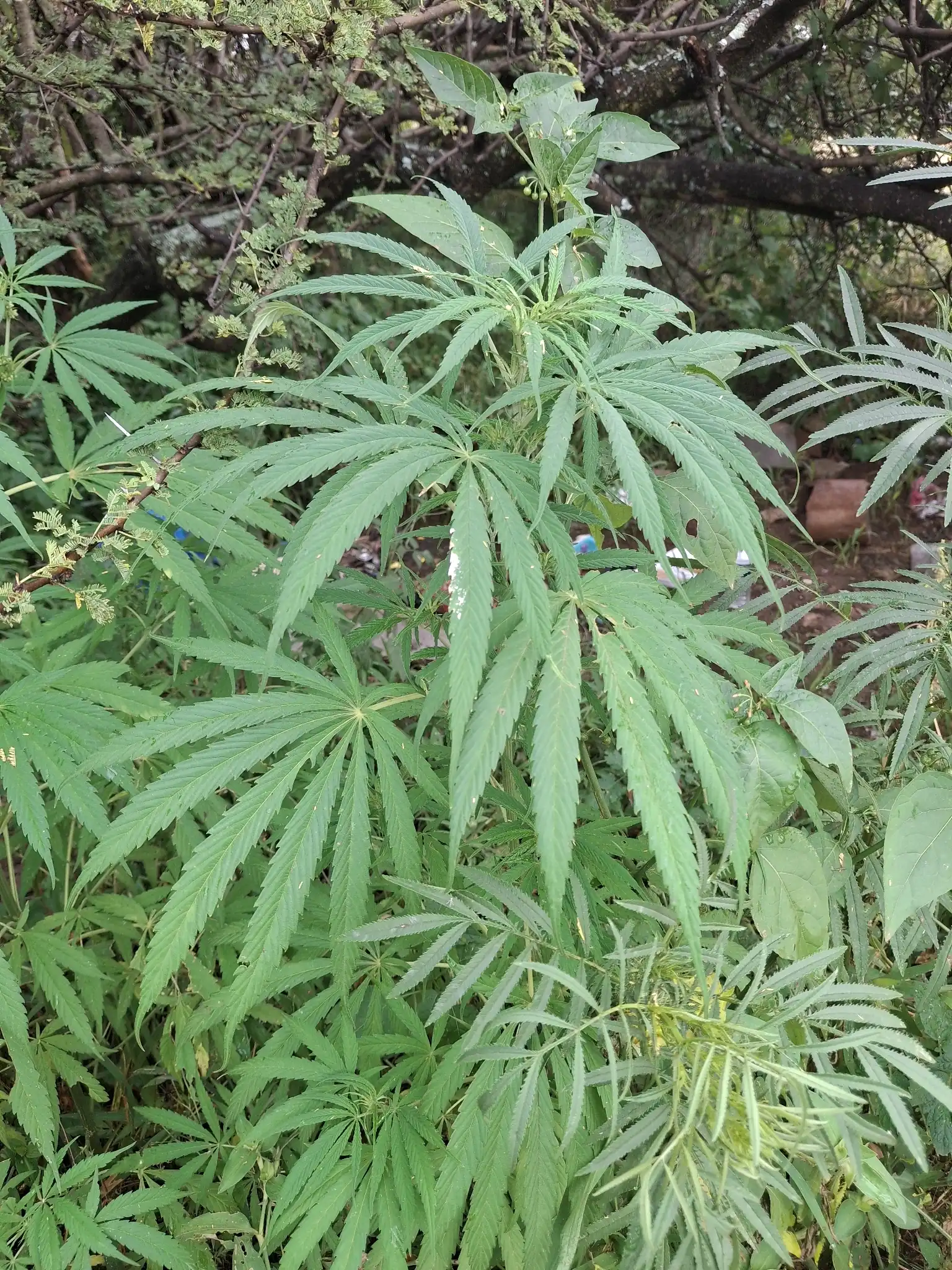
Cannabis sativa is an upright, erect herbaceous annual native to Central Asia, characterized by its distinct palmately compound leaves with serrated leaflets. The species is dioecious, producing inconspicuous, apetalous green flowers in wind-pollinated clusters during late summer and fall.
This species features vibrant yellow-green to medium green new growth and develops highly resinous female floral bracts. It contains active cannabinoids and sticky resins that can cause contact dermatitis in sensitive handlers.
Uses & Benefits:
Essentials
At a Glance
Plant Type
Annual
Height
120"
Width
60"
Light
Full Sun
Zones
4, 5, 6, 7, 8, 9, 10
Water
Moderate
Humidity
Moderate
Lifespan
Annual
Native To
Central Asia
Toxicity
Toxic to pets, skin irritant, allergenic pollen
Bloom period
Late summer – Fall
In flower about 4 months of the year
Planting
How to Grow
- Plant in a full-sun location receiving at least six hours of direct daily sunlight after all danger of spring frost has passed.
- Prepare a well-drained loam or sandy loam soil bed with a pH adjusted between 6.0 and 7.0.
- Water consistently during active vegetative growth, allowing the top layer of soil to dry slightly to prevent waterlogging.
- Apply a balanced nitrogen-heavy fertilizer every one to two weeks during the vegetative phase, shifting to a phosphorus-rich formula during flowering.
Pro Tip
Amateurs frequently overwater this species, which triggers fatal Pythium or Fusarium root rot; ensure excellent soil drainage and maintain high air circulation around the dense floral clusters to prevent Botrytis outbreaks.
Keep It Thriving
Care Guide
Do
- Provide a minimum of six hours of direct sunlight daily.
- Prune or top the plants early in the vegetative stage to encourage lateral branching.
- Ensure high airflow around plants to minimize fungal pathogens.
Don't
- Do not overwater or allow the roots to sit in waterlogged, poorly drained soil.
- Do not prune back into old woody stems once the plant reaches maturity.
- Do not apply high-nitrogen fertilizers during the active flowering phase.
Seasonal Care Calendar
| Task | Jan | Feb | Mar | Apr | May | Jun | Jul | Aug | Sep | Oct | Nov | Dec |
|---|---|---|---|---|---|---|---|---|---|---|---|---|
| Fertilize | ||||||||||||
| Harvest | ||||||||||||
| Pest Check | ||||||||||||
| Plant | ||||||||||||
| Prune |
Watch Out For
Pests & Diseases
Common Pests
Common Diseases
In the Garden
Landscape Uses & Companions
Landscape Uses
Companion Plants
Multiply
Propagation Methods
Good to Know
Common Questions
Hemp questions
What zones can Hemp grow in?
Hemp is hardy in USDA Zones 4–10. Inside that range it survives winter in the ground; outside it, grow it as an annual or a container plant you protect.
Is Hemp deer resistant?
Not reliably. Deer may browse Hemp, especially tender spring growth — plan on repellents or fencing where pressure is high.
When does Hemp bloom?
Hemp typically blooms in late summer through fall. Exact timing shifts a week or two with your zone — Sow's bloom calendar maps it to your garden.
Does Hemp need full sun?
Hemp does best in full sun (6+ hours).
Is Hemp drought tolerant?
Yes — once established (usually after the first full season), Hemp handles dry spells with minimal watering. Water deeply its first year to build the root system that makes that possible.
Keep exploring
Explore the genus
Grow Hemp with confidence
See it in a design of your actual yard, get zone-matched care reminders, and track it season by season in your garden journal.