



The Story
Plant Bio
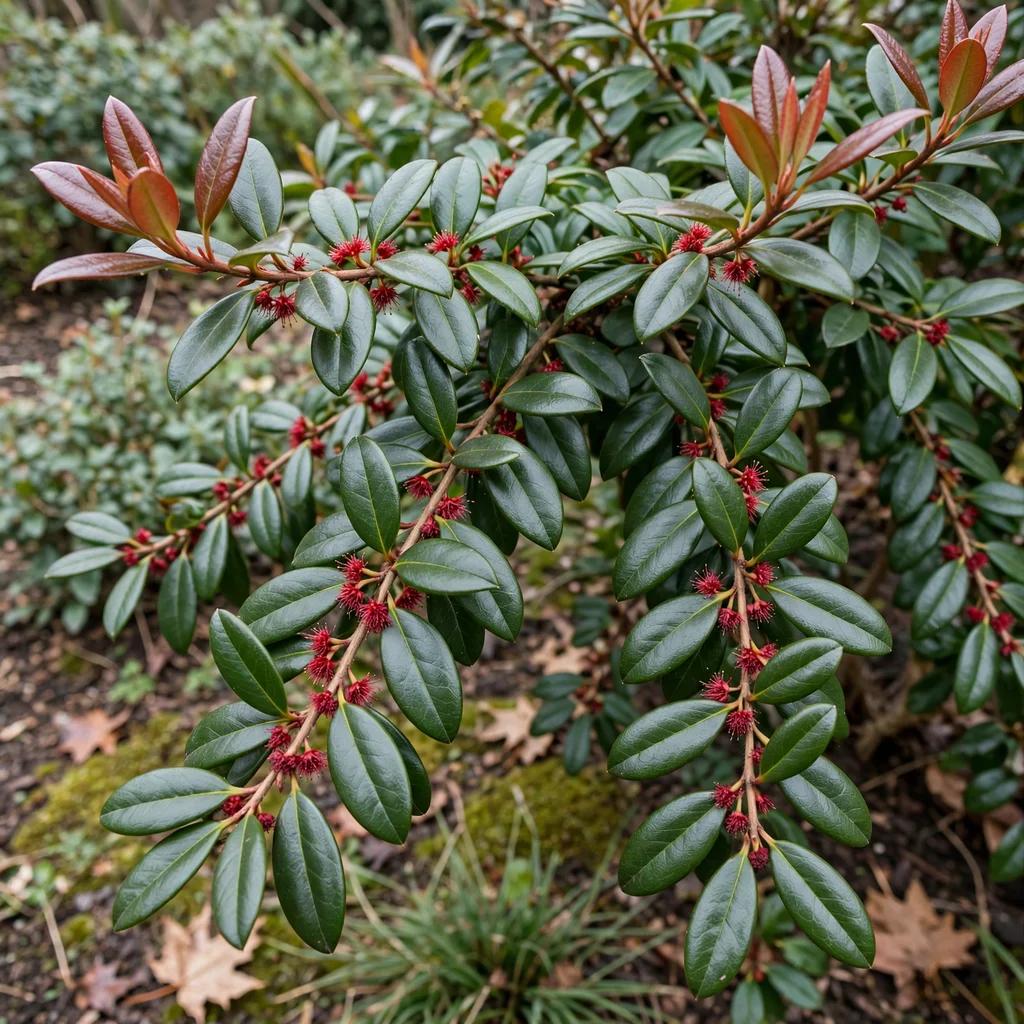
Distylium is a versatile evergreen shrub in the witch hazel family, prized for its adaptability to a wide range of challenging conditions including heat, drought, wet soil, and clay. It features small, leathery leaves and inconspicuous winter flowers.
Cinnamon Girl ('PIIDIST-V') is distinguished by its plum-purple new growth that matures to a blue-green. It has a low, spreading habit and offers superior cold hardiness compared to many other Distylium varieties.
Uses & Benefits:
Essentials
At a Glance
Plant Type
Shrub
Height
30"
Width
42"
Light
Full Sun, Partial Sun
Zones
6, 7, 8, 9
Water
Low to moderate
Humidity
High
Lifespan
Long-lived shrub
Native To
Asia
Toxicity
Non-toxic
Planting
How to Grow
- Select a location in full sun or part shade.
- Dig a hole two to three times wider than the container.
- Amend heavy clay soil with compost to improve structure.
- Remove the plant from its pot and gently loosen the roots.
- Set the plant in the hole with the top of the root ball level with the soil.
- Backfill, water thoroughly, and apply a 2-inch layer of mulch.
Pro Tip
This is a true 'plant it and forget it' shrub. Avoid over-fertilizing and only prune if you need to shape it.
Keep It Thriving
Care Guide
Do
- Water regularly during the first year to establish a deep root system.
- Plant in a location with good drainage, despite its tolerance for wet feet.
- Provide full sun for the best foliage color.
- Use as a tough alternative to boxwood, cherry laurel, or holly.
Don't
- Don't plant in deep shade, which can lead to sparse growth.
- Avoid planting in alkaline soils.
- Don't worry about pests or diseases; it is highly resistant.
- Don't prune heavily; it has a naturally attractive form.
Seasonal Care Calendar
| Task | Jan | Feb | Mar | Apr | May | Jun | Jul | Aug | Sep | Oct | Nov | Dec |
|---|---|---|---|---|---|---|---|---|---|---|---|---|
| Fertilize | ||||||||||||
| Plant | ||||||||||||
| Prune |
Watch Out For
Pests & Diseases
Common Pests
Common Diseases
In the Garden
Landscape Uses & Companions
Landscape Uses
Companion Plants
Multiply
Propagation Methods
Good to Know
Common Questions
Distylium questions
What zones can Distylium grow in?
Distylium is hardy in USDA Zones 6–9. Inside that range it survives winter in the ground; outside it, grow it as an annual or a container plant you protect.
Is Distylium deer resistant?
Yes — Distylium is rated deer-resistant. Deer typically pass it over, though extreme hunger can override any plant's defenses.
When does Distylium bloom?
Distylium typically blooms in late winter through early spring. Exact timing shifts a week or two with your zone — Sow's bloom calendar maps it to your garden.
Does Distylium need full sun?
Distylium does best in full sun to part shade. In hot climates, afternoon shade keeps blooms fresher longer.
Is Distylium drought tolerant?
Yes — once established (usually after the first full season), Distylium handles dry spells with minimal watering. Water deeply its first year to build the root system that makes that possible.
More Distylium to compare
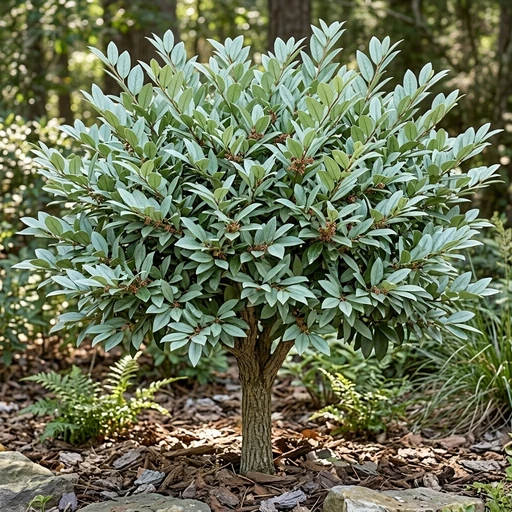
Vintage Jade Distylium
Distylium x hybrida 'Vintage Jade '
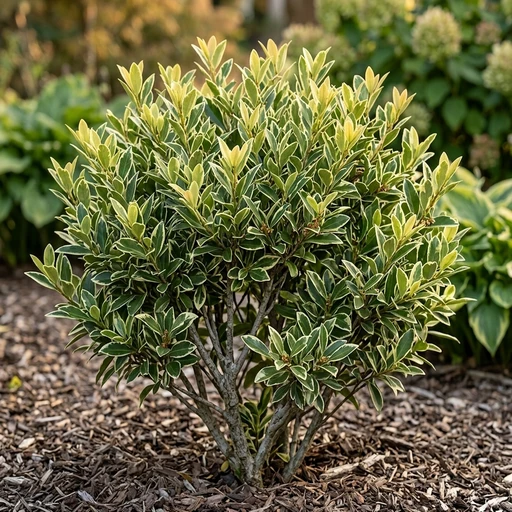
Cinnamon Girl Distylium
Distylium x hybrida 'Cinnamon Girl Distylium'
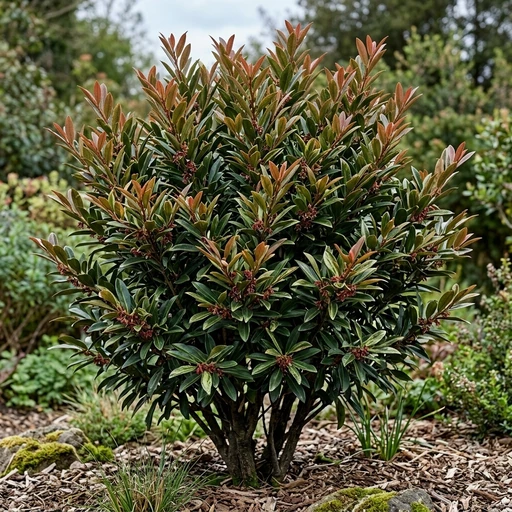
Cast in Bronze Distylium
Distylium x hybrida 'Cast in Bronze'
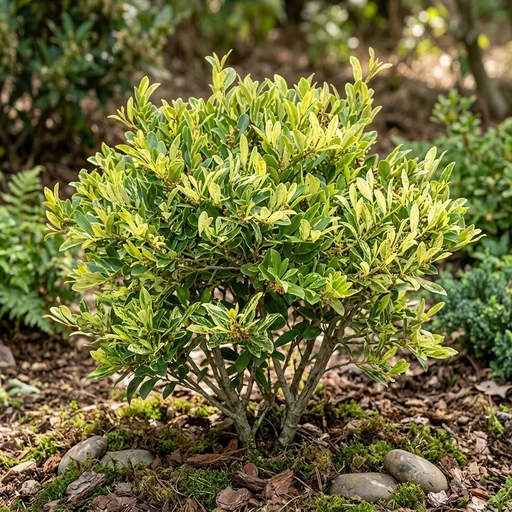
Spring Frost Distylium
Distylium x hybrida 'Spring Frost'
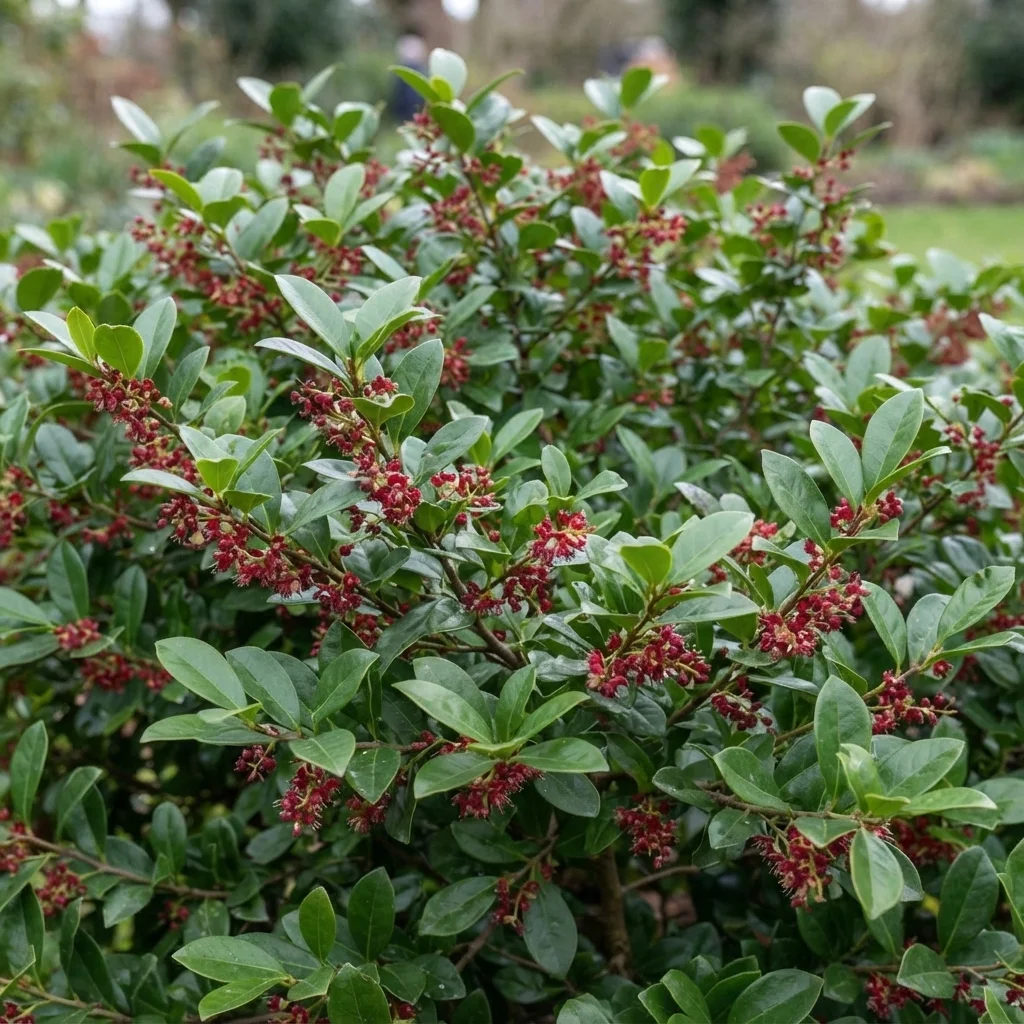
Isu Tree
Distylium racemosum
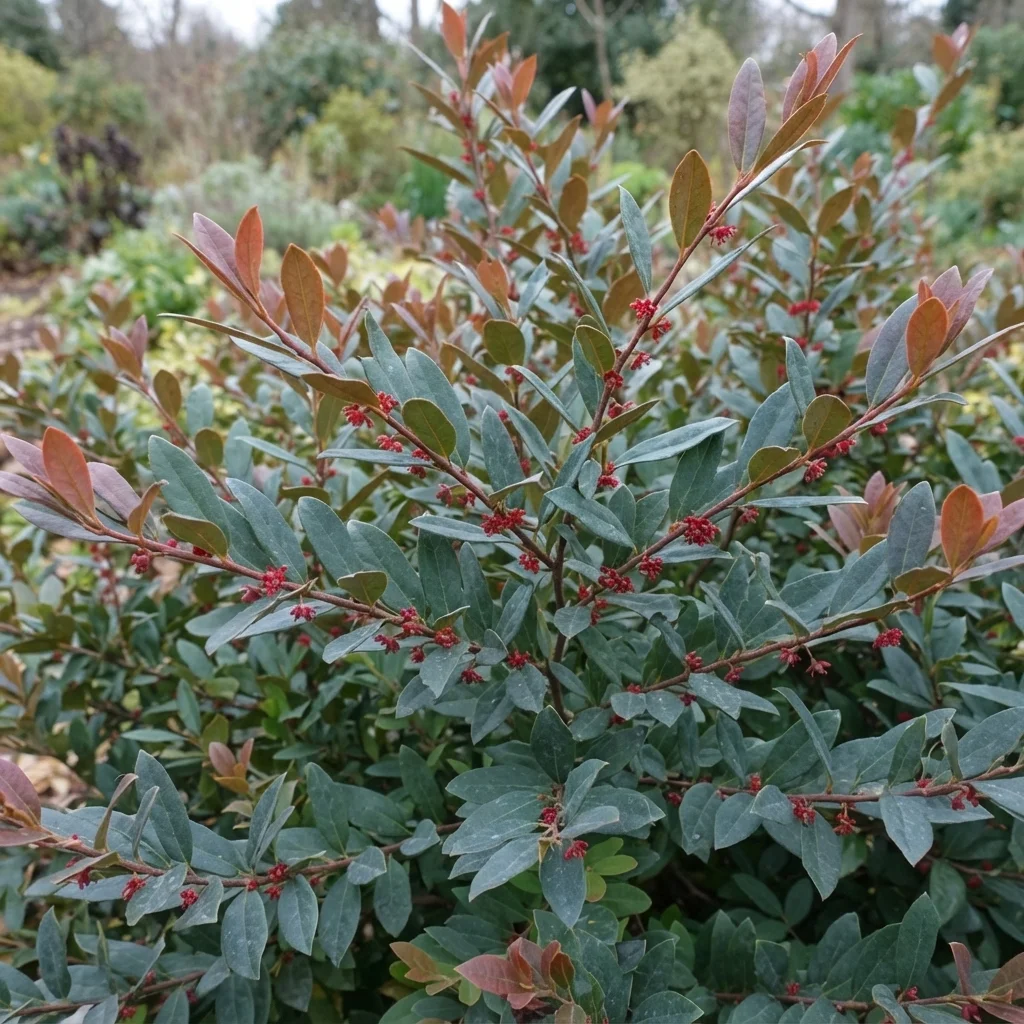
Myrtle-Leafed Distylium
Distylium myricoides
Keep exploring
Explore the genus
Hardy in your zone?
Grow Distylium with confidence
See it in a design of your actual yard, get zone-matched care reminders, and track it season by season in your garden journal.