The Story
Plant Bio
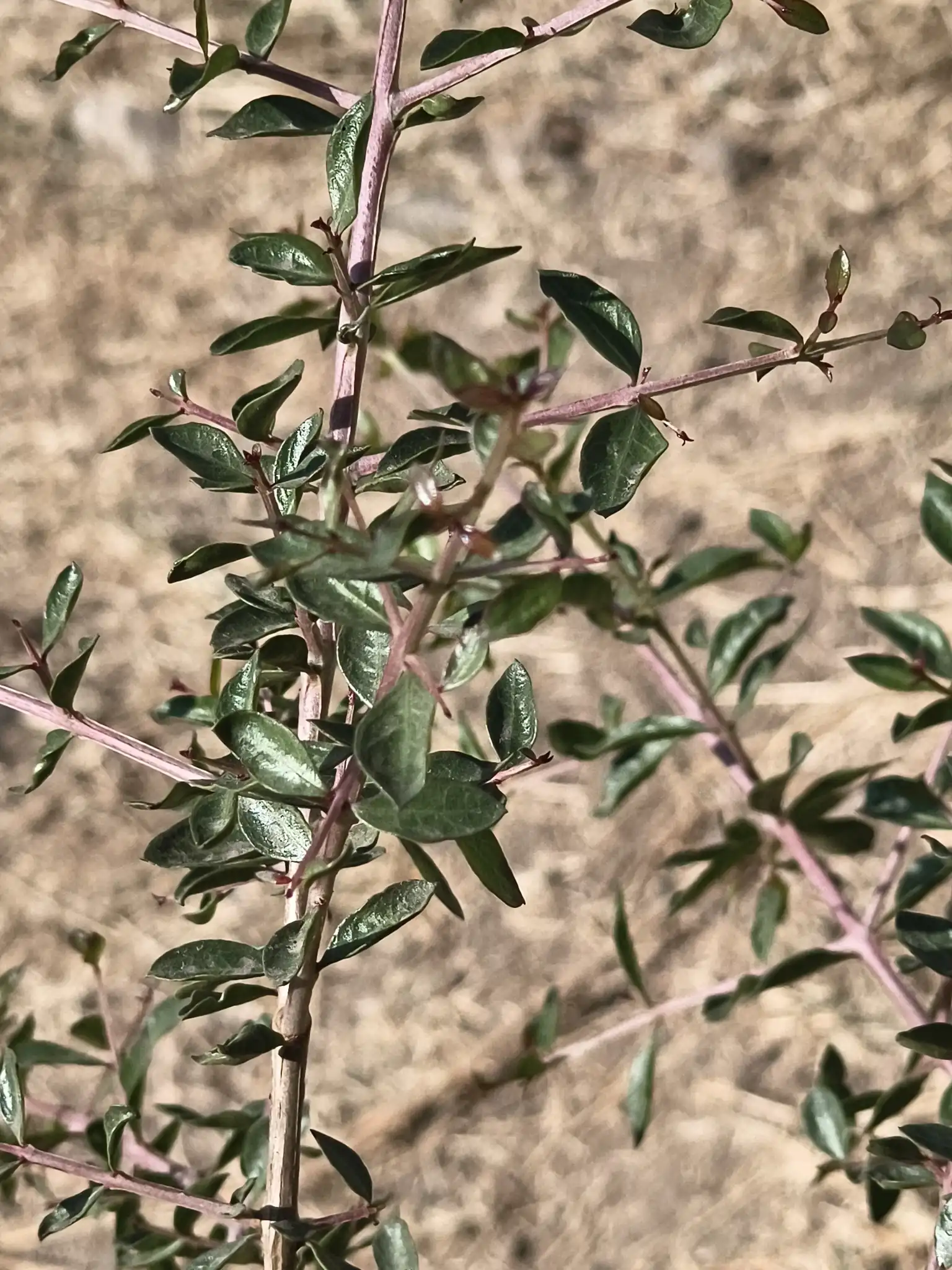
Lawsonia inermis, commonly known as henna, is a large, multi-stemmed evergreen shrub native to semi-arid tropical regions of Africa, Asia, and northern Australia. It features slender, densely branched stems that develop sharp terminal thorns with age, clothed in small, glossy green, lanceolate leaves.
The highly fragrant, creamy-white to pinkish flowers emerge in large terminal clusters from spring through fall, followed by small seed capsules. Crushed leaves release lawsone, a natural chemical that produces a permanent orange-red dye when in contact with skin or fabric.
Uses & Benefits:
Essentials
At a Glance
Plant Type
Shrub
Height
120"
Width
96"
Light
Full Sun
Zones
9, 10
Water
Low
Humidity
Moderate
Lifespan
Perennial
Native To
Africa, Asia, Australia
Toxicity
Non-toxic
Bloom period
Spring – Fall
In flower about 9 months of the year
Planting
How to Grow
- Plant in a container or a garden bed with exceptionally well-drained sandy or loamy soil in a full-sun location.
- Water deeply but infrequently, allowing the soil to dry out completely between waterings to prevent root rot.
- Apply a balanced, low-dose slow-release fertilizer during the active spring and summer growing seasons.
- Bring container-grown plants indoors before overnight temperatures drop below 45°F (5°C) in autumn.
Pro Tip
Overwintering henna indoors requires maximizing direct sunlight and strictly limiting water; soggy soil during winter dormancy rapidly triggers fatal root rot.
Keep It Thriving
Care Guide
Do
- Provide at least six hours of direct sunlight daily.
- Ensure the growing medium has excellent drainage.
- Prune after flowering to maintain shape and size.
Don't
- Do not overwater, especially during the cool winter dormancy period.
- Do not cut blindly into old, leafless woody stems when pruning.
- Do not allow the plant to experience hard freezing temperatures.
Seasonal Care Calendar
| Task | Jan | Feb | Mar | Apr | May | Jun | Jul | Aug | Sep | Oct | Nov | Dec |
|---|---|---|---|---|---|---|---|---|---|---|---|---|
| Fertilize | ||||||||||||
| Pest Check | ||||||||||||
| Prune | ||||||||||||
| Winter Prep |
Watch Out For
Pests & Diseases
Common Pests
Common Diseases
In the Garden
Landscape Uses & Companions
Landscape Uses
Companion Plants
Multiply
Propagation Methods
Good to Know
Common Questions
Henna questions
What zones can Henna grow in?
Henna is hardy in USDA Zones 9–10. Inside that range it survives winter in the ground; outside it, grow it as an annual or a container plant you protect.
Is Henna deer resistant?
Not reliably. Deer may browse Henna, especially tender spring growth — plan on repellents or fencing where pressure is high.
When does Henna bloom?
Henna typically blooms in spring through fall. Exact timing shifts a week or two with your zone — Sow's bloom calendar maps it to your garden.
Does Henna need full sun?
Henna does best in full sun (6+ hours).
Is Henna drought tolerant?
Yes — once established (usually after the first full season), Henna handles dry spells with minimal watering. Water deeply its first year to build the root system that makes that possible.
Keep exploring
Explore the genus
Hardy in your zone?
Grow Henna with confidence
See it in a design of your actual yard, get zone-matched care reminders, and track it season by season in your garden journal.