The Story
Plant Bio
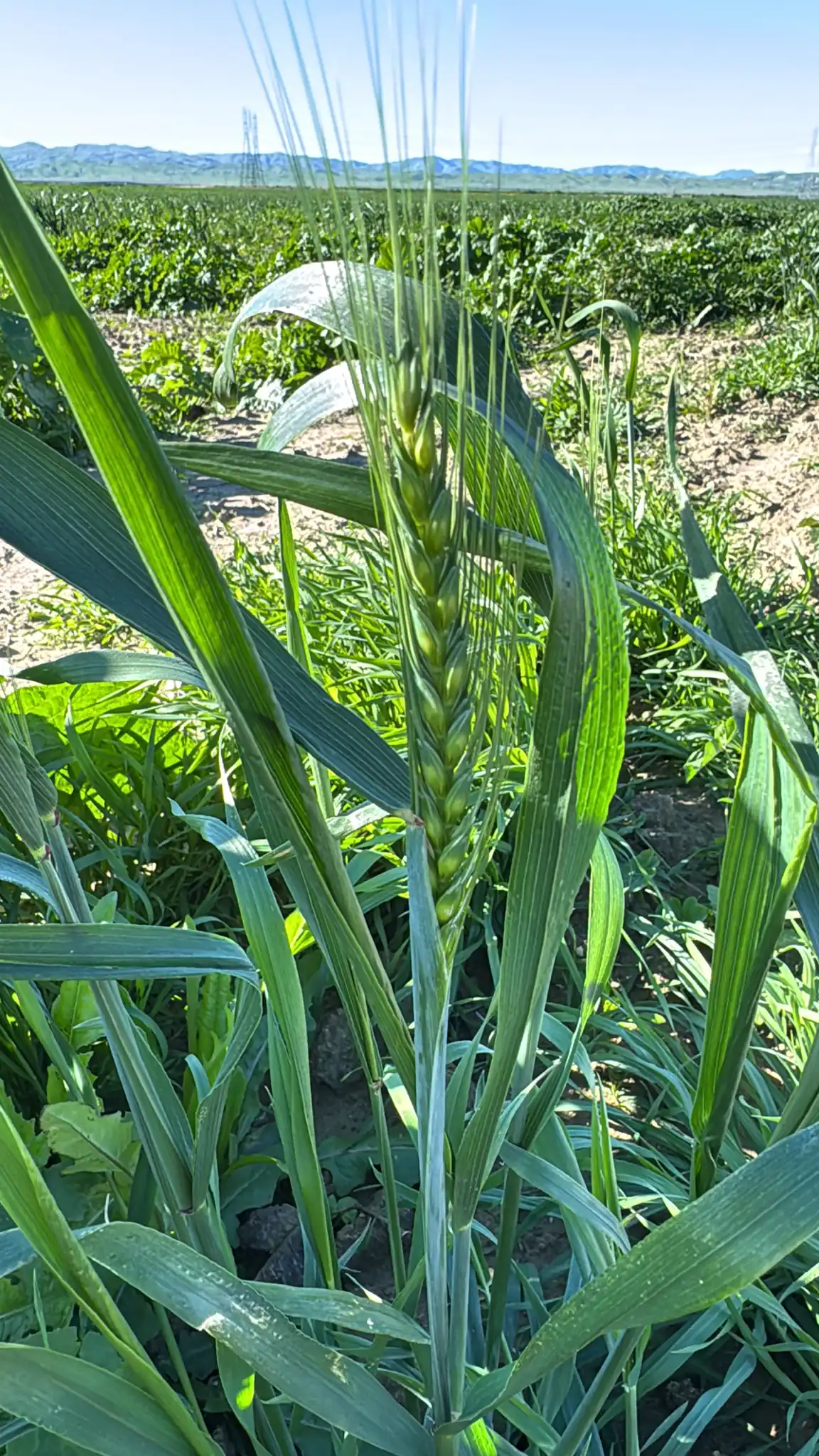
Triticum aestivum is an upright, annual or biennial herbaceous grass characterized by hollow stems and flat, bright green to glaucous green leaves. The terminal flowering spikes bear multiple spikelets that mature from green to golden-yellow, producing the grain heads familiar in agriculture.
This species is widely cultivated as a cool-season cover crop or grain, spreading via tillers to form a dense, upright tufted habit. It adapts readily to diverse fertile soils and provides valuable forage for granivorous birds before the seed heads dry.
Uses & Benefits:
Essentials
At a Glance
Plant Type
Grass
Height
47"
Width
12"
Light
Full Sun
Zones
4, 5, 6, 7, 8, 9
Water
Moderate
Humidity
Low to Moderate
Lifespan
Annual
Native To
Asia
Toxicity
Gluten Allergen / Mechanical Irritant
Bloom period
Spring – Summer
In flower about 6 months of the year
Planting
How to Grow
- Sow seeds directly into well-drained, fertile soil in fall for winter types, or early spring for spring types.
- Plant the seeds at a depth of two to four centimeters to ensure proper root establishment and moisture contact.
- Water moderately during early growth, keeping the soil moist but not waterlogged to prevent root rot.
- Monitor nitrogen application closely, as excessive fertilizer weakens the hollow stems and causes the plants to buckle.
Pro Tip
Terminate the crop by tilling or mowing before the seed heads mature to prevent it from self-sowing and becoming a persistent garden weed.
Keep It Thriving
Care Guide
Do
- Sow seeds directly into fertile, well-drained loams or sandy loams.
- Provide full sun exposure for optimal growth and grain development.
- Terminate the crop before seed set if using it strictly as a green manure.
Don't
- Do not overwater during the flowering and grain-filling stages to avoid fungal diseases.
- Do not apply excessive nitrogen fertilizer, which leads to stem collapse and lodging.
- Do not plant in poorly drained or highly saline soils.
Seasonal Care Calendar
| Task | Jan | Feb | Mar | Apr | May | Jun | Jul | Aug | Sep | Oct | Nov | Dec |
|---|---|---|---|---|---|---|---|---|---|---|---|---|
| Fertilize | ||||||||||||
| Harvest | ||||||||||||
| Pest Check | ||||||||||||
| Plant |
Watch Out For
Pests & Diseases
Common Pests
Common Diseases
In the Garden
Landscape Uses & Companions
Landscape Uses
Companion Plants
Multiply
Propagation Methods
Good to Know
Common Questions
Common Wheat questions
What zones can Common Wheat grow in?
Common Wheat is hardy in USDA Zones 4–9. Inside that range it survives winter in the ground; outside it, grow it as an annual or a container plant you protect.
When does Common Wheat bloom?
Common Wheat typically blooms in spring through summer. Exact timing shifts a week or two with your zone — Sow's bloom calendar maps it to your garden.
Does Common Wheat need full sun?
Common Wheat does best in full sun (6+ hours).
Is Common Wheat drought tolerant?
Yes — once established (usually after the first full season), Common Wheat handles dry spells with minimal watering. Water deeply its first year to build the root system that makes that possible.
Keep exploring
Explore the genus
Grow Common Wheat with confidence
See it in a design of your actual yard, get zone-matched care reminders, and track it season by season in your garden journal.