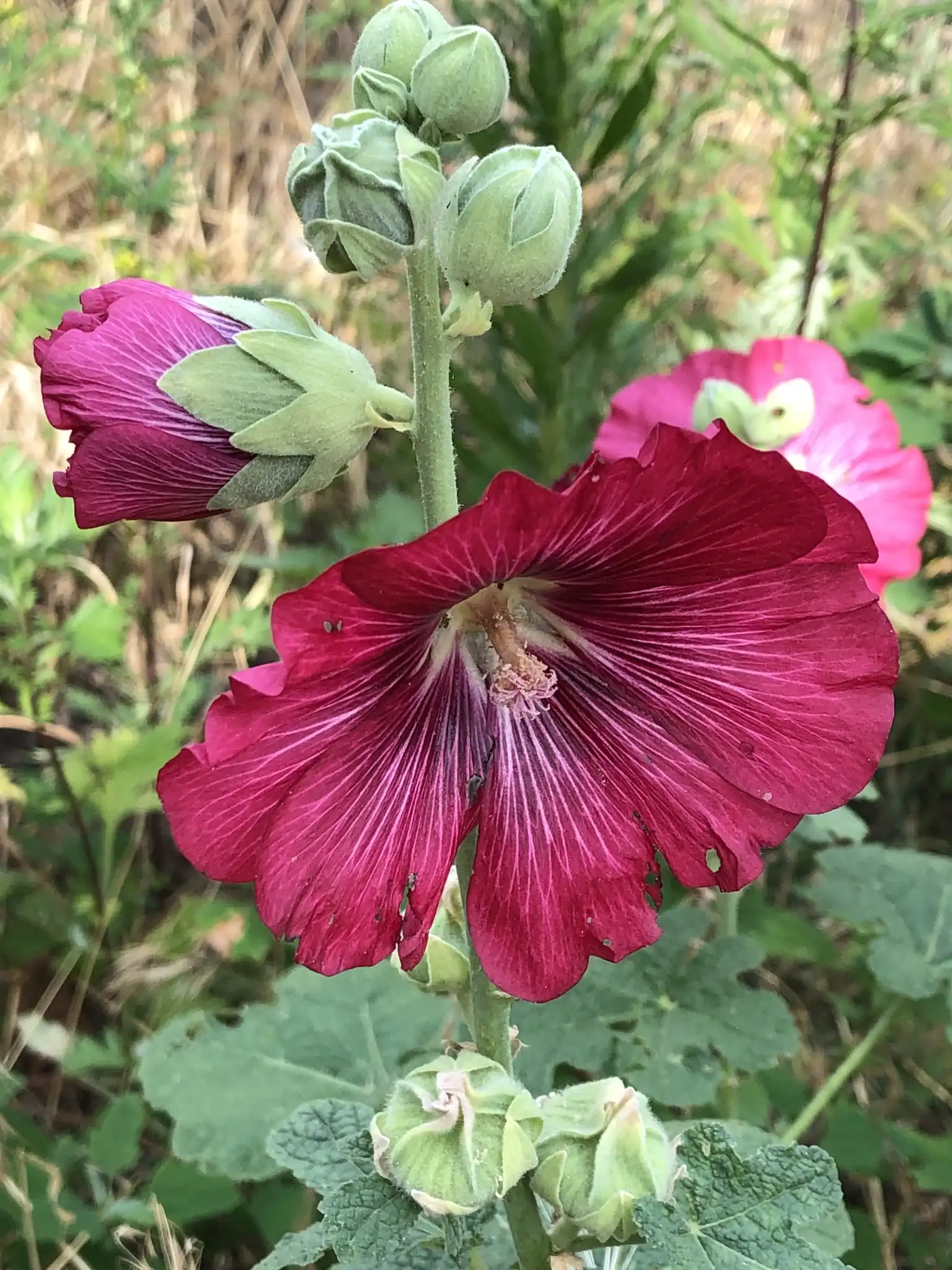
20 named cultivars
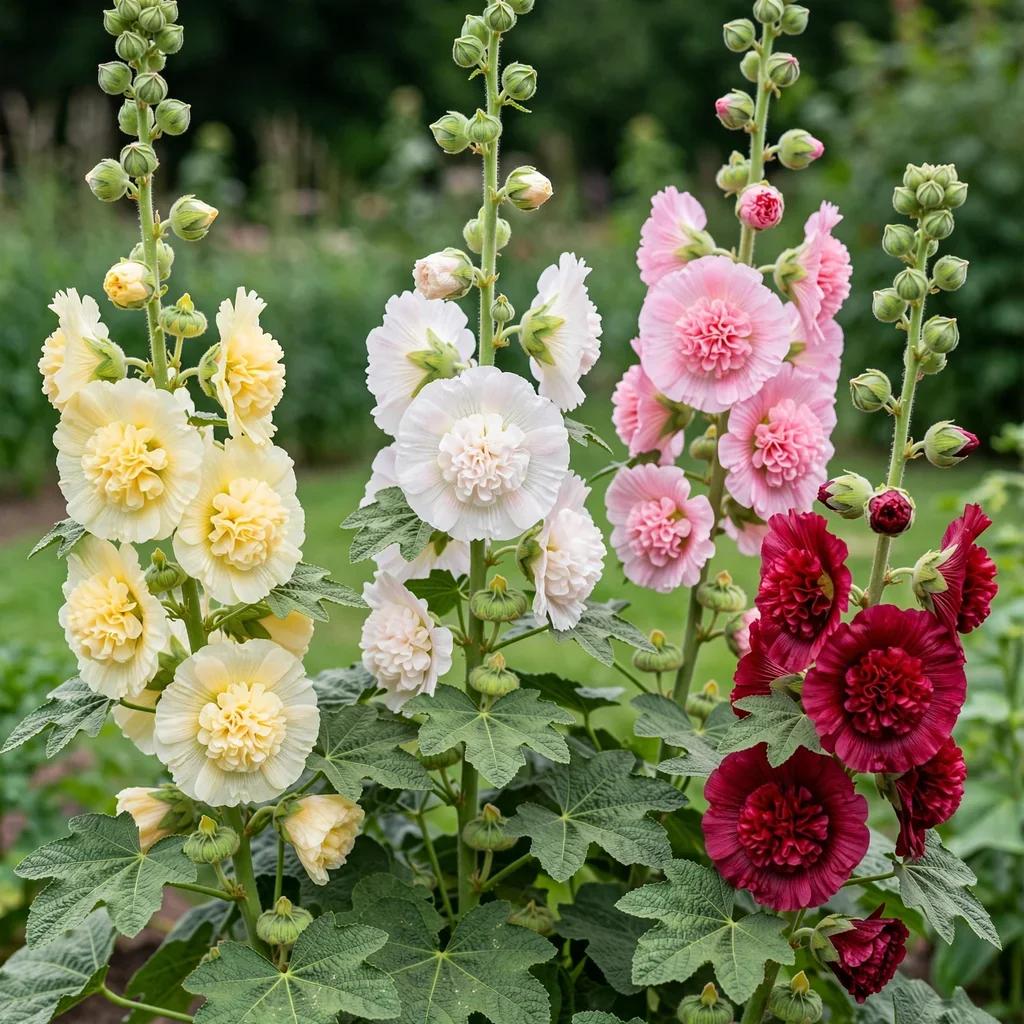 ‘Old Farmyard’Old Farmyard Hollyhock
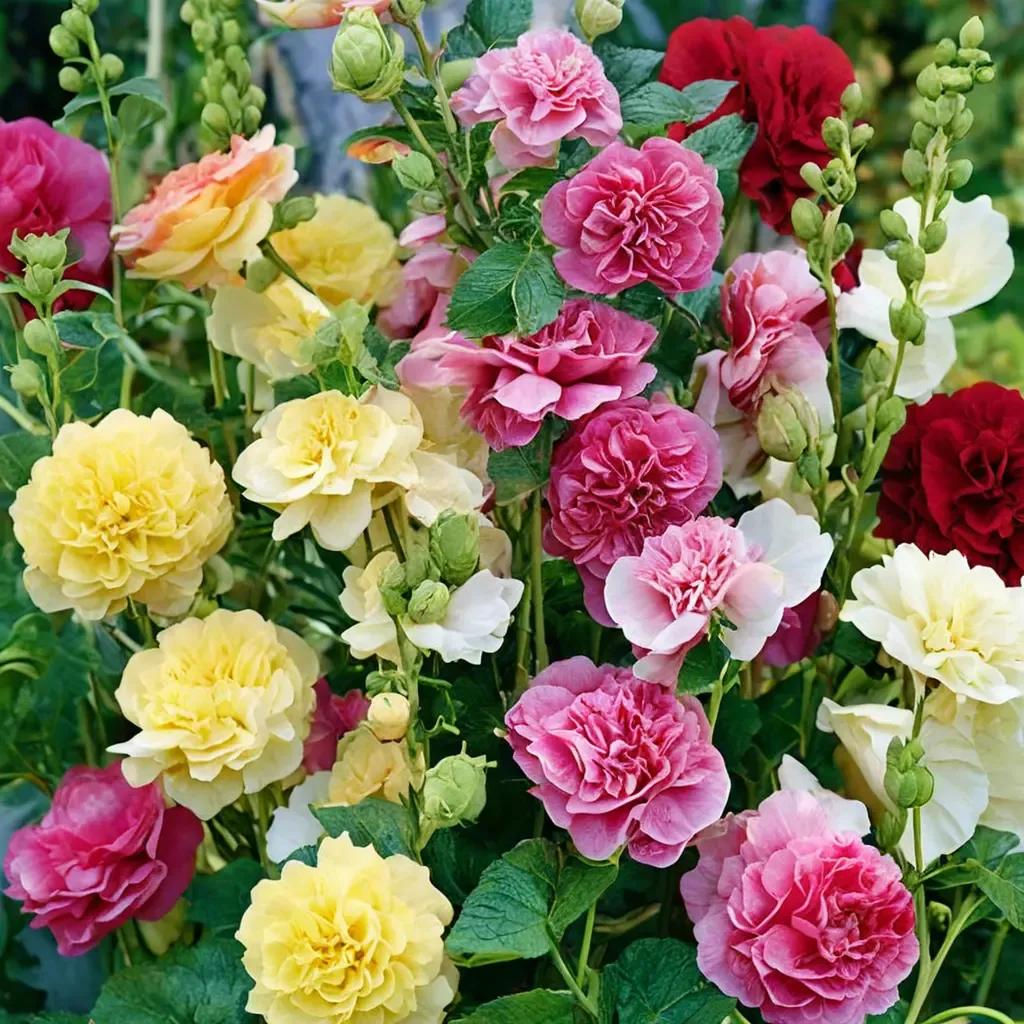 ‘Double Hollyhock Mix’Double Hollyhock
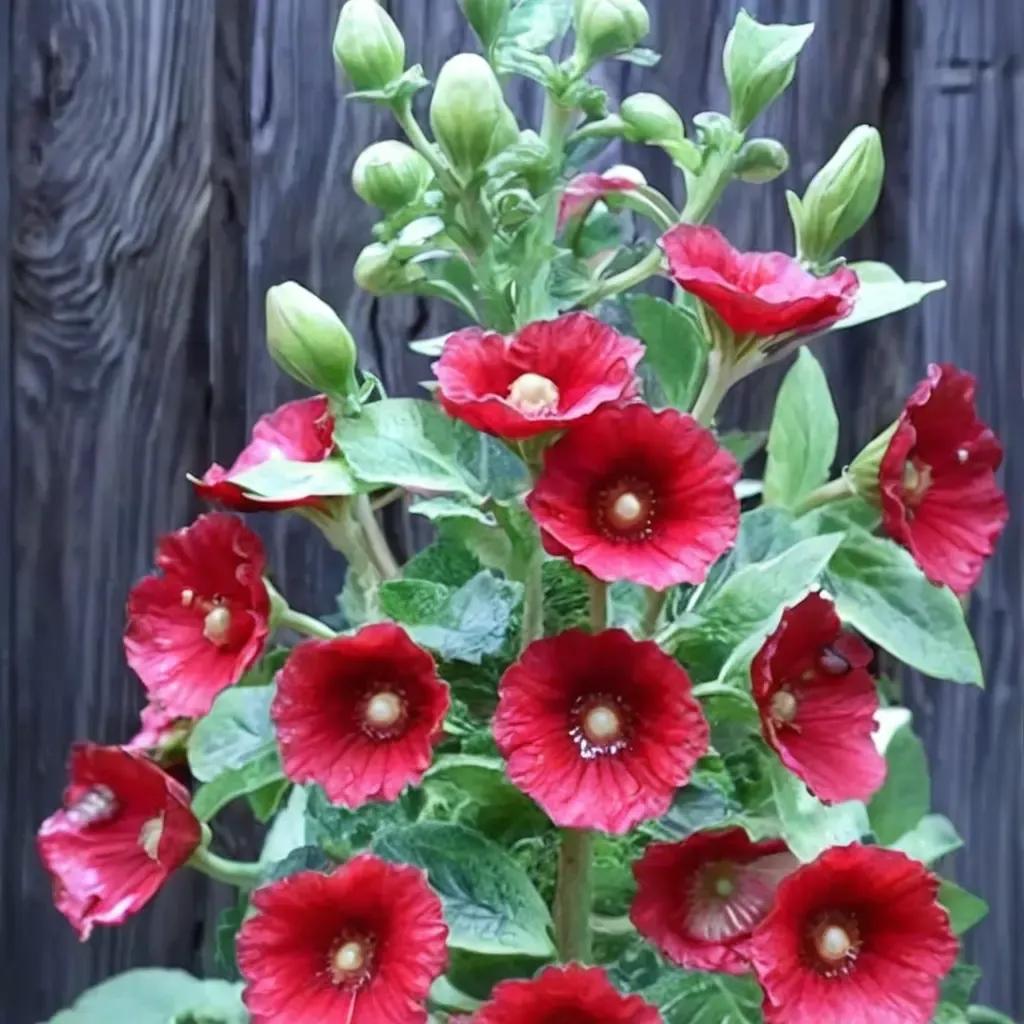 ‘Country Mix’Hollyhock Country Mix
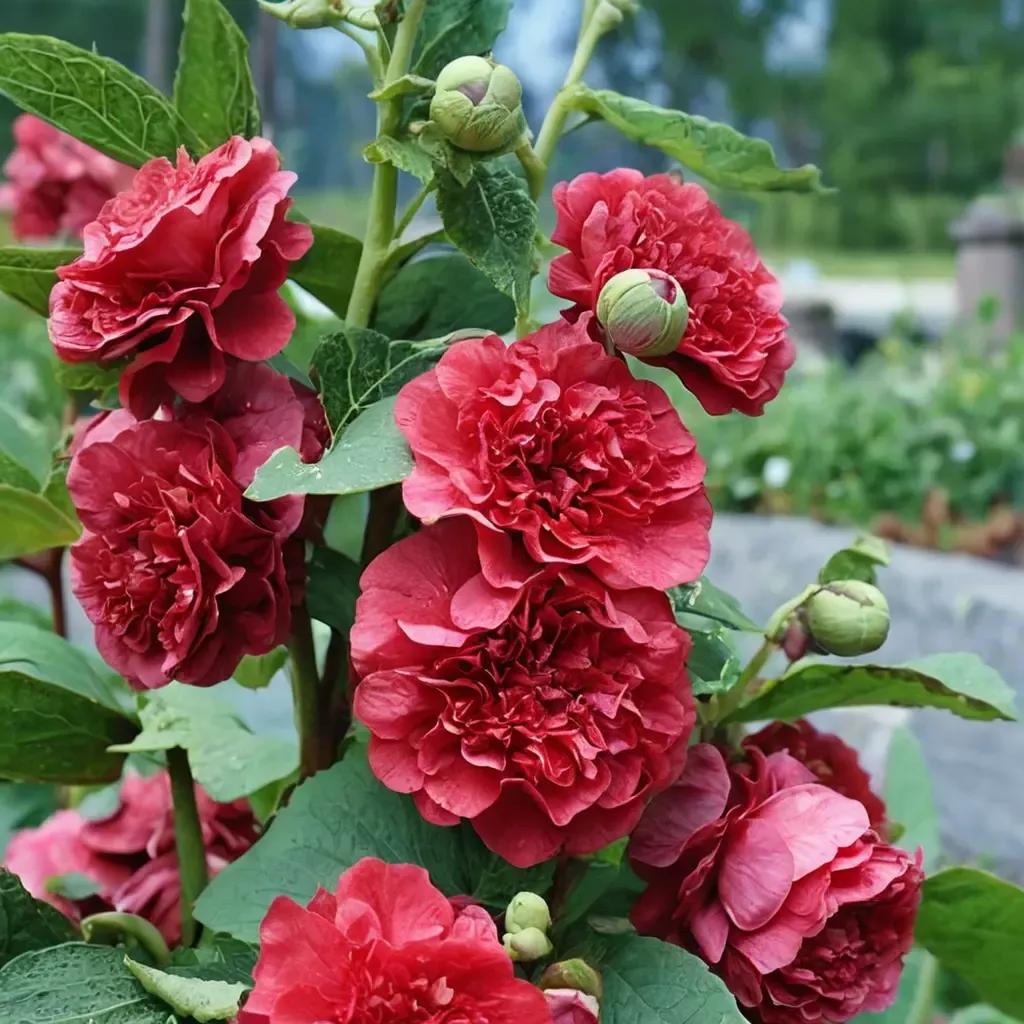 ‘Double Scarlet’Double Scarlet Hollyhock
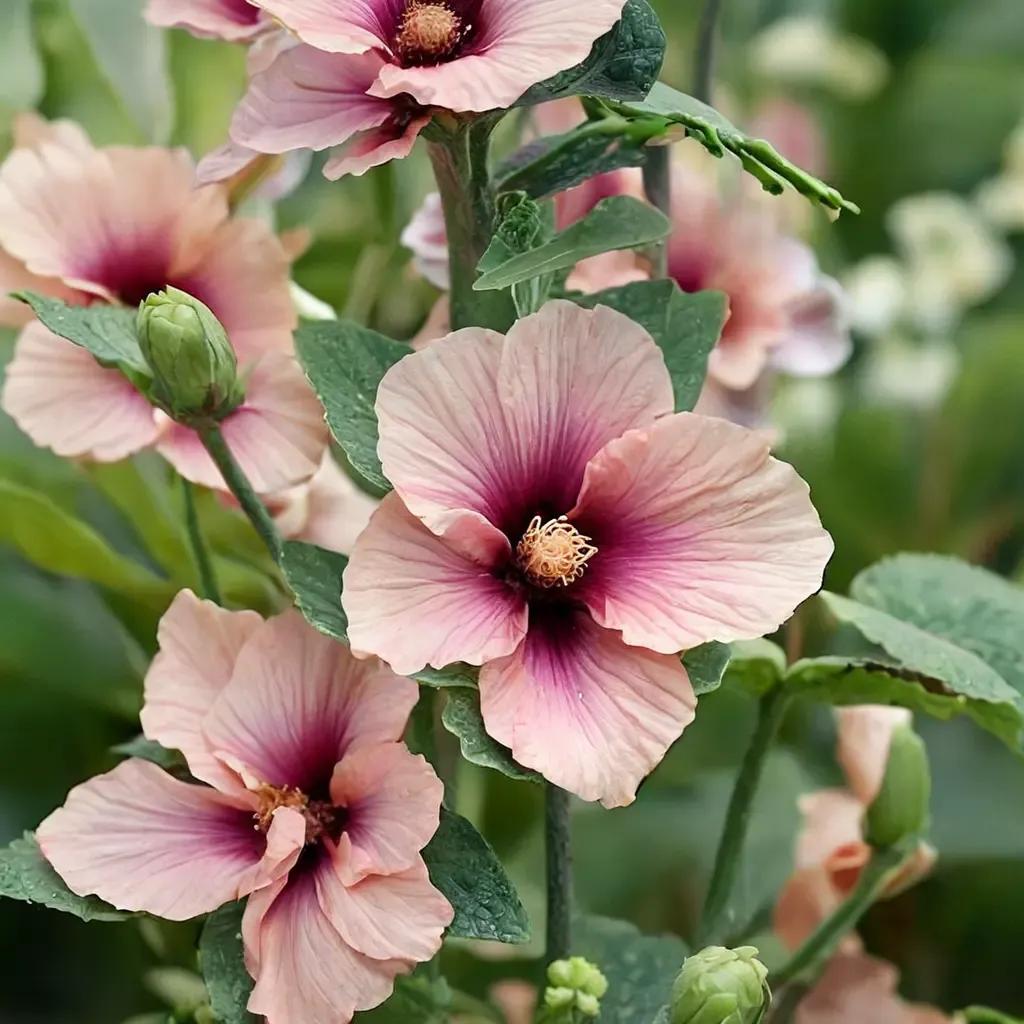 ‘Halo Apricot’Apricot Hollyhock
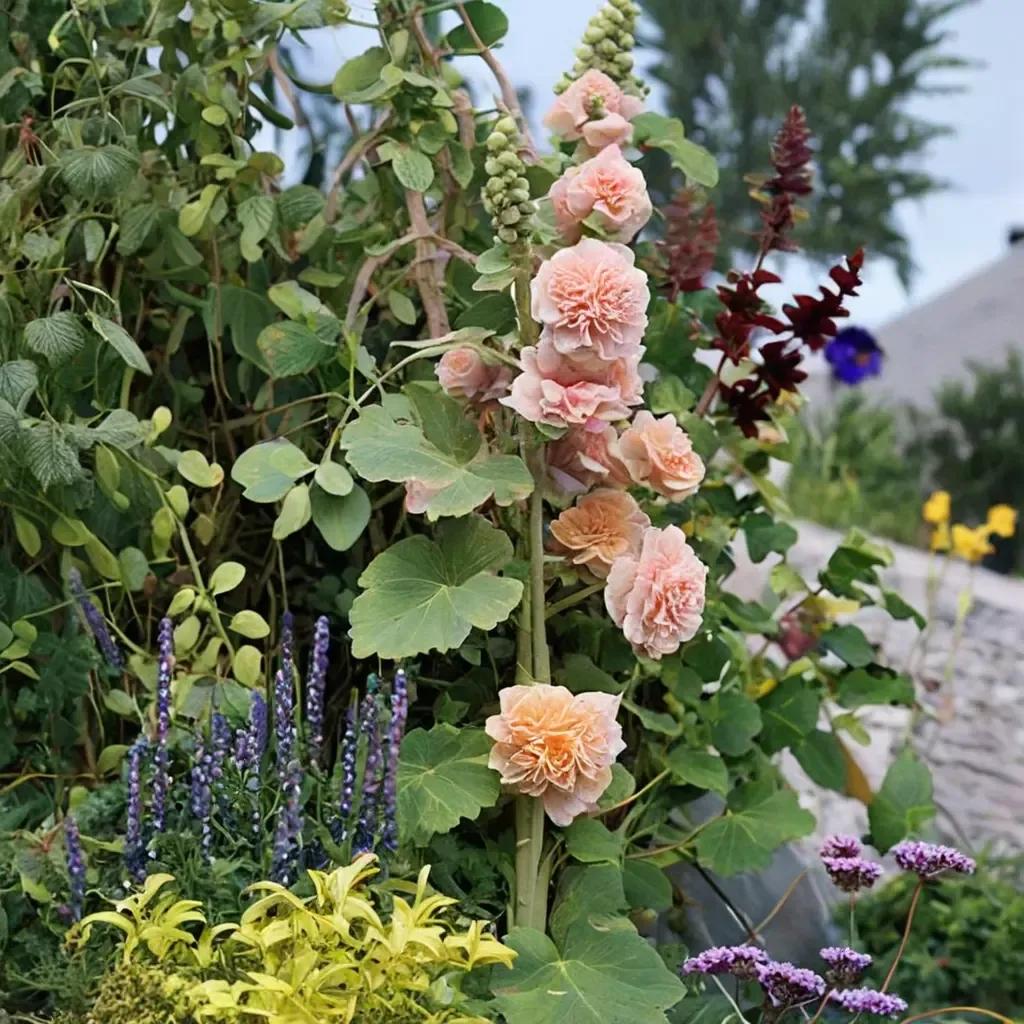 ‘Double Apricot’Double Apricot Hollyhock
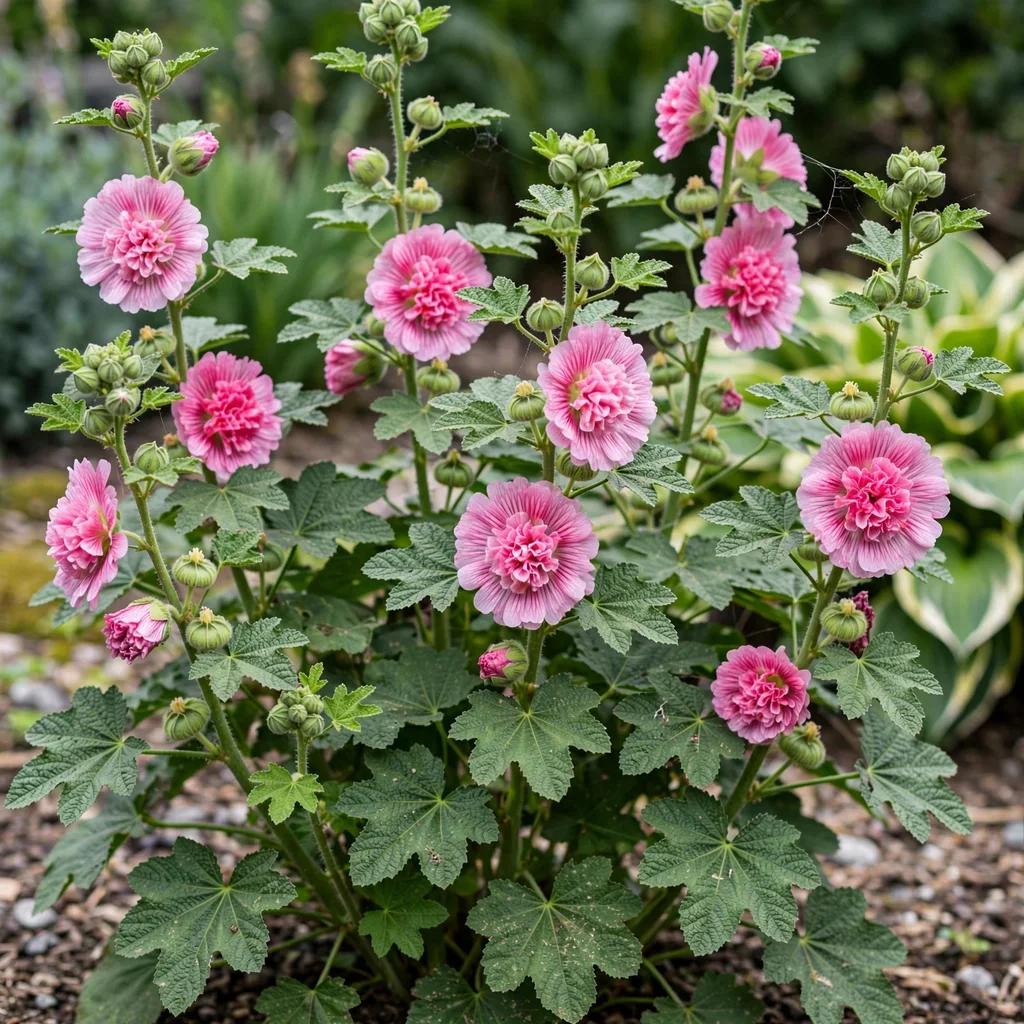 ‘Brilliant Miniature’Brilliant Miniature Hollyhock
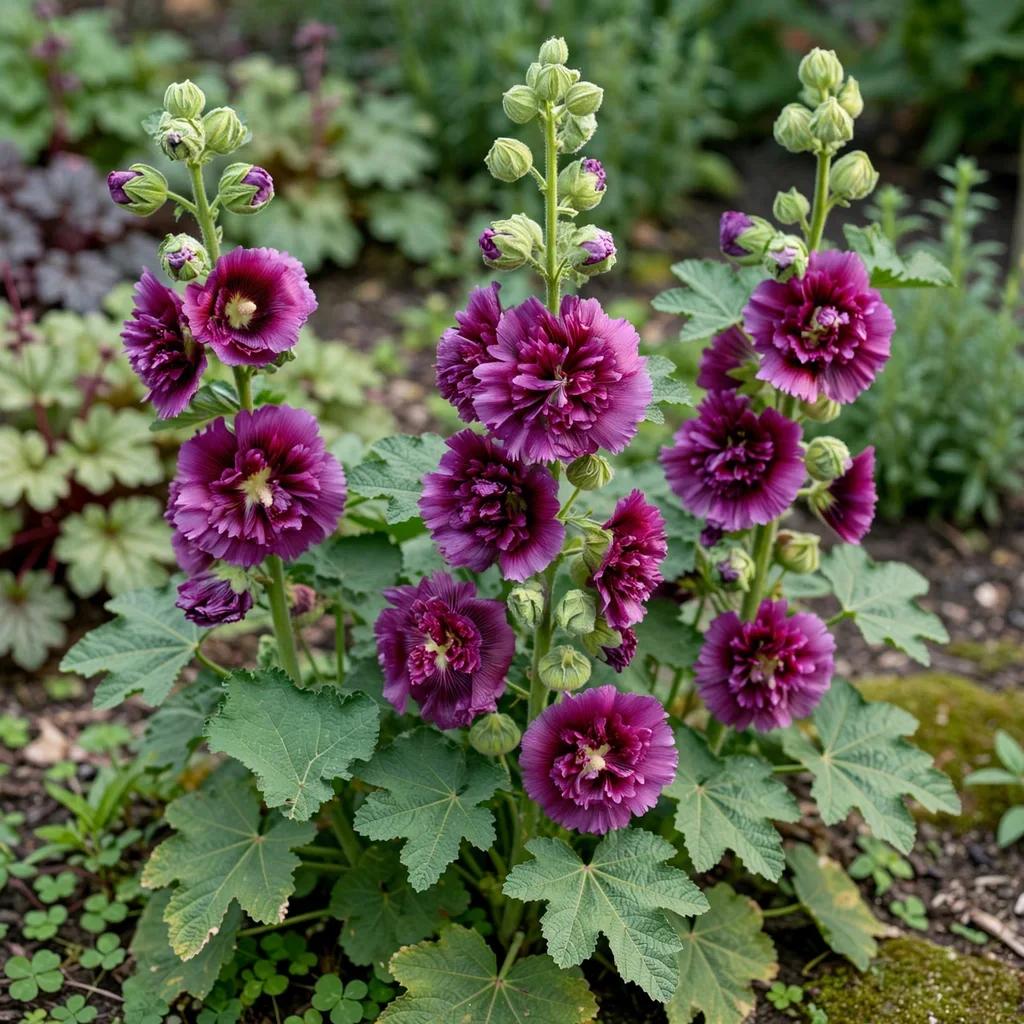 ‘Queeny Purple’Queeny Purple Hollyhock
 ‘Blacknight’Black Night Hollyhock
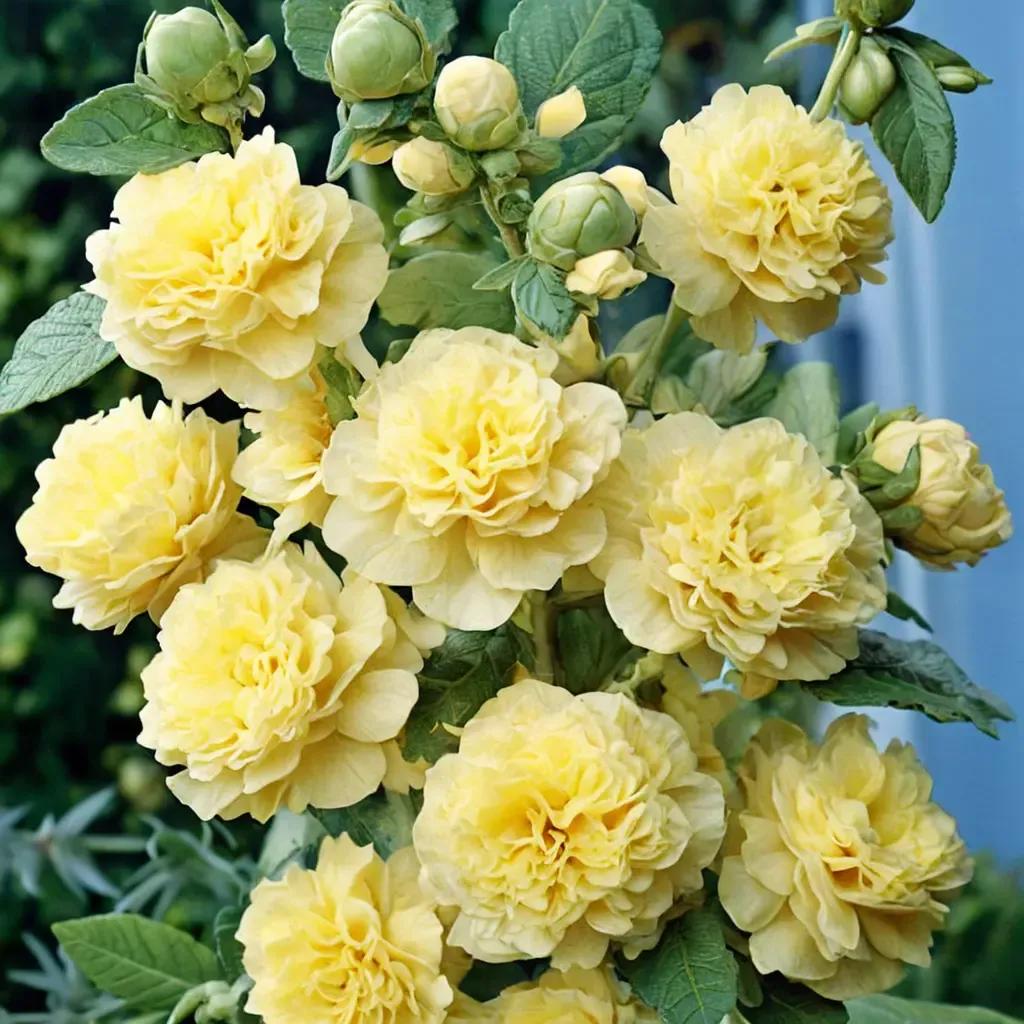 ‘Double Yellow’Double Yellow Hollyhock
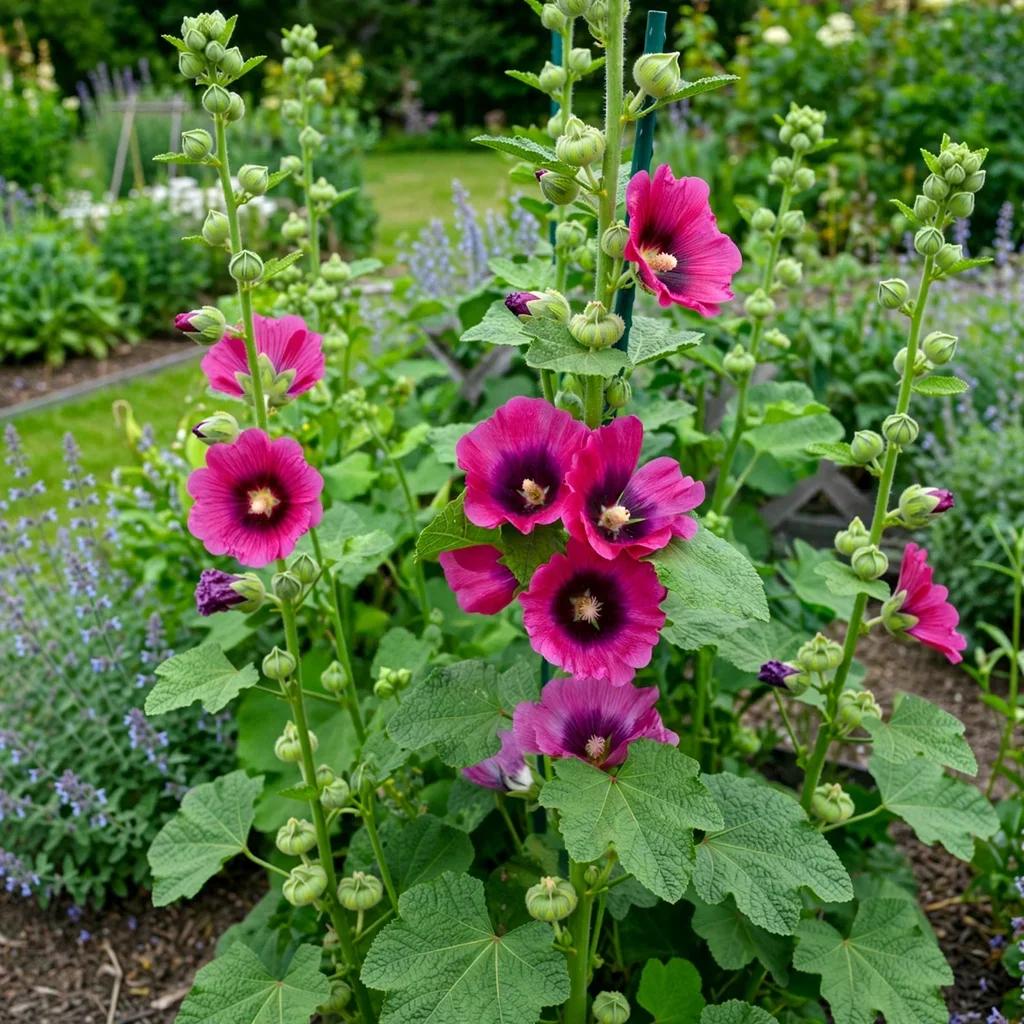 ‘Halo Cerise’Halo Cerise Hollyhock
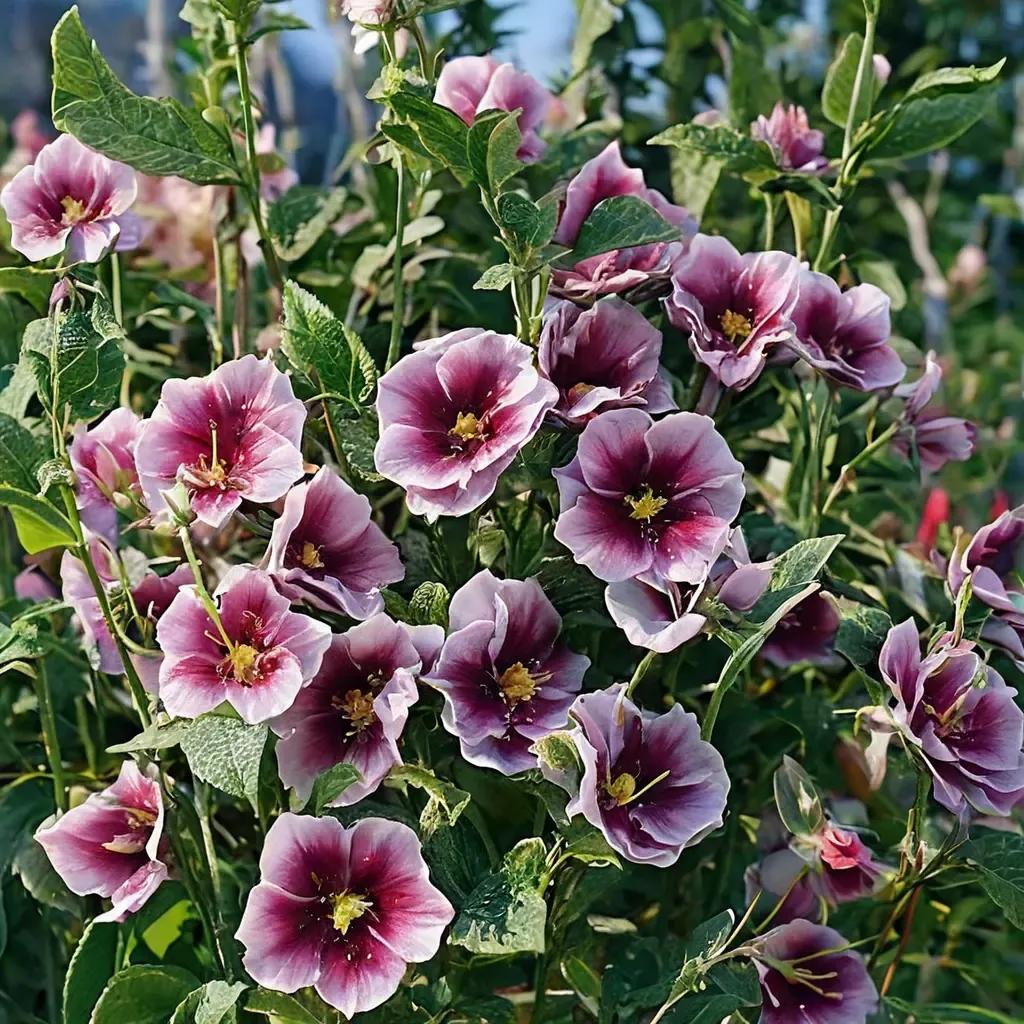 ‘Creme De Cassis’Creme De Cassis Hollyhock
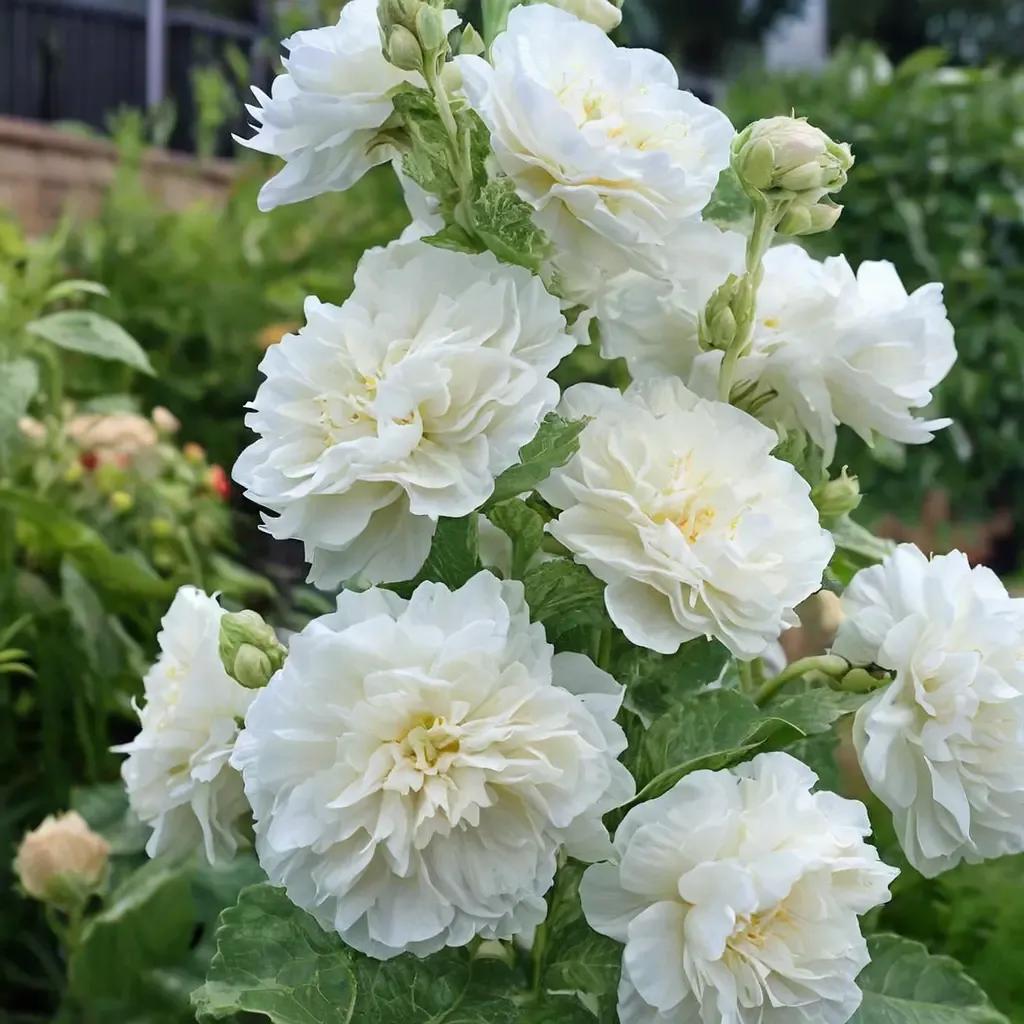 ‘Chater's Double White’Chater's Double White Hollyhock
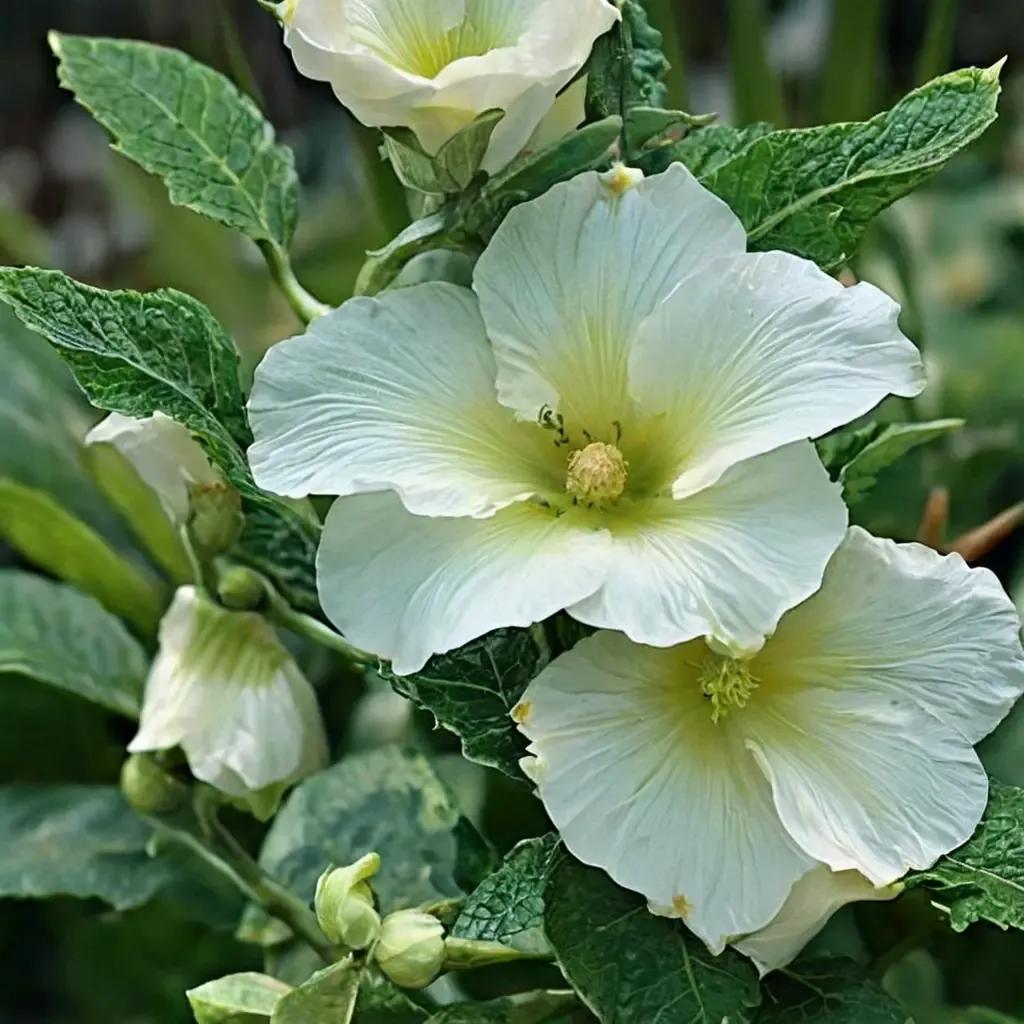 ‘Polarstar’Polarstar Hollyhock
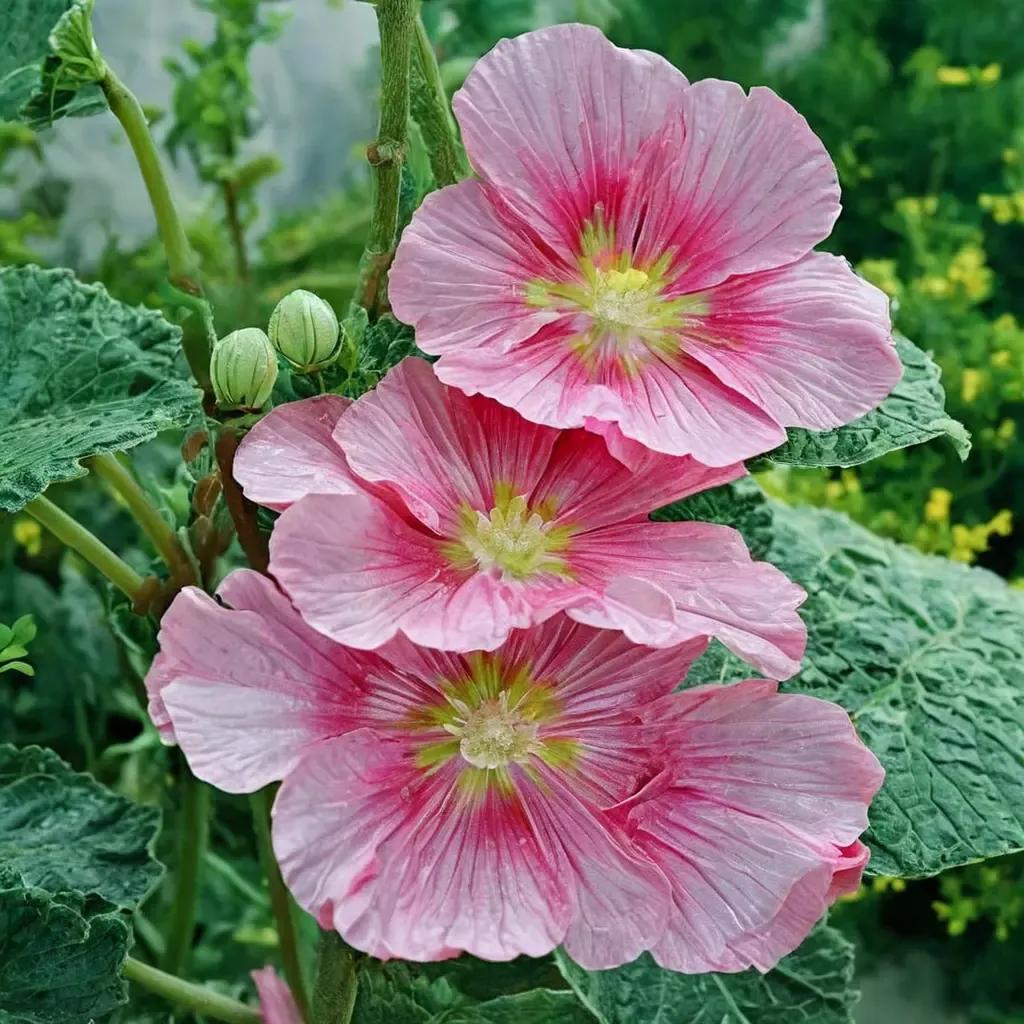 ‘Radiant Rose’Radiant Rose Hollyhock
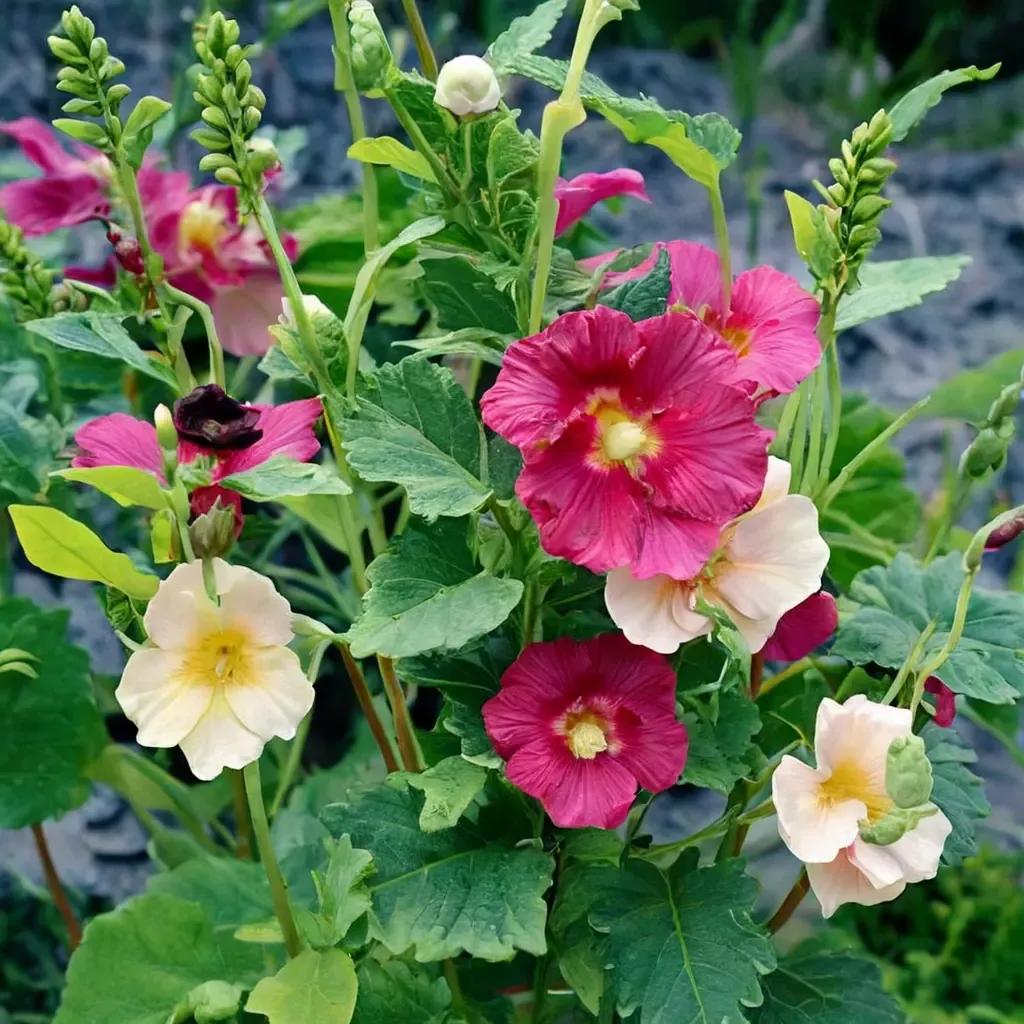 ‘Las Vegas’Las Vegas Hollyhock
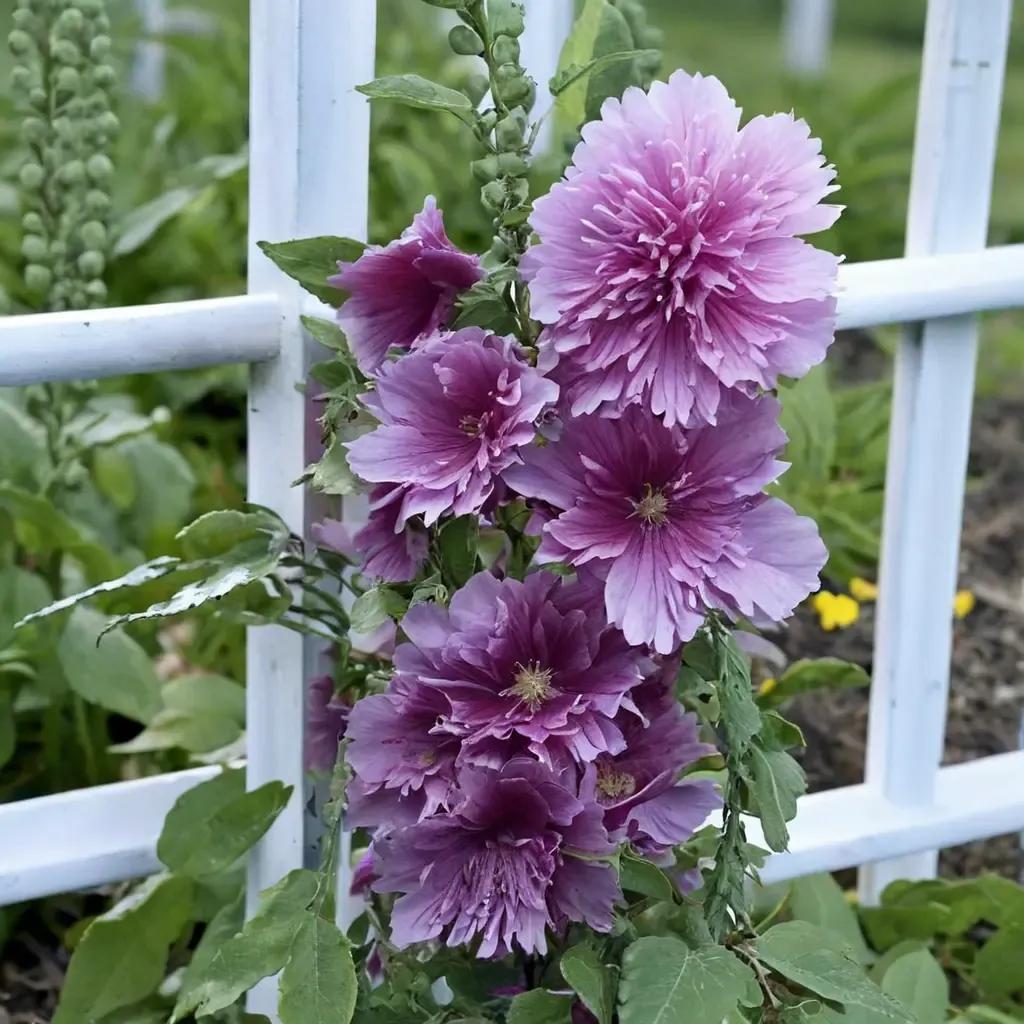 ‘Lilac’Lilac Hollyhock
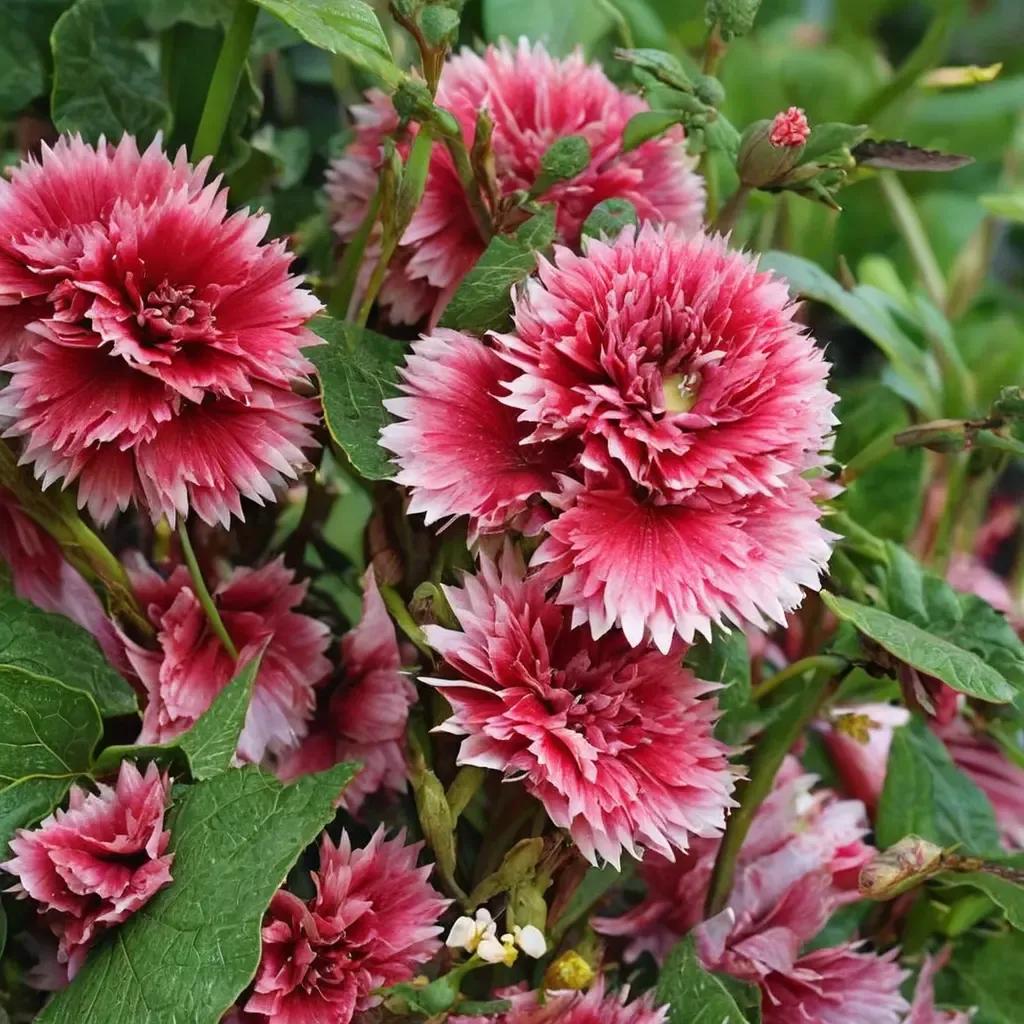 ‘Fiesta Time’Fiesta Time Hollyhock
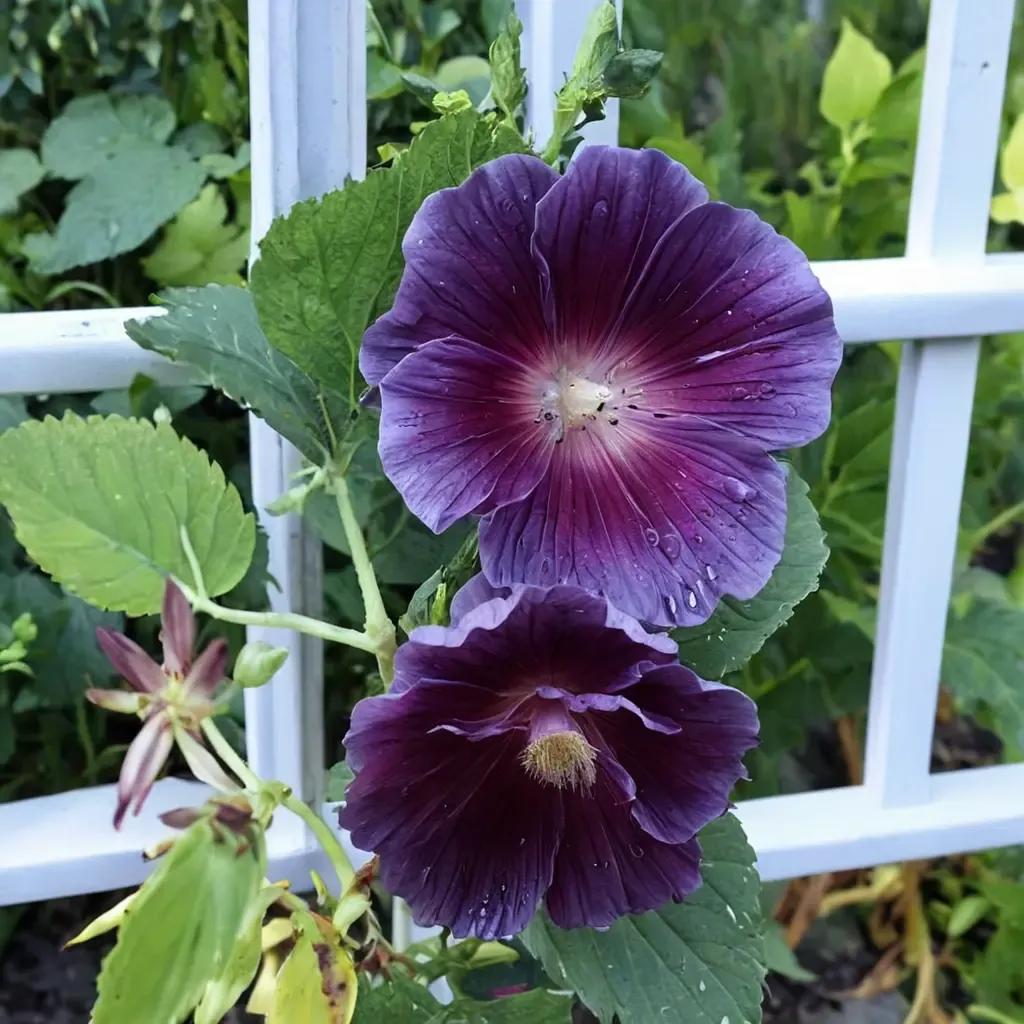 ‘Halo Purple’Purple Hollyhock
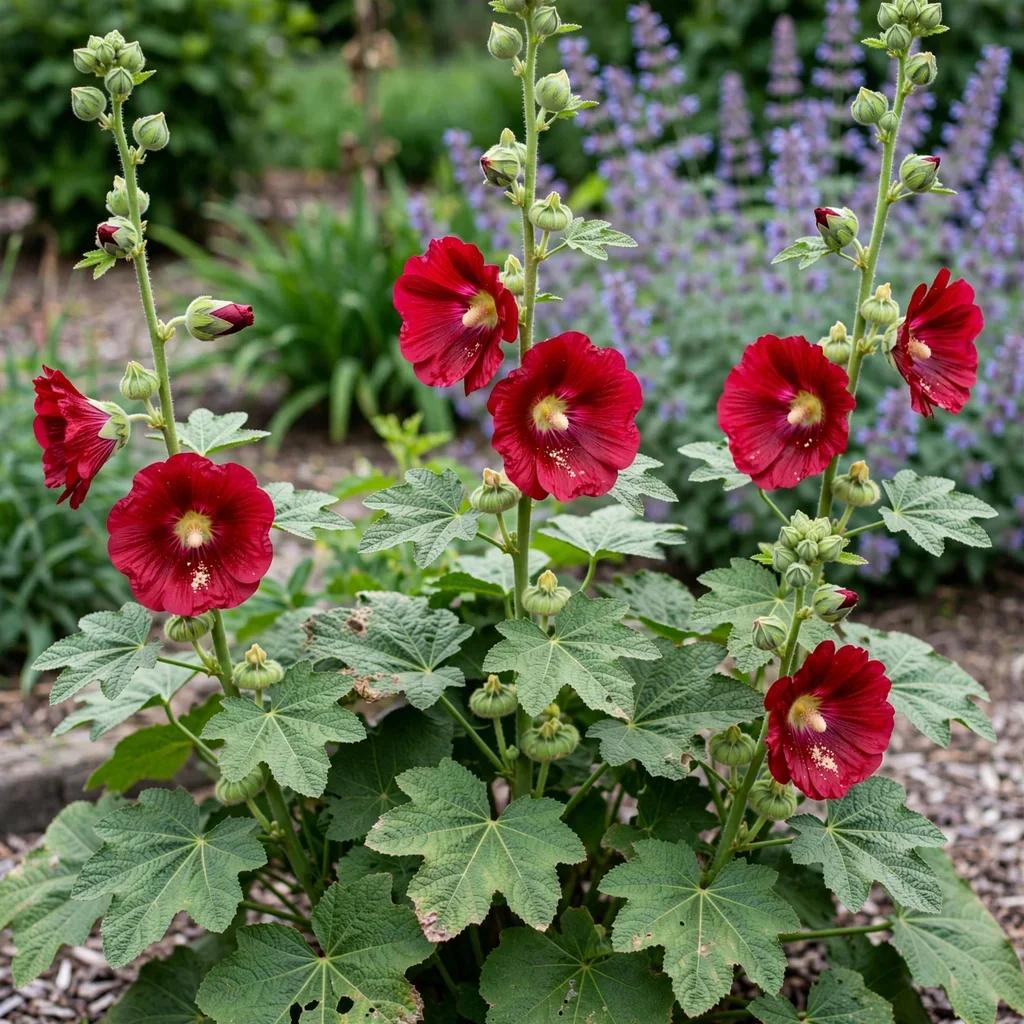 ‘Mars Magic’Hollyhock 'Mars Magic'
The Story
Plant Bio
Alcea rosea, commonly known as hollyhock, is a biennial or short-lived perennial that produces tall spikes of large, showy flowers.
Known for its tall stature and colorful blooms, it has been a garden favorite since ancient times.
Uses & Benefits:
Essentials
At a Glance
Plant Type
Perennial
Height
72"
Width
24"
Light
Full Sun, Partial Sun
Zones
4, 5, 6, 7, 8, 9
Water
Moderate
Humidity
Average
Lifespan
Biennial/Perennial
Native To
Asia
Toxicity
Non-toxic to humans and pets
Planting
How to Grow
- Select a sunny spot with well-draining soil to plant Alcea rosea.
- Tuck seeds 1/4 inch deep and space 18 inches apart in early spring.
- Mist cuttings or seedlings to maintain moisture during initial growth.
- Water regularly, especially during dry spells, to encourage healthy blooms.
- Stake tall varieties to prevent wind damage and support growth.
- Mulch around the base to retain moisture and suppress weeds.
Pro Tip
Plant in early spring for best bloom display and ensure consistent watering during peak growth.
Keep It Thriving
Care Guide
Do
- Water deeply once a week 🌱
- Prune after flowering to promote bushier growth
- Fertilize with a balanced fertilizer in spring
- Support tall varieties with stakes
Don't
- Avoid overwatering to prevent root rot ❌
- Do not disturb roots during flowering
- Avoid planting in overly shaded areas
- Do not forget to deadhead to encourage more blooms
Seasonal Care Calendar
| Task | Jan | Feb | Mar | Apr | May | Jun | Jul | Aug | Sep | Oct | Nov | Dec |
|---|---|---|---|---|---|---|---|---|---|---|---|---|
| Deadhead | ||||||||||||
| Pest Check | ||||||||||||
| Spring Cleanup | ||||||||||||
| Stake |
Watch Out For
Pests & Diseases
Common Pests
Common Diseases
In the Garden
Landscape Uses & Companions
Landscape Uses
Multiply
Propagation Methods
Good to Know
Common Questions
Hollyhock questions
What zones can Hollyhock grow in?
Hollyhock is hardy in USDA Zones 4–9. Inside that range it survives winter in the ground; outside it, grow it as an annual or a container plant you protect.
Is Hollyhock deer resistant?
Not reliably. Deer may browse Hollyhock, especially tender spring growth — plan on repellents or fencing where pressure is high.
When does Hollyhock bloom?
Hollyhock typically blooms in mid-summer through late summer. Exact timing shifts a week or two with your zone — Sow's bloom calendar maps it to your garden.
Does Hollyhock need full sun?
Hollyhock does best in full sun to part shade. In hot climates, afternoon shade keeps blooms fresher longer.
More Alcea to compare
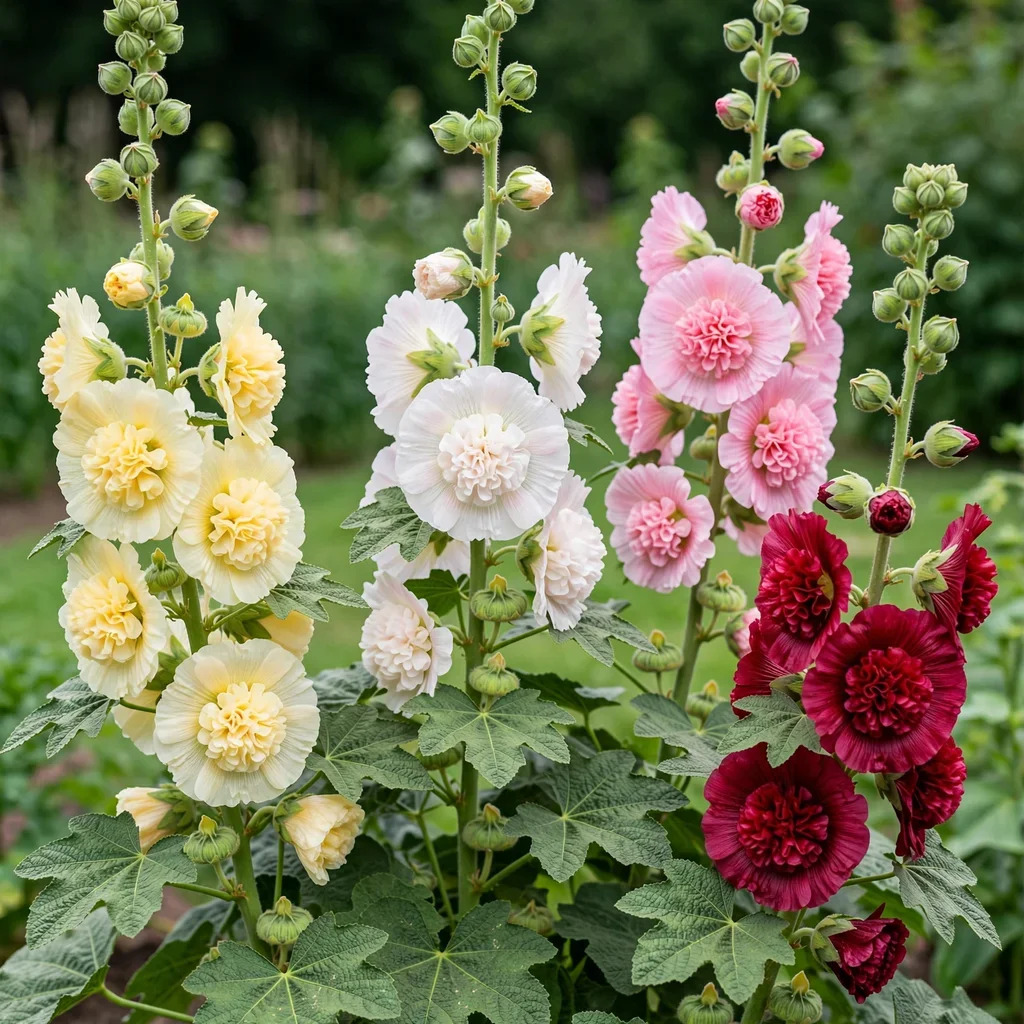
Old Farmyard Hollyhock
Alcea rosea 'Old Farmyard'
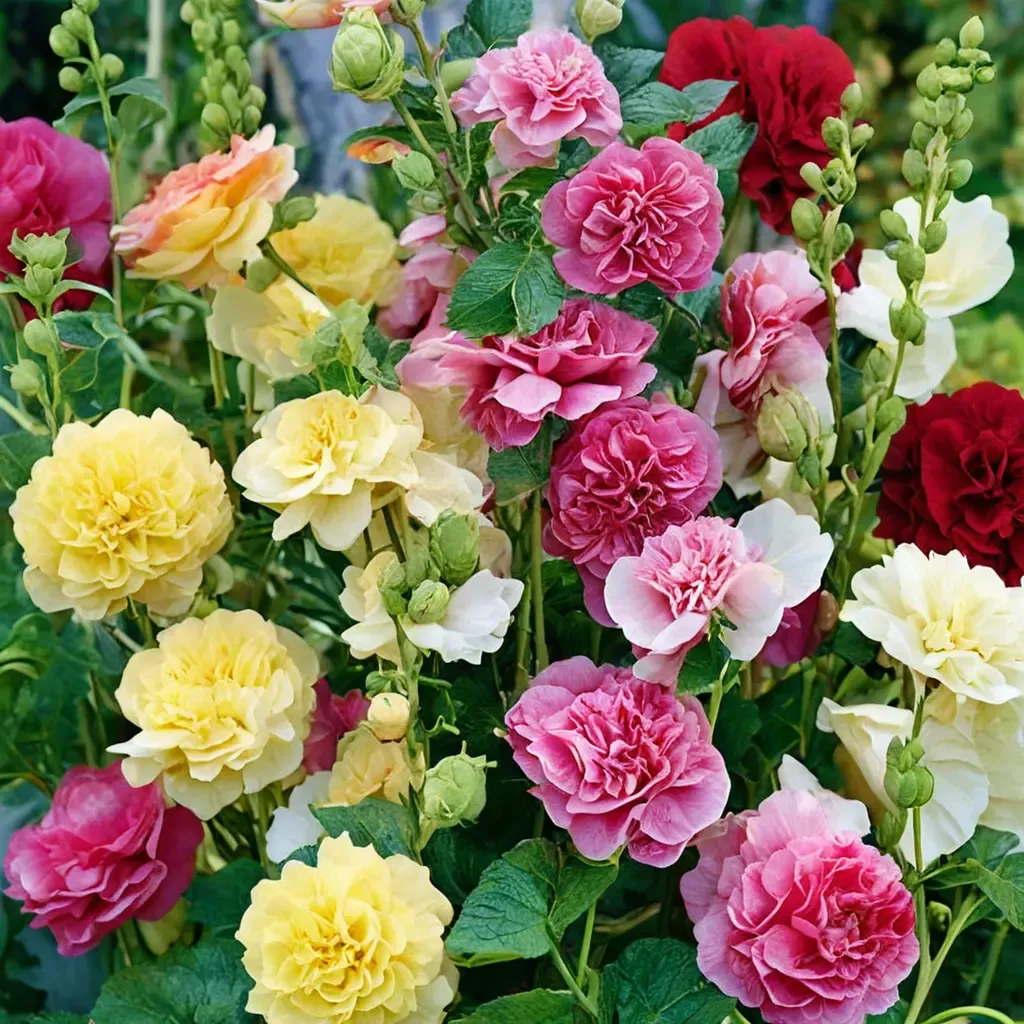
Double Hollyhock
Alcea rosea 'Double Hollyhock Mix'
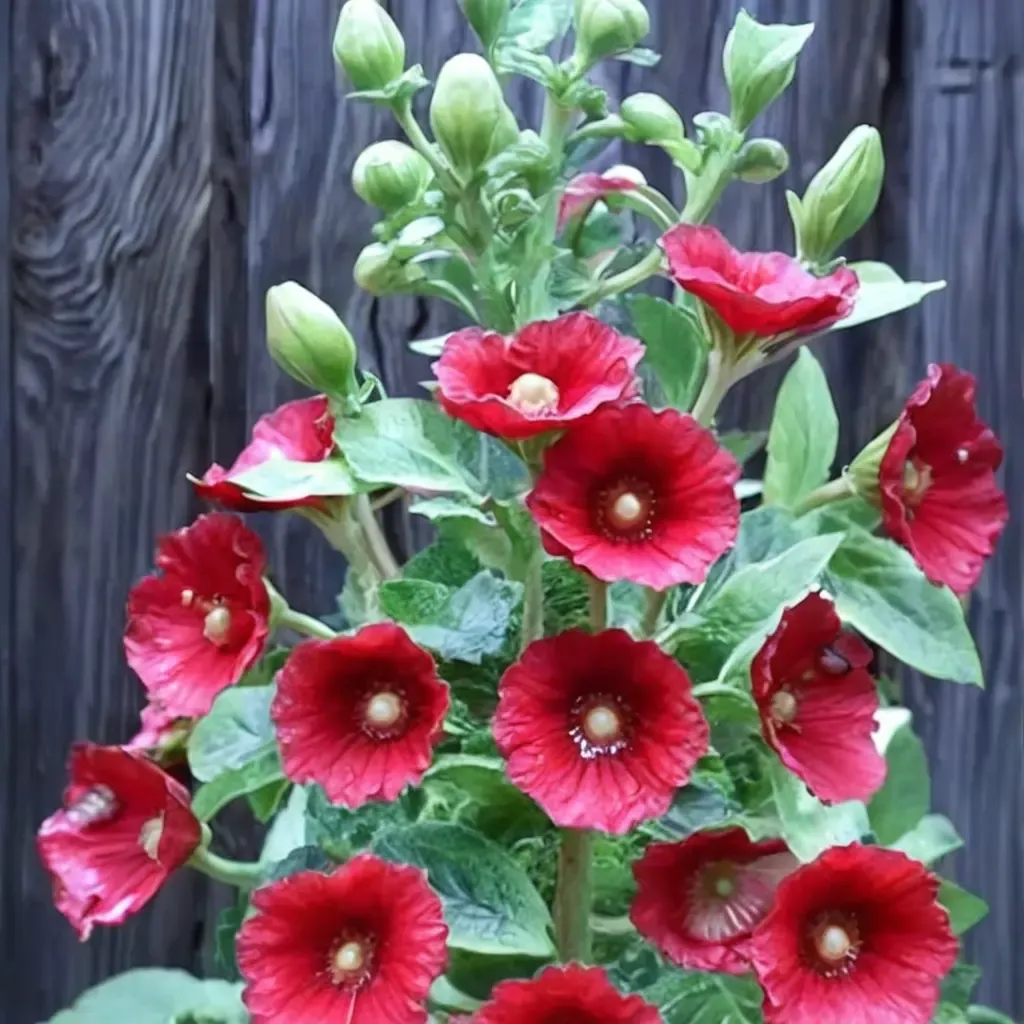
Hollyhock Country Mix
Alcea rosea 'Country Mix'
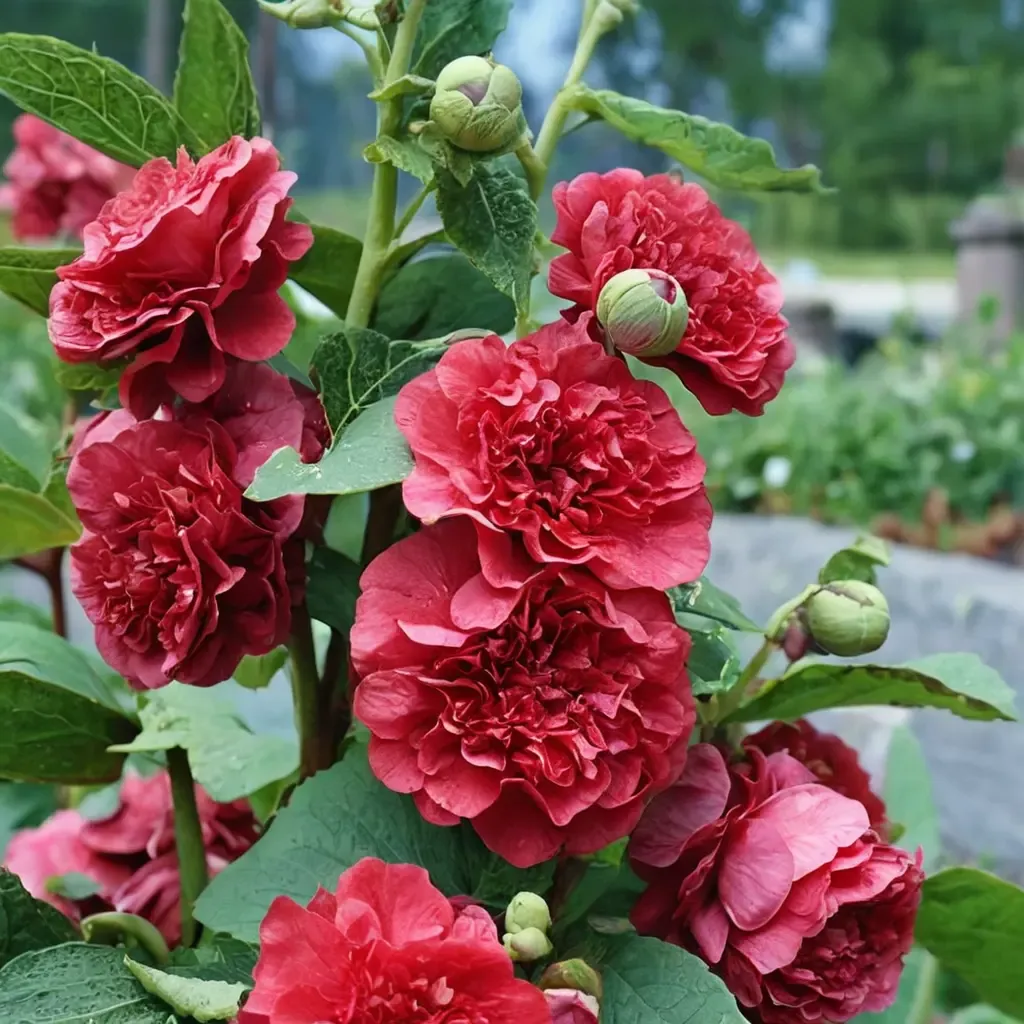
Double Scarlet Hollyhock
Alcea rosea 'Double Scarlet'
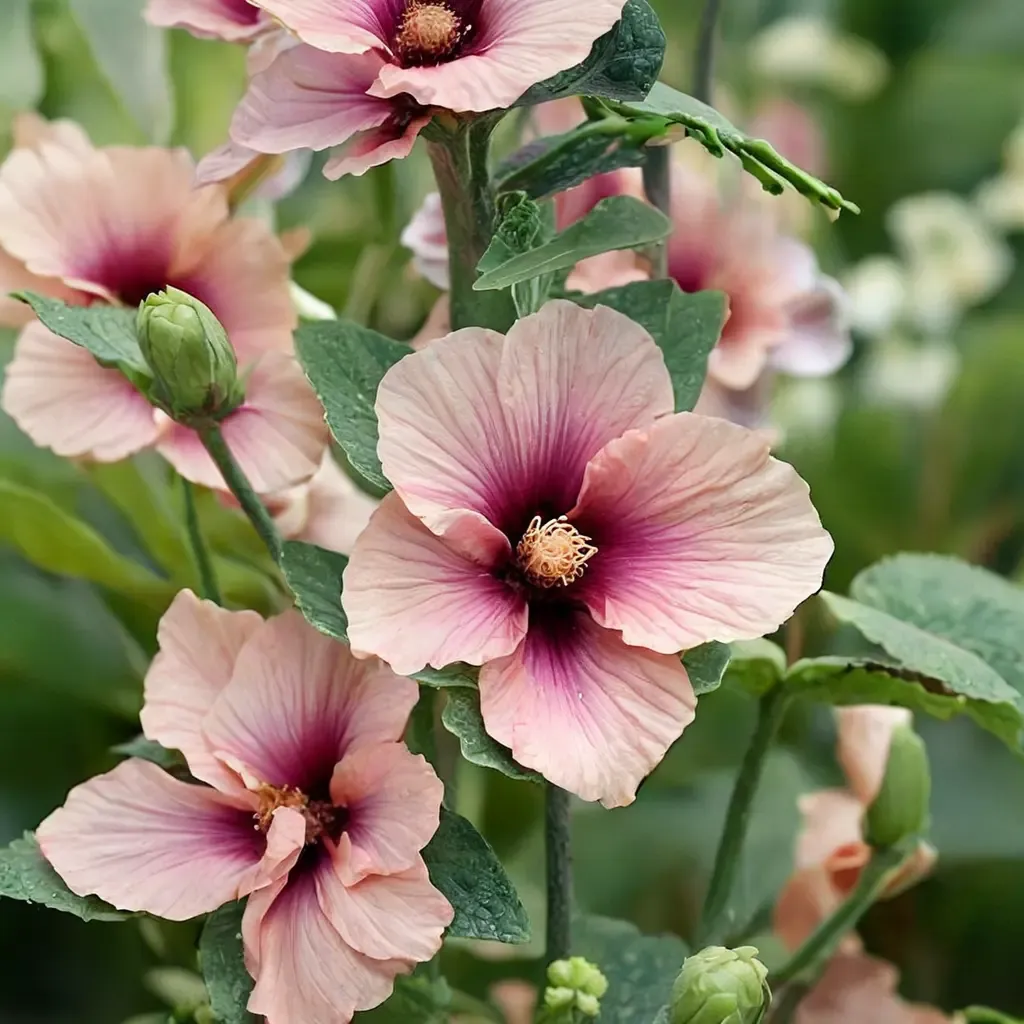
Apricot Hollyhock
Alcea rosea 'Halo Apricot'
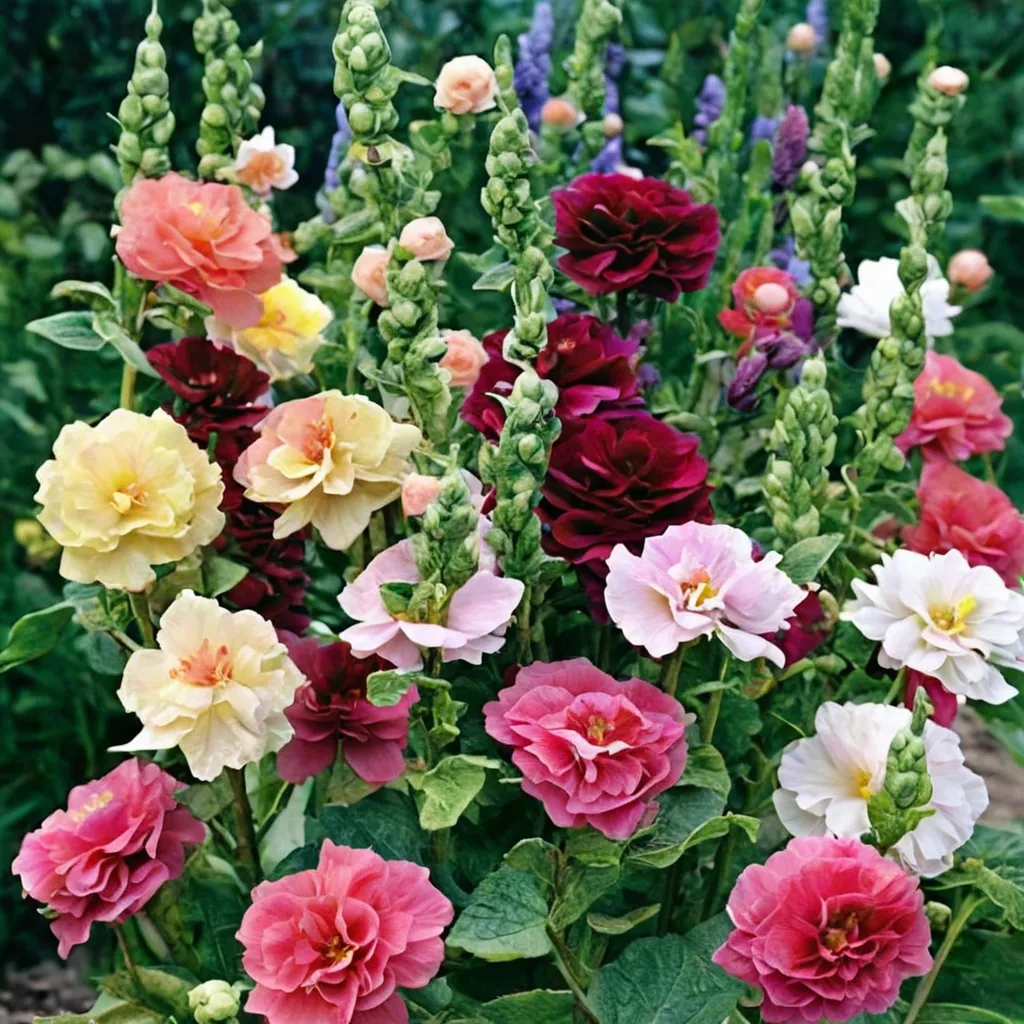
Hollyhock Mix
Alcea x hybrida 'Mix'
Keep exploring
Explore the genus
Grow Hollyhock with confidence
See it in a design of your actual yard, get zone-matched care reminders, and track it season by season in your garden journal.