The Story
Plant Bio
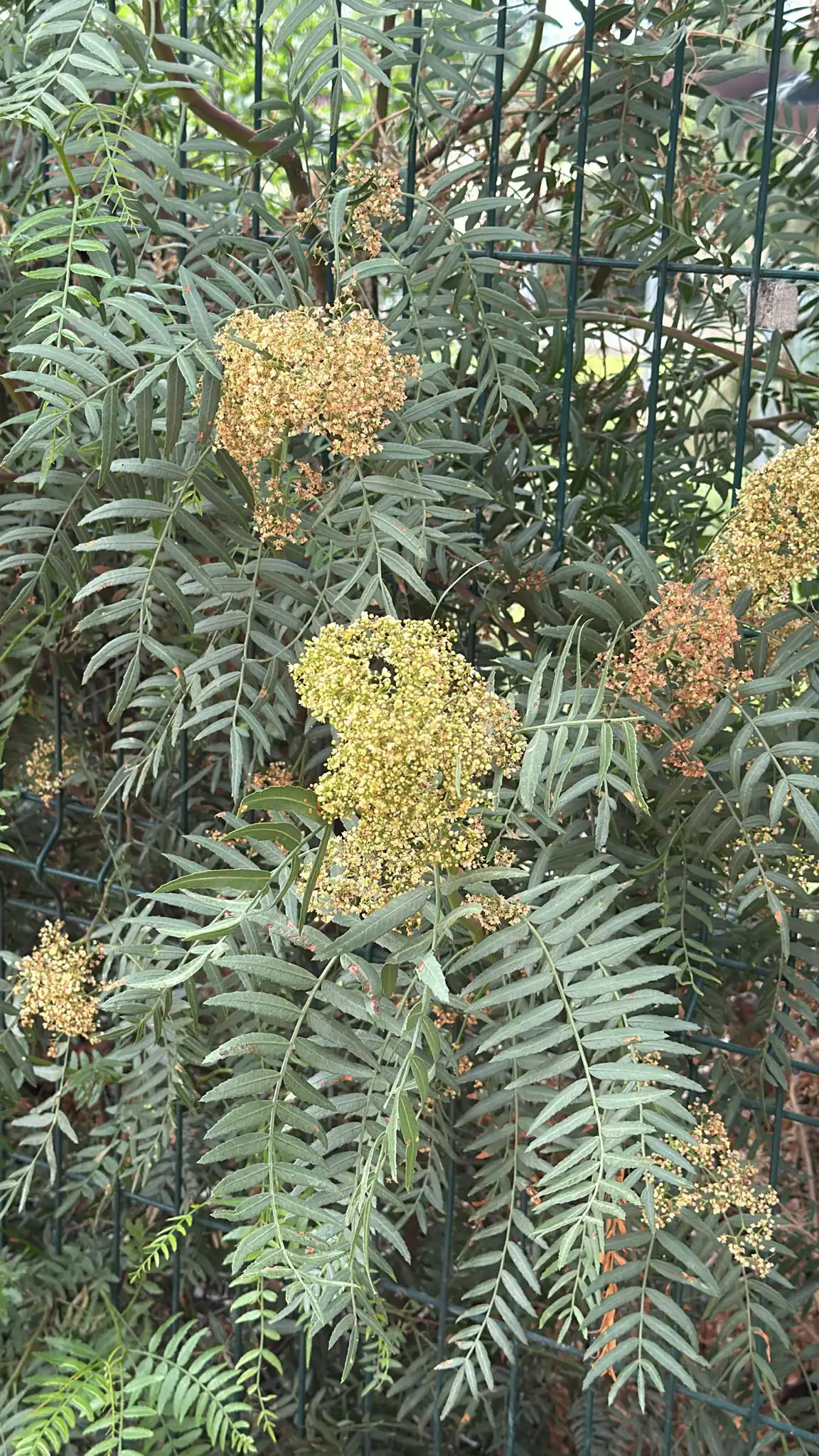
Schinus molle is a fast-growing, evergreen tree native to South America, characterized by a broad, rounded crown and weeping branches that sweep toward the ground. The aromatic, pinnately compound leaves feature numerous narrow leaflets that emerge with a reddish-bronze tint before maturing to bright green.
This species is highly valued in arid landscapes for its exceptional drought tolerance and its pendulous clusters of small, yellowish-white flowers that give way to rose-pink, peppercorn-like berries. The deeply fissured, grayish-brown bark provides strong winter texture, contrasting with the delicate, feathery appearance of the canopy.
Uses & Benefits:
Essentials
At a Glance
Plant Type
Tree
Height
540"
Width
540"
Light
Full Sun
Zones
8, 9, 10
Water
Low
Humidity
Low to Moderate
Lifespan
50-150 years
Native To
South America
Toxicity
Toxic if ingested; sap causes skin irritation.
Bloom period
Spring – Early summer
In flower about 4 months of the year
Planting
How to Grow
- Select a planting site in full sun with excellent drainage, avoiding areas close to foundations, sidewalks, or septic lines.
- Dig a hole twice as wide as the root ball but no deeper, ensuring the root flare sits slightly above the surrounding soil grade.
- Backfill with the native soil without adding organic amendments, and water deeply to settle the soil around the roots.
- Apply a three-inch layer of organic mulch over the root zone, keeping it several inches away from the trunk to prevent rot.
- Water deeply but infrequently during the first two growing seasons to encourage a deep, resilient root system.
Pro Tip
Avoid supplemental summer watering once established; frequent irrigation accelerates growth but results in weak, brittle wood highly susceptible to branch failure in high winds.
Keep It Thriving
Care Guide
Do
- Prune lightly in late winter to remove crossing or weak branches and maintain structural integrity.
- Sweep up fallen leaves and berries periodically to manage litter accumulation.
- Protect young trunks with physical barriers if deer or rabbits are active in the area.
Don't
- Do not shear the canopy into formal shapes, which destroys the natural weeping habit.
- Do not apply high-nitrogen fertilizers, as excess nutrients trigger weak, hazard-prone branch growth.
- Do not plant near hardscaping or utility lines where the aggressive surface roots can cause structural damage.
Seasonal Care Calendar
| Task | Jan | Feb | Mar | Apr | May | Jun | Jul | Aug | Sep | Oct | Nov | Dec |
|---|---|---|---|---|---|---|---|---|---|---|---|---|
| Mulch | ||||||||||||
| Pest Check | ||||||||||||
| Propagate | ||||||||||||
| Prune |
Watch Out For
Pests & Diseases
Common Pests
Common Diseases
In the Garden
Landscape Uses & Companions
Landscape Uses
Companion Plants
Multiply
Propagation Methods
Good to Know
Common Questions
California Pepper Tree questions
What zones can California Pepper Tree grow in?
California Pepper Tree is hardy in USDA Zones 8–10. Inside that range it survives winter in the ground; outside it, grow it as an annual or a container plant you protect.
Is California Pepper Tree deer resistant?
Not reliably. Deer may browse California Pepper Tree, especially tender spring growth — plan on repellents or fencing where pressure is high.
When does California Pepper Tree bloom?
California Pepper Tree typically blooms in spring through early summer. Exact timing shifts a week or two with your zone — Sow's bloom calendar maps it to your garden.
Does California Pepper Tree need full sun?
California Pepper Tree does best in full sun (6+ hours).
Is California Pepper Tree drought tolerant?
Yes — once established (usually after the first full season), California Pepper Tree handles dry spells with minimal watering. Water deeply its first year to build the root system that makes that possible.
Keep exploring
Explore the genus
Hardy in your zone?
Grow California Pepper Tree with confidence
See it in a design of your actual yard, get zone-matched care reminders, and track it season by season in your garden journal.