1 named cultivar
The Story
Plant Bio
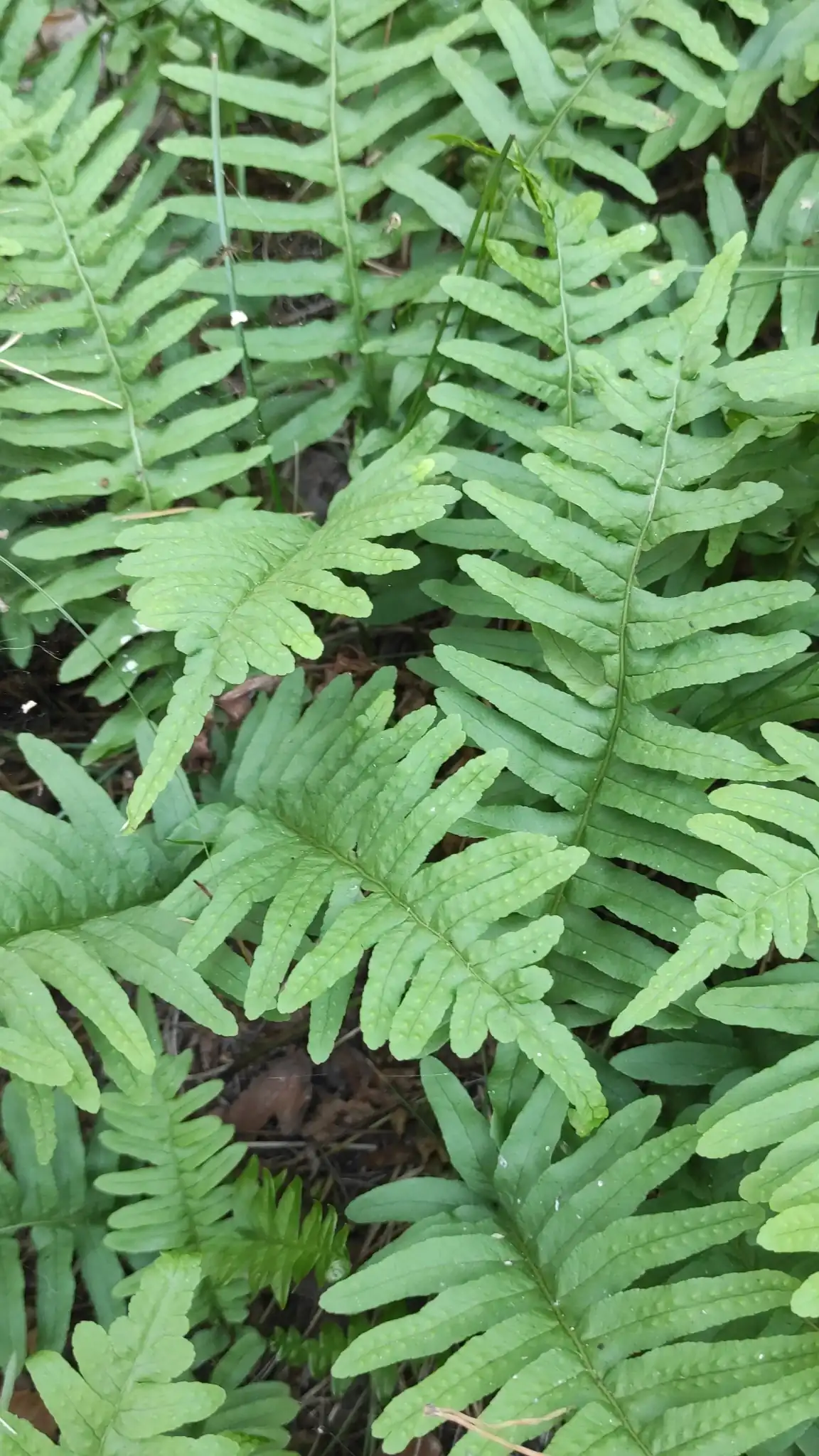
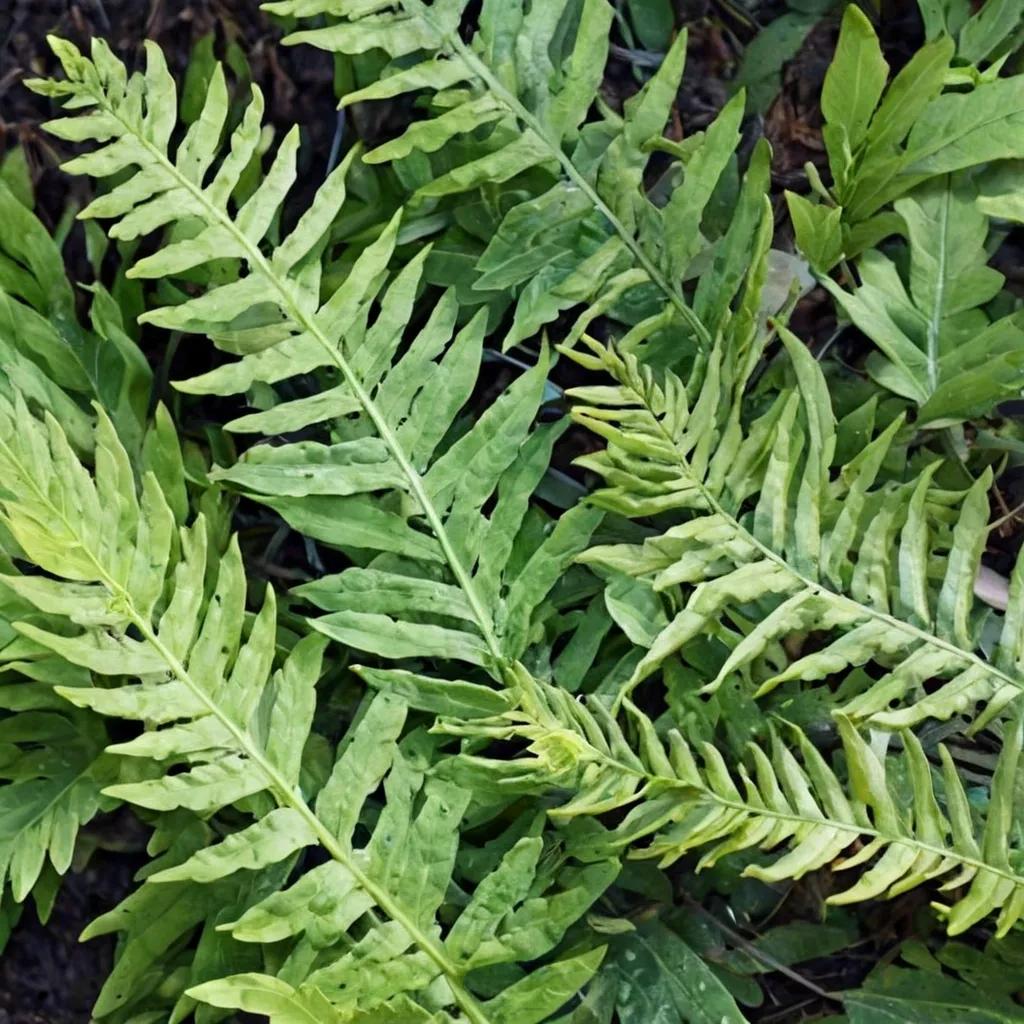
Polypodium vulgare, common polypody, is a small creeping evergreen fern of the northern hemisphere, about a foot high and spreading to three feet. Leathery bright green triangular fronds four to twenty inches long rise singly from a scaly surface rhizome, and round orange-yellow spore clusters stud their undersides.
It is epiphytic in habit — in the wild it grows on mossy rock, walls and tree limbs rather than in soil, and that is exactly where it succeeds in a garden. Try it in the crevices of a shaded dry wall, where the creeping rhizome grips, rather than in a border where richer soil rots it. It holds its fronds through winter.
Uses & Benefits:
Essentials
At a Glance
Plant Type
Fern
Height
12"
Width
36"
Light
Partial Sun, Shade
Zones
6, 7, 8, 9
Water
Moderate
Humidity
Moderate to high
Lifespan
Perennial
Native To
Circumboreal: northern North America and Eurasia
Toxicity
Non-toxic; the rhizome is traditionally used as a sweetener
Planting
How to Grow
- Plant it on mossy rock, walls or a shaded bank.
- Give it partial to deep shade.
- Use gritty, humus-rich, sharply drained material.
- Lay the rhizome on the surface, never bury it.
- Keep it moist while it grips, then leave it.
- Remove tired fronds in early spring.
Pro Tip
The rhizome must sit on the surface — bury it as you would a border fern and it rots rather than creeping.
Keep It Thriving
Care Guide
Do
- Grow it on rock, wall or bank 🧱
- Leave the rhizome on the surface 🌿
- Give it shade and sharp drainage 🌑
- Tidy old fronds in early spring ✂️
Don't
- Bury the rhizome ❌
- Plant it in rich border soil ❌
- Let it sit waterlogged ❌
Seasonal Care Calendar
| Task | Jan | Feb | Mar | Apr | May | Jun | Jul | Aug | Sep | Oct | Nov | Dec |
|---|---|---|---|---|---|---|---|---|---|---|---|---|
| Divide | ||||||||||||
| Tidy |
Watch Out For
Pests & Diseases
Common Pests
Common Diseases
In the Garden
Landscape Uses & Companions
Landscape Uses
Companion Plants
Multiply
Propagation Methods
Good to Know
Common Questions
Common Polypody questions
What zones can Common Polypody grow in?
Common Polypody is hardy in USDA Zones 6–9. Inside that range it survives winter in the ground; outside it, grow it as an annual or a container plant you protect.
Is Common Polypody deer resistant?
Yes — Common Polypody is rated deer-resistant. Deer typically pass it over, though extreme hunger can override any plant's defenses.
Does Common Polypody need full sun?
Common Polypody does best in part shade.
Keep exploring
Explore the genus
Hardy in your zone?
Grow Common Polypody with confidence
See it in a design of your actual yard, get zone-matched care reminders, and track it season by season in your garden journal.