The Story
Plant Bio
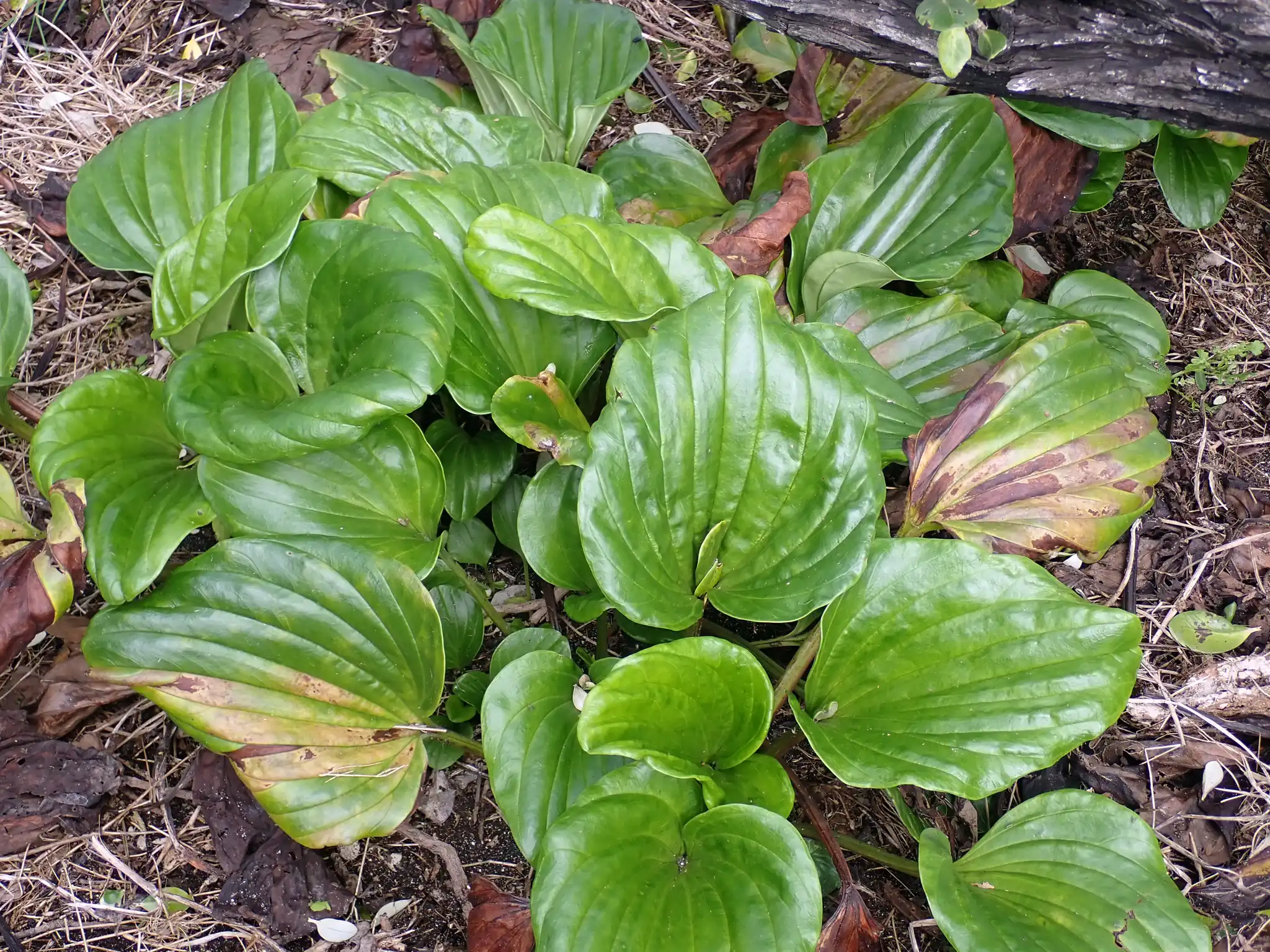
Myosotidium hortensia is a robust, clump-forming evergreen perennial native to the coastal cliffs and beaches of the Chatham Islands. It features massive, glossy, deeply veined, heart-shaped leaves that form a dramatic basal mound up to three feet across.
In spring, the plant produces dense, rounded terminal clusters of bright blue flowers resembling oversized forget-me-nots. This species is highly adapted to maritime environments, tolerating salty coastal winds but requiring high atmospheric humidity and cool, damp root zones.
Uses & Benefits:
Essentials
At a Glance
Plant Type
Perennial
Height
24"
Width
36"
Light
Partial Sun, Shade
Zones
8, 9
Water
High
Humidity
Moderate to high
Lifespan
Perennial
Native To
Chatham Islands
Toxicity
Non-toxic
Bloom period
Spring – Early summer
In flower about 4 months of the year
Planting
How to Grow
- Select a planting site with light dappled shade or partial shade, completely protected from hot afternoon sun.
- Incorporate generous amounts of organic matter, such as leaf mold or composted seaweed, into rich, moisture-retentive soil.
- Ensure the planting site has excellent subsurface drainage to prevent waterlogging and crown rot.
- Apply a thick layer of organic mulch annually to keep the root zone cool and consistently moist.
Pro Tip
Amateurs often fail by treating this as a dry-shade woodland plant. It is a coastal megaherb that demands constant subsurface moisture, a cool root run insulated by kelp or seaweed mulch, and complete protection from hot, baking afternoon sun.
Keep It Thriving
Care Guide
Do
- Water regularly to maintain constant soil moisture, especially during dry summer spells.
- Mulch the root zone with seaweed or leaf mold every spring to provide nutrients and retain moisture.
- Provide winter mulch protection in areas subject to moderate frosts.
Don't
- Do not let the soil dry out completely, as the large succulent leaves wilt rapidly and suffer severe stress.
- Do not prune into old, leafless, woody stems, as the plant cannot regenerate from hard wood.
- Do not plant in heavy, poorly drained clay soils where standing water will rot the rhizomatous crown.
Seasonal Care Calendar
| Task | Jan | Feb | Mar | Apr | May | Jun | Jul | Aug | Sep | Oct | Nov | Dec |
|---|---|---|---|---|---|---|---|---|---|---|---|---|
| Fertilize | ||||||||||||
| Mulch | ||||||||||||
| Propagate | ||||||||||||
| Prune | ||||||||||||
| Winter Prep |
Watch Out For
Pests & Diseases
Common Pests
Common Diseases
In the Garden
Landscape Uses & Companions
Landscape Uses
Companion Plants
Multiply
Propagation Methods
Good to Know
Common Questions
Chatham Island Forget-Me-Not questions
What zones can Chatham Island Forget-Me-Not grow in?
Chatham Island Forget-Me-Not is hardy in USDA Zones 8–9. Inside that range it survives winter in the ground; outside it, grow it as an annual or a container plant you protect.
When does Chatham Island Forget-Me-Not bloom?
Chatham Island Forget-Me-Not typically blooms in spring through early summer. Exact timing shifts a week or two with your zone — Sow's bloom calendar maps it to your garden.
Does Chatham Island Forget-Me-Not need full sun?
Chatham Island Forget-Me-Not does best in part shade.
Keep exploring
Explore the genus
Hardy in your zone?
Grow Chatham Island Forget-Me-Not with confidence
See it in a design of your actual yard, get zone-matched care reminders, and track it season by season in your garden journal.