The Story
Plant Bio
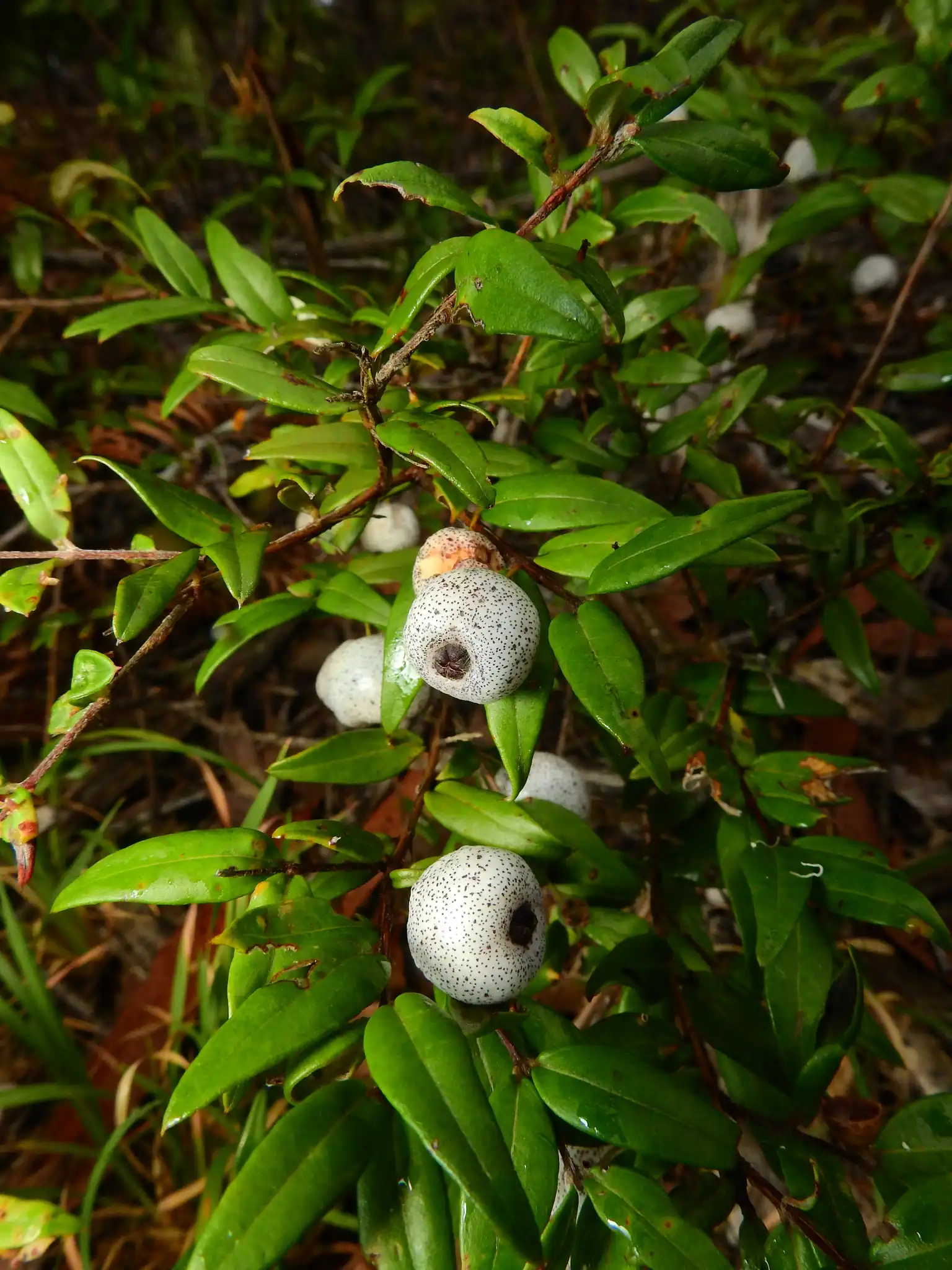
Austromyrtus dulcis, known as midgen berry, is a dense, spreading evergreen shrub native to eastern Australia that forms a low, weeping mound of intertwining branches. The small, glossy dark green leaves are copper-colored when young and release a distinct aroma when crushed, while the undersides are covered in fine, silky white hairs.
This species produces small, five-petaled white flowers in the leaf axils during spring and summer, followed by edible, pale speckled berries with a sweet, aromatic flavor. The plant functions effectively as a broad groundcover or low border in mild coastal gardens where soils are sandy and well-drained.
Uses & Benefits:
Essentials
At a Glance
Plant Type
Shrub
Height
79"
Width
79"
Light
Full Sun, Partial Sun
Zones
9, 10
Water
Moderate
Humidity
High
Lifespan
Perennial
Native To
Eastern Australia
Toxicity
Non-toxic
Bloom period
Spring – Summer
In flower about 6 months of the year
Planting
How to Grow
- Select a planting site with full sun to partial shade, ensuring protection from harsh afternoon sun in hot climates.
- Prepare a planting bed with excellent drainage, incorporating sand or light loam to prevent waterlogged conditions.
- Water regularly during the first growing season to establish a deep root system, keeping the soil moist but not wet.
- Apply a light layer of organic mulch around the base of the shrub to conserve soil moisture and suppress weeds.
Pro Tip
Provide consistent moisture during dry spells and apply a low-phosphorus fertilizer after harvesting to significantly increase berry production and maintain dense foliage.
Keep It Thriving
Care Guide
Do
- Grow in highly permeable, sandy or loamy soils to prevent root rot.
- Prune lightly immediately after the fruiting season to encourage dense growth.
- Use low-phosphorus fertilizers formulated for Australian native plants.
Don't
- Do not allow the roots to sit in heavy, waterlogged clay soils.
- Avoid severe pruning into old, leafless woody stems, which limits regrowth.
- Do not expose the plant to hard, freezing winter temperatures below USDA Zone 9.
Seasonal Care Calendar
| Task | Jan | Feb | Mar | Apr | May | Jun | Jul | Aug | Sep | Oct | Nov | Dec |
|---|---|---|---|---|---|---|---|---|---|---|---|---|
| Fertilize | ||||||||||||
| Harvest | ||||||||||||
| Mulch | ||||||||||||
| Pest Check | ||||||||||||
| Prune |
Watch Out For
Pests & Diseases
Common Pests
Common Diseases
In the Garden
Landscape Uses & Companions
Landscape Uses
Companion Plants
Multiply
Propagation Methods
Good to Know
Common Questions
Midgen Berry questions
What zones can Midgen Berry grow in?
Midgen Berry is hardy in USDA Zones 9–10. Inside that range it survives winter in the ground; outside it, grow it as an annual or a container plant you protect.
When does Midgen Berry bloom?
Midgen Berry typically blooms in spring through summer. Exact timing shifts a week or two with your zone — Sow's bloom calendar maps it to your garden.
Does Midgen Berry need full sun?
Midgen Berry does best in full sun to part shade. In hot climates, afternoon shade keeps blooms fresher longer.
Is Midgen Berry drought tolerant?
Yes — once established (usually after the first full season), Midgen Berry handles dry spells with minimal watering. Water deeply its first year to build the root system that makes that possible.
Keep exploring
Explore the genus
Hardy in your zone?
Grow Midgen Berry with confidence
See it in a design of your actual yard, get zone-matched care reminders, and track it season by season in your garden journal.