The Story
Plant Bio
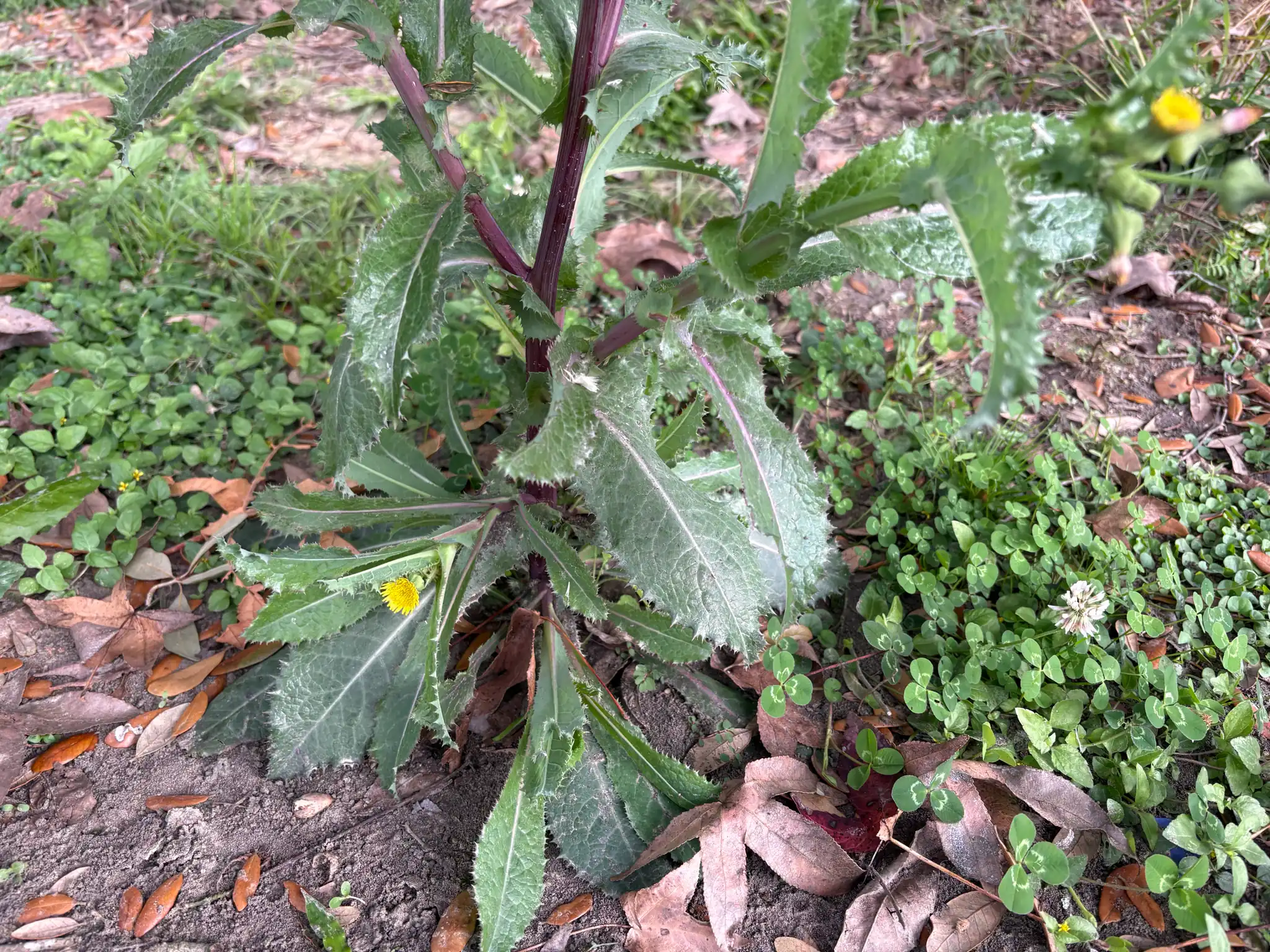
Sonchus asper, commonly known as spiny sowthistle, is an annual or biennial herb that initiates as a basal rosette before bolting into an erect, hollow-stemmed branching form. The plant exudes a milky white latex sap from its stems and foliage when cut or damaged.
This species is distinguished by its glaucous blue-green leaves adorned with sharp, wavy marginal prickles and rounded, auriculate bases that clasp the stem. Unlike similar weeds, it lacks prickles along the underside of the midvein and reproduces entirely by wind-dispersed seeds rather than creeping roots.
Uses & Benefits:
Essentials
At a Glance
Plant Type
Annual
Height
79"
Width
24"
Light
Full Sun, Partial Sun
Zones
4, 5, 6, 7, 8, 9
Water
Low to Moderate
Humidity
High
Lifespan
Annual or Biennial
Native To
Europe, North Africa, and western Asia
Toxicity
Skin Irritant
Bloom period
Spring – Autumn
In flower about 9 months of the year
Planting
How to Grow
- Identify the young basal rosettes in early spring before the central flowering stem begins to bolt.
- Grip the plant firmly at the base of the rosette, wearing gloves to protect against the sharp marginal spines.
- Pull straight upward to extract the entire taproot from moist soil, or use a weeding tool to sever the root below the crown.
- Dispose of the plants immediately if flower heads are present to prevent the wind-dispersed seeds from maturing and spreading.
Pro Tip
Hand-pull plants before they bolt and flower; because the species does not regenerate from root fragments, clean physical removal of the taproot prior to seed set completely eliminates the local population.
Keep It Thriving
Care Guide
Do
- Wear thick gloves when handling the plant to avoid skin irritation from the latex sap and scratches from the sharp leaf spines.
- Remove the entire plant before the yellow composite flowers mature into wind-borne seed heads.
Don't
- Do not compost seeding plants, as the seeds survive typical backyard compost temperatures and will spread.
- Do not rely on tilling or mowing alone once bolting has occurred, as severed stems can still mature seeds.
Seasonal Care Calendar
| Task | Jan | Feb | Mar | Apr | May | Jun | Jul | Aug | Sep | Oct | Nov | Dec |
|---|---|---|---|---|---|---|---|---|---|---|---|---|
| Pest Check | ||||||||||||
| Propagate | ||||||||||||
| Prune | ||||||||||||
| Spring Cleanup |
Watch Out For
Pests & Diseases
Common Pests
Common Diseases
In the Garden
Landscape Uses & Companions
Landscape Uses
Multiply
Propagation Methods
Good to Know
Common Questions
Spiny Sowthistle questions
What zones can Spiny Sowthistle grow in?
Spiny Sowthistle is hardy in USDA Zones 4–9. Inside that range it survives winter in the ground; outside it, grow it as an annual or a container plant you protect.
When does Spiny Sowthistle bloom?
Spiny Sowthistle typically blooms in spring through autumn. Exact timing shifts a week or two with your zone — Sow's bloom calendar maps it to your garden.
Does Spiny Sowthistle need full sun?
Spiny Sowthistle does best in full sun to part shade. In hot climates, afternoon shade keeps blooms fresher longer.
Is Spiny Sowthistle drought tolerant?
Yes — once established (usually after the first full season), Spiny Sowthistle handles dry spells with minimal watering. Water deeply its first year to build the root system that makes that possible.
More Sonchus to compare
Keep exploring
Explore the genus
Grow Spiny Sowthistle with confidence
See it in a design of your actual yard, get zone-matched care reminders, and track it season by season in your garden journal.