The Story
Plant Bio
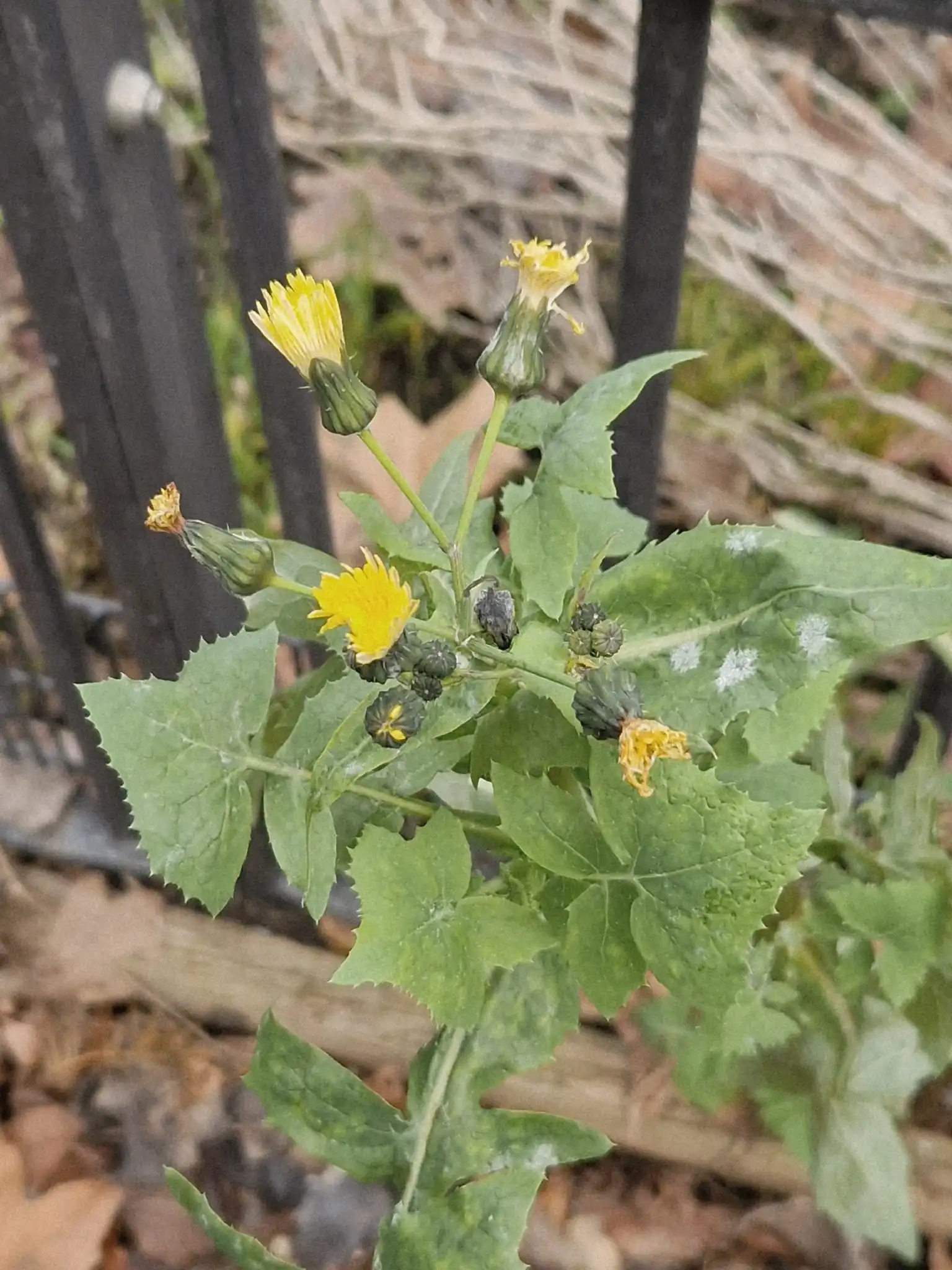
Sonchus oleraceus is an erect, hollow-stemmed annual herb characterized by its deep taproot and glaucous, deeply lobed leaves. The plant exudes a milky white latex from its stems and foliage when cut or broken.
This species is distinguished from wild lettuces by its lack of prickles on the leaf midrib, and from dandelions by its branching, leafy mature stems. The alternate leaves feature pointed, arrow-shaped auricles that clasp tightly around the stem.
Uses & Benefits:
Essentials
At a Glance
Plant Type
Annual
Height
60"
Width
24"
Light
Full Sun, Partial Sun
Zones
4, 5, 6, 7, 8, 9, 10
Water
Low to moderate
Humidity
High
Lifespan
Annual
Native To
Europe, North Africa, temperate and tropical Asia
Toxicity
Skin Irritant
Bloom period
Spring – Fall
In flower about 9 months of the year
Planting
How to Grow
- Select a site with full sun to partial shade and well-drained, fertile soil.
- Sow seeds directly on the soil surface in early spring, pressing them lightly without burying them.
- Water moderately until established, avoiding waterlogged or anaerobic soil conditions.
- Harvest young leaves before the central flowering stem emerges to avoid bitter compounds and high nitrate levels.
Pro Tip
Shallow hand-pulling often snaps the stem at the surface; you must extract the entire deep taproot to prevent the plant from rapidly regenerating.
Keep It Thriving
Care Guide
Do
- Extract the entire taproot when weeding to prevent resprouting.
- Harvest only young, tender leaves for culinary use.
- Monitor for aphids to protect adjacent crop plants.
Don't
- Do not rely on slashing or mowing alone, as cut stems quickly resprout.
- Do not apply supplemental fertilizer, which accelerates aggressive weed growth.
- Do not allow flowers to set seed if you wish to contain its spread.
Seasonal Care Calendar
| Task | Jan | Feb | Mar | Apr | May | Jun | Jul | Aug | Sep | Oct | Nov | Dec |
|---|---|---|---|---|---|---|---|---|---|---|---|---|
| Harvest | ||||||||||||
| Pest Check | ||||||||||||
| Propagate | ||||||||||||
| Prune |
Watch Out For
Pests & Diseases
Common Pests
Common Diseases
In the Garden
Landscape Uses & Companions
Landscape Uses
Companion Plants
Multiply
Propagation Methods
Good to Know
Common Questions
Common Sowthistle questions
What zones can Common Sowthistle grow in?
Common Sowthistle is hardy in USDA Zones 4–10. Inside that range it survives winter in the ground; outside it, grow it as an annual or a container plant you protect.
Is Common Sowthistle deer resistant?
Not reliably. Deer may browse Common Sowthistle, especially tender spring growth — plan on repellents or fencing where pressure is high.
When does Common Sowthistle bloom?
Common Sowthistle typically blooms in spring through fall. Exact timing shifts a week or two with your zone — Sow's bloom calendar maps it to your garden.
Does Common Sowthistle need full sun?
Common Sowthistle does best in full sun to part shade. In hot climates, afternoon shade keeps blooms fresher longer.
Is Common Sowthistle drought tolerant?
Yes — once established (usually after the first full season), Common Sowthistle handles dry spells with minimal watering. Water deeply its first year to build the root system that makes that possible.
More Sonchus to compare
Keep exploring
Explore the genus
Grow Common Sowthistle with confidence
See it in a design of your actual yard, get zone-matched care reminders, and track it season by season in your garden journal.