The Story
Plant Bio
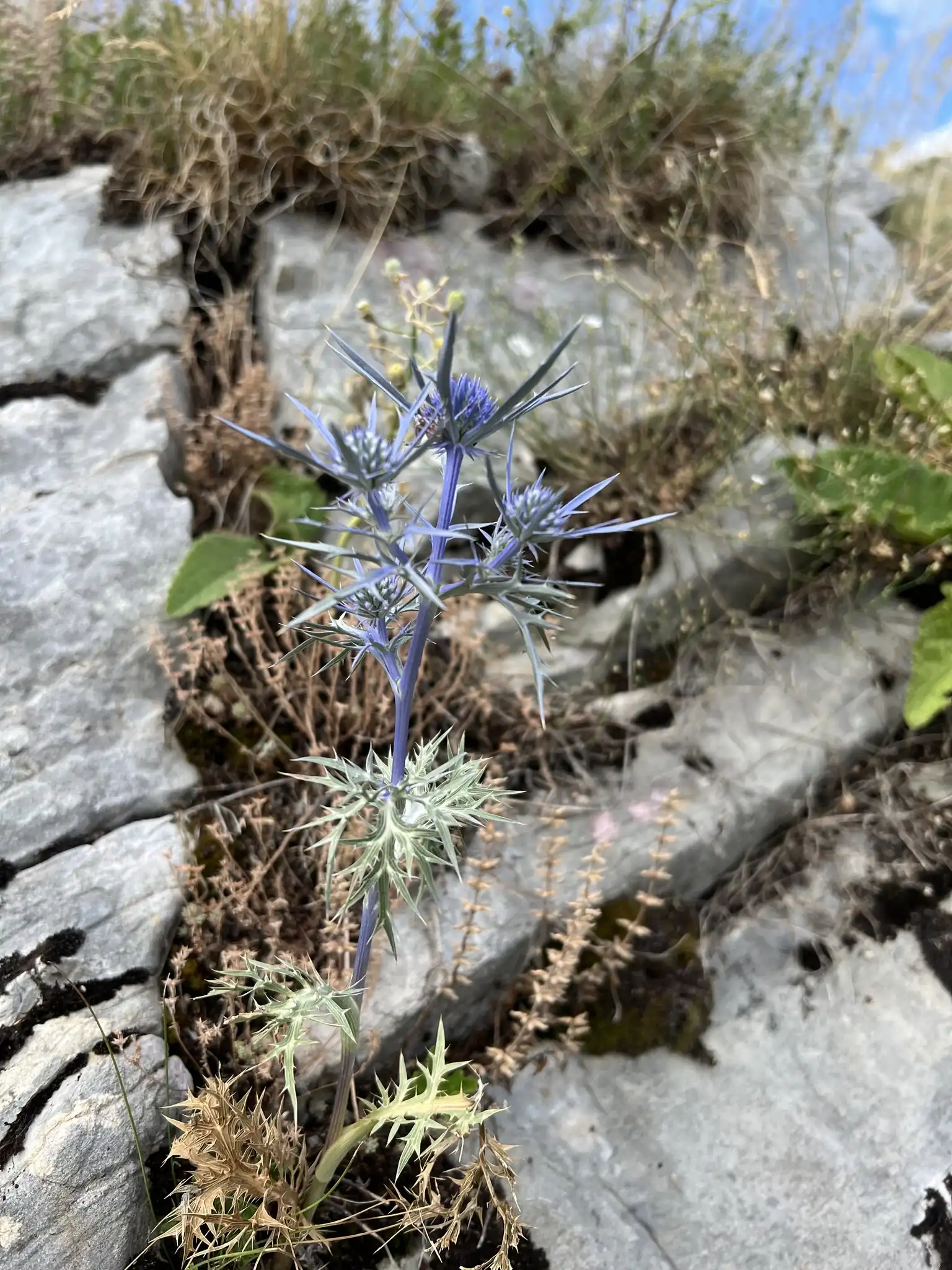
Eryngium amethystinum is a clump-forming, upright herbaceous perennial distinguished by its stiff, architectural branching habit and deep taproot. The species produces basal rosettes of leathery, pinnately lobed, spiny mid-to-gray-green leaves that persist through the growing season.
This species is characterized by its thistle-like cylindrical umbels of amethyst-blue flowers surrounded by rigid, spiky, silvery-blue to purple bracts. The intense metallic coloration develops fully on the stems and bracts during the heat of mid-to-late summer.
Uses & Benefits:
Essentials
At a Glance
Plant Type
Perennial
Height
28"
Width
28"
Light
Full Sun
Zones
4, 5, 6, 7, 8
Water
Low
Humidity
Moderate
Lifespan
Perennial
Native To
Eastern Mediterranean, Southeastern Europe
Toxicity
Non-toxic (spiny foliage can cause mechanical injury)
Bloom period
Mid summer – Late summer
In flower about 2 months of the year
Planting
How to Grow
- Select a planting site in full sun with poor, sandy, or gravelly soil that drains rapidly.
- Dig a hole twice as wide as the root ball but no deeper, ensuring the crown sits level with the surrounding soil.
- Water sparingly during the first growing season to help the deep taproot establish.
- Avoid applying fertilizers or heavy organic mulches, which promote weak, floppy growth.
Pro Tip
Never attempt to divide or transplant established specimens, as the brittle, deep taproot rarely recovers from root disturbance. Plant in lean, gritty soil with exceptional drainage; excess nutrients and winter wetness cause the crown to rot rapidly.
Keep It Thriving
Care Guide
Do
- Plant in sharply drained, gritty, or rocky soil.
- Leave spent flower heads intact through winter to feed wild birds.
- Wear thick gloves when handling the spiny foliage.
Don't
- Do not overwater or plant in heavy clay soils that hold winter moisture.
- Do not attempt to transplant or divide established plants.
- Do not apply rich fertilizers or heavy compost mulches.
Seasonal Care Calendar
| Task | Jan | Feb | Mar | Apr | May | Jun | Jul | Aug | Sep | Oct | Nov | Dec |
|---|---|---|---|---|---|---|---|---|---|---|---|---|
| Pest Check | ||||||||||||
| Propagate | ||||||||||||
| Prune | ||||||||||||
| Winter Prep |
Watch Out For
Pests & Diseases
Common Pests
Common Diseases
In the Garden
Landscape Uses & Companions
Landscape Uses
Multiply
Propagation Methods
Good to Know
Common Questions
Amethyst Sea Holly questions
What zones can Amethyst Sea Holly grow in?
Amethyst Sea Holly is hardy in USDA Zones 4–8. Inside that range it survives winter in the ground; outside it, grow it as an annual or a container plant you protect.
Is Amethyst Sea Holly deer resistant?
Yes — Amethyst Sea Holly is rated deer-resistant. Deer typically pass it over, though extreme hunger can override any plant's defenses.
When does Amethyst Sea Holly bloom?
Amethyst Sea Holly typically blooms in mid summer through late summer. Exact timing shifts a week or two with your zone — Sow's bloom calendar maps it to your garden.
Does Amethyst Sea Holly need full sun?
Amethyst Sea Holly does best in full sun (6+ hours).
Is Amethyst Sea Holly drought tolerant?
Yes — once established (usually after the first full season), Amethyst Sea Holly handles dry spells with minimal watering. Water deeply its first year to build the root system that makes that possible.
More Eryngium to compare
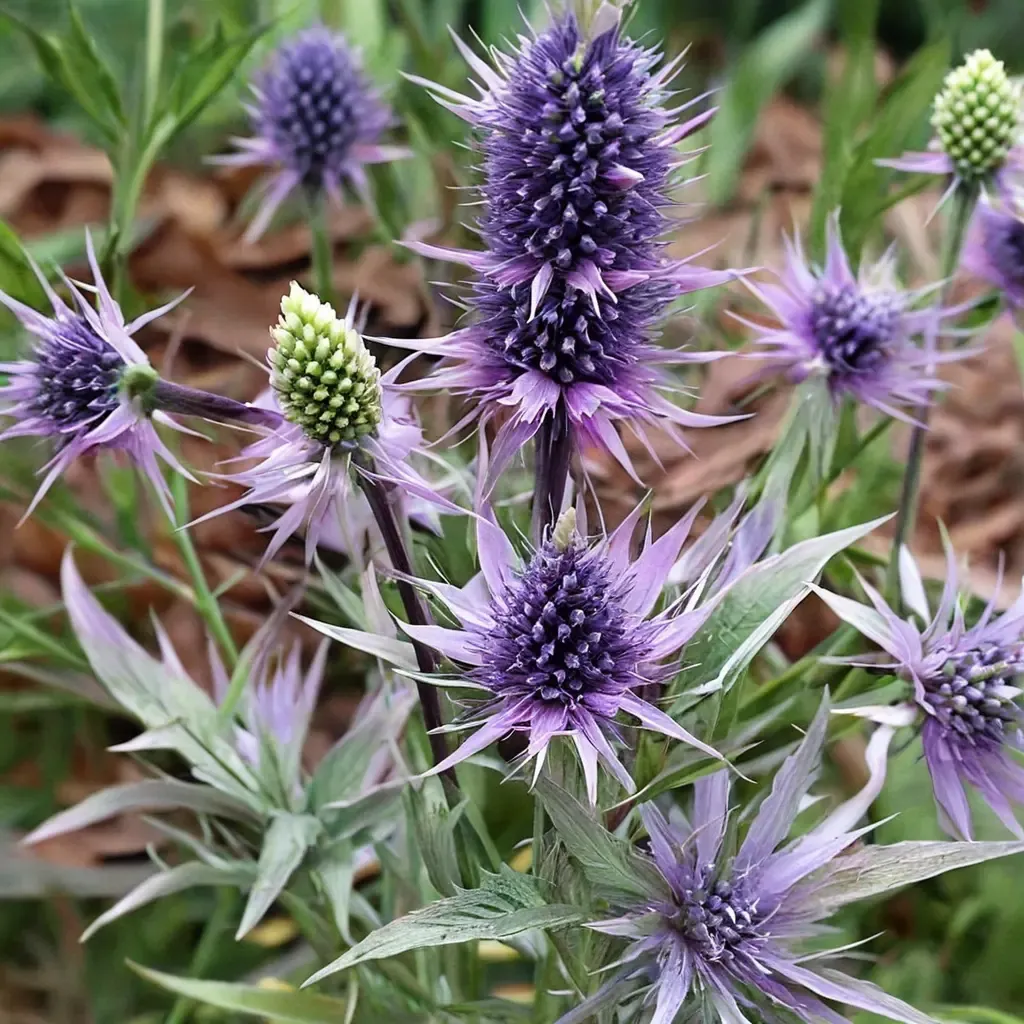
Sea Holly
Eryngium heterophyllum
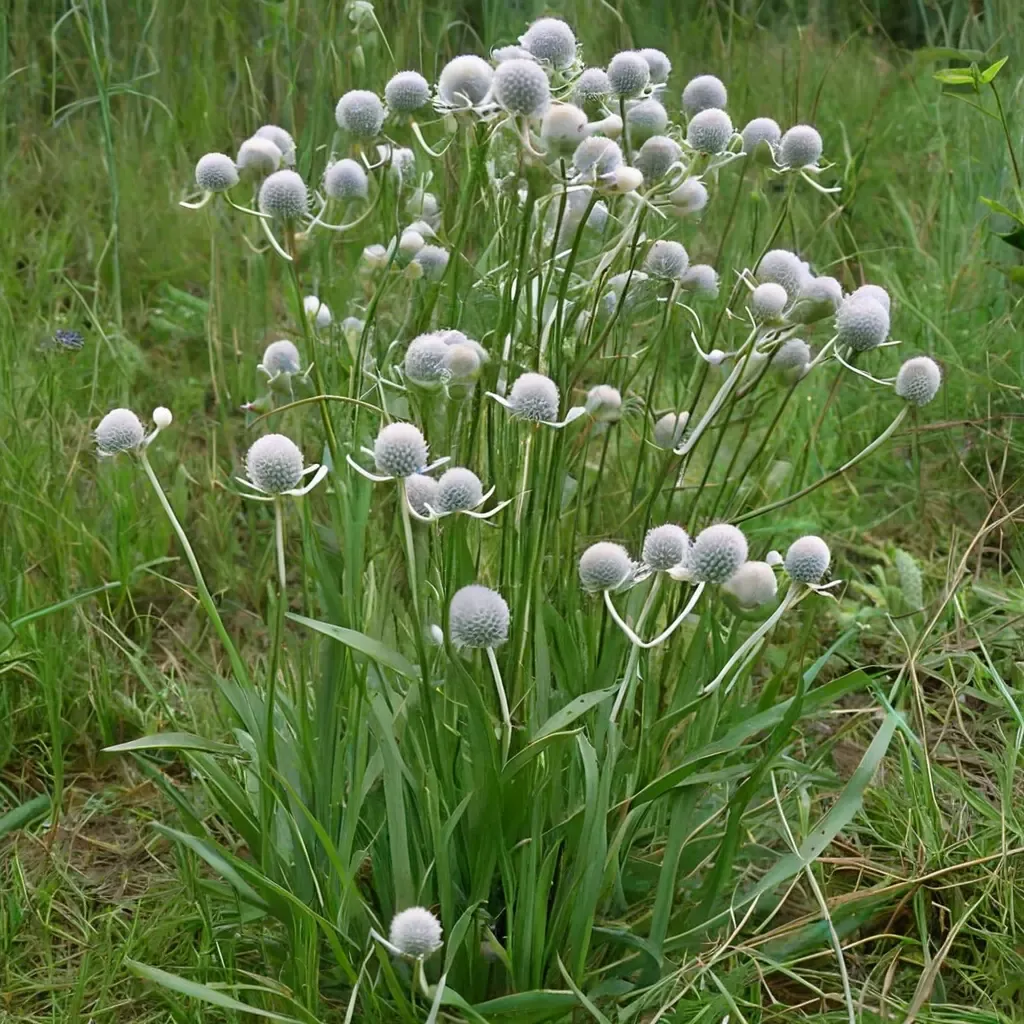
Rattlesnake master
Eryngium yuccifolium
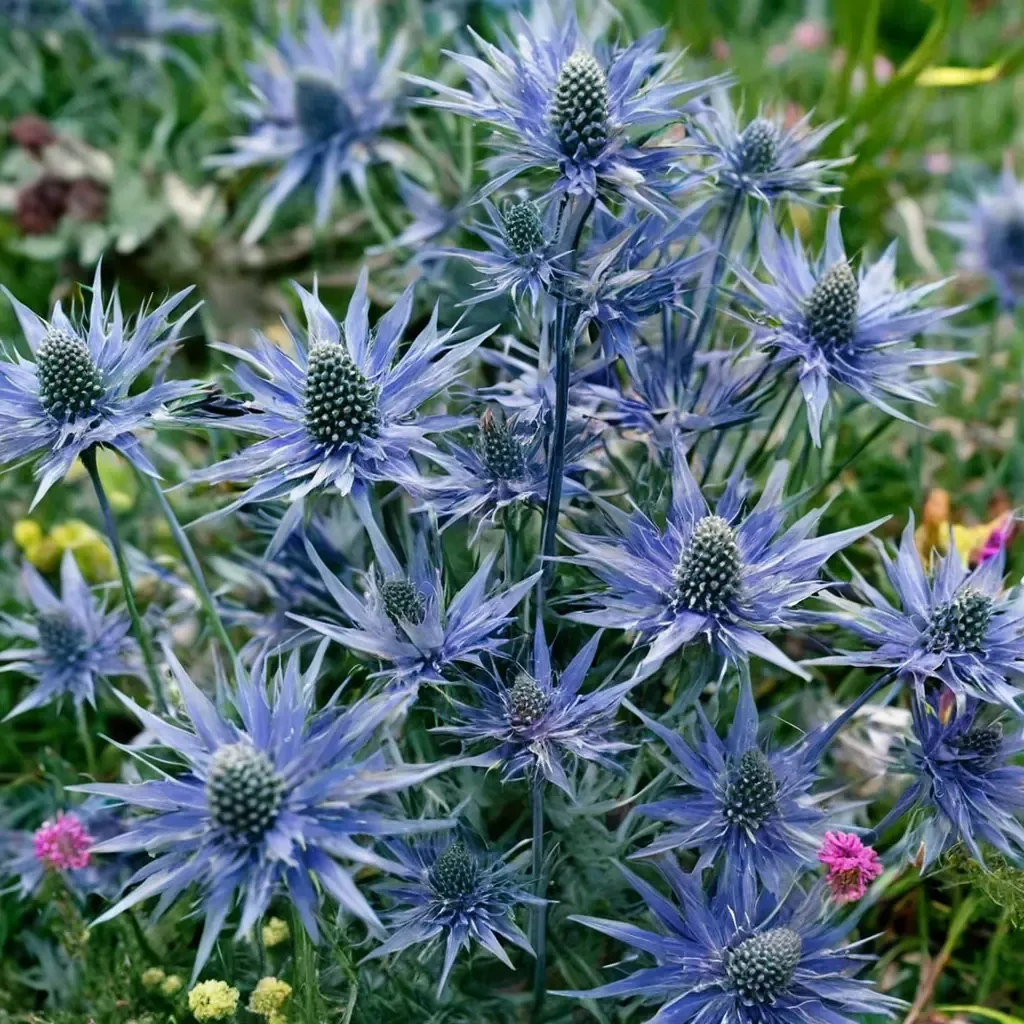
Big Blue Sea Holly
Eryngium x hybrida 'Big Blue'
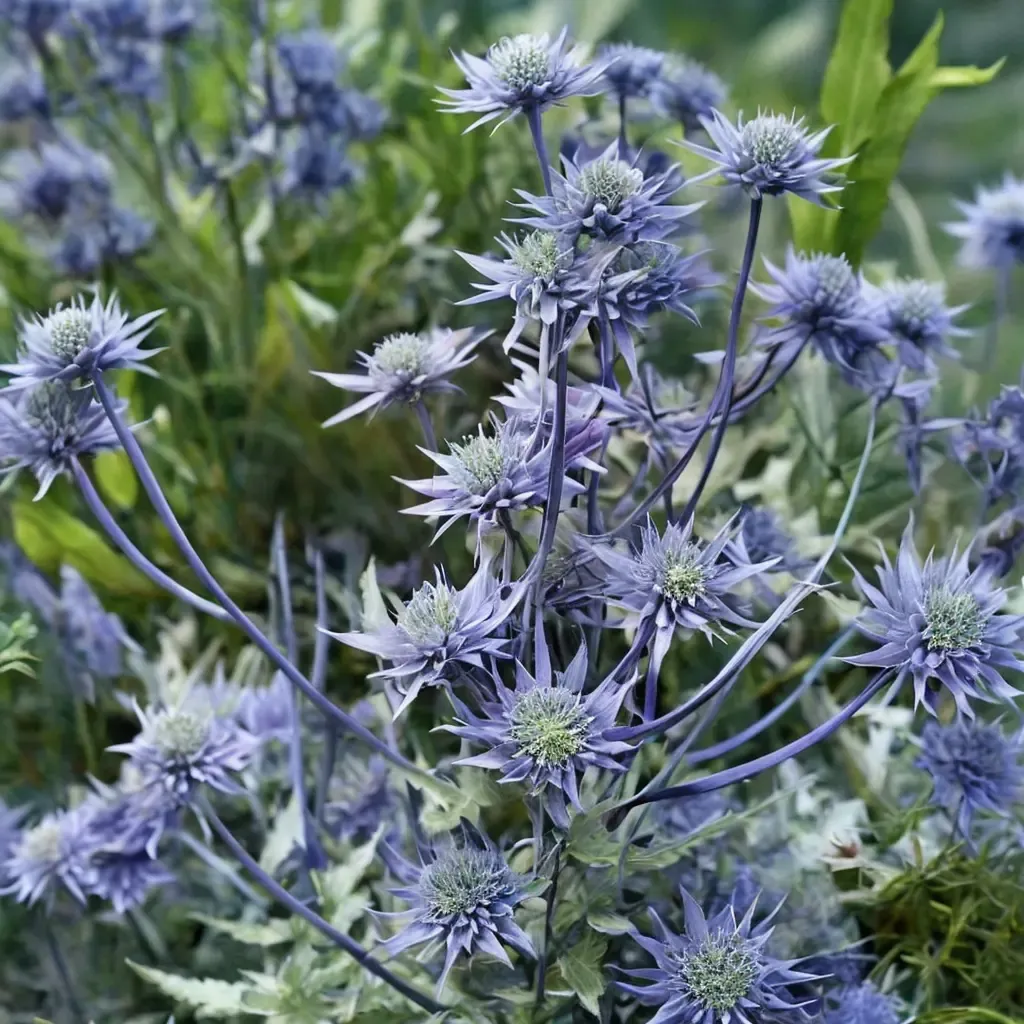
Blue Glitter Sea Holly
Eryngium planum 'Blue Glitter'
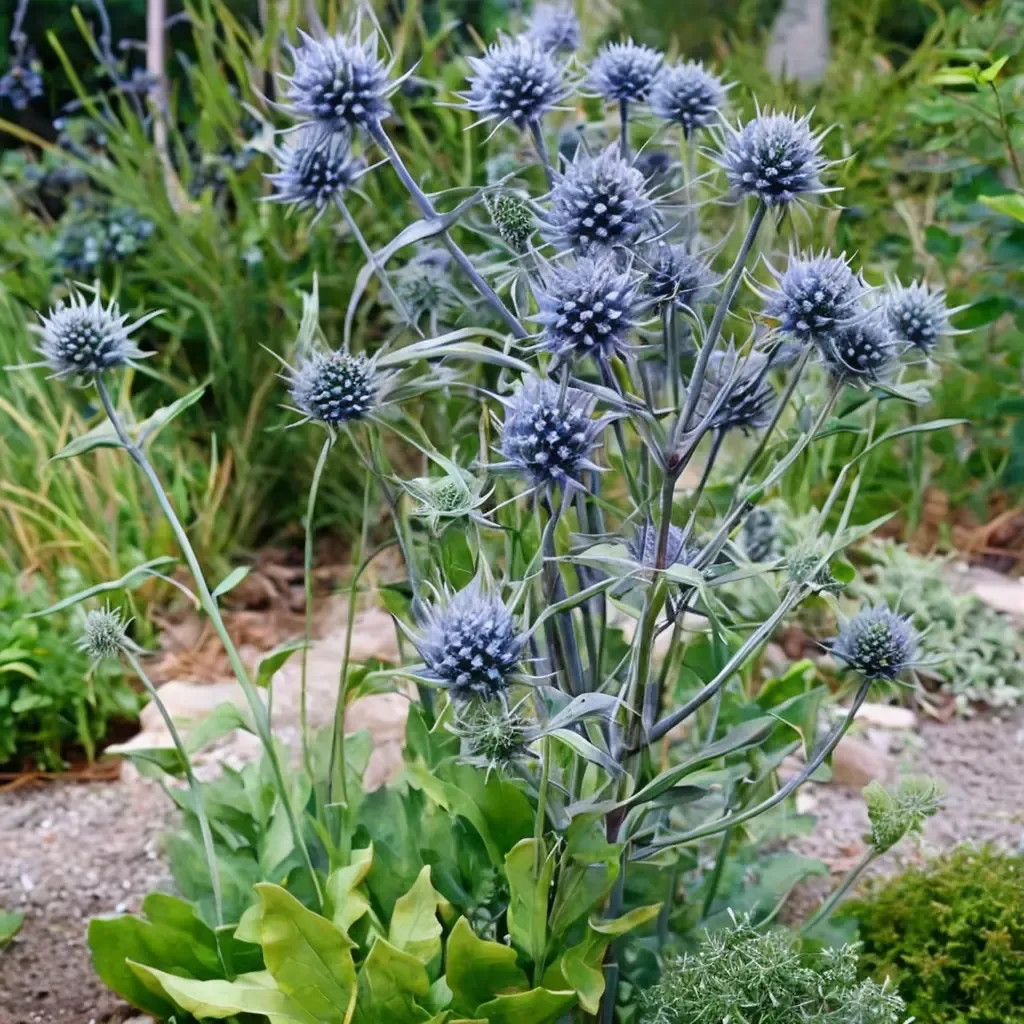
Flat Sea Holly
Eryngium planum
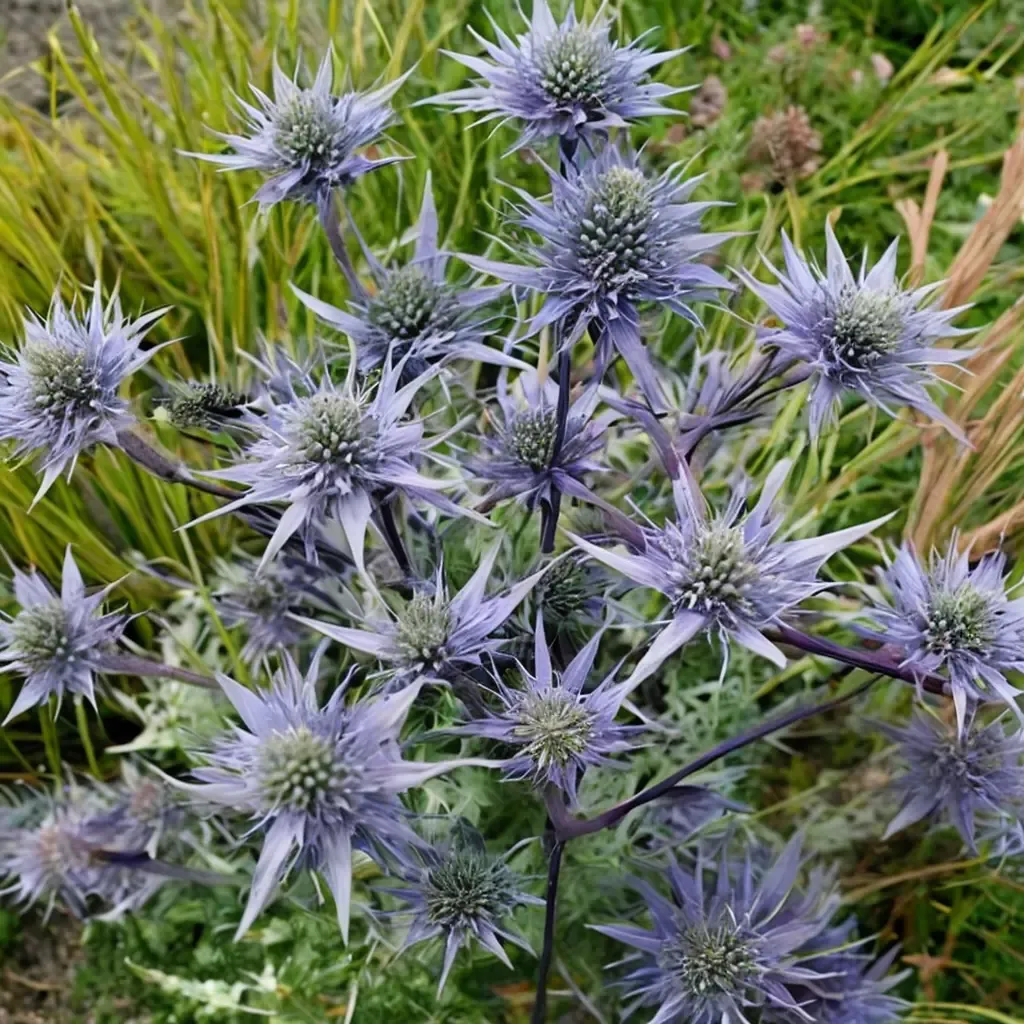
Picos Blue Sea Holly
Eryngium bourgatii 'Picos Blue'
Keep exploring
Explore the genus
Hardy in your zone?
Grow Amethyst Sea Holly with confidence
See it in a design of your actual yard, get zone-matched care reminders, and track it season by season in your garden journal.