The Story
Plant Bio
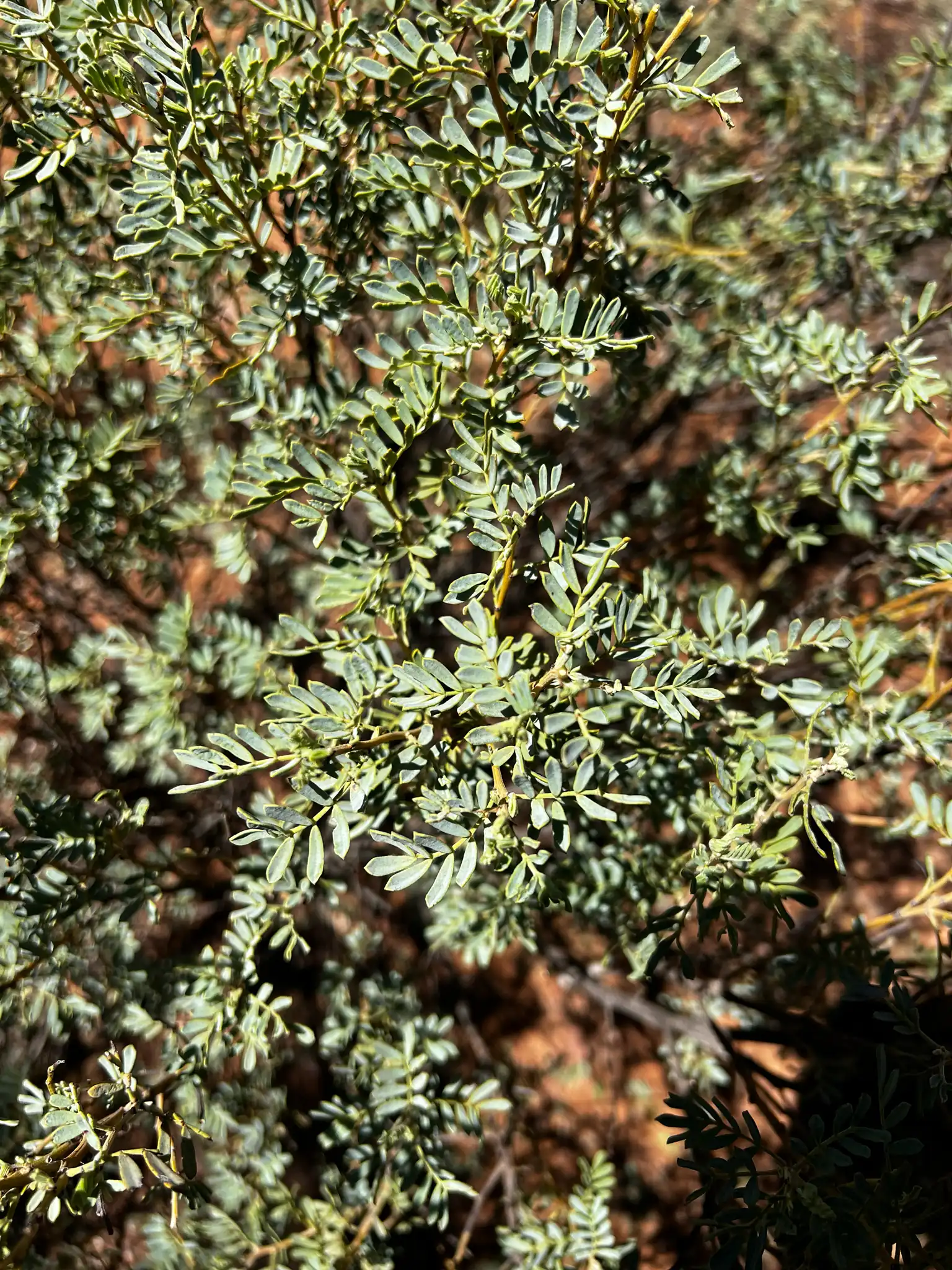
Senna artemisioides, the feathery cassia, is an upright to spreading, multi-stemmed evergreen shrub native to Australia that reaches heights of five to ten feet. Its open, airy canopy is composed of pinnate foliage with narrow, silvery-gray to gray-green leaflets covered in fine hairs.
The shrub produces massed axillary clusters of small, bright yellow, cup-shaped flowers along its stems from winter through spring. New foliage emerges with soft, silver-gray or whitish tones that contrast with the mature gray-green leaves.
Uses & Benefits:
Essentials
At a Glance
Plant Type
Shrub
Height
118"
Width
118"
Light
Full Sun
Zones
8, 9, 10
Water
Low
Humidity
Low
Lifespan
Moderate
Native To
Australia
Toxicity
Toxic to pets and livestock if ingested
Bloom period
Winter – Spring
In flower about 6 months of the year
Planting
How to Grow
- Select a planting site in full sun with sandy, loamy, or rocky soil that provides exceptional drainage.
- Dig a hole twice as wide as the root ball and of equal depth, ensuring the crown sits level with the surrounding soil.
- Water deeply to settle the soil, then establish a minimal watering schedule, allowing the soil to dry completely between applications.
- Apply a light, low-phosphorus slow-release fertilizer in spring if soil fertility is extremely poor, though feeding is rarely required.
Pro Tip
Prune lightly immediately after the spring flowering flush to maintain a dense shape; cutting back into old, leafless wood will fail to stimulate new growth from dormant buds.
Keep It Thriving
Care Guide
Do
- Plant in highly permeable soils to prevent waterlogging and root rot.
- Prune annually immediately after the spring bloom to maintain a compact form.
- Provide full sun exposure to maximize flowering and maintain silver foliage color.
Don't
- Do not overwater or plant in heavy clay soils that retain moisture.
- Do not prune hard into old, bare wood, as it will not regenerate.
- Do not apply heavy, high-phosphorus fertilizers.
Seasonal Care Calendar
| Task | Jan | Feb | Mar | Apr | May | Jun | Jul | Aug | Sep | Oct | Nov | Dec |
|---|---|---|---|---|---|---|---|---|---|---|---|---|
| Fertilize | ||||||||||||
| Pest Check | ||||||||||||
| Propagate | ||||||||||||
| Prune |
Watch Out For
Pests & Diseases
Common Pests
Common Diseases
In the Garden
Landscape Uses & Companions
Landscape Uses
Companion Plants
Multiply
Propagation Methods
Good to Know
Common Questions
Feathery Cassia questions
What zones can Feathery Cassia grow in?
Feathery Cassia is hardy in USDA Zones 8–10. Inside that range it survives winter in the ground; outside it, grow it as an annual or a container plant you protect.
When does Feathery Cassia bloom?
Feathery Cassia typically blooms in winter through spring. Exact timing shifts a week or two with your zone — Sow's bloom calendar maps it to your garden.
Does Feathery Cassia need full sun?
Feathery Cassia does best in full sun (6+ hours).
Is Feathery Cassia drought tolerant?
Yes — once established (usually after the first full season), Feathery Cassia handles dry spells with minimal watering. Water deeply its first year to build the root system that makes that possible.
More Senna to compare
Keep exploring
Explore the genus
Hardy in your zone?
Grow Feathery Cassia with confidence
See it in a design of your actual yard, get zone-matched care reminders, and track it season by season in your garden journal.