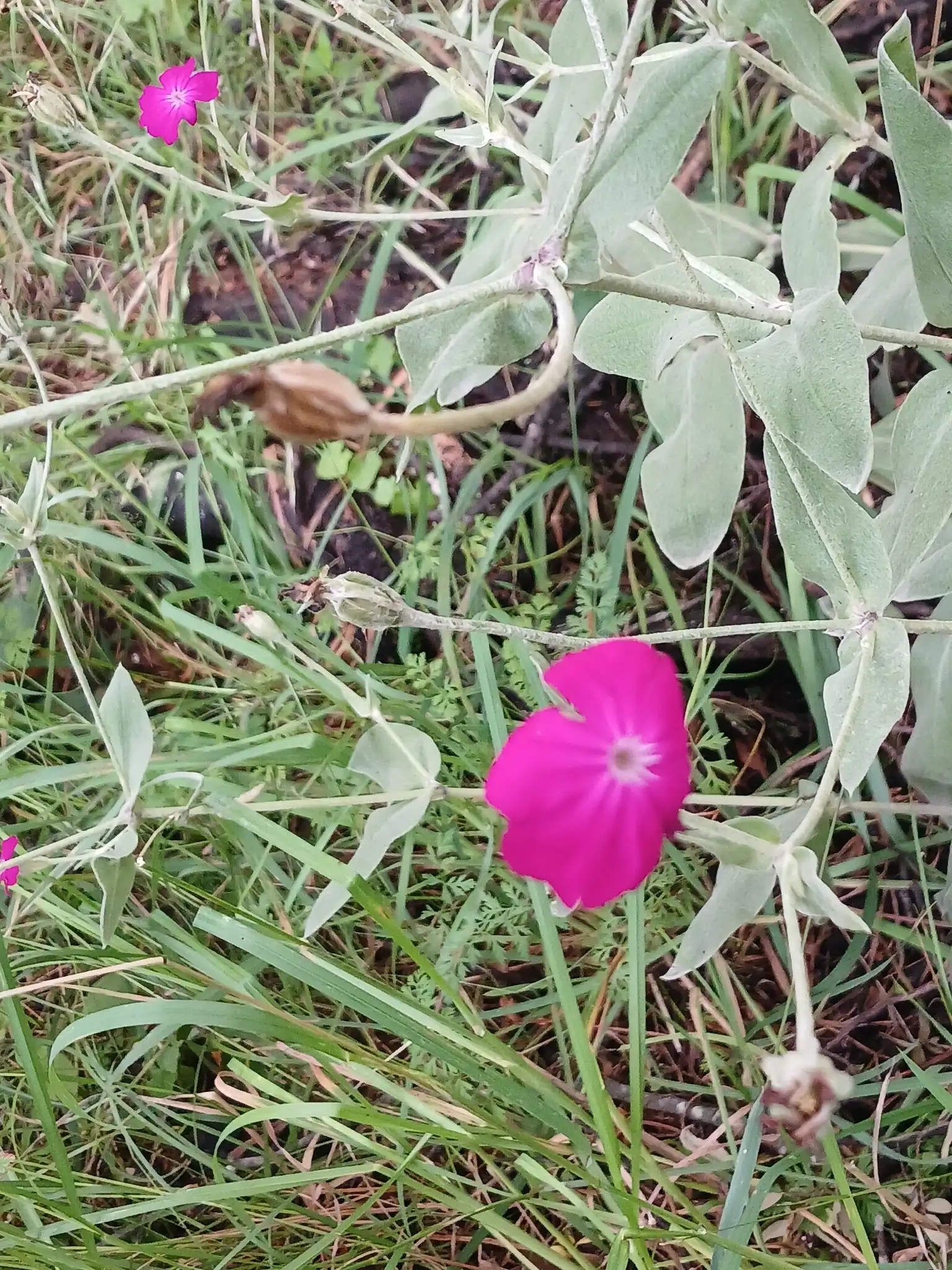
1 named cultivar
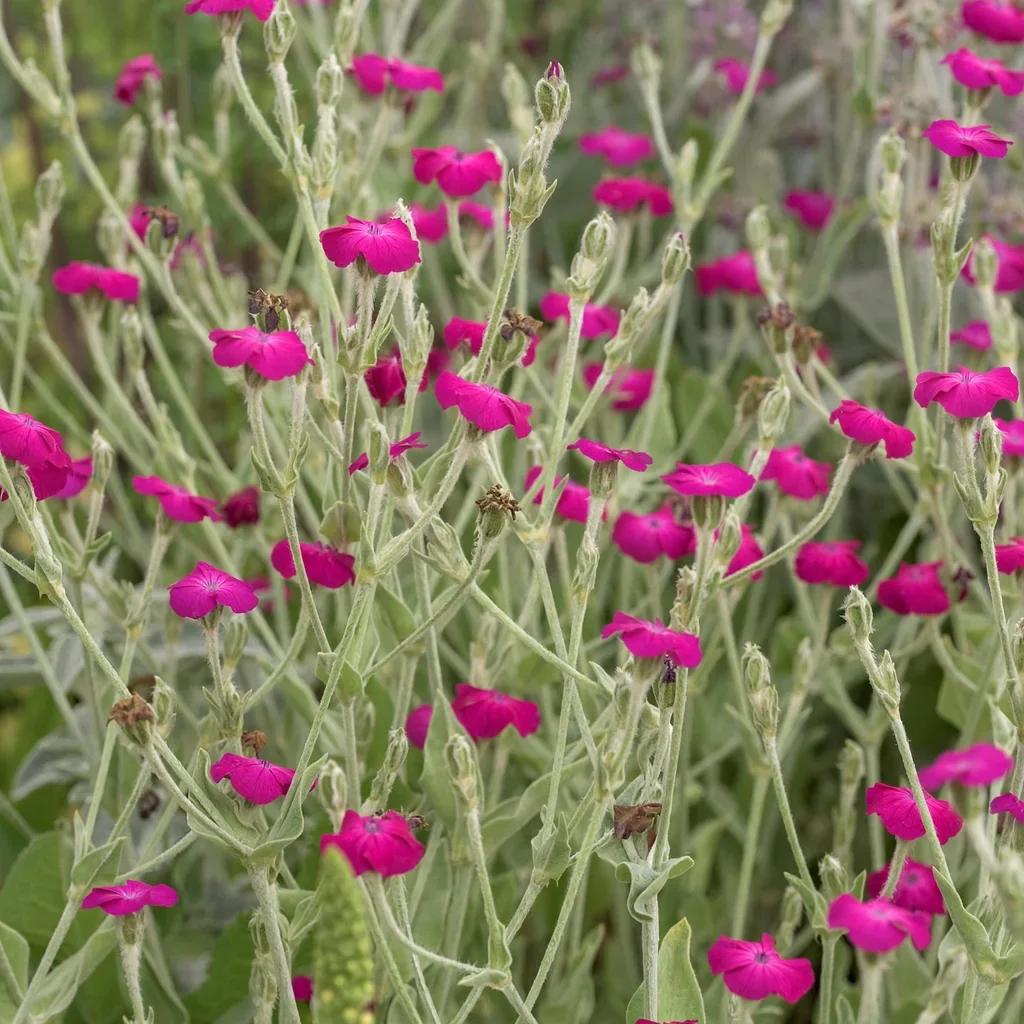
The Story
Plant Bio
Silene coronaria is an erect, clump-forming, short-lived perennial or biennial distinguished by its dense, silver-grey, woolly foliage. In summer, branching stems rise above the soft, felted basal rosettes to bear open clusters of vivid, long-stalked flowers.
The intense magenta or rose-pink blossoms contrast sharply against the white-woolly stems and leaves. The thick, hairy indumentum serves as a natural defense, making the plant highly resistant to deer and rabbit browsing.
Uses & Benefits:
Essentials
At a Glance
Plant Type
Perennial
Height
36"
Width
18"
Light
Full Sun, Partial Sun
Zones
4, 5, 6, 7, 8, 9
Water
Low
Humidity
Low to moderate
Lifespan
Short-lived perennial / Biennial
Native To
Southeastern Europe, central and southwestern Asia
Toxicity
Non-toxic (hairs may cause mild skin irritation)
Planting
How to Grow
- Select a planting site in full sun with lean, sandy, or rocky soil that drains rapidly.
- Dig a hole twice the width of the root ball and plant the crown level with the surrounding soil surface.
- Water sparingly to establish the root system, then withhold supplemental watering except during prolonged dry spells.
- Allow spent flowers to drop seed if you wish to maintain a permanent colony, as individual plants are short-lived.
Pro Tip
Provide exceptionally sharp winter drainage; wet winter soils will quickly rot the crown and root system of this drought-tolerant species.
Keep It Thriving
Care Guide
Do
- Deadhead spent flower stems immediately after the primary summer bloom to prolong flowering.
- Ensure the soil pH remains neutral to alkaline for optimal growth.
- Clean up the silver basal rosettes in early spring to remove dead or damaged winter foliage.
Don't
- Do not overwater or plant in heavy, poorly drained clay soils.
- Do not apply heavy fertilizers, as this species thrives in lean, low-nutrient soils.
- Do not disturb the established taproot once the plant is settled in the garden.
Seasonal Care Calendar
| Task | Jan | Feb | Mar | Apr | May | Jun | Jul | Aug | Sep | Oct | Nov | Dec |
|---|---|---|---|---|---|---|---|---|---|---|---|---|
| Deadhead | ||||||||||||
| Pest Check | ||||||||||||
| Propagate | ||||||||||||
| Spring Cleanup |
Watch Out For
Pests & Diseases
Common Pests
Common Diseases
In the Garden
Landscape Uses & Companions
Landscape Uses
Multiply
Propagation Methods
Good to Know
Common Questions
Rose Campion questions
What zones can Rose Campion grow in?
Rose Campion is hardy in USDA Zones 4–9. Inside that range it survives winter in the ground; outside it, grow it as an annual or a container plant you protect.
Is Rose Campion deer resistant?
Yes — Rose Campion is rated deer-resistant. Deer typically pass it over, though extreme hunger can override any plant's defenses.
When does Rose Campion bloom?
Rose Campion typically blooms in late spring through summer. Exact timing shifts a week or two with your zone — Sow's bloom calendar maps it to your garden.
Does Rose Campion need full sun?
Rose Campion does best in full sun to part shade. In hot climates, afternoon shade keeps blooms fresher longer.
Is Rose Campion drought tolerant?
Yes — once established (usually after the first full season), Rose Campion handles dry spells with minimal watering. Water deeply its first year to build the root system that makes that possible.
More Silene to compare
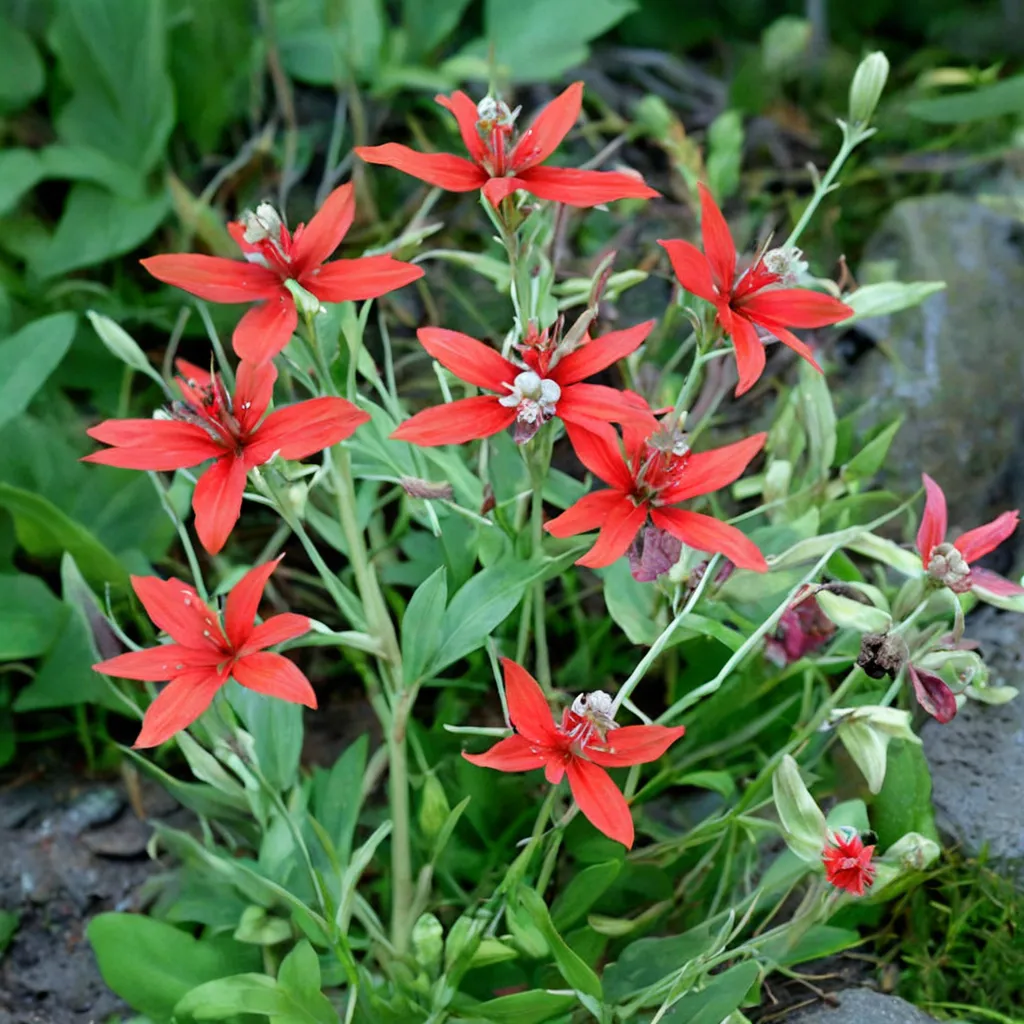
Fire Pink
Silene virginica 'Fire Pinks'
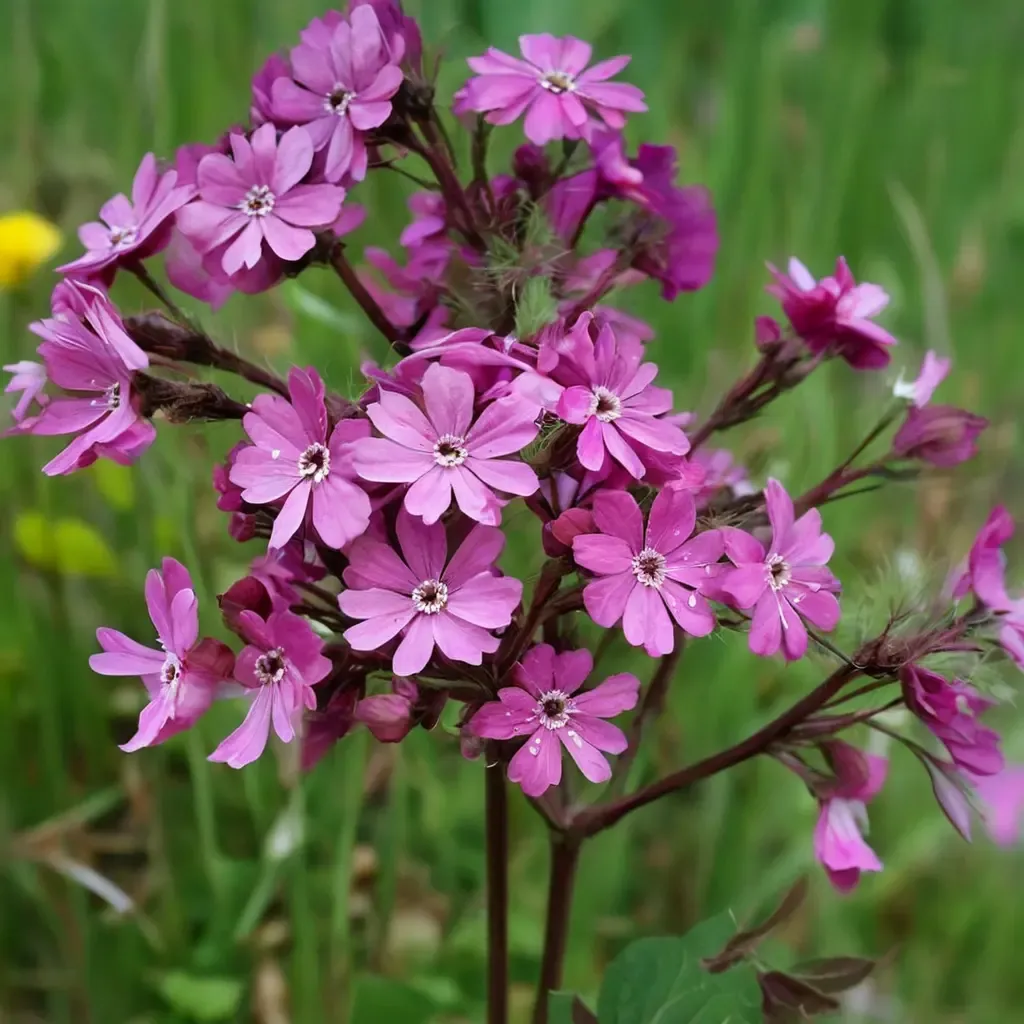
Red Campion
Silene dioica
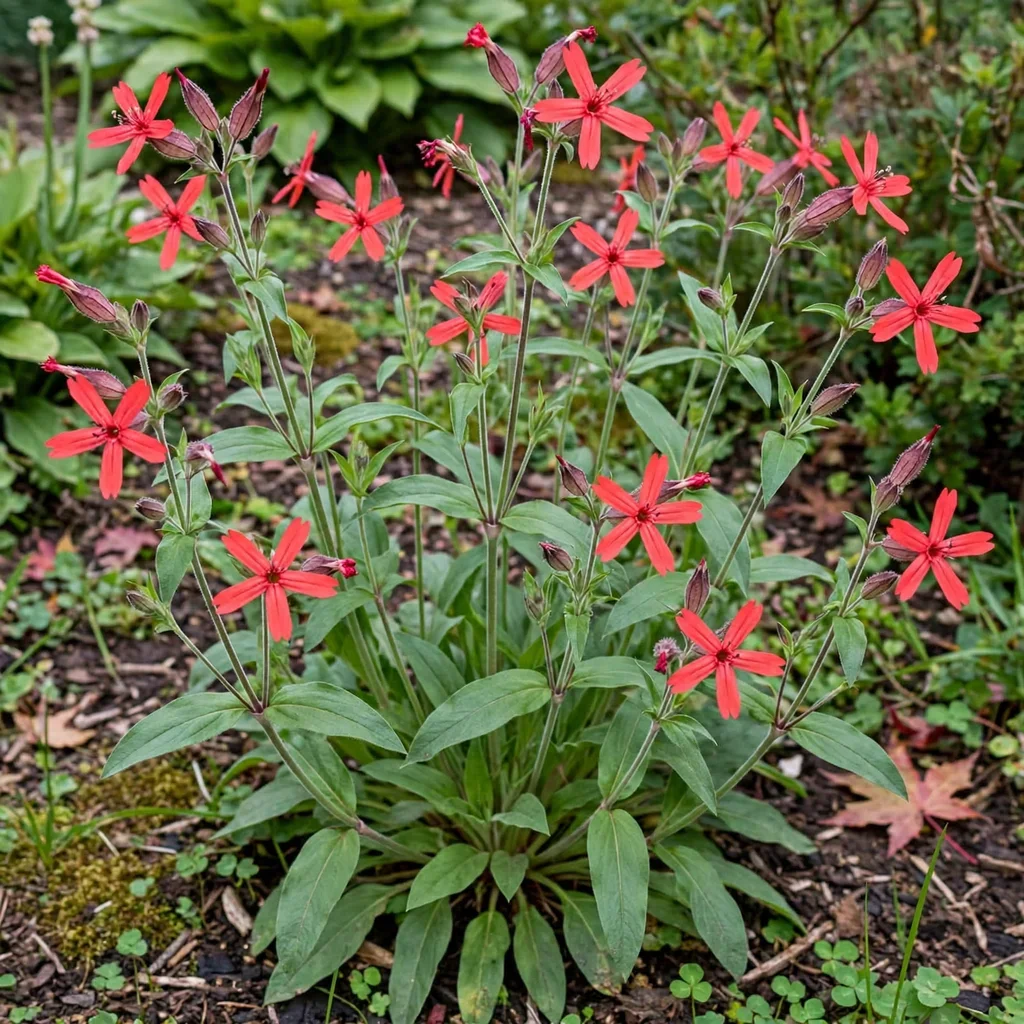
Jackson Valentine Fire Pink
Silene virginica 'Jackson Valentine'
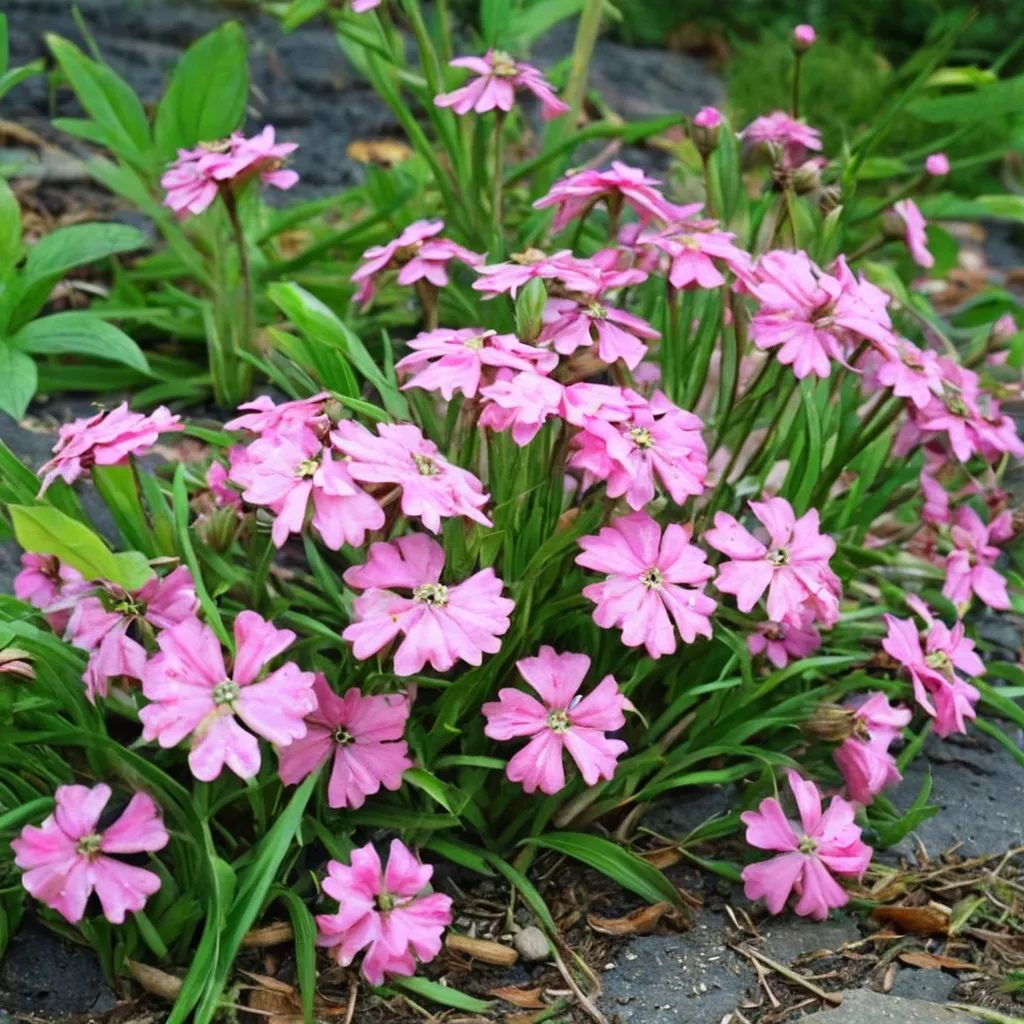
Wild Pink
Silene caroliniana 'Short and Sweet'
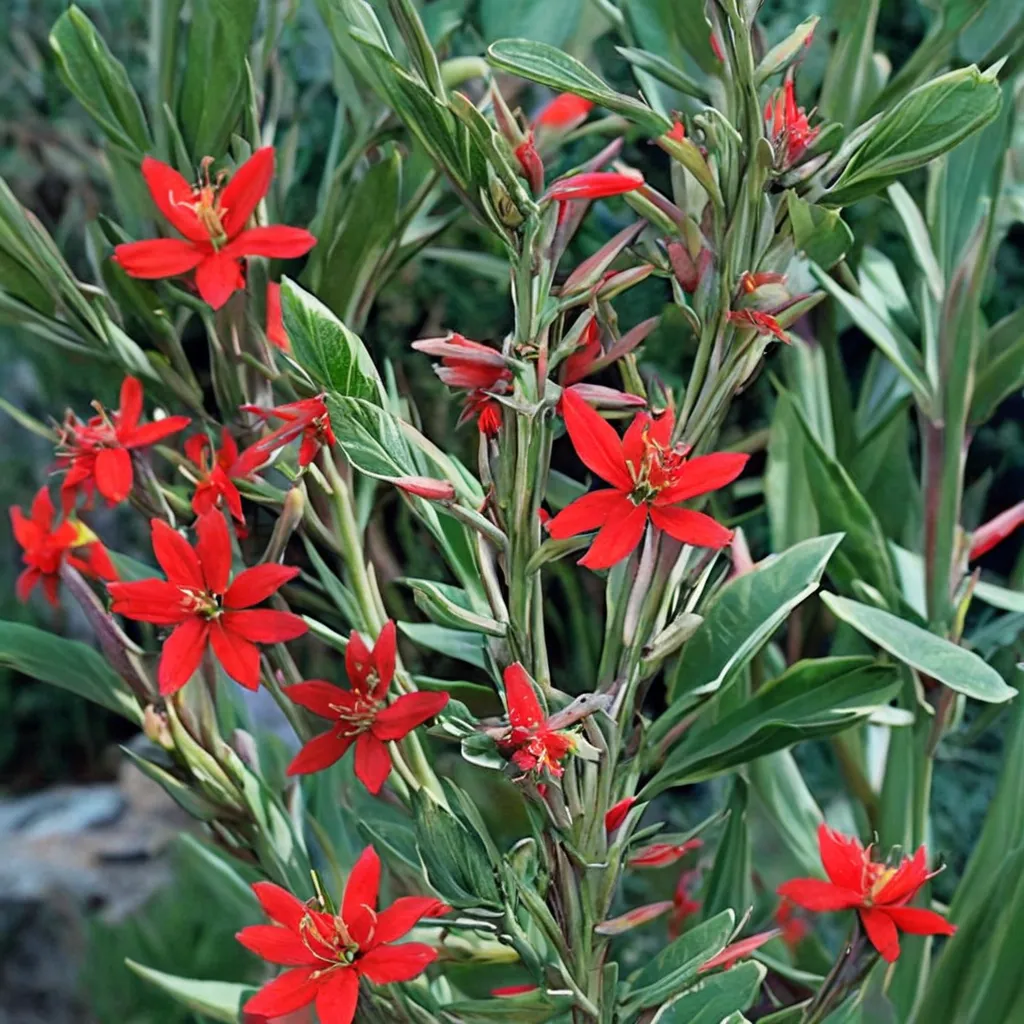
Prairie Fire Royal Catchfly
Silene regia 'Prairie Fire'
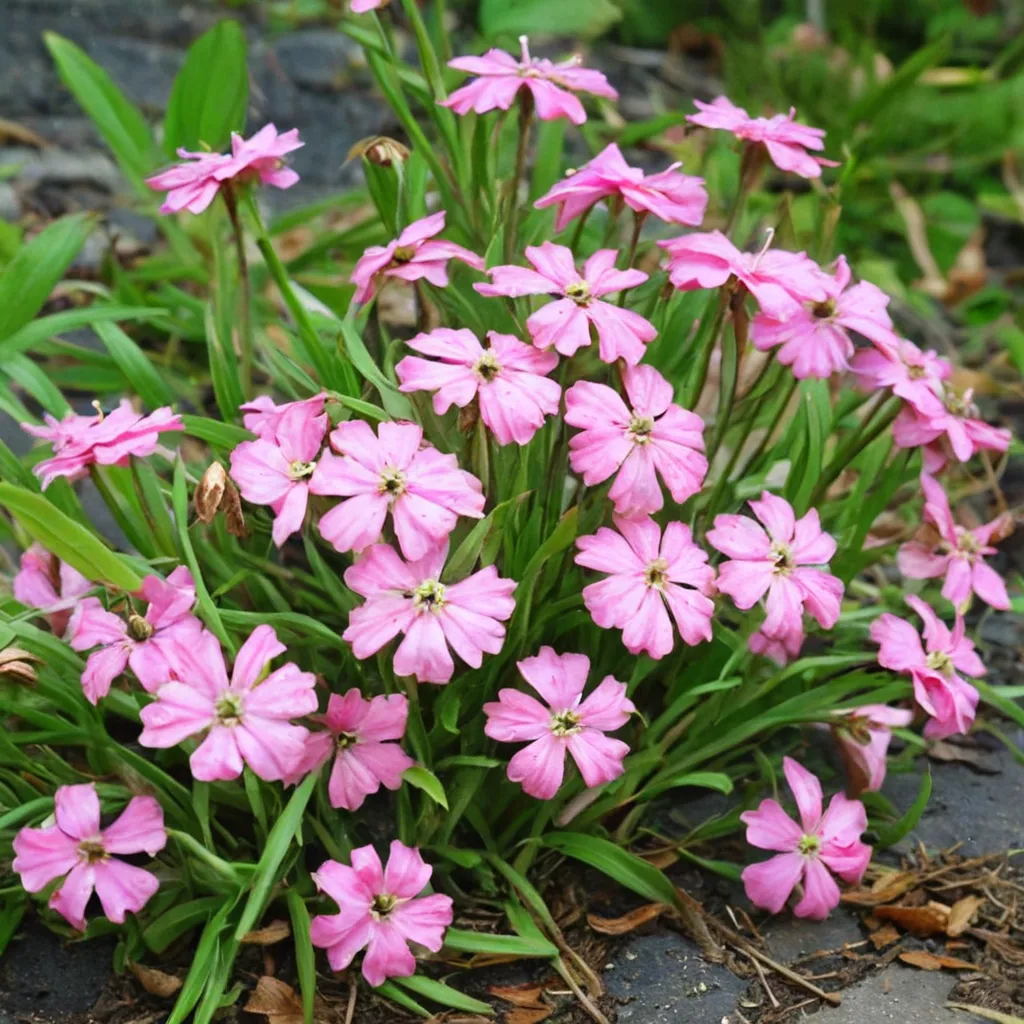
Short and Sweet Wild Pinks
Silene caroliniana 'Short Sweet'
Keep exploring
Explore the genus
Grow Rose Campion with confidence
See it in a design of your actual yard, get zone-matched care reminders, and track it season by season in your garden journal.