The Story
Plant Bio
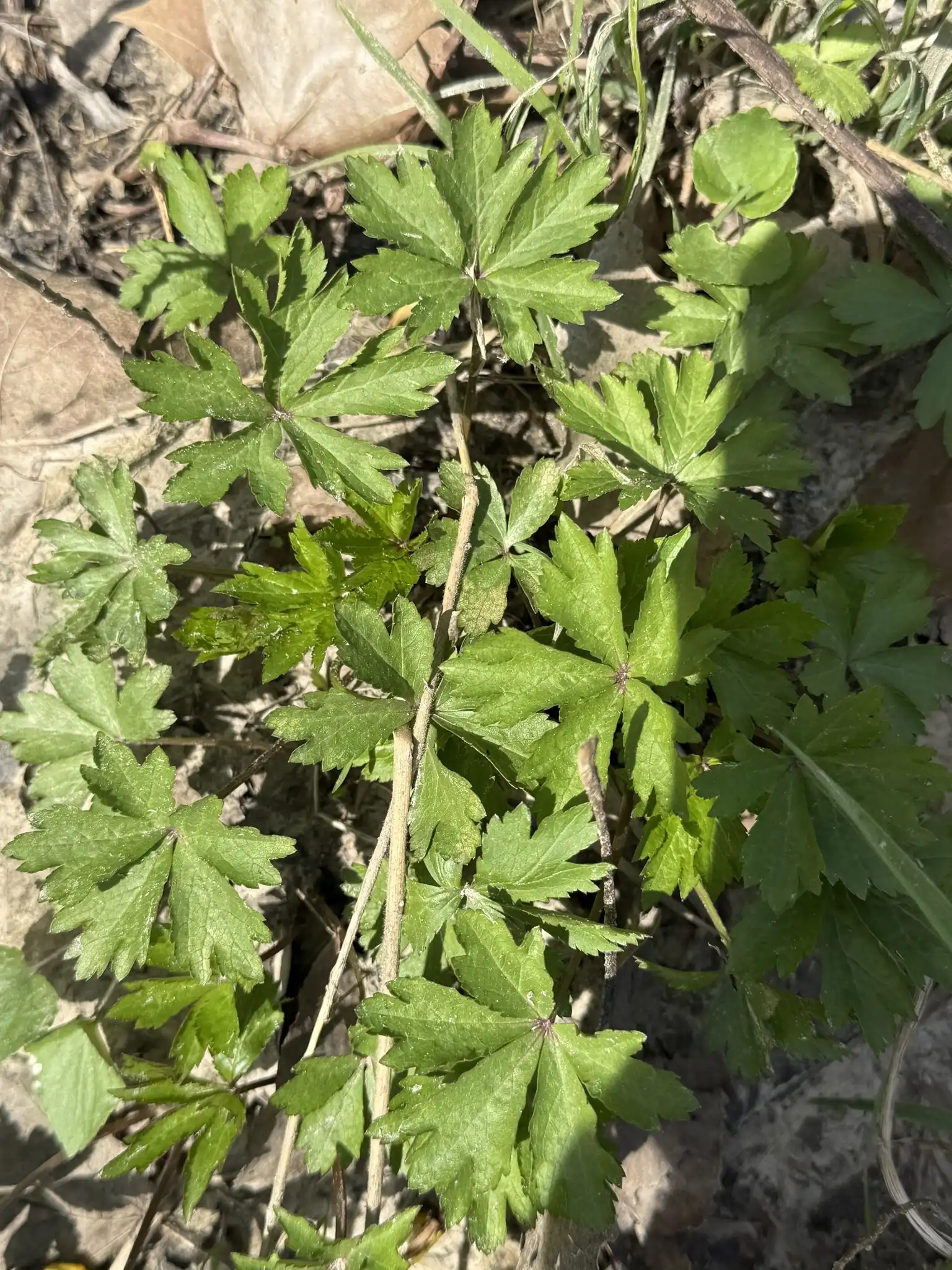
Anemonastrum canadense, the Canada anemone, is a vigorous herbaceous perennial native to North American meadows and streambanks, spreading rapidly via underground rhizomes to form dense green carpets. The deeply lobed, tooth-edged foliage resembles wild geranium, emerging light green in spring before maturing to a deep forest green.
This species is distinguished by its solitary, cup-shaped white flowers with prominent yellow central stamens, which rise on long stalks above the foliage from late spring into mid-summer. Unlike clump-forming anemones, it acts as a highly aggressive groundcover that quickly smothers weeds in moist, open areas.
Uses & Benefits:
Essentials
At a Glance
Plant Type
Perennial
Height
24"
Width
60"
Light
Full Sun, Partial Sun
Zones
4, 5, 6, 7, 8
Water
Moist to wet
Humidity
High
Lifespan
Perennial
Native To
North America
Toxicity
Toxic if ingested; skin irritant
Bloom period
Late spring – Mid-summer
In flower about 3 months of the year
Planting
How to Grow
- Select a planting site in full sun to partial shade with moist to wet soil, such as a rain garden, ditch, or woodland edge.
- Amend sandy or poor soils with compost to help retain moisture, though the plant tolerates clay and loam without modification.
- Space bareroots or plugs twelve to eighteen inches apart to allow the rhizomes room to fill in the gaps quickly.
- Water deeply and regularly during the first growing season to establish a robust root system, keeping the soil consistently damp.
Pro Tip
Plant this species only where its aggressive, rhizomatous spread can be safely contained, such as in wet ditches or woodland edges, as it will quickly overrun delicate neighbors in a standard perennial border.
Keep It Thriving
Care Guide
Do
- Wear gloves when handling or dividing the plants to prevent skin irritation from the toxic sap.
- Plant in areas with natural barriers, like mowed turf or paved edges, to control the spreading rhizomes.
- Cut the dead foliage back to the ground in late fall or early spring once the plant enters winter dormancy.
Don't
- Do not plant this species in small, tidy perennial borders where it will crowd out less vigorous plants.
- Avoid applying supplemental fertilizer, as this plant thrives and spreads rapidly in average, unamended soils.
- Do not allow the soil to dry out completely, as drought causes the foliage to turn tattered and trigger early dormancy.
Seasonal Care Calendar
| Task | Jan | Feb | Mar | Apr | May | Jun | Jul | Aug | Sep | Oct | Nov | Dec |
|---|---|---|---|---|---|---|---|---|---|---|---|---|
| Divide | ||||||||||||
| Pest Check | ||||||||||||
| Propagate | ||||||||||||
| Spring Cleanup |
Watch Out For
Pests & Diseases
Common Pests
Common Diseases
In the Garden
Landscape Uses & Companions
Landscape Uses
Multiply
Propagation Methods
Good to Know
Common Questions
Canada Anemone questions
What zones can Canada Anemone grow in?
Canada Anemone is hardy in USDA Zones 4–8. Inside that range it survives winter in the ground; outside it, grow it as an annual or a container plant you protect.
Is Canada Anemone deer resistant?
Yes — Canada Anemone is rated deer-resistant. Deer typically pass it over, though extreme hunger can override any plant's defenses.
When does Canada Anemone bloom?
Canada Anemone typically blooms in late spring through mid-summer. Exact timing shifts a week or two with your zone — Sow's bloom calendar maps it to your garden.
Does Canada Anemone need full sun?
Canada Anemone does best in full sun to part shade. In hot climates, afternoon shade keeps blooms fresher longer.
Keep exploring
Explore the genus
Hardy in your zone?
Grow Canada Anemone with confidence
See it in a design of your actual yard, get zone-matched care reminders, and track it season by season in your garden journal.