The Story
Plant Bio
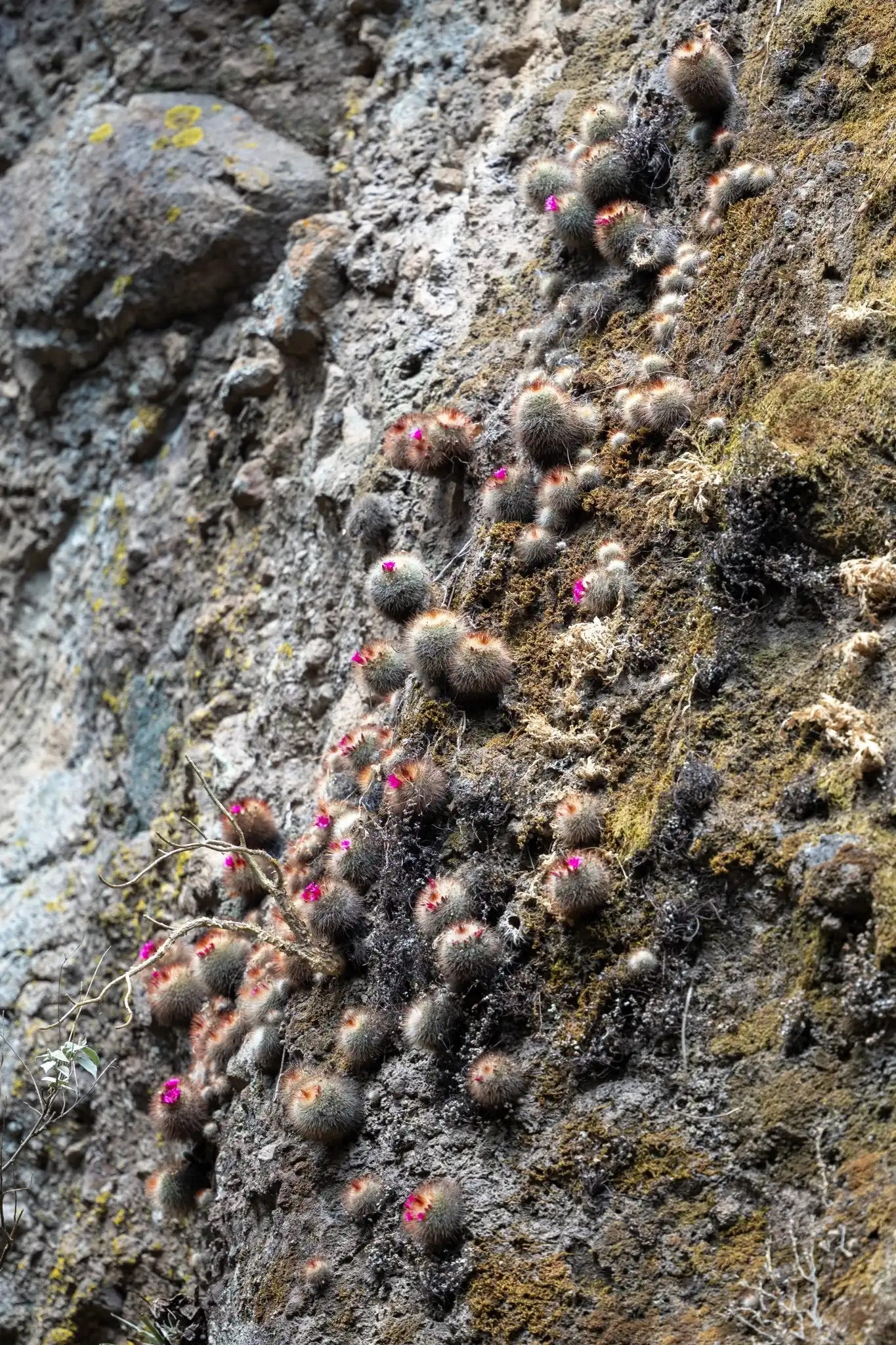
Mammillaria spinosissima, the spiny pincushion cactus, is a cylindrical Mexican cactus reaching twelve to twenty inches in height, with dark blue-green stems covered in distinct, nipple-like tubercles. The plant grows solitary when young but forms clustered offsets at the base with age, densely cloaked in interlocking, colorful spines.
This species is distinguished by its intensely colored new spines emerging at the crown, ranging from white and yellow to deep coppery red. In spring, a ring of small, funnel-shaped pink to purplish flowers emerges from the axils of the tubercles near the top of the stem.
Uses & Benefits:
Essentials
At a Glance
Plant Type
Cactus Succulent
Height
20"
Width
6"
Light
Full Sun, Partial Sun
Zones
10
Water
Low
Humidity
Low
Lifespan
Long-lived
Native To
Mexico
Toxicity
Non-toxic (spines cause mechanical irritation)
Bloom period
Spring – Early summer
In flower about 4 months of the year
Planting
How to Grow
- Plant in a gritty, porous cactus-and-succulent mix with minimal organic matter to ensure absolute drainage.
- Position in full sun or very bright filtered light, providing light afternoon shade during extreme summer heatwaves.
- Water thoroughly every two to three weeks during the summer growing season, allowing the soil to dry out completely between waterings.
- Withhold water almost entirely through the winter months to prevent root rot and encourage spring blooming.
Pro Tip
Provide a cool, dry winter dormancy between 45 and 55 degrees Fahrenheit with near-total water cessation to trigger the formation of the spring flower crown.
Keep It Thriving
Care Guide
Do
- Use thick, protective gloves when handling to avoid mechanical irritation from the sharp spines.
- Ensure the container has large drainage holes and never sits in standing water.
- Keep the plant completely dry if temperatures drop near freezing.
Don't
- Do not water on a fixed calendar schedule; always check that the potting medium is bone-dry first.
- Never cut back into old, leafless stem tissue as the cactus cannot regenerate from old wood.
- Avoid placing the plant in high-humidity indoor spaces or dark corners.
Seasonal Care Calendar
| Task | Jan | Feb | Mar | Apr | May | Jun | Jul | Aug | Sep | Oct | Nov | Dec |
|---|---|---|---|---|---|---|---|---|---|---|---|---|
| Fertilize | ||||||||||||
| Pest Check | ||||||||||||
| Propagate | ||||||||||||
| Winter Prep |
Watch Out For
Pests & Diseases
Common Pests
Common Diseases
In the Garden
Landscape Uses & Companions
Landscape Uses
Companion Plants
Multiply
Propagation Methods
Good to Know
Common Questions
Spiny Pincushion Cactus questions
What zones can Spiny Pincushion Cactus grow in?
Spiny Pincushion Cactus is hardy in USDA Zone 10. Inside that range it survives winter in the ground; outside it, grow it as an annual or a container plant you protect.
Is Spiny Pincushion Cactus deer resistant?
Yes — Spiny Pincushion Cactus is rated deer-resistant. Deer typically pass it over, though extreme hunger can override any plant's defenses.
When does Spiny Pincushion Cactus bloom?
Spiny Pincushion Cactus typically blooms in spring through early summer. Exact timing shifts a week or two with your zone — Sow's bloom calendar maps it to your garden.
Does Spiny Pincushion Cactus need full sun?
Spiny Pincushion Cactus does best in full sun to part shade. In hot climates, afternoon shade keeps blooms fresher longer.
Is Spiny Pincushion Cactus drought tolerant?
Yes — once established (usually after the first full season), Spiny Pincushion Cactus handles dry spells with minimal watering. Water deeply its first year to build the root system that makes that possible.
Keep exploring
Explore the genus
Hardy in your zone?
Grow Spiny Pincushion Cactus with confidence
See it in a design of your actual yard, get zone-matched care reminders, and track it season by season in your garden journal.