The Story
Plant Bio
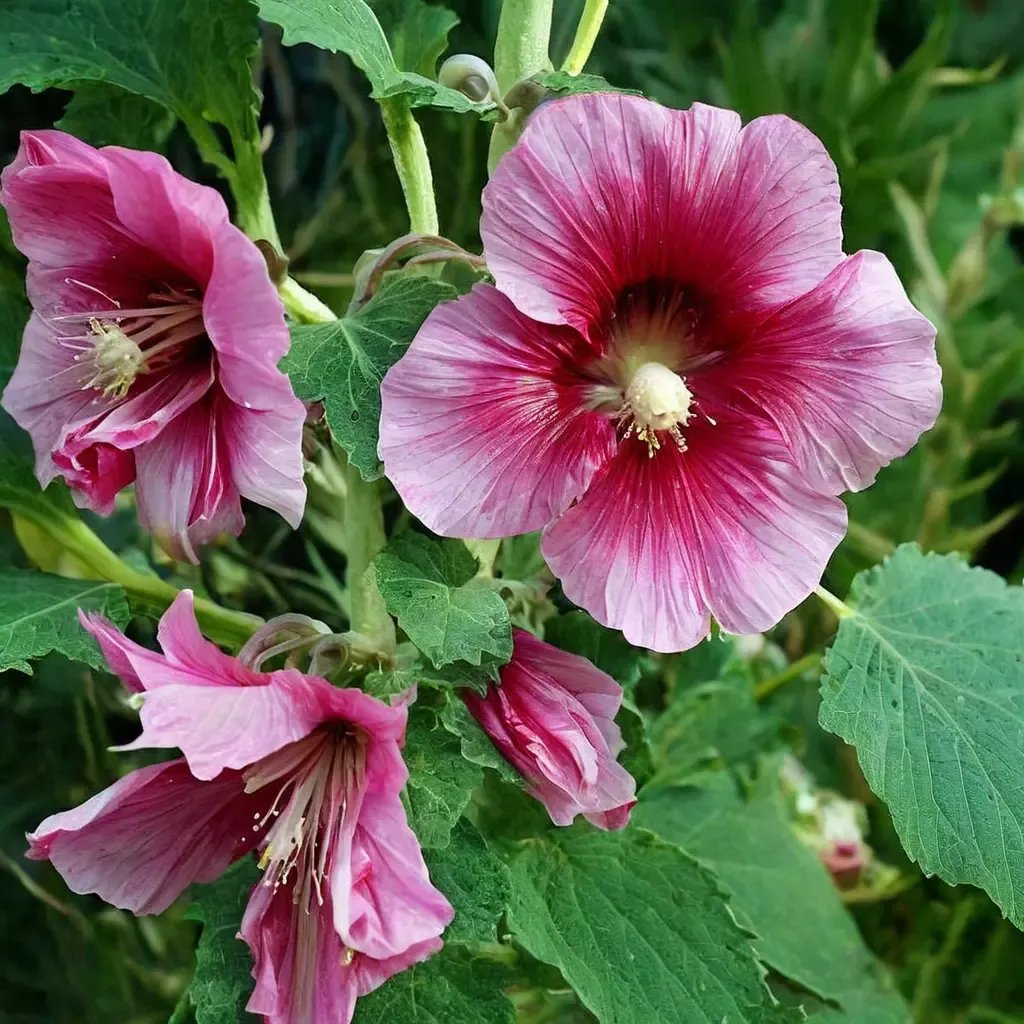
Tall biennial or perennial with striking, large pink flowers.
Unique for its tall stature and ability to attract beneficial insects.
Uses & Benefits:
Provides tall, vibrant blooms that enhance garden borders and flower beds.
Supports pollinators such as bees and butterflies, promoting ecological health.
Adds biodiversity and attracts beneficial insects to the garden ecosystem.
Essentials
At a Glance
Plant Type
Perennial
Height
72"
Width
24"
Light
Full Sun
Zones
4, 5, 6, 7, 8, 9
Water
Moderate
Humidity
Average
Lifespan
Perennial
Native To
Southwest Asia
Toxicity
Non-toxic to humans and pets
Bloom period
Mid-summer – Late summer
J
F
M
A
M
J
J
A
S
O
N
D
In flower about 2 months of the year
Planting
How to Grow
- Tuck seeds into well-draining soil in early spring for best germination.
- Mist cuttings regularly to maintain humidity and promote root growth.
- Water deeply once a week during dry spells to encourage healthy growth.
- Fertilize with a balanced liquid feed every 4-6 weeks during the growing season.
- Stake tall stems to prevent wind damage and support plant structure.
- Remove spent flowers to encourage continuous blooming and tidy appearance.
Pro Tip
Plant in full sun with rich, well-draining soil for abundant blooms.
Keep It Thriving
Care Guide
Do
- Water regularly during dry periods 💧
- Prune to shape and remove dead or diseased stems ✂️
- Apply organic compost annually for healthy growth
- Mulch around the base to retain moisture and suppress weeds
- Support tall varieties with stakes or cages
Don't
- Avoid overwatering to prevent root rot ❌
- Do not neglect staking for tall varieties
- Refrain from heavy fertilization late in the season
- Don't harvest flowers before full bloom
- Avoid planting in poorly drained soil
Seasonal Care Calendar
| Task | Jan | Feb | Mar | Apr | May | Jun | Jul | Aug | Sep | Oct | Nov | Dec |
|---|---|---|---|---|---|---|---|---|---|---|---|---|
| Deadhead | ||||||||||||
| Pest Check | ||||||||||||
| Spring Cleanup | ||||||||||||
| Stake |
Watch Out For
Pests & Diseases
Common Pests
Common Diseases
In the Garden
Landscape Uses & Companions
Landscape Uses
Airy border plantColorful perennial bedWildflower meadow accent
Multiply
Propagation Methods
Good to Know