The Story
Plant Bio
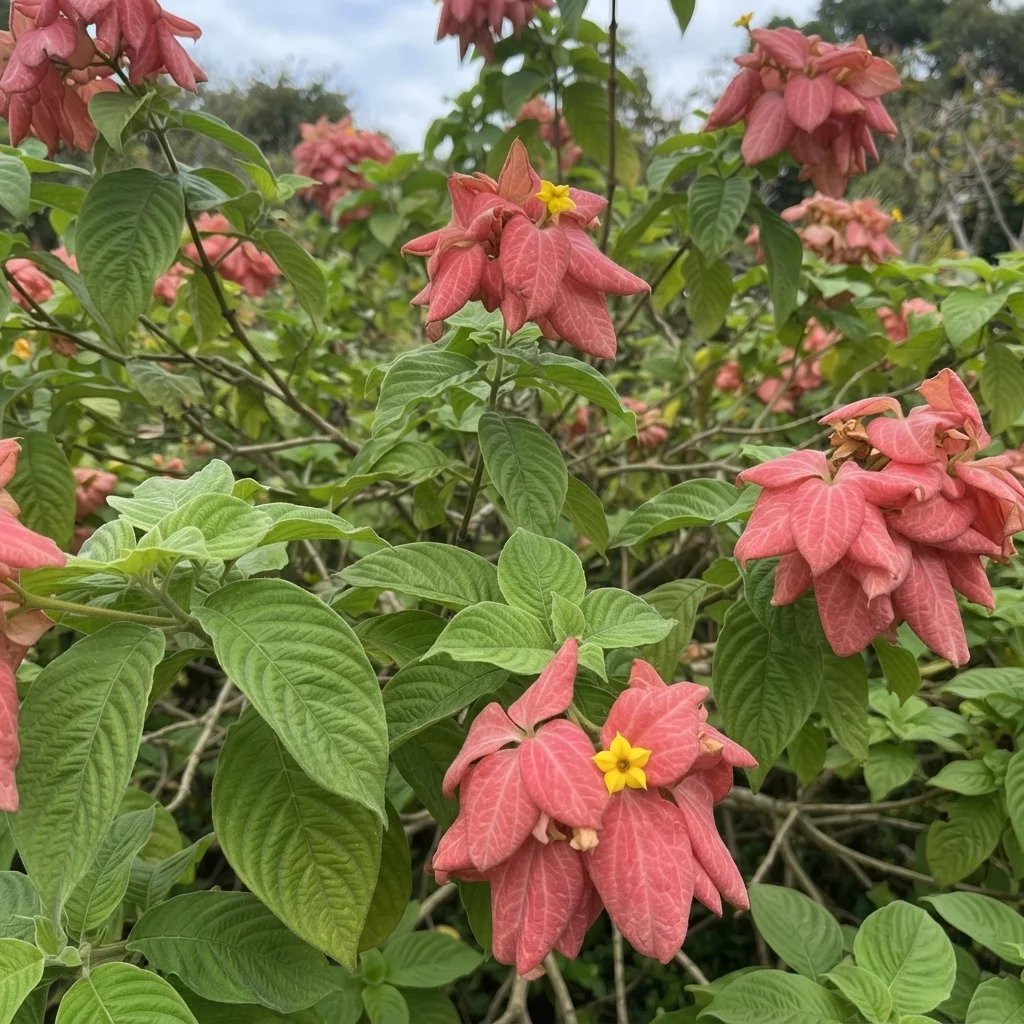
Mussaenda erythrophylla is a scrambling evergreen shrub native to tropical West Africa, cultivated for its large, colorful floral bracts. The true flowers are small, creamy-yellow tubes with red centers, but the primary visual impact comes from the massive, velvety red sepals that surround them from spring through fall.
The species features opposite, deeply veined dark green leaves covered in soft hairs on the undersides and new growth. In frost-free regions, it maintains a lush, multi-stemmed habit that can climb or scramble over nearby structures if left unsupported.
Uses & Benefits:
Essentials
At a Glance
Plant Type
Shrub
Height
118"
Width
118"
Light
Full Sun, Partial Sun
Zones
9, 10
Water
Moderate
Humidity
High
Lifespan
Perennial
Native To
Tropical West Africa
Toxicity
Non-toxic
Bloom period
Spring – Fall
In flower about 9 months of the year
Planting
How to Grow
- Select a planting site in full sun to partial shade with rich, organic, well-draining soil.
- Dig a hole twice the width of the root ball and backfill with a mix of native soil and organic compost.
- Water deeply at the base immediately after planting, maintaining consistent moisture without allowing the soil to become waterlogged.
- Apply a balanced, slow-release tropical fertilizer in early spring and mid-summer to support active growth.
Pro Tip
Prune the stems back hard in late winter or early spring to stimulate vigorous new wood, which produces the largest and most abundant red sepals; shearing into old, leafless wood without visible buds will result in slow, patchy recovery.
Keep It Thriving
Care Guide
Do
- Prune hard annually in late winter to encourage fresh flowering wood.
- Provide a trellis or support if a climbing, scrambling habit is desired.
- Protect the plant from cold drafts and temperatures approaching freezing.
Don't
- Do not allow the roots to sit in standing water or heavy, poorly drained clay.
- Do not prune heavily into old, bare wood that lacks active dormant buds.
- Do not let the soil dry out completely during hot summer spells.
Seasonal Care Calendar
| Task | Jan | Feb | Mar | Apr | May | Jun | Jul | Aug | Sep | Oct | Nov | Dec |
|---|---|---|---|---|---|---|---|---|---|---|---|---|
| Fertilize | ||||||||||||
| Pest Check | ||||||||||||
| Prune | ||||||||||||
| Winter Prep |
Watch Out For
Pests & Diseases
Common Pests
Common Diseases
In the Garden
Landscape Uses & Companions
Landscape Uses
Companion Plants
Multiply
Propagation Methods
Good to Know
Common Questions
Ashanti Blood questions
What zones can Ashanti Blood grow in?
Ashanti Blood is hardy in USDA Zones 9–10. Inside that range it survives winter in the ground; outside it, grow it as an annual or a container plant you protect.
When does Ashanti Blood bloom?
Ashanti Blood typically blooms in spring through fall. Exact timing shifts a week or two with your zone — Sow's bloom calendar maps it to your garden.
Does Ashanti Blood need full sun?
Ashanti Blood does best in full sun to part shade. In hot climates, afternoon shade keeps blooms fresher longer.
Keep exploring
Explore the genus
Hardy in your zone?
Grow Ashanti Blood with confidence
See it in a design of your actual yard, get zone-matched care reminders, and track it season by season in your garden journal.