The Story
Plant Bio
Desmanthus illinoensis, commonly known as Illinois bundleflower, is an upright, multi-stemmed herbaceous perennial native to North American prairies. It forms bushy clumps from a deep taproot, featuring finely divided, bipinnately compound leaves that fold inward when touched or exposed to intense sunlight.
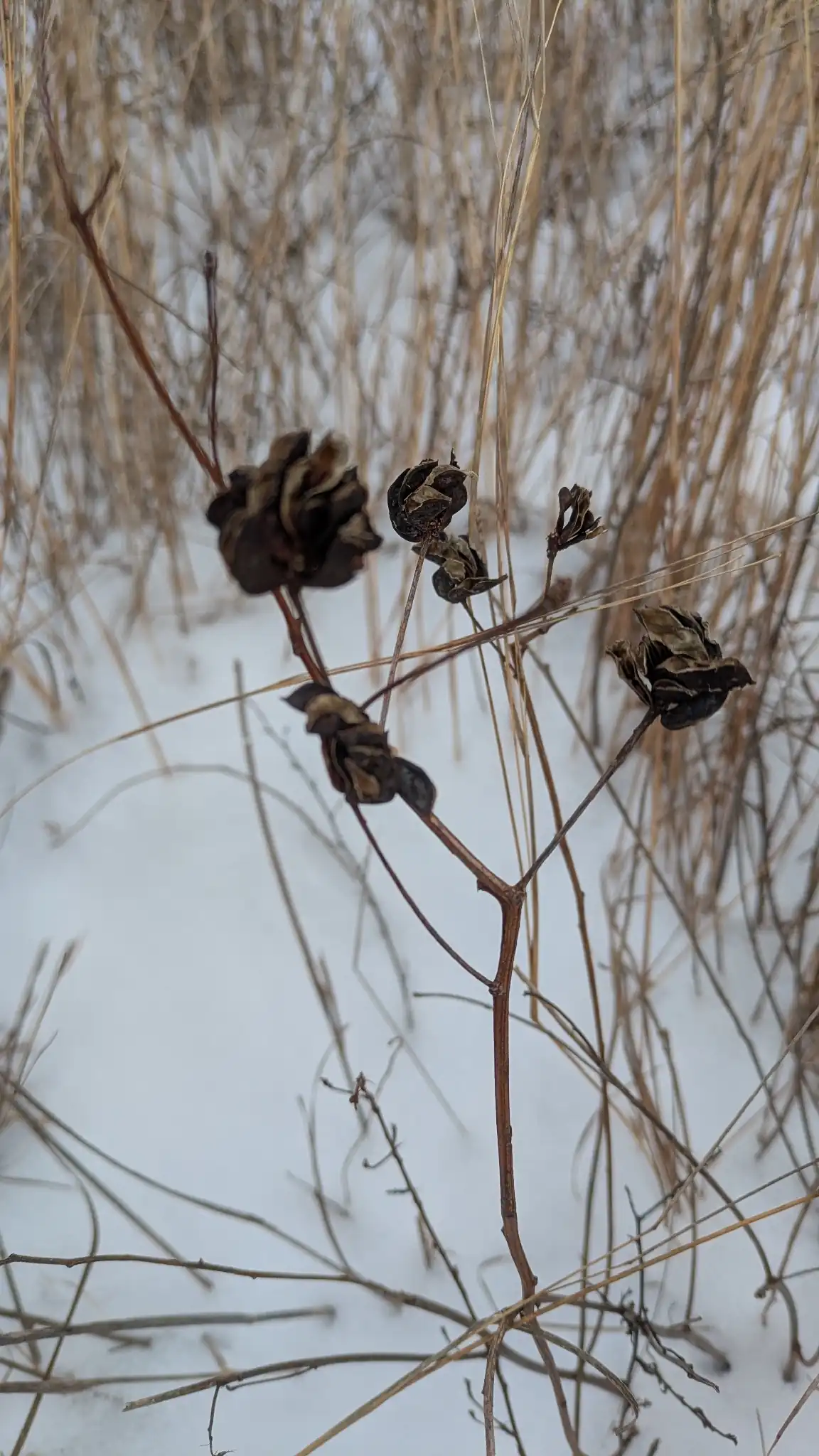
The species is distinguished by its small, globular, greenish-white flower heads with prominent projecting stamens that bloom throughout the summer. These flowers mature into dense, decorative clusters of flat, curved, and slightly twisted leathery brown seedpods.
Uses & Benefits:
Essentials
At a Glance
Plant Type
Perennial
Height
59"
Width
35"
Light
Full Sun
Zones
4, 5, 6, 7, 8, 9
Water
Low to Moderate
Humidity
Adaptable
Lifespan
Perennial
Native To
North America
Toxicity
Roots are toxic if ingested
Bloom period
Summer
In flower about 3 months of the year
Planting
How to Grow
- Select a planting site in full sun with well-drained clay, loam, or sandy soil.
- Sow scarified seeds or plant bare-root crowns in spring once the danger of hard frost has passed.
- Water moderately during the first growing season to help the deep taproot system establish.
- Refrain from applying nitrogen fertilizers, as this legume fixes its own nitrogen.
Pro Tip
Avoid over-watering established plants, as excess irrigation combined with heavy soil promotes root rot. In naturalistic plantings, low-intensity winter burning or light mowing simulates prairie conditions, removing competition and naturally scarifying fallen seedpods.
Keep It Thriving
Care Guide
Do
- Cut dead stems back to the ground in late winter or early spring before new growth emerges.
- Ensure the soil drains thoroughly to prevent stagnant, waterlogged conditions.
- Protect young plants from browsing herbivores if deer or rabbits are active nearby.
Don't
- Do not over-water established plants, which rely on a deep taproot for drought tolerance.
- Do not apply nitrogen-heavy fertilizers, as the plant naturally hosts nitrogen-fixing bacteria.
- Do not ingest any part of the plant, particularly the roots, which contain toxic compounds.
Seasonal Care Calendar
| Task | Jan | Feb | Mar | Apr | May | Jun | Jul | Aug | Sep | Oct | Nov | Dec |
|---|---|---|---|---|---|---|---|---|---|---|---|---|
| Pest Check | ||||||||||||
| Plant | ||||||||||||
| Propagate | ||||||||||||
| Spring Cleanup |
Watch Out For
Pests & Diseases
Common Pests
Common Diseases
In the Garden
Landscape Uses & Companions
Landscape Uses
Companion Plants
Multiply
Propagation Methods
Good to Know
Common Questions
Illinois Bundleflower questions
What zones can Illinois Bundleflower grow in?
Illinois Bundleflower is hardy in USDA Zones 4–9. Inside that range it survives winter in the ground; outside it, grow it as an annual or a container plant you protect.
Is Illinois Bundleflower deer resistant?
Not reliably. Deer may browse Illinois Bundleflower, especially tender spring growth — plan on repellents or fencing where pressure is high.
When does Illinois Bundleflower bloom?
Illinois Bundleflower typically blooms in summer through summer. Exact timing shifts a week or two with your zone — Sow's bloom calendar maps it to your garden.
Does Illinois Bundleflower need full sun?
Illinois Bundleflower does best in full sun (6+ hours).
Is Illinois Bundleflower drought tolerant?
Yes — once established (usually after the first full season), Illinois Bundleflower handles dry spells with minimal watering. Water deeply its first year to build the root system that makes that possible.
Keep exploring
Explore the genus
Grow Illinois Bundleflower with confidence
See it in a design of your actual yard, get zone-matched care reminders, and track it season by season in your garden journal.