
The Story
Plant Bio
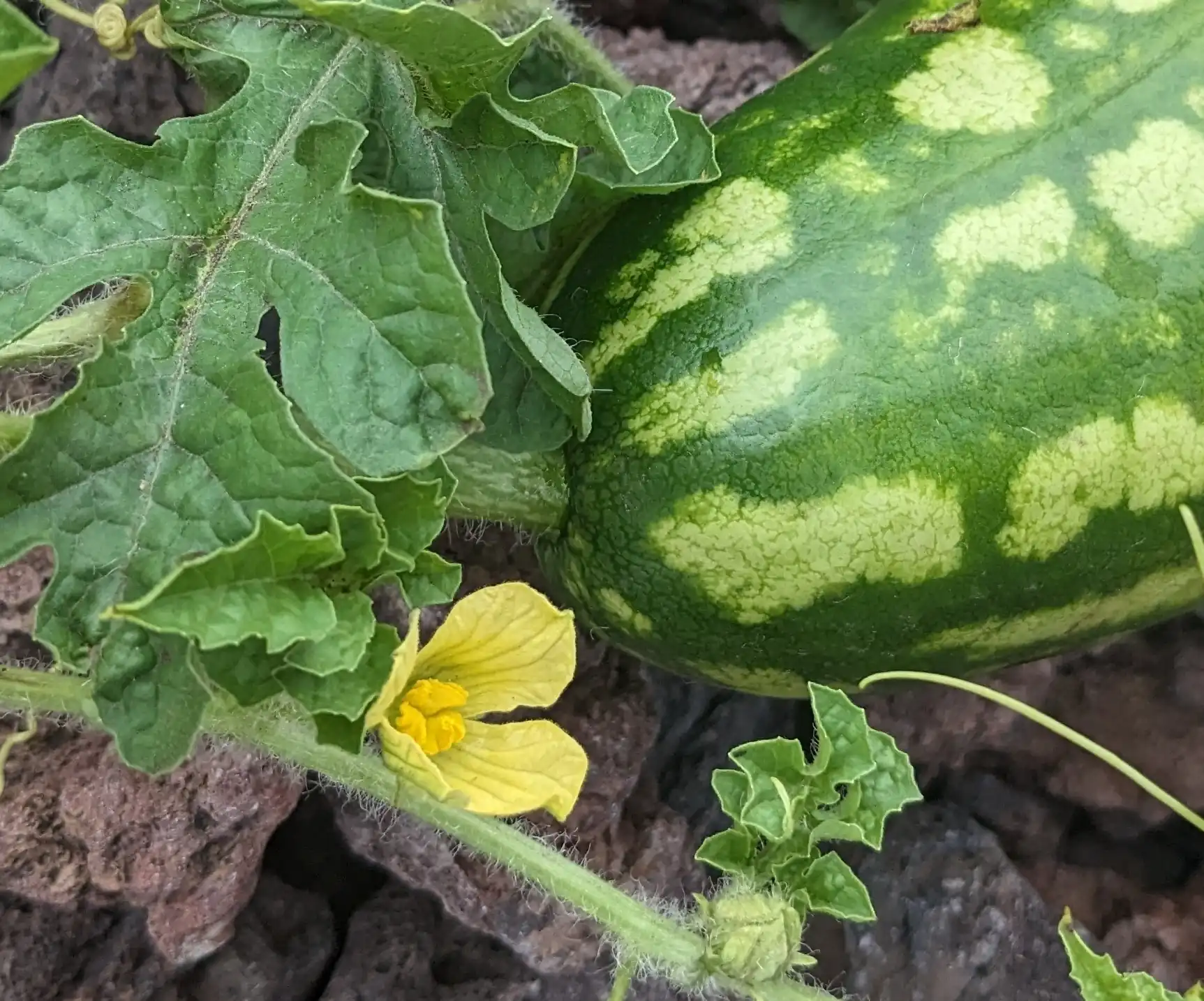
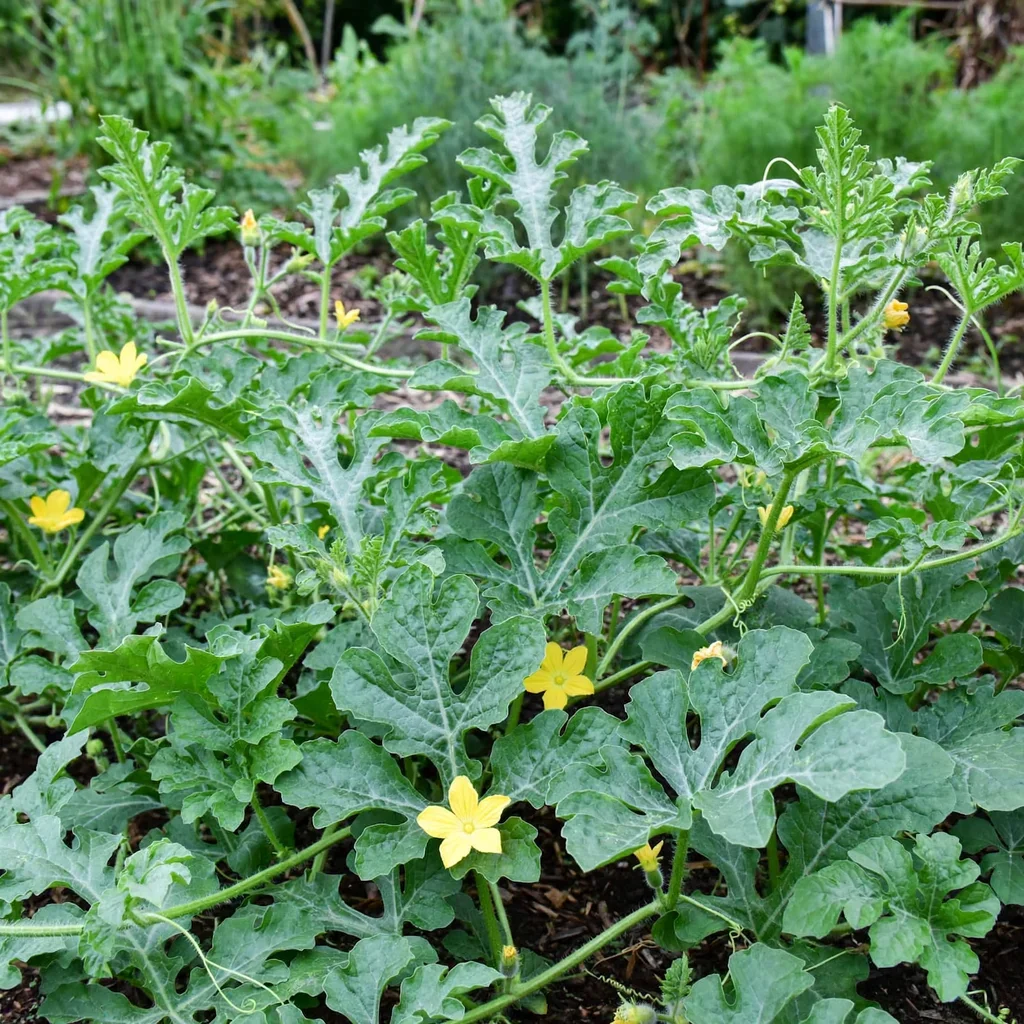
Citrullus lanatus, watermelon, is a trailing warm-season annual vine from Africa, running five to ten feet across the ground and reaching only four to eight inches high. Woolly angular stems climb by tendrils, large lobed heart-shaped leaves are hairy beneath, and yellow cup-shaped flowers give way to the familiar large fruit.
Judging ripeness is the whole skill, and the reliable sign is the ground spot — the patch where the melon rests should turn from white to a deep creamy yellow, and the curly tendril nearest the fruit should be brown and dry. Thumping is far less reliable than either. Male flowers open first and set nothing, which alarms people unnecessarily.
Uses & Benefits:
Essentials
At a Glance
Plant Type
Fruit Vegetable
Height
18"
Width
180"
Light
Full Sun
Zones
4, 5, 6, 7, 8, 9, 10
Water
Moderate to high
Humidity
Moderate
Lifespan
Annual
Native To
Africa
Toxicity
Edible; flesh and rind both used
Planting
How to Grow
- Sow after the last frost into thoroughly warm soil.
- Give it full sun and rich, freely draining ground.
- Allow five to ten feet of run per plant.
- Water deeply and consistently while fruit swells.
- Ease off watering as the fruit approaches ripeness.
- Check the ground spot and tendril before picking.
Pro Tip
Ignore the thump — the ground spot turning creamy yellow and the nearest tendril drying brown are what actually indicate ripeness.
Keep It Thriving
Care Guide
Do
- Sow into genuinely warm soil 🌡️
- Water deeply while fruit swells 💧
- Check the ground spot for ripeness 🍉
- Give each plant real room 📏
Don't
- Plant out into cold soil ❌
- Worry when the first flowers set nothing ❌
- Keep watering heavily as fruit ripens ❌
Seasonal Care Calendar
| Task | Jan | Feb | Mar | Apr | May | Jun | Jul | Aug | Sep | Oct | Nov | Dec |
|---|---|---|---|---|---|---|---|---|---|---|---|---|
| Harvest | ||||||||||||
| Sow |
Watch Out For
Pests & Diseases
Common Pests
Common Diseases
In the Garden
Landscape Uses & Companions
Landscape Uses
Multiply
Propagation Methods
Good to Know
Common Questions
Watermelon questions
What zones can Watermelon grow in?
Watermelon is hardy in USDA Zones 4–10. Inside that range it survives winter in the ground; outside it, grow it as an annual or a container plant you protect.
Is Watermelon deer resistant?
Not reliably. Deer may browse Watermelon, especially tender spring growth — plan on repellents or fencing where pressure is high.
When does Watermelon bloom?
Watermelon typically blooms in summer through late summer. Exact timing shifts a week or two with your zone — Sow's bloom calendar maps it to your garden.
Does Watermelon need full sun?
Watermelon does best in full sun (6+ hours).
Is Watermelon drought tolerant?
Yes — once established (usually after the first full season), Watermelon handles dry spells with minimal watering. Water deeply its first year to build the root system that makes that possible.
More Citrullus to compare
Keep exploring
Explore the genus
Grow Watermelon with confidence
See it in a design of your actual yard, get zone-matched care reminders, and track it season by season in your garden journal.