The Story
Plant Bio
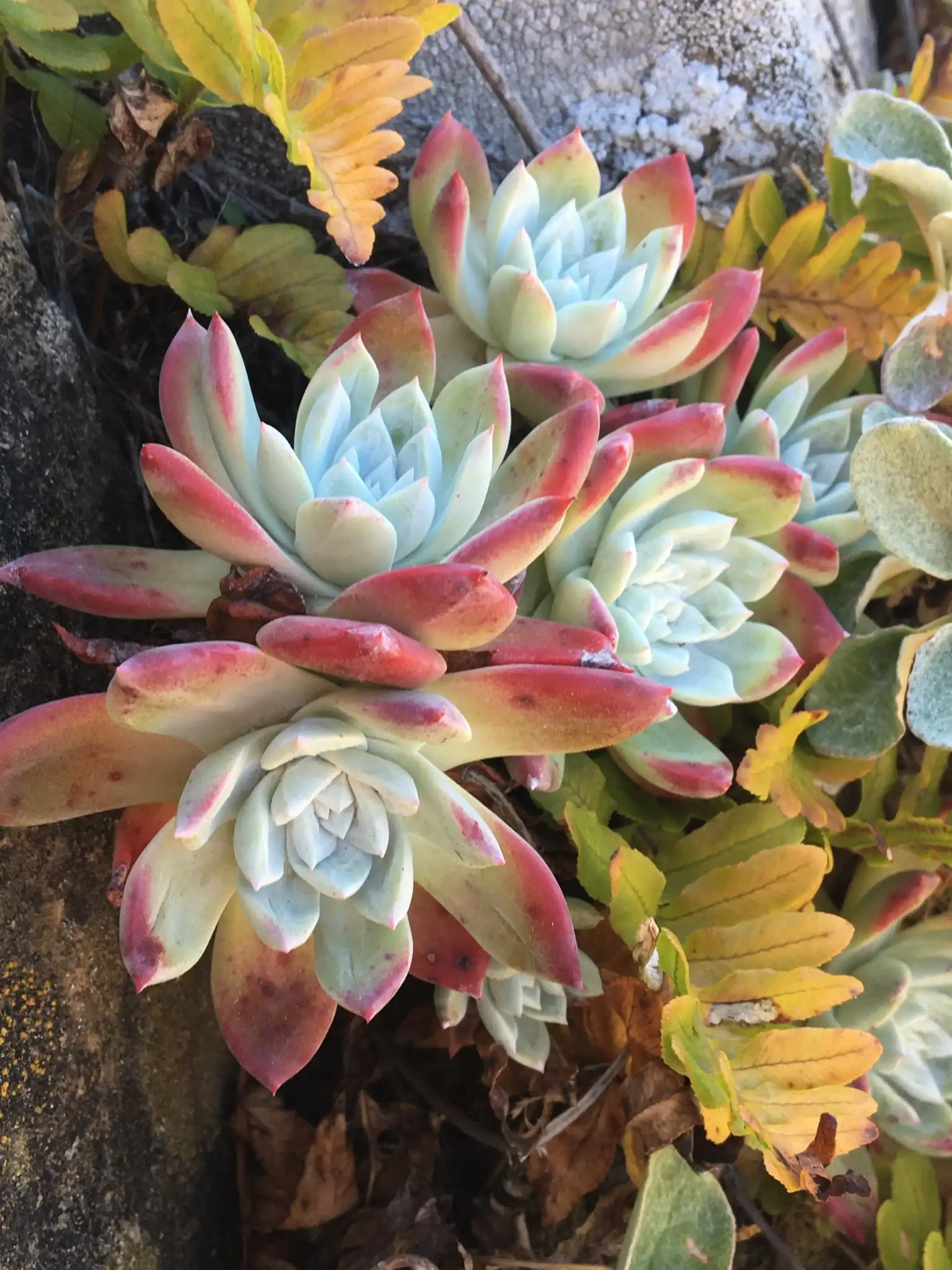
Dudleya farinosa, commonly known as the powdery liveforever, is a succulent plant native to the coastal regions of California. It is characterized by its rosette of thick, fleshy, glaucous leaves and produces yellow flowers on a tall inflorescence.
Noted for its striking appearance and ability to thrive in rocky, drought-prone environments.
Uses & Benefits:
Essentials
At a Glance
Plant Type
Cactus Succulent
Height
10"
Width
18"
Light
Full Sun, Partial Sun
Zones
8, 9, 10
Water
Low
Humidity
Low
Lifespan
Perennial
Native To
California
Toxicity
Non-toxic
Bloom period
Late spring to mid-summer – Late summer
In flower about 4 months of the year
Planting
How to Grow
- Tuck well-draining sandy soil into pots or garden beds for Dudleya farinosa.
- Mist cuttings lightly with water to encourage root development during propagation.
- Place in a bright location with direct sunlight for at least 4-6 hours daily.
- Allow soil to dry completely between waterings to prevent root rot.
- Transplant young plants when they are established, typically after 1 year.
- Mulch lightly with gravel or sand to improve drainage and mimic natural habitat.
Pro Tip
Use a cactus or succulent mix for optimal drainage and growth success.
Keep It Thriving
Care Guide
Do
- Provide full sun for at least 4 hours daily 🌞
- Water sparingly, letting soil dry out completely between watering 💧
- Use a well-draining soil mix to prevent root rot
- Protect from frost in colder zones
- Apply a cactus fertilizer during the growing season
Don't
- Avoid overwatering, which can cause root rot ❌
- Do not plant in heavy clay soil without amendments ❌
- Never expose to prolonged frost without protection ❌
- Avoid excessive fertilizing, which can harm the plant ❌
- Don’t place in low-light conditions
Seasonal Care Calendar
| Task | Jan | Feb | Mar | Apr | May | Jun | Jul | Aug | Sep | Oct | Nov | Dec |
|---|---|---|---|---|---|---|---|---|---|---|---|---|
| Mulch | ||||||||||||
| Pest Check | ||||||||||||
| Plant | ||||||||||||
| Winter Prep |
Watch Out For
Pests & Diseases
Common Pests
Common Diseases
In the Garden
Landscape Uses & Companions
Landscape Uses
Multiply
Propagation Methods
Good to Know
Common Questions
Powdery Liveforever questions
What zones can Powdery Liveforever grow in?
Powdery Liveforever is hardy in USDA Zones 8–10: in that range it survives winter in the ground. Colder than Zone 8, grow it in a container you can move to shelter for the winter, or as an annual.
Is Powdery Liveforever deer resistant?
Yes — Powdery Liveforever is rated deer-resistant. Deer typically pass it over, though extreme hunger can override any plant's defenses.
When does Powdery Liveforever bloom?
Powdery Liveforever typically blooms from late spring to late summer. Exact timing shifts a week or two with your zone — Sow's bloom calendar maps it to your garden.
Does Powdery Liveforever need full sun?
Powdery Liveforever does best in full sun to part shade. In hot climates, afternoon shade keeps blooms fresher longer.
Is Powdery Liveforever drought tolerant?
Yes — once established (usually after the first full season), Powdery Liveforever handles dry spells with minimal watering. Water deeply its first year to build the root system that makes that possible.
More Dudleya to compare
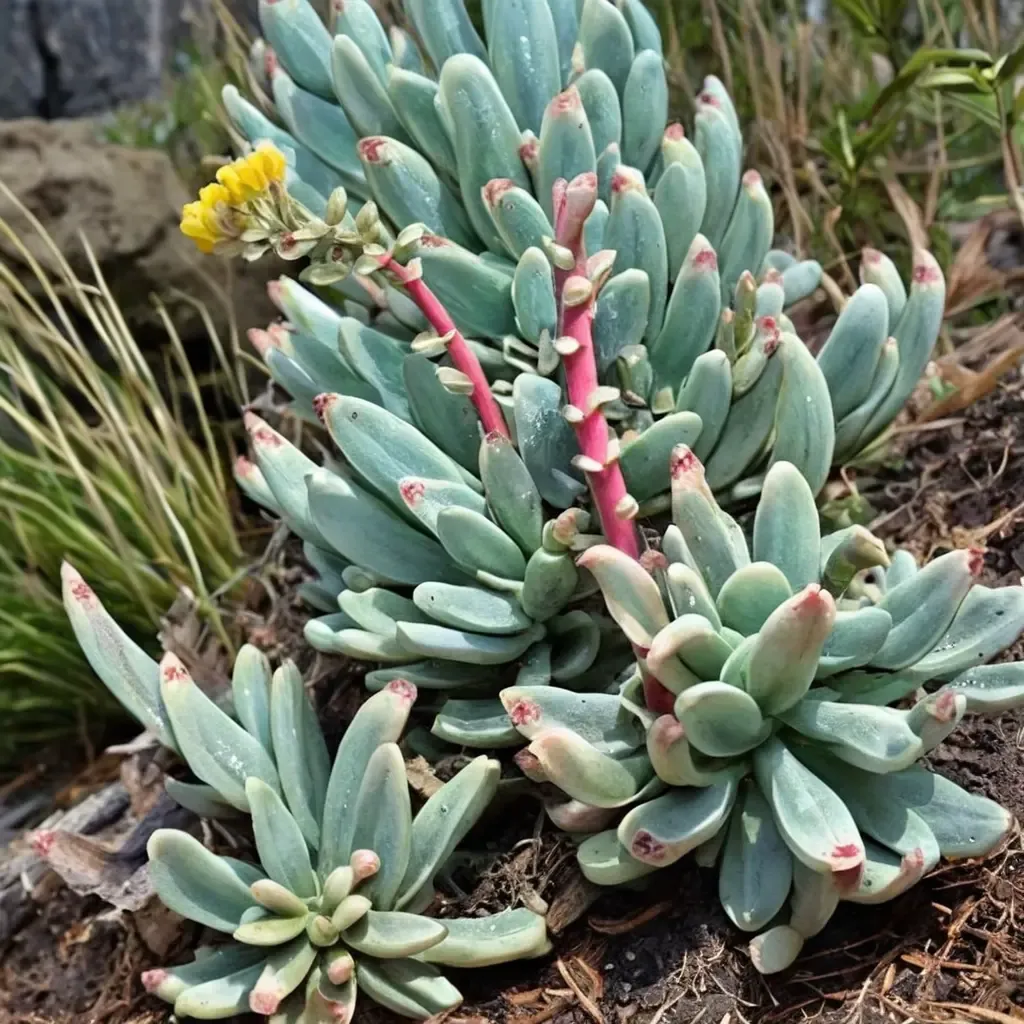
Sea Lettuce
Dudleya caespitosa
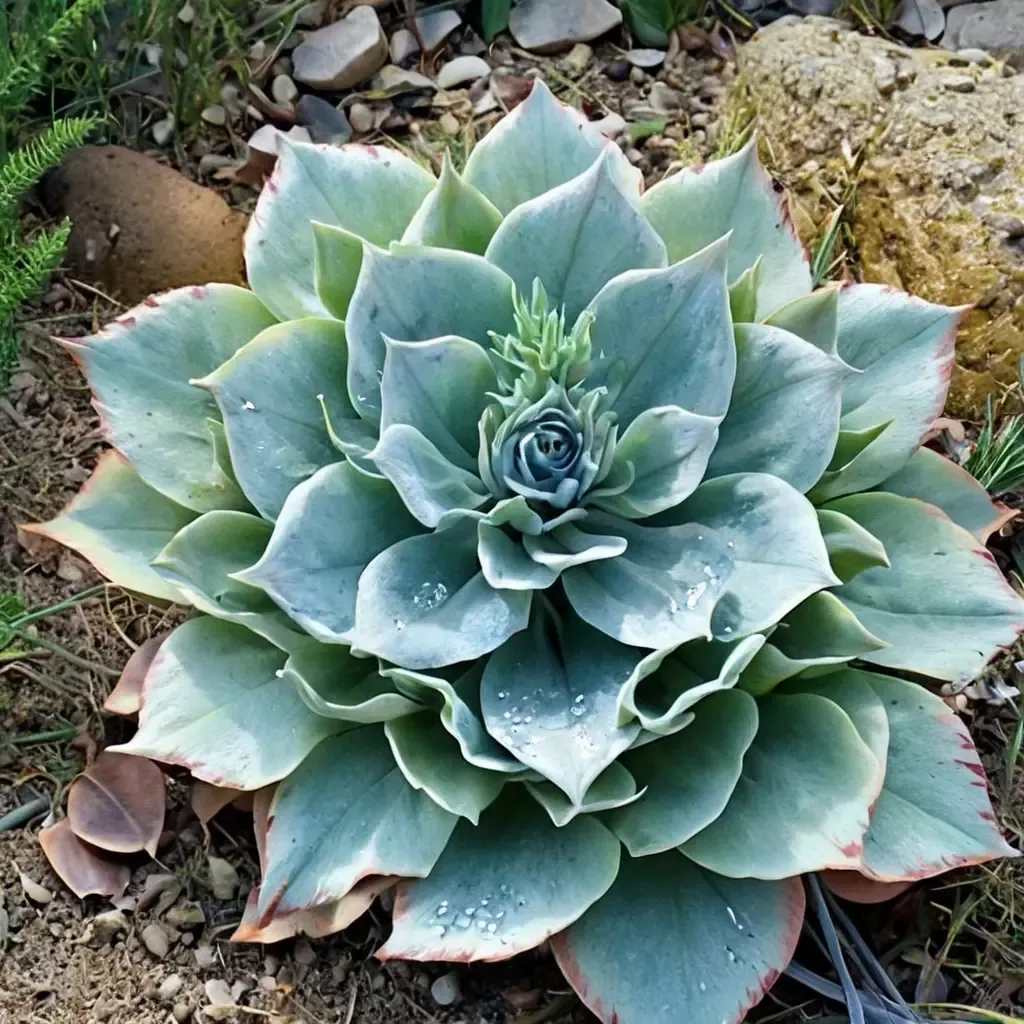
Chalk Dudleya
Dudleya pulverulenta
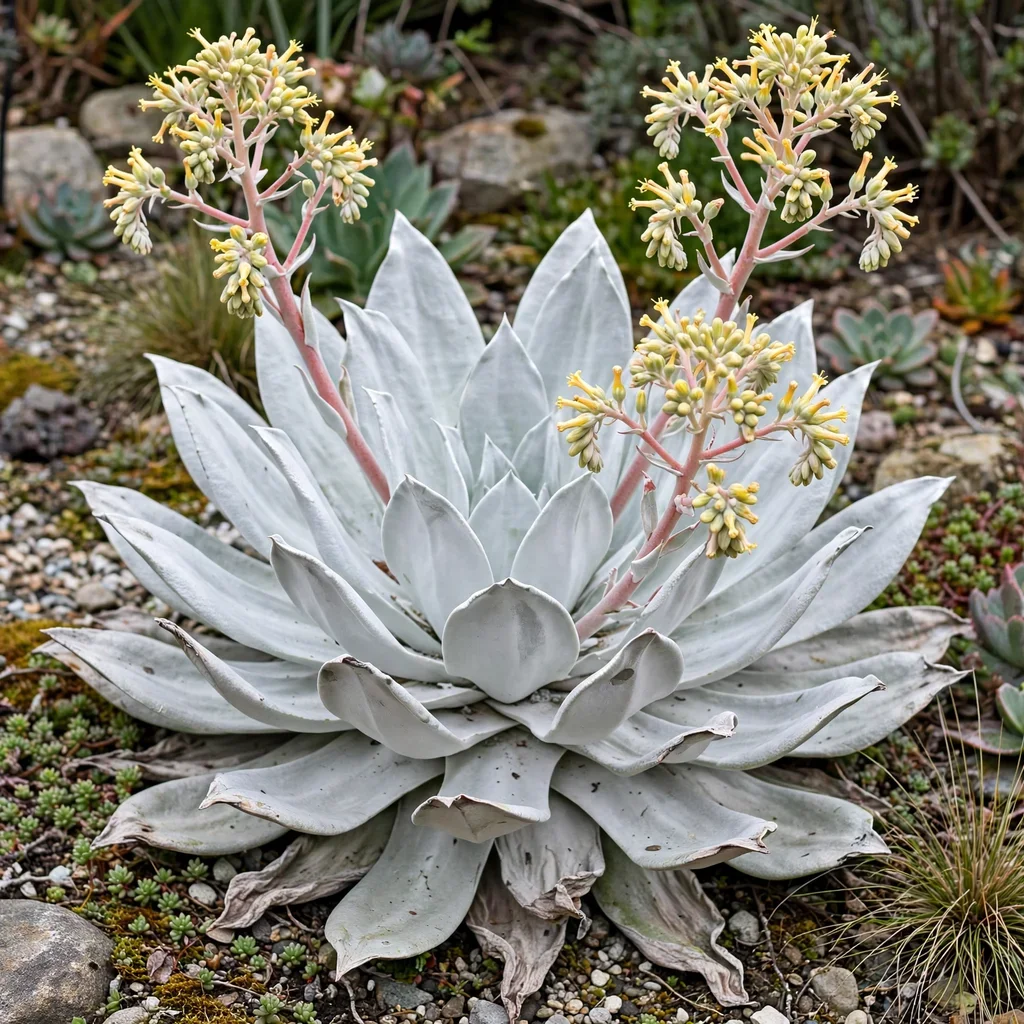
Giant Chalk Dudleya
Dudleya brittonii 'Giant Chalk Dudleya'
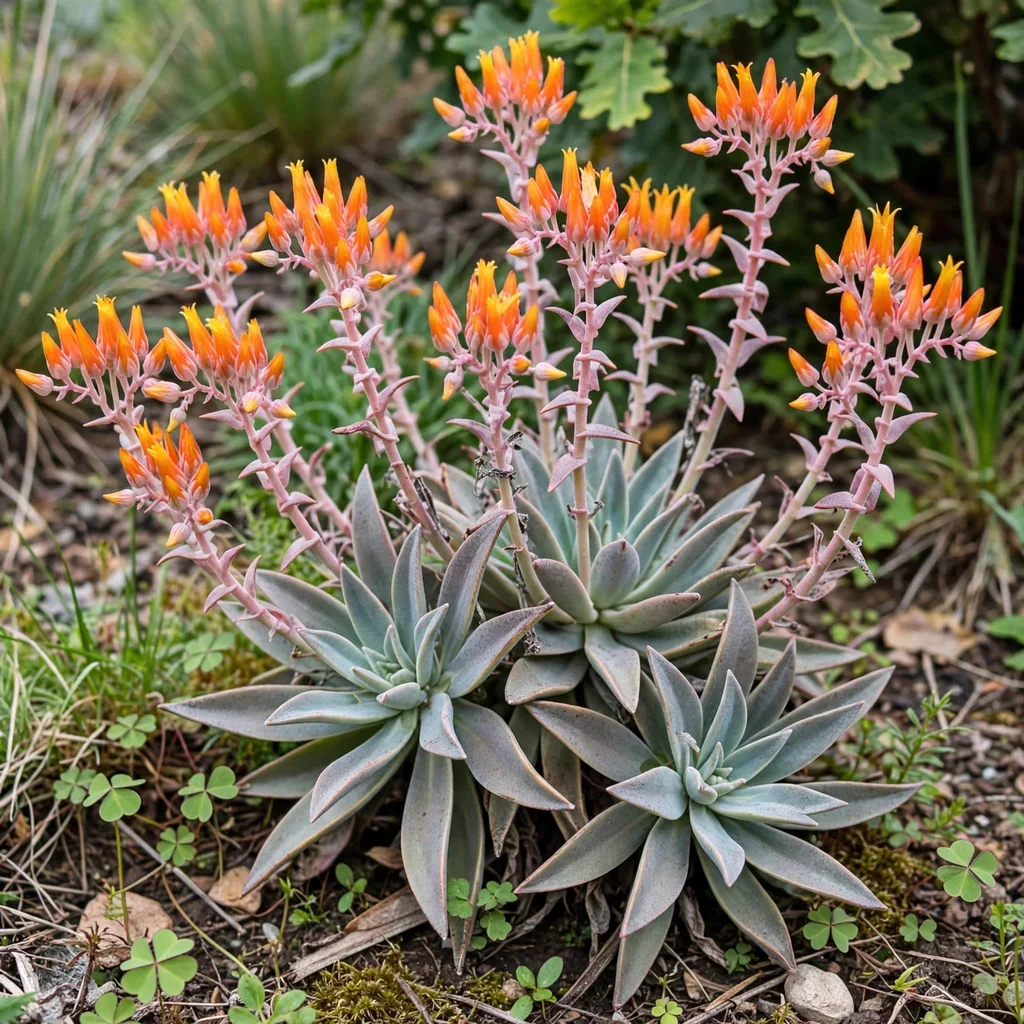
Canyon Liveforever
Dudleya cymosa 'Orange Form'
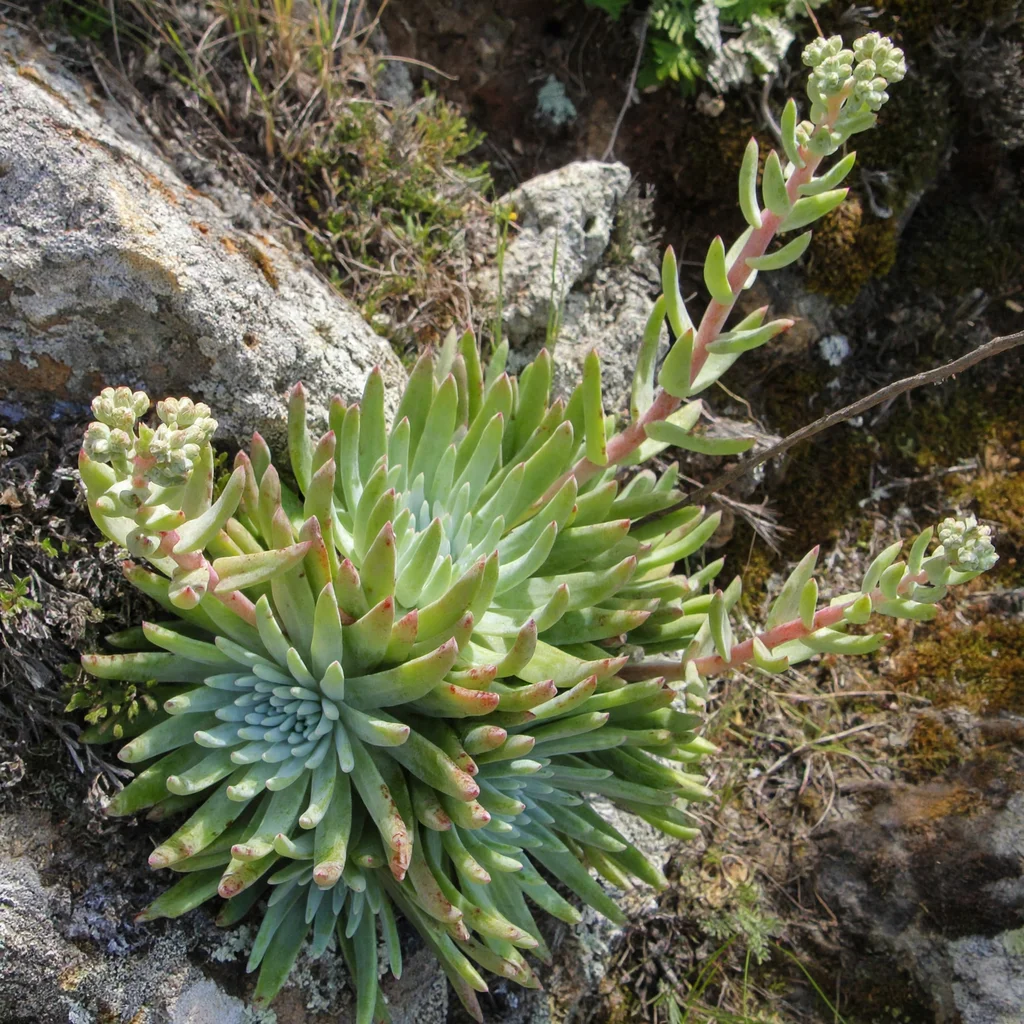
Bright Green Dudleya
Dudleya virens
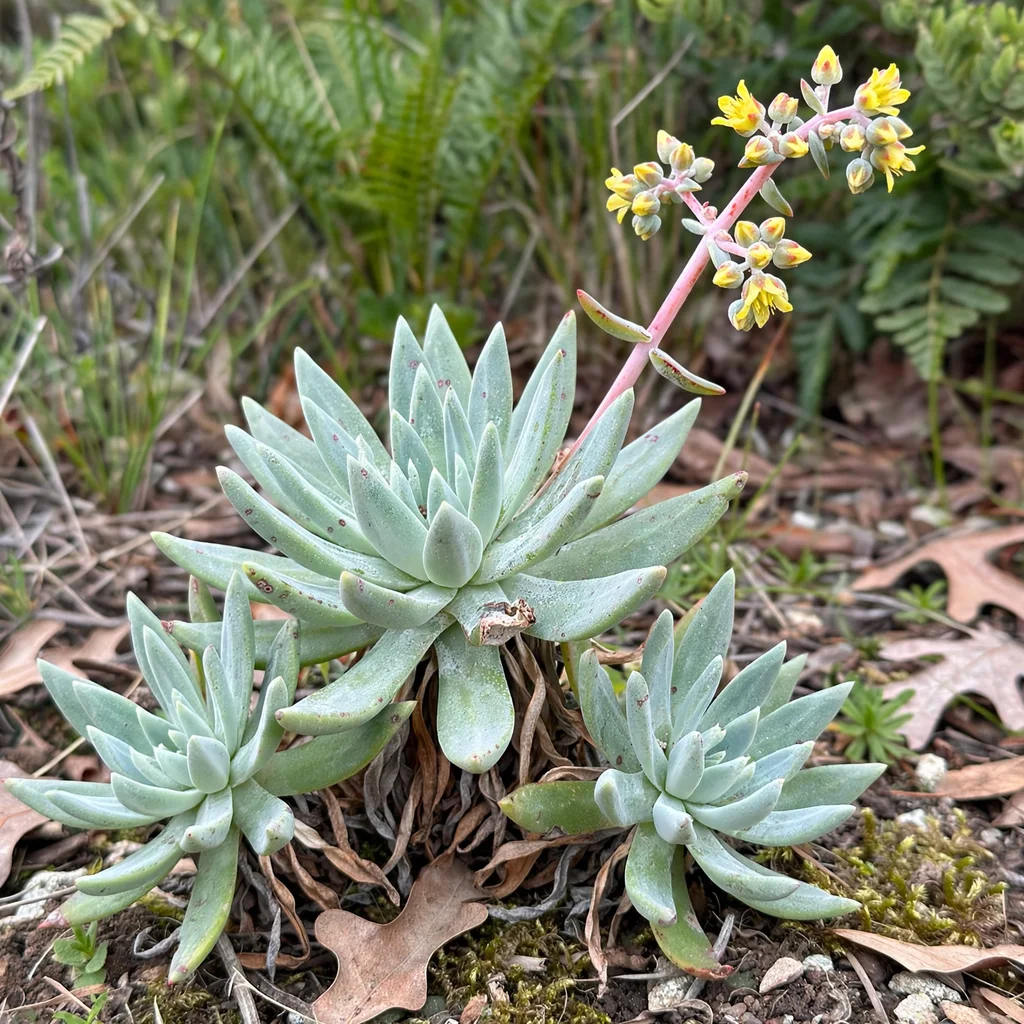
Greene's Liveforever
Dudleya greenei
Keep exploring
Explore the genus
Hardy in your zone?
Grow Powdery Liveforever with confidence
See it in a design of your actual yard, get zone-matched care reminders, and track it season by season in your garden journal.