The Story
Plant Bio
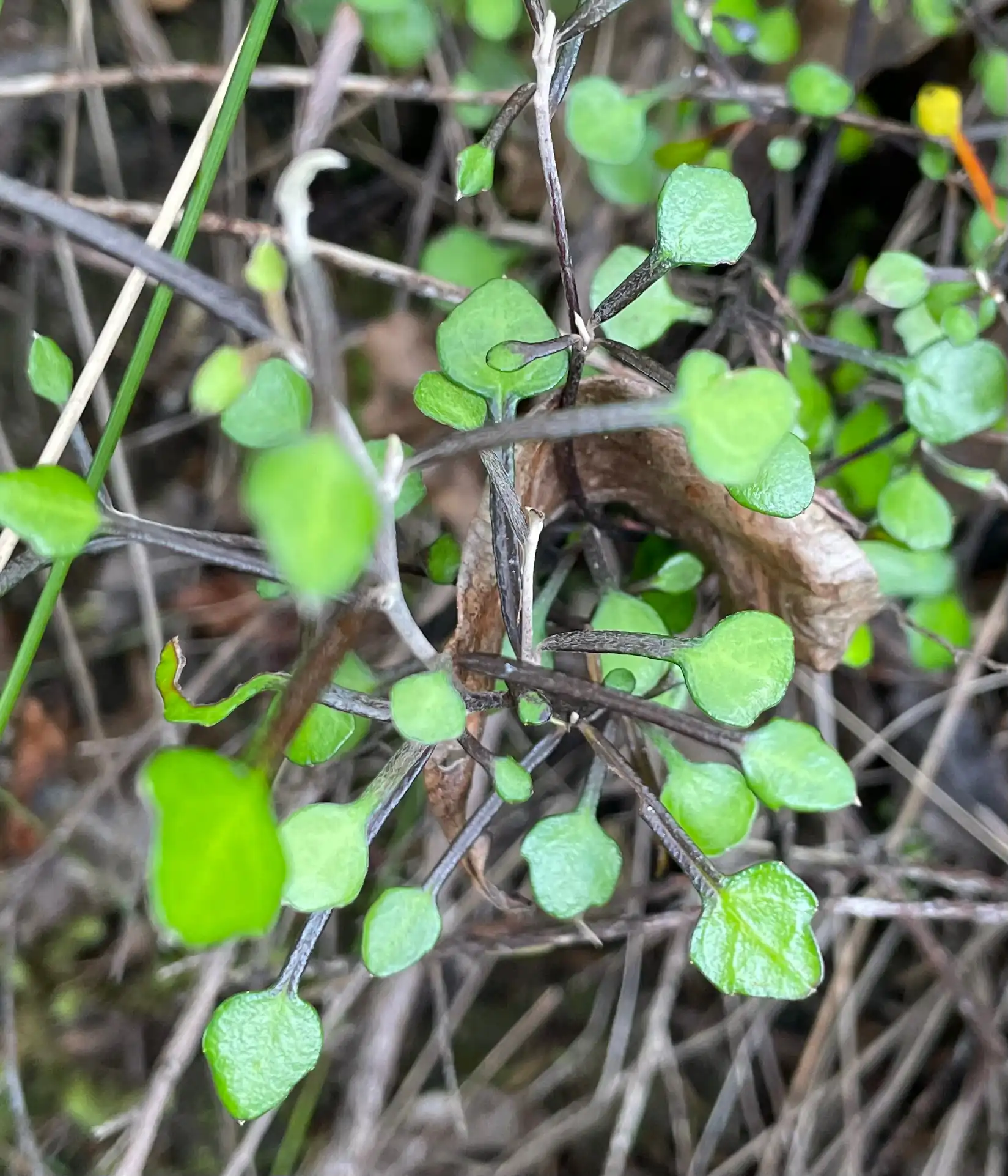
Corokia cotoneaster is an evergreen New Zealand shrub reaching five to ten feet in height, featuring an intricate, zig-zag network of dark, wire-like branches that create a tangled, sculptural form. The small, dark green leaves are grey-green on their upper surfaces and covered with a dense, silvery-white felt underneath.
The new growth emerges covered in a dense, silvery-white pubescence before maturing to a dark, glossy green. The small, bright yellow flowers emerge singly or in small clusters along the bare-looking branches, attracting generalist bees and pollinators.
Uses & Benefits:
Essentials
At a Glance
Plant Type
Shrub
Height
118"
Width
118"
Light
Full Sun, Partial Sun
Zones
8, 9, 10
Water
Low
Humidity
Moderate
Lifespan
Perennial
Native To
New Zealand
Toxicity
Non-toxic
Bloom period
Spring – Early summer
In flower about 4 months of the year
Planting
How to Grow
- Plant in a location that receives full sun to partial shade, prioritizing full sun to achieve the densest branching and best foliage color.
- Ensure the soil is exceptionally well-draining, as this species is highly intolerant of waterlogged or soggy conditions.
- Water moderately during the first growing season to establish a deep root system, after which the plant exhibits high drought tolerance.
- Apply a balanced, slow-release fertilizer sparingly in early spring to support new growth without forcing weak, leggy stems.
Pro Tip
Prune only the outer, leafy envelope of new growth; shearing deep into the interior network of older, leafless brown branches kills those stems, as the plant cannot regenerate from bare wood.
Keep It Thriving
Care Guide
Do
- Plant in highly permeable loam, sand, or clay soils with a neutral to slightly acidic or alkaline pH.
- Provide excellent air circulation to maintain foliage health and prevent fungal issues.
- Protect young plants from deer and rabbit browsing using physical fencing or repellents.
Don't
- Do not plant in low-lying areas or heavy soils where water accumulates and causes root rot.
- Do not prune hard into the older, leafless interior wood, as it will not reshoot.
- Do not overwater once established, as the plant prefers dry conditions.
Seasonal Care Calendar
| Task | Jan | Feb | Mar | Apr | May | Jun | Jul | Aug | Sep | Oct | Nov | Dec |
|---|---|---|---|---|---|---|---|---|---|---|---|---|
| Fertilize | ||||||||||||
| Pest Check | ||||||||||||
| Prune | ||||||||||||
| Winter Prep |
Watch Out For
Pests & Diseases
Common Pests
Common Diseases
In the Garden
Landscape Uses & Companions
Landscape Uses
Companion Plants
Multiply
Propagation Methods
Good to Know
Common Questions
Wire-netting bush questions
What zones can Wire-netting bush grow in?
Wire-netting bush is hardy in USDA Zones 8–10. Inside that range it survives winter in the ground; outside it, grow it as an annual or a container plant you protect.
Is Wire-netting bush deer resistant?
Not reliably. Deer may browse Wire-netting bush, especially tender spring growth — plan on repellents or fencing where pressure is high.
When does Wire-netting bush bloom?
Wire-netting bush typically blooms in spring through early summer. Exact timing shifts a week or two with your zone — Sow's bloom calendar maps it to your garden.
Does Wire-netting bush need full sun?
Wire-netting bush does best in full sun to part shade. In hot climates, afternoon shade keeps blooms fresher longer.
Is Wire-netting bush drought tolerant?
Yes — once established (usually after the first full season), Wire-netting bush handles dry spells with minimal watering. Water deeply its first year to build the root system that makes that possible.
Keep exploring
Explore the genus
Hardy in your zone?
Grow Wire-netting bush with confidence
See it in a design of your actual yard, get zone-matched care reminders, and track it season by season in your garden journal.