The Story
Plant Bio
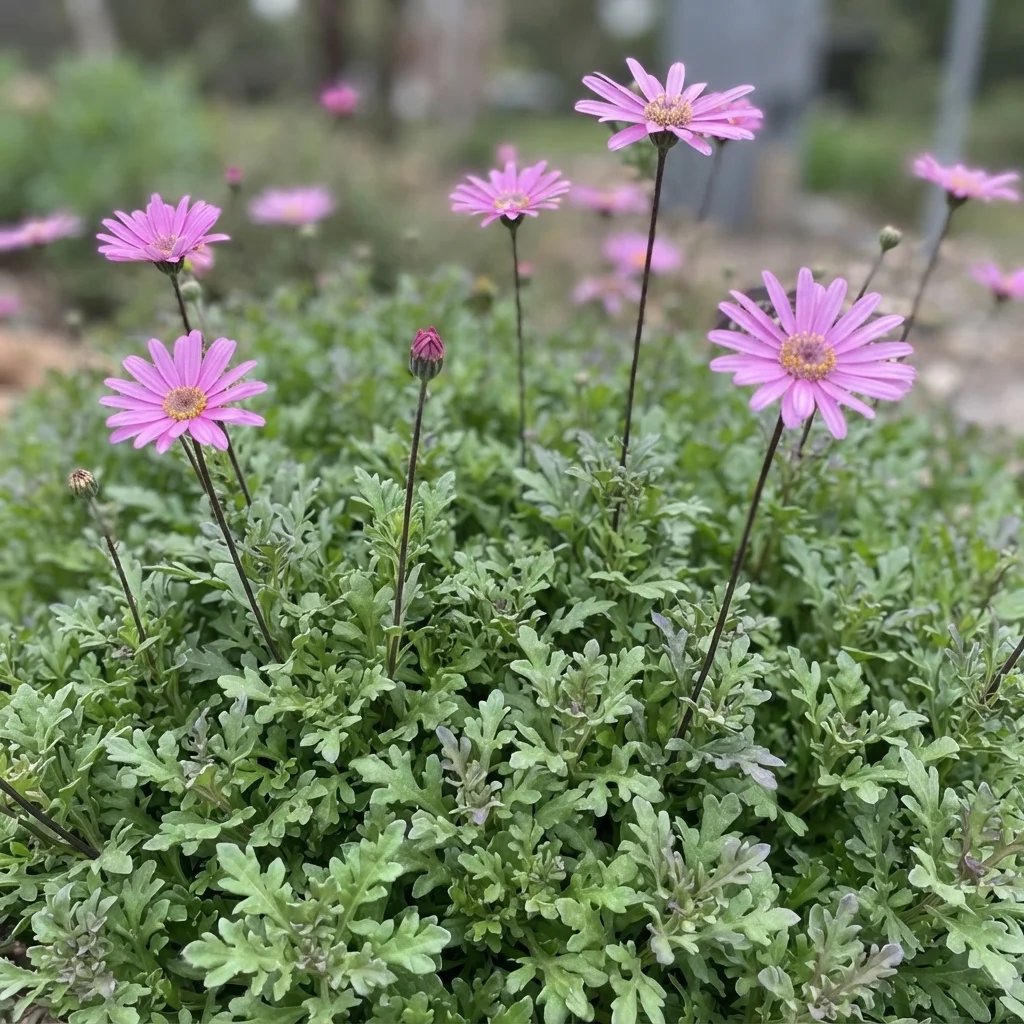
Brachyscome formosa is a low-growing, rhizomatous perennial herb native to the central west of New South Wales, Australia. It spreads via underground suckers to form a compact, mounding carpet of green, lobed leaves that are frequently tinged with purple on their undersides.
'Pilliga Posy' is distinguished by its bright rosy-pink daisy-like flower heads with yellow centers, which measure approximately one inch in diameter. These solitary blooms are held on upright stems up to five inches tall, appearing continuously from spring through fall.
Uses & Benefits:
Essentials
At a Glance
Plant Type
Perennial
Height
12"
Width
20"
Light
Full Sun, Partial Sun
Zones
9, 10
Water
Medium
Humidity
Moderate
Lifespan
Perennial
Native To
Australia
Toxicity
Non-toxic
Bloom period
Spring – Fall
In flower about 9 months of the year
Planting
How to Grow
- Select a planting site in full sun to partial shade with highly porous, well-drained sandy loam or clay loam.
- Dig a hole twice the width of the root ball and plant at the same depth as the nursery container.
- Water lightly but consistently to keep the soil evenly moist without allowing it to become waterlogged.
- Apply a low-phosphorus or balanced native-specific fertilizer sparingly in spring to prevent leggy growth.
Pro Tip
While this species survives dry spells by dying back to its underground rhizomes, optimal flowering and density require regular, light watering combined with highly porous, well-draining soil to prevent root rot.
Keep It Thriving
Care Guide
Do
- Trim back spent flower heads and ragged growth after heavy flushes to maintain a compact habit.
- Ensure excellent soil drainage to prevent Pythium and Rhizoctonia root rot.
- Allow the plant to reshoot from its rhizomes if it dies back during severe frost or dry periods.
Don't
- Don't cut back harshly into old, leafless woody stems, as regeneration from old wood is poor.
- Don't over-fertilize with high-phosphorus synthetic blends, which shortens the plant's lifespan.
- Don't let the plant sit in heavy, saturated garden loam or waterlogged standing water.
Seasonal Care Calendar
| Task | Jan | Feb | Mar | Apr | May | Jun | Jul | Aug | Sep | Oct | Nov | Dec |
|---|---|---|---|---|---|---|---|---|---|---|---|---|
| Fertilize | ||||||||||||
| Pest Check | ||||||||||||
| Propagate | ||||||||||||
| Prune |
Watch Out For
Pests & Diseases
Common Pests
Common Diseases
In the Garden
Landscape Uses & Companions
Landscape Uses
Companion Plants
Multiply
Propagation Methods
Good to Know
Common Questions
Pilliga Daisy questions
What zones can Pilliga Daisy grow in?
Pilliga Daisy is hardy in USDA Zones 9–10. Inside that range it survives winter in the ground; outside it, grow it as an annual or a container plant you protect.
Is Pilliga Daisy deer resistant?
Not reliably. Deer may browse Pilliga Daisy, especially tender spring growth — plan on repellents or fencing where pressure is high.
When does Pilliga Daisy bloom?
Pilliga Daisy typically blooms in spring through fall. Exact timing shifts a week or two with your zone — Sow's bloom calendar maps it to your garden.
Does Pilliga Daisy need full sun?
Pilliga Daisy does best in full sun to part shade. In hot climates, afternoon shade keeps blooms fresher longer.
Is Pilliga Daisy drought tolerant?
Yes — once established (usually after the first full season), Pilliga Daisy handles dry spells with minimal watering. Water deeply its first year to build the root system that makes that possible.
More Brachyscome to compare
Keep exploring
Explore the genus
Hardy in your zone?
Grow Pilliga Daisy with confidence
See it in a design of your actual yard, get zone-matched care reminders, and track it season by season in your garden journal.