The Story
Plant Bio
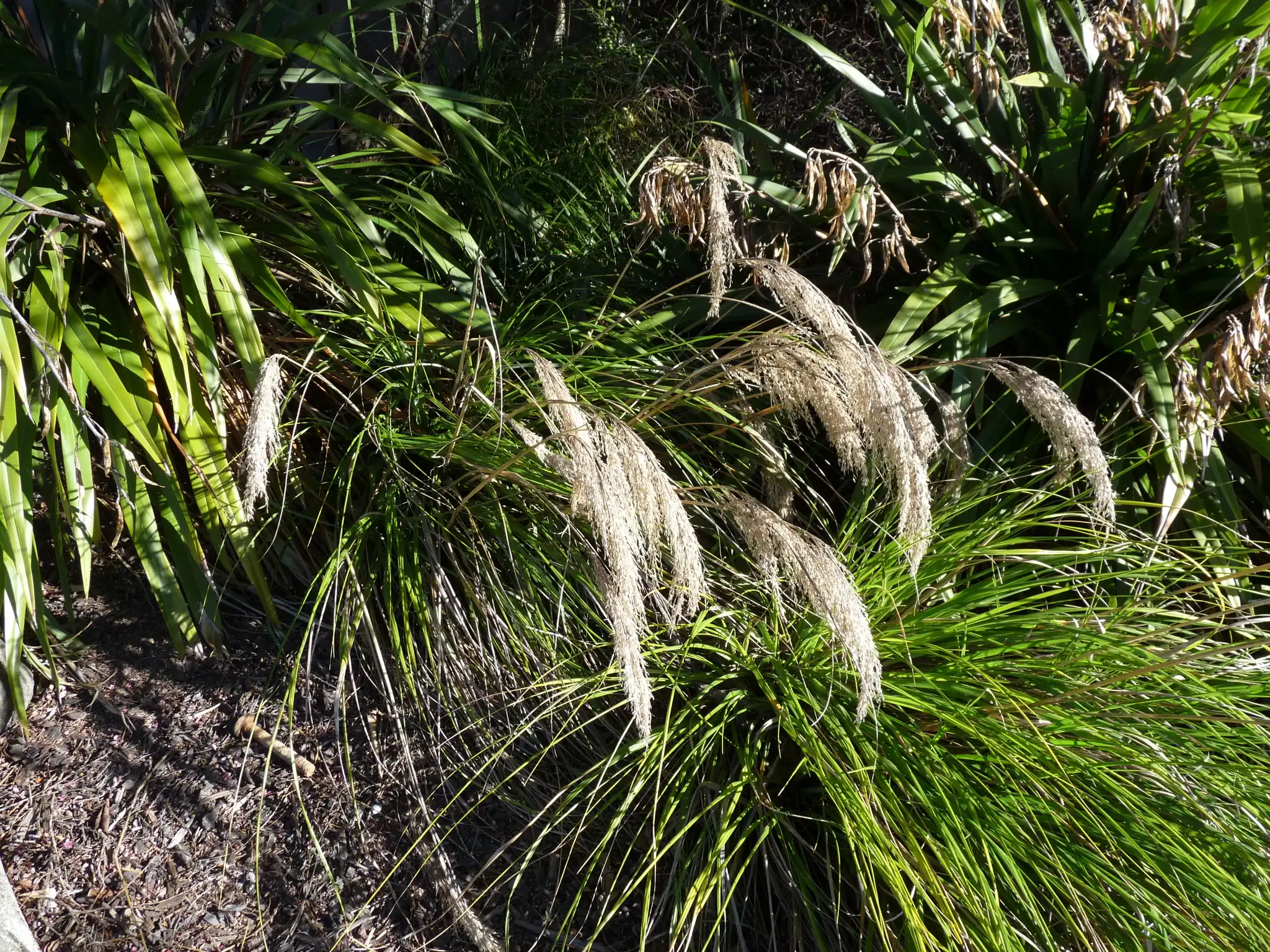
Chionochloa flavicans is an evergreen, tussock-forming perennial grass native to the North Island of New Zealand, where it grows on rocky cliffs and forest margins. It forms a dense, weeping mound of glossy, narrow green leaves topped by arching, feathery flower plumes that emerge cream-colored in summer and mature to a warm tan.
This species is distinguished from other snow tussocks by its broader, glossy foliage and miniature, toetoe-like flower plumes that weep gracefully under their own weight. The evergreen leaves retain their bright yellow-green color throughout the winter months, providing structural interest when other grasses have died back.
Uses & Benefits:
Essentials
At a Glance
Plant Type
Grass
Height
47"
Width
47"
Light
Full Sun, Partial Sun
Zones
8, 9, 10
Water
Moderate
Humidity
Moderate
Lifespan
Perennial
Native To
New Zealand
Toxicity
Non-toxic
Bloom period
Summer
In flower about 3 months of the year
Planting
How to Grow
- Select a planting site in full sun to partial shade with sandy, loamy, or chalky soil that drains rapidly.
- Dig a hole twice the width of the root ball and set the plant so the crown sits level with the surrounding soil line.
- Water thoroughly immediately after planting and maintain consistent moisture until the root system is established.
- Apply a light layer of organic mulch around the base to conserve moisture, keeping it clear of the immediate crown.
Pro Tip
Never shear this grass back to the ground in winter; removing the foliage down to the crown often kills the plant, so maintenance must be limited to combing out dead leaves by hand.
Keep It Thriving
Care Guide
Do
- Comb out dead foliage by hand using gloved hands to maintain a clean appearance.
- Ensure the soil drains freely to prevent root rot during wet winter months.
- Water regularly during extended dry spells to maintain the glossy color of the foliage.
Don't
- Do not cut the foliage back hard into the old woody crown, as this can kill the plant.
- Do not plant in heavy clay or waterlogged soils where standing water persists.
- Do not over-fertilize, as excessive nutrients lead to weak, floppy growth.
Seasonal Care Calendar
| Task | Jan | Feb | Mar | Apr | May | Jun | Jul | Aug | Sep | Oct | Nov | Dec |
|---|---|---|---|---|---|---|---|---|---|---|---|---|
| Divide | ||||||||||||
| Fertilize | ||||||||||||
| Pest Check | ||||||||||||
| Spring Cleanup |
Watch Out For
Pests & Diseases
Common Pests
Common Diseases
In the Garden
Landscape Uses & Companions
Landscape Uses
Multiply
Propagation Methods
Good to Know
Common Questions
Broad-Leaved Snow Tussock questions
What zones can Broad-Leaved Snow Tussock grow in?
Broad-Leaved Snow Tussock is hardy in USDA Zones 8–10. Inside that range it survives winter in the ground; outside it, grow it as an annual or a container plant you protect.
Is Broad-Leaved Snow Tussock deer resistant?
Not reliably. Deer may browse Broad-Leaved Snow Tussock, especially tender spring growth — plan on repellents or fencing where pressure is high.
When does Broad-Leaved Snow Tussock bloom?
Broad-Leaved Snow Tussock typically blooms in summer through summer. Exact timing shifts a week or two with your zone — Sow's bloom calendar maps it to your garden.
Does Broad-Leaved Snow Tussock need full sun?
Broad-Leaved Snow Tussock does best in full sun to part shade. In hot climates, afternoon shade keeps blooms fresher longer.
Is Broad-Leaved Snow Tussock drought tolerant?
Yes — once established (usually after the first full season), Broad-Leaved Snow Tussock handles dry spells with minimal watering. Water deeply its first year to build the root system that makes that possible.
Keep exploring
Explore the genus
Hardy in your zone?
Grow Broad-Leaved Snow Tussock with confidence
See it in a design of your actual yard, get zone-matched care reminders, and track it season by season in your garden journal.