The Story
Plant Bio
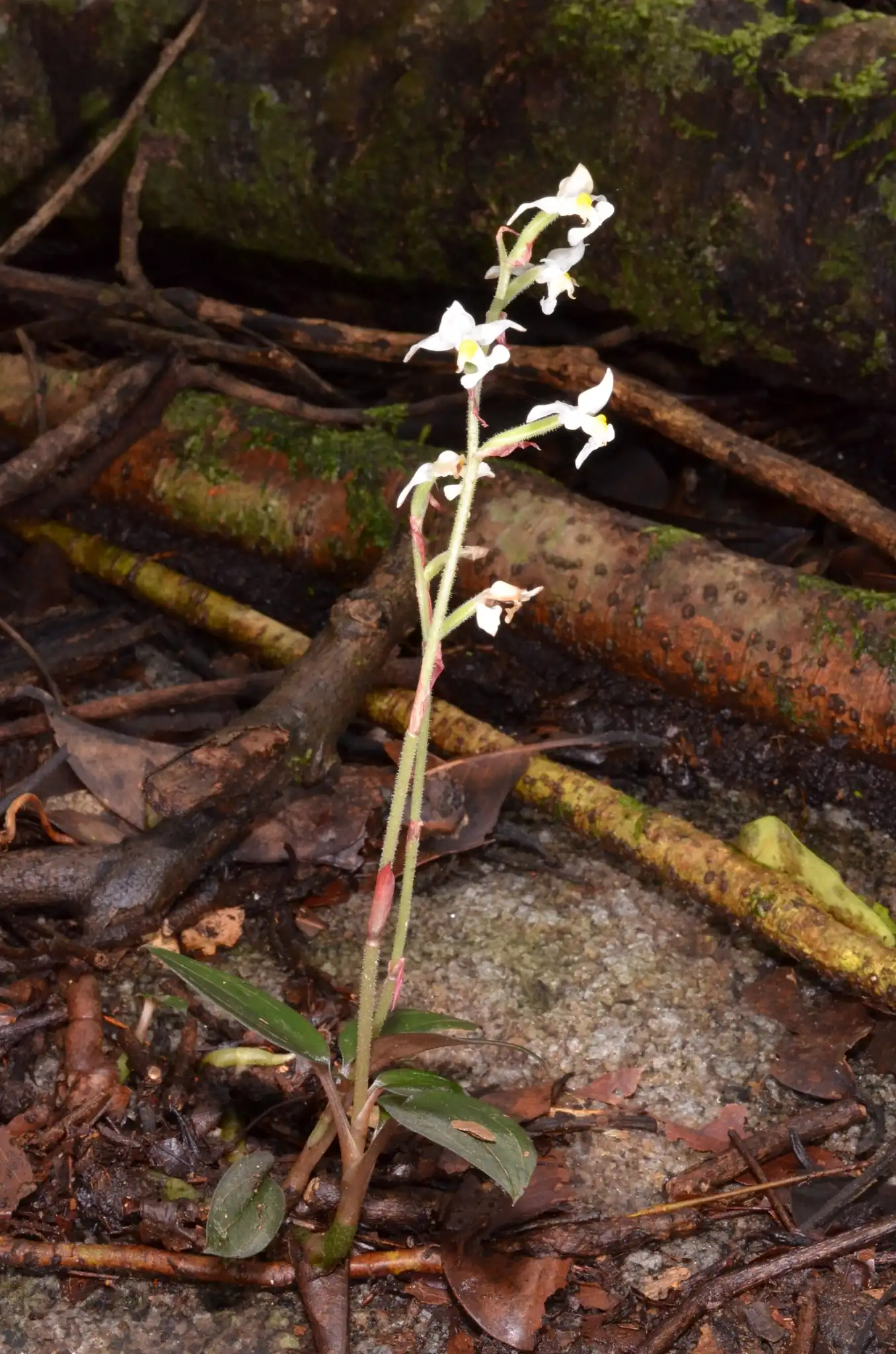
Ludisia discolor, the jewel orchid, is a low-growing terrestrial orchid native to the damp, shaded forest floors of tropical Asia. Unlike most orchids grown for their blossoms, this species is cultivated primarily for its velvety, deep purplish-bronze to dark green leaves patterned with gold, copper, or silvery-red veins.
The creeping, fleshy rhizomes root at the nodes to form a spreading mat that remains under twelve inches in height. In winter, upright terminal spikes rise above the foliage to display small, hooded white flowers with a twisting yellow central column.
Uses & Benefits:
Essentials
At a Glance
Plant Type
Tropical
Height
12"
Width
16"
Light
Shade
Zones
10
Water
High
Humidity
High (60% to 80%+)
Lifespan
Perennial
Native To
Tropical Asia
Toxicity
Non-toxic
Bloom period
Winter – Early spring
In flower about 4 months of the year
Planting
How to Grow
- Select a wide, shallow container with excellent drainage holes to accommodate the creeping rhizomatous growth habit.
- Fill the pot with a highly porous, organic mix containing fine orchid bark, perlite, peat moss, and sphagnum moss.
- Position the plant in deep indirect light or full shade, ensuring it receives no direct sunlight to prevent leaf scorching.
- Water consistently to keep the medium evenly damp, never allowing the substrate to dry out completely or sit in stagnant water.
Pro Tip
Grow in wide, shallow pots using a loose, highly aerated orchid bark and peat mix rather than standard potting soil, which suffocates the creeping rhizomes.
Keep It Thriving
Care Guide
Do
- Maintain high humidity levels between 60% and 80% using a terrarium or humidifier.
- Use a highly aerated, loose orchid substrate to prevent root and stem rot.
- Water with room-temperature water to keep the growing medium consistently moist.
Don't
- Do not plant in heavy, dense universal potting soil that retains excess water.
- Do not expose the velvety foliage to direct sunlight, which bleaches and burns the leaves.
- Do not allow the pot to sit in standing water, as stagnant moisture quickly rots the roots.
Seasonal Care Calendar
| Task | Jan | Feb | Mar | Apr | May | Jun | Jul | Aug | Sep | Oct | Nov | Dec |
|---|---|---|---|---|---|---|---|---|---|---|---|---|
| Fertilize | ||||||||||||
| Pest Check | ||||||||||||
| Propagate | ||||||||||||
| Prune | ||||||||||||
| Winter Prep |
Watch Out For
Pests & Diseases
Common Pests
Common Diseases
In the Garden
Landscape Uses & Companions
Landscape Uses
Companion Plants
Multiply
Propagation Methods
Good to Know
Common Questions
Jewel Orchid questions
What zones can Jewel Orchid grow in?
Jewel Orchid is hardy in USDA Zone 10. Inside that range it survives winter in the ground; outside it, grow it as an annual or a container plant you protect.
When does Jewel Orchid bloom?
Jewel Orchid typically blooms in winter through early spring. Exact timing shifts a week or two with your zone — Sow's bloom calendar maps it to your garden.
Keep exploring
Explore the genus
Hardy in your zone?
Grow Jewel Orchid with confidence
See it in a design of your actual yard, get zone-matched care reminders, and track it season by season in your garden journal.